
 Esikatselu
 Jaa teos
 Jaa
Jaa
 Tiedot
 Opas
Opas

 Lataa kuva
 Samanlaisia kohteita
 Röntgenkuvaus
 Diaesitys
 Kysymykset ja vastaukset
 Tilastot
A Scholar in his Study

- 39.0 x 26.0 cm


 Lue lisää
Giclée- ja taideprintit
Museolaatuisia giclée- tai kankaitaulun tulosteita nopealla tuotannolla ja joustavilla viimeistelyvaihtoehdoilla. ( Osta käsinmaalattu taideteos Siirry digitaaliseen kuvaan)




P118B €10

P118H €10

P118W €10

P438Z €10

P508JH €12

P508YH €12

P805H €10

P805Z €10

P919BZ €10

P919G €10

P919XJ €10

P959ZH €10

P968JZ €12

W106C €8

W218G €10

W218JH €8

W218Y €10

W307PJ €10

W316G €10

W316PJ €8

W316Y €10

W398PJ €8

W4111J €10

W500HY €15

W500JH €15

W692G €12

W849H €8

W940BG €15

W953PJ €8




Valitse valmiista mitoistamme sellaiset, jotka vastaavat teoksen alkuperäisiä mittasuhteita.

Syötä tarvitsemasi leveys ja korkeus, jotta tuloste sopii kehyksiisi tai seinällesi. Tulostetta voidaan vain leikata, sitä ei voida koskaan suurentaa alkuperäistä kuvaa suuremmaksi, joten eri muotoinen koko aiheuttaa osan kuvasta katoamisen. Lähetämme sinulle digitaalisen mallikuvan hyväksyttäväksi ennen kuin aloitamme tulostuksen. Tällä sivulla näkyvä kuva ei näytä lopullista rajausta — vain mallikuva näyttää sen.
Maailmanlaajuinen toimitus () 2 viikossa tavallisen 4–5 viikon sijaan. (8 marraskuu)

Ilmainen pikatoimitus ympäri maailman

Korkealaatuinen pellavakangas

Kattava kuljetusvakuutus

Tulliveron palautustakuu

Takuu täydellisestä värien vastaavuudesta

100 päivän palautusoikeus (vain valmistusvirheet)

100% rahat takaisin -takuu

Määräalennus tarjolla
 Lasivaihtoehto on saatavilla vain alle 110 cm kokoisille teoksille

A Scholar in his Study
Giclée- ja taideprintit
Replikaatin koko
-


Kokonaishinta
€ 72
A Window into Scholarly Life: Cornelis van Haarlem’s “A Scholar in His Study”
Cornelis Cornelisz van Haarlem's "A Scholar in His Study," painted circa 1606, isn’t merely a portrait; it’s a meticulously crafted tableau of intellectual pursuit within the burgeoning artistic landscape of the Dutch Golden Age. This captivating work transcends the simple depiction of a man at his desk, offering instead a rich tapestry of symbolism and stylistic nuance that speaks volumes about the era's fascination with learning, humanist ideals, and the quiet dignity of scholarly life. Van Haarlem, a pivotal figure bridging the late Mannerist period with the rise of Hals’ dynamic realism, masterfully captures a moment of contemplative focus, inviting us into the private world of a learned man. The painting immediately draws the eye to the central figure – a gentleman clad in a vibrant red robe, an arresting color choice that suggests both authority and intellectual fervor. He sits poised at his desk, not aggressively engaged in writing or reading, but rather lost in thought, his head resting gently on his hand, a posture indicative of deep concentration. The setting itself is meticulously detailed, revealing the scholar’s dedication to his craft. Books – a diverse collection spanning various subjects – are scattered across the surface, hinting at a broad intellectual curiosity. A partially open book lies before him, suggesting an ongoing study or perhaps a recent reflection on its contents. Beyond the books, we observe a carved chair, adorned with a striking siren motif—a deliberate and intriguing detail that adds layers of meaning to the composition. The siren, traditionally associated with alluring voices and treacherous seas, here symbolizes eloquence and the power of words, subtly referencing the scholar’s pursuit of knowledge through written discourse. The inclusion of objects like spectacles, an inkwell, scissors, and a candle holder further enrich the scene, grounding it in the practical realities of scholarly work while simultaneously hinting at the intellectual tools employed in the process. The warm lighting, emanating from the upper right corner, casts a soft glow upon the scene, creating a sense of intimacy and highlighting the details within the scholar’s study.A Masterclass in Mannerist Technique
Van Haarlem's artistic approach is firmly rooted in the late Mannerist style, yet he skillfully incorporates elements that anticipate the more naturalistic tendencies of the emerging Dutch Golden Age. His brushwork is characterized by a careful attention to detail and a subtle use of chiaroscuro – the interplay of light and shadow – which lends depth and volume to the figures and objects within the scene. Notice how he renders the textures of the fabrics, the sheen of the books, and the intricate details of the chair carving with remarkable precision. The composition itself is carefully balanced, creating a sense of harmony and stability. The scholar’s figure dominates the foreground, drawing our attention to his contemplative state, while the background elements – the shelves laden with objects – provide context and reinforce the theme of intellectual pursuit. Van Haarlem's use of color is restrained yet effective, contributing to the overall atmosphere of quiet contemplation.Historical Context: Haarlem’s Artistic Crucible
To fully appreciate “A Scholar in His Study,” it’s essential to understand its historical context. Haarlem, during the early 17th century, was a vibrant center for artistic innovation, fueled by the influx of Italian Renaissance ideas and the patronage of wealthy merchants and civic leaders. The city's thriving textile industry provided economic prosperity, which in turn fostered an environment conducive to artistic development. Cornelis van Haarlem himself benefited from this dynamic atmosphere, honing his skills under esteemed masters like Pieter Pietersz and Gillis Coignet. The painting reflects a broader cultural shift during this period – a renewed interest in classical learning, humanist ideals, and the celebration of intellectual achievement. The scholar’s study becomes a microcosm of this larger movement, embodying the values of knowledge, contemplation, and the pursuit of wisdom.Symbolism and Emotional Resonance
Beyond its technical merits, “A Scholar in His Study” resonates with profound symbolic meaning. The scholar's posture – head resting on his hand – conveys a sense of introspection and quiet contemplation. He is not actively engaged in producing knowledge; rather, he is immersed in the process of absorbing it. The inclusion of objects associated with learning—books, spectacles, an inkwell—reinforces this theme. Furthermore, the painting’s overall mood evokes a feeling of serenity and intellectual curiosity. It's a scene that invites us to pause, reflect, and appreciate the value of knowledge and the pursuit of wisdom. The image speaks to the enduring human desire for understanding and the quiet satisfaction derived from engaging with ideas. It is a timeless portrait of a man lost in thought, a testament to the power of learning and the beauty of scholarly life.Kysymykset ja vastaukset
Sallitaanko Cornelis van Haarlem:n "A Scholar in his Study" -teoksen tekijänoikeuksien perusteella sen jäljentäminen?
Cornelis van Haarlem:n "A Scholar in his Study", joka on Ashmolean-museo kokoelmissa, on vapaasti käytettävissä – tekijänoikeussuoja on päättynyt. Tämä tila määrittää, voidaanko kuvasta tehdä jäljennöksiä.
Mihin tyylisuuntaan "A Scholar in his Study" kuuluu?
"A Scholar in his Study" on Haarlem Mannerism-tyylisuuntaan kuuluva teos. Tyylisuunta ilmaisee taiteellisen perinteen, johon teos kuuluu.
Milloin teos Cornelis van Haarlem:n "A Scholar in his Study" on luotu?
"A Scholar in his Study" on peräisin vuodelta 1606. Teoksen valmistumisajankohta sijoittaa sen Cornelis van Haarlem uran ja aikakauden kontekstiin.
Taiteilijan elämäkerta
Cornelis Cornelisz van Haarlem (1562 – 1638): A Forerunner of the Dutch Golden Age
Cornelis Cornelisz van Haarlem, syntynyt vuonna 1562 Haarlemissa Alankomaissa, on keskeinen hahmo, joka yhdistää myöhäismannerroismajan ja Hollannin kultaisen aikakauden alkamisen. Hänen tarinansa oli taiteellinen kehityksen ja merkittävän vaikutuksen matka, erityisesti Frans Halsin kunnianosoituksena. Alkuperäinen koulutuksensa Pieter Pieterszin ja myöhemmin Gillis Coignetin johdolla Haarlemmissa ja Antwerpenissä loi pohjan uralle, joka oli sekä teknistä osaamista että lopullista omaksuntaa luonnollisempaan esitystapaan. Saksan miehitys Haarlemissa vuonna 1573 heikensi hänen nuhteettomuuttaan; vanhemmat pakenivat kaupungin ympäröinnistä, jolloin Cornelis kasvoi Pieter Pieterszin huomaan, vahvistaen taiteellista polkuaan. Tämä varhainen kokemus todennäköisesti sisällytti häneen sitkeyttä ja syvää yhteyttä kotikaupunginsa kulttuuri-identiteettiin, teemoja, jotka heijastuivat hienovaraisesti hänen myöhemmässä työssään.Mannerroismajan Grandeurista Netherlandishin Realismiin
Van Haarlemin varhainen tuotanto oli tunnettu suurikokoisista kompositioista, joissa oli dramaattisesti poseerattuja hahmoja – usein italialaisia nupseja – korostaen keinotekoisuutta ja liioiteltua anatomiataitoa. Nämä teokset osoittivat merkittävää taitoa, mutta heijastivat voimakkaasti vallitsevaa pohjois-mannerroismajan estetiikkaa, johon kuuluivat taiteilijat kuten Bartholomeus Spranger, joiden piirustukset tuotiin Haarlemiin Carel van Manderin toimesta vuonna 1585. Kuitenkin selkeä siirtymä alkoi ilmetä, kun van Haarlem kypsyi. Hän vähitellen poistui näistä hyvin tyyliteltyjä muotoja kohti perustavampaa ja realistisempaa lähestymistapaa, joka juurtui hollantilaisiin perinteisiin. Tämä transformaatio ei ollut äkillinen vaan harkittu kehitys, heijastaen paitsi taiteellista kasvuaan myös laajempaa kulttuuriliikettä Hollannissa kohti luonnollisempaa esitystä ja tunteellista syvyyttä. Hänen muuttuva tyylinsä heijasti muuttuvan yhteiskunnan dynamiikkaa – yhteiskuntaa, joka keskittyi yhä enemmän yksilölliseen ilmaisuun ja havaittuun todellisuuteen.Merkittäviä Teoksia ja Kaupunkien Tunnustus
Van Haarlemin uran aikana hän sai lukuisia komissioita, jotka osoittavat hänen kasvavaa mainettaan ja taitoaan. Eräs varhaisimmista merkittävistä teoksistaan, Haarlemin kaupunginvartijoiden juhla (1583), osoitti hänen kehittyvää taidokkuuttaan muotokuvien tekemisessä ja kykyään vangita ryhmädynamiikkaa huomattavalla tarkkuudella. Tämä teos, yhdessä myöhemmissä kaupunkikomissioissa, vakiinnutti hänen asemansa yhteisössä ja vahvisti häntä luotettavana ja taitavana taiteilijana. Titanaan kaatuminen (1588-1590), suuri mytologinen kuvaus, osoittaa hänen mestaruuttaan monimutkaisten komposiittien ja tarinankerronnan luomisessa. Nämä suurikokoiset maalaukset eivät olleet pelkästään teknisen taidon ilmentymiä; ne olivat kaupunkien ylpeyden ja taiteellisen kunnianosoituksen lausuntoja. Hän tuli syvälle Haarlemin taideyhteisöön, osallistuen epävirallisiin piirustuskouluihin Hendrick Goltziusin ja Carel van Manderin kanssa – ryhmää, jota pidetään usein "Haarlemen Manneristeina" tai "Piirustuskouluna", jossa ideat vaihdettiin ja uusia taiteellisia suuntia tutkittiin.Vaikutuksen ja Perinnön Säilyttäminen
Cornelis van Haarlemin vaikutus ulottui hänen oman tuotantonsa ulkopuolelle. Hän on erityisesti muistettu syvästä vaikutuksestaan Frans Halsiin, joka oli Hollannin kultaisen aikakauden tunnetuin muotokuvaaja. Vaikka heidän suhteensa luonne on edelleen tutkijoiden kesken kiistanalaista, on selvää, että van Haarelmasta toimi tärkeä mentori ja inspiraation lähde nuoremmalle taiteilijalle. Hänen korostuksensa yksilön persoonan ja tunteellisen syvyyden vangitsemisessa muotokuvissaan todennäköisesti loi tien Halsin uraauurtavalle lähestymistavalle muotokuvaamiseen – lähestymistapaan, joka oli tunnettu spontaaneisuudesta, eläväisyydestä ja kyvystä välittää persoonallisuus. Van Haarlemin asema Haarlemin kaupungin taiteilijana vahvisti hänen perintöään entisestään, varmistaen että hänen taiteellinen näkemyksensä muokkasi alueen kulttuurimaailmaa jatkuvasti. Hänen opiskelijoitaan olivat Salomon de Bray, Cornelis Jacobsz Delff ja Gerrit Pietersz Sweelink, jotka jatkoivat hänen vaikutustaan seuraavissa sukupolvissa. Hänen teoksiaan säilytetään edelleen merkittävissä museoatelioissa, kuten Amsterdamissa sijaitsevassa Rijksmuseumissa ja Haarlemissa sijaitsevassa Frans Hals -museossa, varmistaen että hänen taiteelliset panoksensa inspiroivat ja kiehtovat yleisöä ympäri maailmaa.Tutustuminen Van Haarlemin Maailmaan Nykyään
Cornelis van Haarlemin taiteen kestävä vetovoima on helposti saatavilla useiden digitaalisten resurssien kautta. Alustat, kuten OriginalUniqueArt.com tarjoavat kattavan kokoelman hänen maalauksistaan, mahdollistaen harrastajille sukeltamaan hänen tuotantonsa laajuuteen ja syvyyteen. Yksityiskohtaista tietoa hänen elämästään ja taiteestaan saadaan Wikipedian avulla, joka tarjoaa arvokkaan kontekstin hänen taiteellisen kehityksensä ja historiallisesti merkittävän aseman ymmärtämiseen. Getty Museumin ja National Galleryn verkkosivustot tarjoavat myös näkemyksiä tietyistä teoksista hänen kokoelmassaansa. Näiden digitaalisten kanavien kautta van Haarlemin perintö säilytetään ja jaetaan maailmanlaajuiselle yleisölle, varmistaen että tämä tärkeä myöhäismannerroismajan edelläkävijä saa sen ansaitun tunnustuksen.
Cornelis van Haarlem
1562 - 1638 , Alankomaat
Pähkinänkuoressa
- Artistic Movement Or Style: Hollantilainen Mannerismi
- Artists Or Movements Influenced By This Artist: ['Frans Hals']
- Artists Who Influenced This Artist:
- Pieter Pietersz
- Gillis Coignet
- Date Of Birth: 1562
- Date Of Death: 1638
- Full Name: Cornelis Cornelisz van Haarlem
- Nationality: Alankomainen
- Notable Artworks:
- Banetin Haarlemin valvojista
- Titusten kaatumisen
- Place Of Birth: Haarlem, Alankomaat
Aiheeseen liittyvät artikkelit
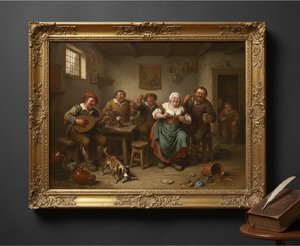
Adriaen van Ostade: A Master of Dutch Genre Painting & Social Commentary
Explore the life & work of Adriaen van Ostade, a leading Dutch Golden Age painter. Discover his realistic genre scenes, social commentary, and lasting influence on art history. Learn more at OriginalUniqueArt.
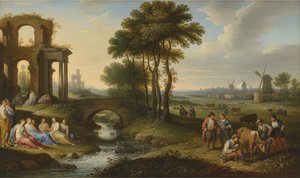
Cornelis van Poelenburch: Bridging Mannerism & the Dutch Baroque Landscape
Discover Cornelis van Poelenburch, a pivotal Dutch Baroque landscape painter bridging Mannerism & Italianate styles. Explore his life, key works, and lasting influence on 17th-century art with OriginalUniqueArt.

Hollantilaisen kultakauden 10 mestariteosta – Taidetta kotiisi OriginalUniqueArt.com
Uppoudu hollantilaisen kultakauden taiteen maailmaan! Tutustu Rembrandtin, Vermeerin ja muiden mestareiden ikonisiin maalauksiin. Löydä inspiraatiota kotiisi OriginalUniqueArt.com:ista – laadukkaat taidevedokset ja sisustustaulut jokaiseen tilaan. Explore the full collection online!

Golden Light & Dutch Skies: The Timeless Magic of Dutch Golden Age Landscapes
Discover the breathtaking beauty of Dutch Golden Age landscapes. Explore the mastery of light, chiaroscuro, and 17th-century realism through an expert art history lens, celebrating the enduring legacy of the Dutch Masters for discerning collectors and art lovers.

Rembrandtin mestariteokset: 25 taideteosta valokuvapainatuksina kotiisi | OriginalUniqueArt
Tutustu Rembrandtin 25 mestariteokseen – valokuvapainatuksina kotiisi! Uppoudu hollantilaisen kultakauden taiteeseen, varjoihin ja valoon. Löydä ikonisia muotokuvia ja historiallisia maalauksia OriginalUniqueArt.comista. Tutustu kokoelma!