
 Esikatselu
 Jaa teos
 Jaa
Jaa
 Tiedot
 Opas
Opas

 Lataa kuva
 Samanlaisia kohteita
 Röntgenkuvaus
 Diaesitys
 Kysymykset ja vastaukset
 Tilastot
Bacchusin voitto Intiassa

- 352.0 x 385.0 cm


 Lue lisää
Giclée- ja taideprintit
Museolaatuisia giclée- tai kankaitaulun tulosteita nopealla tuotannolla ja joustavilla viimeistelyvaihtoehdoilla. ( Osta käsinmaalattu taideteos Siirry digitaaliseen kuvaan)




P118B €10

P118H €10

P118W €10

P438Z €10

P508JH €12

P508YH €12

P805H €10

P805Z €10

P919BZ €10

P919G €10

P919XJ €10

P959ZH €10

P968JZ €12

W106C €8

W218G €10

W218JH €8

W218Y €10

W307PJ €10

W316G €10

W316PJ €8

W316Y €10

W398PJ €8

W4111J €10

W500HY €15

W500JH €15

W692G €12

W849H €8

W940BG €15

W953PJ €8




Valitse valmiista mitoistamme sellaiset, jotka vastaavat teoksen alkuperäisiä mittasuhteita.

Syötä tarvitsemasi leveys ja korkeus, jotta tuloste sopii kehyksiisi tai seinällesi. Tulostetta voidaan vain leikata, sitä ei voida koskaan suurentaa alkuperäistä kuvaa suuremmaksi, joten eri muotoinen koko aiheuttaa osan kuvasta katoamisen. Lähetämme sinulle digitaalisen mallikuvan hyväksyttäväksi ennen kuin aloitamme tulostuksen. Tällä sivulla näkyvä kuva ei näytä lopullista rajausta — vain mallikuva näyttää sen.
Maailmanlaajuinen toimitus () 2 viikossa tavallisen 4–5 viikon sijaan. (4 marraskuu)

Ilmainen pikatoimitus ympäri maailman

Korkealaatuinen pellavakangas

Kattava kuljetusvakuutus

Tulliveron palautustakuu

Takuu täydellisestä värien vastaavuudesta

100 päivän palautusoikeus (vain valmistusvirheet)

100% rahat takaisin -takuu

Määräalennus tarjolla
 Lasivaihtoehto on saatavilla vain alle 110 cm kokoisille teoksille

Bacchusin voitto Intiassa
Giclée- ja taideprintit
Replikaatin koko
-


Kokonaishinta
€ 72
Konrad Martin Metzin Maanlähtöinen Taistelun Triumphi Bacchusissa Intiassa
Konrad Martin Metz (1749–1827) oli italialainen barokkitaiteilija, jonka työskentelytahti ja yksityiskohtien huolellisuus ovat jääneet historiaan erityisesti hänen keskittyvänsä klassiseen mytologiaan ja kristinuskon tarinaan. Hänestä tuli yksi aikansa merkittävimmistä taiteilijoista Francesco Bartolozzin johdolla, joka puolestaan oli tunnettu Mannerismiin keskittyvästä kaiverrusmestaruudesta ja Royal Academian perustamisesta Bolognassa. Metz ei ollut pelkästään tuottelias, vaan hänen teoksensa ovat myös täynnä älyllistä syvyyttä ja tarkkaa teknistä toteutusta – ominaisuuksia jotka ovat erityisen arvostettuja nykypäivänä.Taustaa ja Taiteellinen Kehitys
Metz syntyi Bonnissa, Saksassa vuonna 1749, ja sai koulutuksen, joka painotti matematiikkaa ja luonnontieteitä klassisten opintojen lisäksi. Hän kehitti taidonnauttinsa Francesco Bartolozzin ohjauksessa, joka oli tunnettu Mannerismiin keskittyvästä kaiverrusmestaruudesta ja Royal Academian perustamisesta Bolognassa. Tämä yhteistyö loi pohjan Metzille tulevaisuuden työskentelylle ja mahdollisti hänen oman henkilökohtaisen tyylinsä kehittymisen. Bartolozzi oli erityisesti vaikuttanut siihen, että Metz keskittyisi yksityiskohtiin ja käyttäisi monimutkaisia tekniikoita klassisten myyttien kuvastamiseen.Tyyli ja Tekniikka: Mannerismi Intian Näkökulmasta
Metzin tunnusmerkki oli hänen oman aikansa suurimmaksi taiteilijaksi noussut Bartolozziin verrattuna huolellinen työskentelytapaan sekä klassisen myytön kuvastamiseen keskittyvänsä erityinen tapa. Hän käytti pääosin kaiverrusmenetelmää, jonka avulla hän sai aikaan syvän ja yksityiskohtaisen pinnan – menetelmän joka oli erityisen tehokas luomaan dramaattisia tunnelmia. Tämä tekniikka mahdollisti hänelle tarkkaan jäljitellä kivestä tai marmorista valmistettujen monumenttien ulkonäköä, mikä kuvastaa hänen aikansa suurinta taiteellista tyyliä: Mannerismi. Metz ei pelkästään tuottelias ollut, vaan hänen työnsä ovat myös täynnä älyllistä syvyyttä ja tarkkaa teknistä toteutusta – ominaisuuksia jotka ovat erityisen arvostettuja nykypäivänä. Hän keskittyi erityisesti yksityiskohtiin ja käyttäisi monimutkaisia tekniikoita klassisten myyttien kuvastamiseen keskittyvänsä erityinen tapa.Symbolismi ja Historiallinen Konteksti
"The Triumph of Bacchus in India" ei ole pelkästään teknisesti mestariteos, vaan myös täynnä symboleja jotka kertovat paljon aikansa kulttuurista ja uskonnollisesta maailmankuvausta. Teoksessa näkyvät sekä jumalalliset olennot että ihmiset, jotka ovat keskittyneet taistelussa tai juhlassa – kuvasto joka viittaa erityisesti kristinuskon viimeiseen tuomiopäivään ja sen aikaisiin tapahtumiin. Eleet ovat dramaattisia ja liikkuvia, mikä korostaa teoksen tunnetta epävakaisuudesta ja kaaoksesta. Lisäksi työstä löytyvät merkittäviä symboleja kuten egyptiläinen krokotiili ja leijona – olennot jotka kuvastavat voimaa ja rohkeutta. Näiden yksityiskohtien tarkka jäljitys tuo teokseen syvyyttä ja tarjoaa katsojalle mahdollisuuden pohtia aikansa suurta kysymystä: ihmisen kohtalo maailmankaikkeudessa. Tämä konteksti on erityisen tärkeä, sillä se selittää Metzille oman aikansa suurimmaksi taiteilijaksi noussut Bartolozziin verrattuna huolellinen työskentelytapaan sekä klassisen myytön kuvastamiseen keskittyvänsä erityinen tapa.Emotionaalinen Ilmaisu ja Inspiraatio
Metzin maalauksesta huokuu tunne dramaattisesta voimasta ja epävakaisuudesta – tunteet jotka ovat yhteydessä aikansa suurta kysymystä: ihmisen kohtalo maailmankaikkeudessa. Tämä tunnelma on erityisen vahva yksityiskohtaisen työskentelytavan ansiosta, jonka avulla hän sai aikaan syvän ja yksityiskohtaisen pinnan – menetelmän joka oli erityisen tehokas luomaan dramaattisia tunnelmia. Katsoja voi tuntea yhteyttä aikansa suurta kysymystä: ihmisen kohtalo maailmankaikkeudessa. Tämä tunne on erityisen vahva yksityiskohtaisen työskentelytavan ansiosta, jonka avulla hän sai aikaan syvän ja yksityiskohtaisen pinnan – menetelmän joka oli erityisen tehokas luomaan dramaattisia tunnelmia.Kysymykset ja vastaukset
Voinko käyttää lisättyä todellisuutta nähdäkseni teoksen Conrad Martin Metz:n "Bacchusin voitto Intiassa" omassa huoneessani?
Voit esikatsella teosta Conrad Martin Metz:n "Bacchusin voitto Intiassa" omalla seinälläsi käyttämällä lisättyä todellisuutta yhteensopivalla laitteella Tarkastele teosta AR-tilassa -sivun kautta.
Miten voin löytää teoksia, jotka muistuttavat teosta Conrad Martin Metz:n "Bacchusin voitto Intiassa"?
Teokset, jotka muistuttavat teosta Conrad Martin Metz:n "Bacchusin voitto Intiassa", on koottu sen Samankaltaisia teoksia -sivulle.
Kuinka kylläinen "Bacchusin voitto Intiassa"-teoksen väripaletti on?
Teoksen Conrad Martin Metz:n "Bacchusin voitto Intiassa" värikylläisyys on Vaimea.
Taiteilijan elämäkerta
The Visionary Precision of Conrad Martin Metz
In the grand tapestry of late Enlightenment and early Romantic art, few threads are as intricately woven as those spun by Conrad Martin Metz. Born in Bonn, Germany, in 1749, Metz emerged not merely as a craftsman of lines, but as a storyteller of the classical soul. His life was a journey through the most vibrant intellectual centers of Europe, moving from the rigorous academic traditions of London to the sun-drenched, antiquity-rich streets of Rome. This movement allowed him to bridge the gap between the structured elegance of the late Baroque and the burgeoning emotional depth of Neoclassicism, creating a body of work that resonates with both technical perfection and mythological grandeur.
The foundation of Metz’s mastery was laid through a disciplined education that balanced the precision of mathematics and natural sciences with the profound beauty of classical studies. This humanist approach is evident in every etching and drawing he produced. His artistic trajectory was irrevocably shaped by his mentorship under Francesco Bartolozzi, one of the most celebrated engravers of the era. Under Bartolozzi’s guidance at the Royal Academy Schools in London, Metz mastered the delicate nuances of printmaking, learning to manipulate light and shadow with a virtuosity that would become his hallmark. He adopted and refined advanced techniques such as aquatint and roulette, allowing him to achieve tonal gradations and textures that breathed life into static plates.
A Symphony of Myth and Masterpiece
Metz’s oeuvre is a profound exploration of the ancient world, where Greek and Roman myths are resurrected through ink and paper. His work often serves as a visual dialogue with the Old Masters; he frequently engraved religious and mythological subjects after the likes of Michelangelo and Raphael, effectively acting as a conduit between the Renaissance giants and the contemporary audiences of the eighteenth century. His ability to translate the monumental scale of frescoed ceilings into the intimate medium of printmaking was nothing short of extraordinary. One of his most ambitious undertakings involved a massive fifteen-plate engraving of Michelangelo’s Last Judgment, a project that showcased his capacity for handling complex, crowded compositions and dramatic, divine tension.
Beyond the grand scale of his engravings, Metz possessed a remarkable ability to capture the ephemeral. His drawings—often executed in pen, brown ink, and wash—reveal a sensitive hand capable of rendering the soft curve of a putto or the tragic weight of a mythological catastrophe. In works such as The Death of the Children of Niobe, created during his later years in Rome, one can witness the intersection of his technical skill and his emotional depth. These pieces are not merely illustrations; they are meditations on fate, beauty, and the enduring power of classical tragedy, often incorporating references to ancient sculptures that ground his imagination in the physical reality of Roman antiquity.
Legacy of an International Master
The historical significance of Conrad Martin Metz lies in his role as a pivotal figure in the international Neoclassical style. By settling in Rome in 1801, where he remained until his death in 1827, he became part of the living pulse of classical revivalism. His work helped define the aesthetic standards of an era that sought to find order and nobility in the ruins of the past. Through his prolific output of engravings and illustrations, he disseminated the beauty of classical motifs across Europe, influencing the visual language of both the scholarly elite and the broader public.
Today, the legacy of Metz is preserved in the hallowed halls of the world's greatest institutions, including the British Museum, the Metropolitan Museum of Art, and the National Gallery of Art. His contributions can be summarized through several enduring artistic pillars:
- Technical Innovation: The masterful application of aquatint and soft-ground etching to achieve unprecedented textural depth.
- Classical Preservation: The role of an engraver as a bridge, bringing the monumental works of the Renaissance to a wider, contemporary audience.
- Narrative Depth: A unique ability to imbue mythological scenes with a sense of psychological realism and dramatic movement.
- Cultural Synthesis: The blending of German precision, English academic training, and Italian classical inspiration into a singular, cohesive style.
Conrad Martin Metz remains a testament to the power of meticulous observation. His life’s work stands as a luminous reminder of a time when art sought to harmonize the rigorous logic of science with the boundless reaches of human myth.

Conrad Martin Metz
1749 - 1827 , Italy
Pähkinänkuoressa
- Full Name: Conrad Martin Metz
- Nationality: German
- Date Of Birth: 1749
- Date Of Death: 1827
- Place Of Birth: Rome, Italy
- Notable Artworks:
- The Triumph of Bacchus in India
- Saint-Martin
- Artistic Movement Or Style: Baroque & Rococo
- Artists Who Influenced This Artist: ['Francesco Bartolozzi']
- Artists Or Movements Influenced By This Artist: ['Michelangelo']
Aiheeseen liittyvät artikkelit

Barokin loisto: Kuinka tuoda ylellisyyttä ja tunnetta nykyaikaiseen sisustukseen
Tutustu barokki sisustuksen loistoon! Opi luomaan ylellistä ja tunnelmallista kotia historiallisen tyylin inspiroimana. Vinkkejä, esimerkkejä ja in apua.

The Dramatic Flourish: Exploring the Baroque Movement's Enduring Legacy in Art History
Explore the dramatic world of Baroque art! Discover iconic artists like Caravaggio & Rubens, defining techniques, and its lasting impact on art history. Expert insights for collectors & enthusiasts at OriginalUniqueArt.

The Visceral Stage: Exploring Dramatic Narratives & Emotional Intensity in Baroque Art
Explore the dramatic world of Baroque art! Discover iconic masters like Caravaggio & Rembrandt, their techniques, and the movement's lasting impact. Expert insights for collectors & enthusiasts at OriginalUniqueArt.
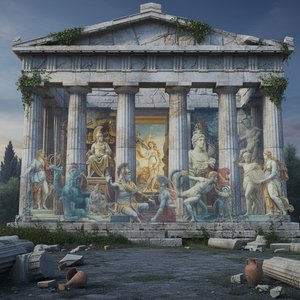
Echoes of Olympus: Mythological Narratives in Western Art Through the Ages
Explore the captivating history of mythological narratives in Western art! From ancient Greece to modern masterpieces, discover iconic artworks & symbolism. Expert analysis and high-quality reproductions at OriginalUniqueArt.

Barokin mestariteokset: Taidetta ja loistoa kotiisi – OriginalUniqueArt.com
Uppoudu barokin loistokkuuteen! Tutustu Caravaggion, Rembrandtin ja Vermeerin kaltaisten mestareiden tunnetuimpiin teoksiin. Taidehistoriaa kotiisi – löydä upeat taidetulosteet ja canvas-taulut OriginalUniqueArt.comista.
