

 Esikatselu
 Jaa
Jaa Jaa
Jaa
 Tarkemmat tiedot

 Lataa
Lataa
 Samanlaisia
 Röntgenkuva
 Diaesitys
 Tilastot
George Washington (Last Bust Portrait type)
 Oil On Canvas
- WallArt
- Neoclassicism
 1795
1795- Early Modern
 30.0 x 22.0 cm
 Näytä lisää
Giclée-printit ja taideprintit
Museolaatuisia giclée- tai kankaitaulun tulosteita nopealla tuotannolla ja joustavilla viimeistelyvaihtoehdoilla. ( Osta käsintehty maalaus Siirry digitaaliseen kuvaan)




P118B $10

P118H $10

P118W $10

P438Z $10

P508JH $12

P508YH $12

P805H $10

P805Z $10

P919BZ $10

P919G $10

P919XJ $10

P959ZH $10

P968JZ $12

W106C $8

W218G $10

W218JH $8

W218Y $10

W307PJ $10

W316G $10

W316PJ $8

W316Y $10

W398PJ $8

W4111J $10

W500HY $15

W500JH $15

W692G $12

W849H $8

W940BG $15

W953PJ $8




Valitse valmiista mitoistamme sellaiset, jotka vastaavat teoksen alkuperäisiä mittasuhteita.

Voit syöttää omat mitat sopiaksesi tiettyyn kehykseen tai tilaan. Jos valittu koko ei vastaa alkuperäisen kuvan mittasuhteita, rajaamme teosta tai laajennamme kuvaa peilatulla tai yhtenäisellä reunalla. Digitaalinen mallikuva lähetetään hyväksyttäväksi ennen tuotannon aloittamista.
Huomaathan, että näytöllä näkyvä esikatselu ei vastaa lopullista rajausta tai laajennusta. Vain mallikuva näyttää lopullisen sommittelun tarkasti.
Vaikka räätälöityjä kokoja on saatavilla, suosittelemme valitsemaan mitat valmiista listasta alkuperäisten mittasuhteiden säilyttämiseksi.
Toimitus maailmanlaajuisesti () kahdessa viikossa tavallisen 4–5 viikon sijaan. (16 syyskuu)

Ilmainen pikatoimitus ympäri maailman

Korkealaatuinen pellavakangas

Kattava kuljetusvakuutus

Tulliveron palautustakuu

Täydellinen värien vastaavuustakuu

100 päivän palautusoikeus (vain valmistusvirheet)

100% rahat takaisin -takuu

Määräalennus tarjous
 Lasivaihtoehto on saatavilla vain alle 110 cm kokoisina teoksina

George Washington (Last Bust Portrait type)
Giclée-printit ja taideprintit
Replikaatin koko
-


Kokonaishinta
$ 80
The Soul of a Nascent Republic
In the quiet, commanding presence of Charles Willson Peale’s 1795 portrait, George Washington, one finds far more than a mere likeness of a man; one encounters the very soul of a nascent republic. This particular rendition, belonging to the "Last Bust Portrait" type, captures the first President of the United States with a profound sense of Neoclassical grace. The composition is masterfully centered, focusing our gaze upon Washington’s head and shoulders, creating an intimate yet monumental encounter. Through soft, diffused lighting, Peale breathes life into the subtle contours of the face, allowing shadows to dance gently across the features, lending a weight of wisdom and gravity to the subject. It is a piece that does not merely depict a historical figure but invites the viewer into a moment of silent, dignified reflection.
Beyond its aesthetic brilliance, the painting serves as a vital historical document, capturing the essence of an era defined by revolution and the birth of American identity. As a master of his craft, Peale utilized his deep connection to the figures of the American Revolution to create works that are both personal and political. In this portrait, the subject is rendered with a resolute expression in his eyes, suggesting a leader who has weathered the storms of war and is now anchored by the heavy responsibility of peace. For the discerning collector, owning such a piece is akin to holding a fragment of history, a window into the foundational spirit of a nation.
Technical Mastery and Neoclassical Elegance
The technical mastery displayed in this oil on canvas is nothing short of breathtaking, making it an exquisite choice for those who appreciate the meticulous traditions of classical painting. Peale utilizes a sophisticated layering of colors to achieve a lifelike texture, where the smoothness of skin contrasts beautifully with the structured folds of period clothing. The palette is intentionally restrained, dominated by deep, somber tones of brown and black that evoke a sense of timelessness and authority. These dark hues are punctuated by delicate highlights of grey and white, which catch the light to define the fine details of Washington’s hair and the dignified structure of his features.
The style leans heavily towards Neoclassicism, characterized by realistic representation and an emphasis on order and balance. The lines are predominantly smooth and controlled, defining the contours of the face and clothing with surgical precision. This sense of stability is further reinforced by a deep, muted brown background, which provides a neutral anchor for the figure. Such a composition allows the portrait to command attention in any sophisticated setting without overwhelming the surrounding decor, making it an ideal centerpiece for a study, library, or formal living space.
A Timeless Addition to the Sophisticated Interior
For the interior designer or art enthusiast, this portrait offers a unique opportunity to introduce a sense of heritage and gravitas into a room. The neutral, muted tones of the work allow it to integrate seamlessly into various design aesthetics, from traditional colonial styles to modern minimalist environments. Because the painting relies on subtle tonal shifts rather than jarring colors, it provides a calming, intellectual energy to a space.
When considering a high-quality reproduction of this masterpiece, one is not just selecting a decoration, but an atmospheric element that can transform a room's character. It serves as:
- A Focal Point: The centered, monumental composition naturally draws the eye, creating a sense of importance within a gallery wall or standalone placement.
- An Anchor of Sophistication: The dark, classical palette provides a grounding effect that complements rich woods, leather, and metallic accents.
- A Conversation Piece: The historical significance of Peale’s depiction of Washington offers endless depth for storytelling and intellectual engagement with guests.
Ultimately, this portrait is an invitation to contemplate the virtues of leadership, resilience, and dignity. It remains a breathtaking testament to the power of portraiture to transcend time, offering a lasting legacy of beauty and strength to any collection.
Taiteilijan elämäkerta
Charles Willson Peale: A Life of Art, Science, and Patriotism
Charles Willson Peale was a figure who embodied the spirit of his era – an artist deeply rooted in scientific observation and passionately committed to documenting the wonders of the natural world. Born April 15, 1741, in Chester County, Maryland, he navigated a childhood marked by considerable hardship following his father’s untimely demise, forging ahead with determination fueled by an innate fascination for artistic expression.Early Life and Artistic Training
Peale's formative years saw him apprenticed as a saddler – a practical skill that instilled discipline and honed his hand-eye coordination – before serendipitously discovering his true vocation within the realm of painting. Recognizing his burgeoning talent, he initially benefited from instruction under John Hesselius, absorbing foundational techniques and stylistic considerations. This initial exposure was further enriched by brief studies with John Singleton Copley, demonstrating an early aptitude for capturing likeness accurately and conveying emotion effectively. However, it was his time studying under Benjamin West in London (1767-1770) that truly cemented his artistic trajectory. The influence of European Neoclassical ideals – characterized by idealized forms and rational composition – profoundly shaped Peale’s style, establishing a bedrock for his subsequent explorations.Artistic Career and Major Works
Peale swiftly established himself as a portraitist of distinction, securing commissions from prominent figures of the American Revolution. Among these were nearly sixty depictions of George Washington, meticulously crafted to honor the nation's leader while simultaneously serving as invaluable historical records. His style evolved gracefully over time, retaining West’s neoclassical elegance yet incorporating elements of realism and striving for unparalleled accuracy in portraying his subjects. The resulting portraits are testaments to Peale’s dedication to capturing not merely appearance but also character and spirit. Notably, *George Washington (1772)* marked the commencement of a lifelong partnership with Washington—a relationship that would yield numerous iconic images reflecting the evolving political landscape of the time. Furthermore, *The Staircase Group (c. 1795)* stands as an extraordinary achievement in trompe l'oeil artistry – an illusionistic technique designed to deceive the eye—creating the impression that his sons Raphael and Titian seamlessly integrate into the architectural setting of the museum itself.Scientific Pursuits and Peale’s American Museum
Beyond his artistic accomplishments, Charles Willson Peale possessed a fervent passion for natural history. Driven by an inquisitive spirit, he spearheaded expeditions to meticulously document flora and fauna across America, furthering scientific understanding and expanding the boundaries of knowledge. Recognizing the transformative potential of disseminating scientific discoveries to the public, Peale founded Peale's American Museum in Philadelphia (1784)—a pioneering institution that would become one of the earliest museums in the United States. The museum’s halls housed an astonishing array of specimens—botanical illustrations alongside animal skeletons and archaeological artifacts—representing a comprehensive panorama of scientific inquiry. Perhaps Peale’s most enduring legacy resides in his masterful reconstruction of a mastodon skeleton, acquired during an expedition in 1801 – a monumental undertaking that captivated the public imagination and solidified Peale's reputation as a visionary scientist and educator.Legacy and Historical Significance
Charles Willson Peale’s artistic output transcends mere aesthetic beauty; it embodies the intellectual fervor of the Enlightenment—a period characterized by reason, observation, and an unwavering belief in human potential. His portraits stand as enduring symbols of American leadership and patriotism, offering poignant glimpses into the personalities and aspirations of pivotal figures who shaped the nation's destiny. Moreover, Peale’s establishment of Peale’s American Museum represents a watershed moment in the history of scientific education—a bold assertion that knowledge should be accessible to all citizens. His influence extended far beyond his own lifetime, inspiring subsequent generations of artists and scientists alike – cementing his place as an indelible figure within the annals of American cultural heritage. He fostered a family tradition of artistic excellence, with his sons James Peale and Rubens Peale continuing his legacy through their own distinguished careers in art and science.
Charles Willson Peale
1741 - 1827 , Yhdysvallat
Pikatiedot
- Artistic Movement Or Style: Neoklassismi
- Artists Who Influenced This Artist:
- John Hesselius
- John Singleton Copley
- Benjamin West
- Date Of Birth: April 15, 1741
- Date Of Death: February 22, 1827
- Full Name: Charles Willson Peale
- Nationality: Amerikkalainen
- Notable Artworks:
- Staircase Group
- George Washington
- Place Of Birth: Chester, United Kingdom
Liittyvät artikkelit

Georges Seurat: 25 mestariteosta – Valon ja värin lumoa taidossa | OriginalUniqueArt
Tutustu Georges Seuratin 25 mestariteokseen! Uppoudu pointillismia, valomaalausta ja väriteoriaa hyödyntävään taidemaailmaan. Löydä A Sunday on La Grande Jatte ja muut ikonit OriginalUniqueArt.comista – korkealaatuiset taidekopiot kotiisi.

Georges Braquen 25 mestariteosta: Taidetta kotiin OriginalUniqueArtilta
Tutustu Georges Braquen 25 mestariteokseen ja kubismin lumoihin! Taidehistoriaa, värejä ja inspiraatiota kotiisi. Laadukkaat taulut OriginalUniqueArtilta – löydä täydellinen seinätaulu nyt!

Neoclassical Portraiture: The Timeless Elegance of Order, Grace, and Academic Mastery
Explore the refined world of Neoclassical portraiture. Discover the mastery of line, light, and order through an expert exploration of academic art history, from Jacques-Louis David to Jean-Antoine Houdon. Immerse yourself in the timeless elegance of classical realism.
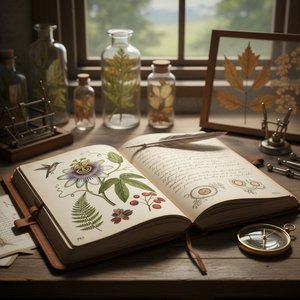
Titian Ramsay Peale II: A Legacy of Botanical Precision & Artistic Innovation
Explore the life & art of Titian Ramsay Peale II, a master of botanical precision and wildlife painting. Discover his legacy bridging art & natural history at OriginalUniqueArt.

Charles Willson Peale: Portraiture, Enlightenment Ideals & Shaping American Identity
Explore the life & art of Charles Willson Peale – Revolutionary portraitist, scientist, and founder of America’s first museum. Discover his iconic paintings of Washington & the Enlightenment ideals that shaped a nation.

