

 Katso seinällä
 Lähetä
 Jaa
Jaa
 Tarkemmat tiedot
 Opas
Opas

 Lataa kuva
 Samanlaisia kohteita
 Röntgenkuvaus
 Diaesitys
 Tilastot
Untitled (958)

 Lue lisää
Giclée- ja taideprintit
Museolaatuisia giclée- tai kankaitaulun tulosteita nopealla tuotannolla ja joustavilla viimeistelyvaihtoehdoilla. ( Tilaa käsinmaalattu jäljennös Siirry digitaaliseen kuvaan)




































Valitse valmiista mitoistamme sellaiset, jotka vastaavat teoksen alkuperäisiä mittasuhteita.

Voit syöttää omat mitat sopiaksesi tiettyyn kehykseen tai tilaan. Jos valittu koko ei vastaa alkuperäisen kuvan mittasuhteita, rajaamme teosta tai laajennamme kuvaa peilatulla tai yhtenäisellä reunalla. Digitaalinen mallikuva lähetetään hyväksyttäväksi ennen tuotannon aloittamista.
Huomaathan, että näytöllä näkyvä esikatselu ei vastaa lopullista rajausta tai laajennusta. Vain mallikuva näyttää lopullisen sommittelun tarkasti.
Vaikka räätälöityjä kokoja on saatavilla, suosittelemme valitsemaan mitat valmiista listasta alkuperäisten mittasuhteiden säilyttämiseksi.
Maailmanlaajuinen toimitus () 2 viikossa tavallisen 4–5 viikon sijaan. (26 syyskuu)

Ilmainen pikatoimitus ympäri maailman

Korkealaatuinen pellavakangas

Kattava kuljetusvakuutus

Tulliveron palautustakuu

Takuu täydellisestä värien vastaavuudesta

100 päivän palautusoikeus valmistusvirhetapauksissa

100% rahat takaisin -takuu

Määräalennus saatavilla
 Lasivaihtoehto on saatavilla vain alle 110 cm kokoisille teoksille

Untitled (958)
Giclée- ja taideprintit
Replikaatin koko
-


Kokonaishinta
$ 80
A Delicate Bloom: Exploring Mackintosh's "Untitled (958)"
This captivating artwork, currently known as “Untitled (958),” offers a glimpse into the refined aesthetic of Charles Rennie Mackintosh, a pivotal figure in the Glasgow Style movement. While lacking a formal title from the artist’s hand, its visual impact speaks volumes about his mastery of decorative arts and his unique approach to floral representation. The painting presents a close-up study of pink flowers interwoven with lush green foliage, creating an intimate and visually rich composition. The presence of three small white dots adds a subtle layer of intrigue – perhaps representing dewdrops or simply serving as delicate accents within the overall design.Style & Technique: Echoes of Art Nouveau
Mackintosh’s style is instantly recognizable, firmly rooted in the Art Nouveau movement but infused with his distinct Scottish sensibility. Unlike the more overtly ornate and flowing forms often associated with Art Nouveau, Mackintosh favored a restrained elegance characterized by geometric precision and simplified lines. This piece exemplifies this approach; while depicting natural forms – flowers and leaves – they are rendered with a clarity and linearity that borders on abstraction. The technique appears to be executed in oil paint, allowing for subtle gradations of color within the petals and leaves, creating depth and texture despite the relatively flat perspective. The close cropping of the subject matter is also characteristic of his work, focusing attention entirely on the beauty of the floral arrangement.Historical Context & The Glasgow Style
Created during Mackintosh’s prolific period (likely around the turn of the 20th century), “Untitled (958)” reflects the burgeoning artistic scene in Glasgow. The "Glasgow Style" was a unique blend of Art Nouveau, Celtic Revival influences, and Scottish vernacular architecture and design. Mackintosh spearheaded this movement, leaving an indelible mark on interior design, furniture making, and decorative arts. His work aimed to create harmonious environments – total works of art encompassing architecture, furnishings, and decorative elements. This painting can be seen as a smaller-scale manifestation of that holistic vision, demonstrating his ability to translate the principles of good design into a captivating floral study. His collaborations with his wife, Margaret Macdonald Mackintosh, were also crucial in shaping this distinctive style; her own symbolic and often mystical imagery frequently complemented his architectural designs.Symbolism & Emotional Impact
While seemingly straightforward in its depiction of flowers, the painting likely carries deeper symbolic weight within the context of Mackintosh’s broader artistic philosophy. Flowers often represent themes of growth, beauty, and transience – concepts that resonate with the Art Nouveau fascination with nature. The restrained palette of pinks and greens evokes a sense of tranquility and understated elegance. The overall effect is one of quiet contemplation; the viewer is invited to appreciate the delicate details and subtle harmonies within this miniature floral world. It’s a piece that inspires serenity and offers a moment of respite from the complexities of modern life, embodying Mackintosh's desire to create spaces and objects that nurture the soul.Taiteilijan elämäkerta
A Scottish Visionary: The Life and Art of Charles Rennie Mackintosh
Charles Rennie Mackintosh, born in Glasgow on June 7, 1868, was more than an architect; he was a philosophical artist who sought to harmonize every aspect of the built environment. From the grandest structures to the smallest details of furniture and ornamentation, his vision aimed for a holistic aesthetic experience—a distinctly Scottish interpretation of the burgeoning Art Nouveau movement. Growing up as one of eleven children in a family where his father served as a police superintendent, Mackintosh’s early life offered little indication of the artistic revolution he would ignite. His education at Reid's Public School and Allan Glen's Institution revealed an aptitude for art but also hinted at challenges with traditional academic disciplines, possibly indicative of dyslexia. This divergence from conventional learning may have fostered his unique perspective, allowing him to approach design unbound by established norms. His formative years were significantly shaped by his apprenticeship under architect John Hutchison, coupled with evening classes at the Glasgow School of Art—a crucible where he forged crucial relationships with fellow students Herbert McNair, Margaret Macdonald, and Frances Macdonald, collectively known as “The Four.” These connections weren’t merely professional; they were deeply collaborative, influencing each other's artistic trajectories and forming the core of what would become the Glasgow Style.Forging a New Aesthetic: The Glasgow Style and Architectural Masterpieces
By the 1890s, Mackintosh had emerged as a leading figure in the “Glasgow Style,” an Art Nouveau variant infused with Celtic symbolism, Japanese aesthetics, and the principles of the Arts and Crafts movement. This wasn’t simply about applying decorative motifs; it was about creating a total work of art—where architecture, furniture, interiors, and even textiles were conceived as interconnected elements of a unified design. He rejected the ornate excesses of Victorian taste, favoring instead simplicity, elegance, and geometric forms inspired by nature. His most celebrated achievement is undoubtedly the Glasgow School of Art building (1896–1909), considered the first original example of Art Nouveau architecture in Great Britain. The building’s innovative use of steel framing allowed for large, open studio spaces bathed in natural light—a radical departure from conventional classrooms—while its façade, adorned with stylized floral motifs and asymmetrical composition, became an instantly recognizable emblem of Mackintosh's vision. Beyond the School of Art, Mackintosh’s genius shone through in projects like Windyhill (1899–1901), a country house that seamlessly integrates with its landscape; Hill House (1902), a masterpiece of domestic architecture characterized by its white harled exterior and evocative interiors—a space designed to inspire contemplation and connection with the natural world; Queen’s Cross Church (1907–1909), demonstrating his mastery of ecclesiastical design, blending Gothic tradition with modernist principles; and Scotland Street School (1904–1906)—a whimsical and imaginative building conceived as a beacon of learning and creativity. These projects exemplify Mackintosh's belief that architecture should serve not merely as shelter but as an active participant in shaping human experience.The Influence of Celtic Tradition and Japanese Aesthetics
Mackintosh’s artistic sensibilities were profoundly influenced by two distinct cultural traditions: Celtic symbolism and Japanese aesthetics. The Celtic Revival, which gained momentum during his formative years, instilled in him a fascination with intricate patterns, spirals, and stylized representations of flora and fauna—elements that would permeate his designs throughout his career. Similarly, Mackintosh was captivated by the austere beauty and understated elegance of Japanese architecture and garden design—principles he adopted to create spaces characterized by tranquility, harmony, and a deliberate rejection of superfluous ornamentation. These influences informed his approach to composition, materiality, and spatial organization—resulting in works that embody both Scottish heritage and Eastern refinement.Collaboration with Margaret Macdonald Mackintosh: The Glasgow Style Duo
Mackintosh’s artistic partnership with Margaret Macdonald Mackintosh was one of the most enduring and fruitful collaborations in British art history. Together, they formed “The Four”—alongside Herbert McNair and Frances Macdonald—and established a creative synergy that propelled the Glasgow Style to its zenith. Their shared vision—a commitment to simplicity, functionality, and the pursuit of aesthetic perfection—guided their artistic endeavors across disciplines, from architecture to furniture design to textile printing. Margaret Macdonald Mackintosh’s contribution was particularly significant in shaping the interiors of Mackintosh's buildings—creating spaces that reflected his philosophical ideals through subtle color palettes, textured fabrics, and carefully considered decorative elements. Their collaborative spirit extended beyond mere professional association; they were married in 1900, forging a bond rooted in mutual respect and artistic admiration.Legacy and Rediscovery: An Enduring Influence on Modern Design
Despite facing considerable obscurity during his lifetime—particularly after World War I—Charles Rennie Mackintosh experienced a remarkable revival of interest in the late 20th century. Scholars and designers recognized the profound influence of his work on subsequent generations, acknowledging his pioneering use of space, light, and materials as precursors to modernist principles. His emphasis on geometric abstraction and organic forms resonated with artists seeking new expressive languages—establishing him as one of Scotland’s most important architects and designers—a visionary artist whose unique aesthetic continues to inspire and captivate audiences worldwide. Today, Mackintosh's buildings stand as monuments to his genius—testaments to a belief that true artistic innovation lies in the pursuit of a singular vision—a vision that transcends time and remains powerfully relevant in contemporary design discourse. His enduring legacy is a reminder that beauty can be found not only in ornamentation but also in restraint—a lesson that continues to inform architectural practice and artistic creativity.
Charles Rennie Mackintosh
1868 - 1928 , Iso Britannia
Tietoa taiteilijasta
- Artistic Movement Or Style: Jugend
- Artists Or Movements Influenced By This Artist: ['Art Nouveau']
- Date Of Birth: 6 kesäkuuta 1868
- Date Of Death: 10 joulukuuta 1928
- Full Name: Charles Rennie Mackintosh
- Nationality: Skotlantilainen
- Notable Artworks:
- Glasgow School of Art
- Willow Tearooms
- Place Of Birth: Glasgow, Iso-Britannia
Aiheeseen liittyvät artikkelit
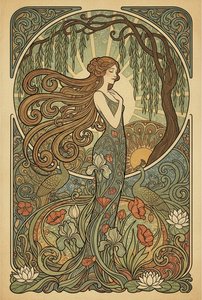
The Flowing Line & Flourishing Form: Exploring Art Nouveau's Aesthetic Legacy
Explore the captivating world of Art Nouveau! Discover its origins, key artists like Horta & Mucha, regional styles, innovative techniques, and lasting influence on architecture & design. A comprehensive guide for art enthusiasts.
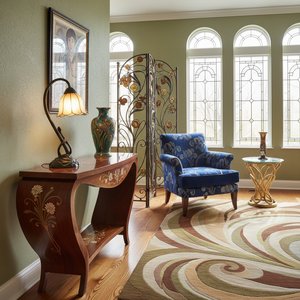
Art Noveau'n 10 mestariteosta: Taidetta ja inspiraatiota kotiin | OriginalUniqueArt.fi
Tutustu Art Noveau'n 10 mestariteokseen! Uppoudu jugendtyylin maailmaan Alphonse Muchan, Gustav Klimtin ja muiden ikonisten taiteilijoiden teosten kautta. Löydä inspiraatiota kotiisi ja tutki laadukkaat taideprintit OriginalUniqueArt.com-sivustolta.

The Elegance of Art Nouveau: Embracing Nature's Fluid Beauty and the Belle Époque Spirit
Discover the enchanting world of Art Nouveau. Explore the organic beauty, flowing lines, and Belle Époque elegance that defined an era of unparalleled craftsmanship and natural inspiration.
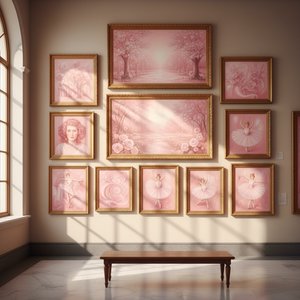
Vaaleanpunkan sävyt taiteessa: 10 kuuluisinta mestariteosta kotiisi – OriginalUniqueArt.com
Uppoudu vaaleanpunkan sävyjen maailmaan! Tutustu 10 kuuluisimpaan maalaukseen – Monet, Renoir, Degas ja muut mestarit. Löydä inspiraatiota sisustukseesi ja tilaa upeat taideteokset kotiisi OriginalUniqueArt.comista. Explore the full collection online!
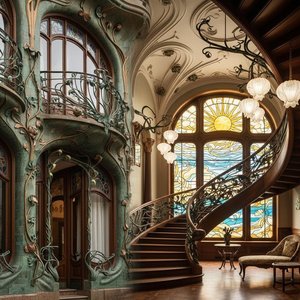
Art Nouveau: The Elegant Fusion of Nature and Design – A Journey Through Organic Sophistication
Discover the exquisite world of Art Nouveau. Explore the elegant fusion of nature and design through architectural masterpieces, organic forms, and the legendary masters of the Belle Époque. Immerse yourself in a journey of timeless sophistication and ornamental beauty.