() ·

Sinulle käsin tehty maalaus

Eulen Grab

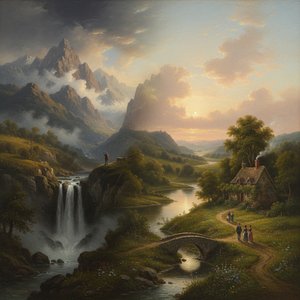
Käsinmaalattu öljyvärinen jäljennös

Käsinmaalattu öljyväri kankaalle haluamassasi koossa ja kehyksissä, taiteilijoidemme valmistamana tilauksesta. ( Vaihda tulosteeseen Siirry digitaaliseen kuvaan)

Keräilykohteen kuvaus

Caspar David Friedrichin Eulen Grab - romanttinen maisema maalauksena, jossa katsoja kohtaaa kuolevaisuuden ja luonnon kauneuden. Tutustu täydelliseen kokoelmaan WikiArtissa!

Taiteilijan elämäkerta

Caspar David Friedrich (1774-1840): Saksa romanttinen maalari, jonka lumoavat maisemat ja symboleihin pohjautuva taide ovat ikoniset. Luonnon ja ihmisen kohtaaminen täydellisesti vangittu.

alkaen ·

Luku 1

Kuinka suuren sen tulisi olla?

Vedä liukusäädintä vaihtaaksesi kokoa; vasemmalla oleva kuva näyttää kehyksen todellisen leveyden. Alkuperäiset mittasuhteet säilyvät.

Vakiokoko
räätälöity
CM
INCH

Valitse valmiista mitoistamme sellaiset, jotka vastaavat teoksen alkuperäisiä mittasuhteita.

leveys
korkeus

Kirjoita tarvitsemasi leveys ja korkeus, jotta teos sopii kehyksiisi tai seinällesi. Koska kyseessä on käsinmaalattu teos, taiteilija voi maalata hieman enemmän kuvan ympärille tai rajata sitä hieman, jos haluat eri muotoisen koon — valinta on sinun. Lähetämme sinulle digitaalisen mallikuvan hyväksyttäväksi ennen kuin maalaus alkaa. Tällä sivulla näkyvä kuva ei vastaa lopullista tulosta — vain mallikuva näyttää sen.

Luku 2

Miten teoksen tulisi saapua?

Valitse kangaspinnan reunat

Valitse kehys

Corner sample of the WhiteWrap canvas edge finish, stretched on massiivipuu bars
Valkoinen reuna €1
Corner sample of the BlurSideWrap canvas edge finish, stretched on massiivipuu bars
pehmennetty reuna €1
Corner sample of the ExtendedWrap canvas edge finish, stretched on massiivipuu bars
Jatkuva reuna €1
Corner sample of the P118B picture frame: valettu polystyreeni, 5 cm wide and 3 cm thick
P118B €10
Corner sample of the P118H picture frame: valettu polystyreeni, 5 cm wide and 3 cm thick
P118H €10
Corner sample of the P118W picture frame: valettu polystyreeni, 5 cm wide and 3 cm thick
P118W €10
Corner sample of the P438Z picture frame: valettu polystyreeni, 5.5 cm wide and 3.5 cm thick
P438Z €10
Corner sample of the P508JH picture frame: valettu polystyreeni, 7 cm wide and 3.5 cm thick
P508JH €12
Corner sample of the P508YH picture frame: valettu polystyreeni, 7 cm wide and 3.5 cm thick
P508YH €12
Corner sample of the P805H picture frame: valettu polystyreeni, 5 cm wide and 3.5 cm thick
P805H €10
Corner sample of the P805Z picture frame: valettu polystyreeni, 5 cm wide and 3.5 cm thick
P805Z €10
Corner sample of the P919BZ picture frame: valettu polystyreeni, 7 cm wide and 3.5 cm thick
P919BZ €10
Corner sample of the P919G picture frame: valettu polystyreeni, 7 cm wide and 3.5 cm thick
P919G €10
Corner sample of the P919XJ picture frame: valettu polystyreeni, 7 cm wide and 3.5 cm thick
P919XJ €10
Corner sample of the P959ZH picture frame: valettu polystyreeni, 5 cm wide and 3 cm thick
P959ZH €10
Corner sample of the P968JZ picture frame: valettu polystyreeni, 6 cm wide and 4 cm thick
P968JZ €12
Corner sample of the W106C picture frame: massiivipuu, 5 cm wide and 3 cm thick
W106C €8
Corner sample of the W218G picture frame: massiivipuu, 5 cm wide and 3 cm thick
W218G €10
Corner sample of the W218JH picture frame: massiivipuu, 5 cm wide and 3 cm thick
W218JH €8
Corner sample of the W218Y picture frame: massiivipuu, 5 cm wide and 3 cm thick
W218Y €10
Corner sample of the W307PJ picture frame: massiivipuu, 6 cm wide and 3 cm thick
W307PJ €10
Corner sample of the W316G picture frame: massiivipuu, 6 cm wide and 3 cm thick
W316G €10
Corner sample of the W316PJ picture frame: massiivipuu, 6 cm wide and 3 cm thick
W316PJ €8
Corner sample of the W316Y picture frame: massiivipuu, 6 cm wide and 3 cm thick
W316Y €10
Corner sample of the W398PJ picture frame: massiivipuu, 5 cm wide and 3 cm thick
W398PJ €8
Corner sample of the W4111J picture frame: massiivipuu, 6.5 cm wide and 3.5 cm thick
W4111J €10
Corner sample of the W500HY picture frame: massiivipuu, 7 cm wide and 5 cm thick
W500HY €15
Corner sample of the W500JH picture frame: massiivipuu, 7 cm wide and 5 cm thick
W500JH €15
Corner sample of the W692G picture frame: massiivipuu, 8 cm wide and 4 cm thick
W692G €12
Corner sample of the W849H picture frame: massiivipuu, 5 cm wide and 3 cm thick
W849H €8
Corner sample of the W940BG picture frame: massiivipuu, 7.5 cm wide and 4.5 cm thick
W940BG €15
Corner sample of the W953PJ picture frame: massiivipuu, 6 cm wide and 3.5 cm thick
W953PJ €8
Corner sample of the H24-GOLD picture frame: kaiverrettua puuta ja gessoa, 10 cm wide and 6 cm thick
H24-GOLD €30
Corner sample of the H24-SILVER picture frame: kaiverrettua puuta ja gessoa, 10 cm wide and 6 cm thick
H24-SILVER €30
Corner sample of the H36-GOLD picture frame: kaiverrettua puuta ja gessoa, 15 cm wide and 6.5 cm thick
H36-GOLD €45
Corner sample of the H36-SILVER picture frame: kaiverrettua puuta ja gessoa, 15 cm wide and 6.5 cm thick
H36-SILVER €45
Kehyksen esikatselu
Kehystetty

Kehystys: . Kokonaismitat kehyksen kanssa: .

Luku 3

Kuka sen maalaa, ja pitäisikö mitään muuttaa?

Esimerkkejä muutettavista asioista: Vaihda kasvot asiakkaan valokuvaan; Lisää lemmikki (esim. vaihda kissa koiraksi); Lisää piilotettu viesti taustalle; Vaihda taustan maisemaa tai elementtejä.


Tilauksen jälkeen OriginalUniqueArt.com -tiimi lähettää asiakkaalle sähköpostia ohjeita varten ja toimittaa luonnoksen esikatselun

Maailmanlaajuinen toimitus () 3–4 viikossa tavallisen 5 viikon sijaan. (4 marraskuu). Laadusta ei tingitä.

Luku 4

Viimeiset silaukset

Nimikyltti, kuten museossa?

Kaiverretun pronssilaatan tiedot

This elegant plaque features the artist's name and the title of the artwork, finely engraved for a timeless presentation.

It is made from bronze with a refined, elegant finish. The text is precisely laser-engraved for a sharp and permanent result. Measuring 9x2 cm, the plaque is compact yet easy to read. It's built to be durable and scratch-resistant, offering a professional, museum-quality look. Mounting is simple thanks to the included adhesive backing.

Läpinäkyvän akryylilaatan tiedot

The plaque includes essential engraved details such as the artist's name, the title of the artwork, the date it was created, the type of media used-like oil on canvas or watercolor-a brief description of the piece, and a QR code that links to the complete artwork information.

It is crafted from clear acrylic, offering a sleek, modern appearance. The text is UV-engraved in black to ensure strong visual contrast. With a size of 10x15 cm, it ensures optimal readability. It comes equipped with two metal hooks for secure wall mounting. The plaque is designed to be weather-resistant, making it suitable for various environments, and it includes interactive features that work seamlessly with smartphone scanning.

Mustan akryylilaatan tiedot

This elegant plaque includes engraved information such as the artist's name, the title of the artwork, the date it was created, the type of media used (like oil on canvas or watercolor), a short description of the artwork, and a QR code for quick access to more information.

The plaque itself is made from refined black acrylic with a premium finish. The text is laser-engraved in white for high contrast and readability. Its size is 10x15 cm, designed to be easy to read. It comes with two metal hooks for professional mounting. The design is sleek and fits any interior style. It is also weather-resistant and durable, with built-in digital integration for mobile compatibility.

Suojaava lakka?

Milloin tarvitset sen?

Luku 5

Maalauksesi juuri niin kuin tilasit

Eulen Grab

Reproduktiotekniikka

Replikaatin koko

-

Kokenut huipputaiteilija

Lisää yksityiskohtia, hienostuneisuutta ja enemmän aikaa tuotantoon

-

Reproduktion kehystysvaihtoehdot

-

-

Teoksille tai reproduktioille, joiden mikä tahansa sivu on suurempi kuin 105 cm (noin 41 tuumaa), kehys toimitetaan osina purettuna sarjana. Tämä menetelmä varmistaa turvallisen toimituksen ja ehkäisee vaurioita kuljetuksen aikana.

Vaatii ammattimaista kokoamista – kyseessä ei ole tee-se-itse-tuote.
Sarja on koottava ja kangas kiristettävä kokeneen kehystysammattilaisen toimesta käyttäen puuliimaa (ei sisälly pakkaukseen), kangaspinnetteitä ja puristimia, jotta kehyksen kulmat pysyvät suorina liiman kuivuessa. Virheellinen kokoaminen tai epätasainen kankaan kiristys voi vaurioittaa teosta pysyvästi, eikä tällaiset vauriot ala takuun piiriin.

  • Kaikki massiivipuupalat sisältyvät, tarkasti mittojen mukaan leikattuina.

  • Kootaan mukana tulevilla ruuveilla sekä kulmaliitoksia varten tarvittavalla puuliimalla, jota ei toimiteta, joten se on hankittava kehystäjältä.

  • Vaatii ammattilaisvälineitä, jotka eivät sisälly pakkaukseen: kankaan venytyspihdit (kiristin) ja puristimet, joilla pidetään kehyksen puut suorassa liiman kuivuessa.

Tärkeää:
Kulmaliitoksissa tarvitaan puuliimaa, kehyksien osat on pidettävä puristimilla, kunnes liima on täysin kuivunut, ja koottuun kehykseen jännitettävän kankaan kiristämiseen tarvitaan kangaspenssipihti. Mikään näistä ei sisälly pakkaukseen. Suosittelemme varmistamaan kokeneen kehystäjän saatavuuden ennen tämän kokoisen kehyksen tilaamista.

Nimilaatta

-

-

Suojalakkaus

Kiiltävä lakka (syventää värejä, suojaa valolta ja kosteudelta)

-

Mukauta taideteokseni

Esimerkkejä muokattavista asioista: Vaihda kasvot asiakkaan omaan valokuvaan; Lisää lemmikki (esim. vaihda kissa koiraan); Lisää taustalle piilotettu viesti; Muuta taustan maisemaa tai elementtejä.

-

Pikatoimitus

Maailmanlaajuinen toimitus () 3–4 viikossa tavallisen 5 viikon sijaan. (4 marraskuu). Laadusta ei tingitä.

-

Pikatoimitus

Maailmanlaajuinen toimitus () 5 viikon kuluessa. (11 marraskuu).

Sisältyy hintaan

Kokonaishinta

€ 267

Kokonaishinta € 267

Lasivaihtoehto on saatavilla vain alle 110 cm kokoisille teoksille

Sisältyy jokaiseen tilaukseen

  • Ilmainen pikatoimitus ympäri maailman
  • Korkealaatuinen pellavakangas
  • Kattava kuljetusvakuutus
  • Tulliveron palautustakuu
  • Takuu täydellisestä värien vastaavuudesta
  • 100 päivän palautusoikeus (vain valmistusvirheet)
  • 100% rahat takaisin -takuu
  • Määräalennus tarjolla

Owl on Grave: A Meditation on Mortality in Romantic Landscape

Caspar David Friedrich, a titan of German Romanticism, stands as an unparalleled interpreter of the sublime—that profound feeling of awe and terror inspired by nature—among his enduring masterpieces. Among his enduring masterpieces, Owl on a Grave (1837) transcends mere visual representation to embody the core tenets of this influential artistic movement. This painting isn’t simply depicting a scene; it's inviting contemplation about life’s ephemeral nature and humanity’s relationship with eternity.

Composition and Symbolism: The Language of Silence

Friedrich meticulously crafted Owl on a Grave’s composition to maximize its expressive power. Dominating the canvas is an owl perched atop a weathered wooden post or grave marker—a deliberate choice reflecting the pervasive preoccupation with death and decay within Romantic thought. The owl's downward gaze establishes a palpable atmosphere of introspection, prompting viewers to confront existential questions. Complementing this central figure are subtle additions: another bird nestled in the upper left corner – likely symbolizing vigilance and perhaps mirroring the owl’s solemn posture – and a solitary flower positioned on the right side, injecting a touch of fragile beauty into the otherwise austere landscape. The owl itself carries profound symbolic weight, representing wisdom, death, and the afterlife—themes central to Romantic spirituality. Similarly, the grave marker serves as a poignant reminder of mortality, grounding the viewer in the inescapable reality of human existence.

Artistic Style and Technique: Gothic Influence Meets Pencil Precision

Friedrich’s artistic style is characterized by its embrace of gothic elements – particularly the dramatic interplay of light and shadow – to evoke feelings of melancholy and spiritual contemplation. He skillfully employs pencil as his medium, achieving remarkable detail and textural nuance. This technique allows him to capture the subtle nuances of atmospheric perspective, conveying a sense of depth and realism that distinguishes it from earlier neoclassical styles. The muted palette—primarily browns, greys, and ochres—further reinforces the painting’s solemn mood and aligns with Friedrich’s desire to depict nature as an arena for profound spiritual experience. Unlike many Romantic painters who favored bold brushstrokes and vibrant colors, Friedrich prioritized tonal gradation, creating a visual harmony that underscores the painting’s contemplative character.

Context and Significance: Friedrich’s Vision of Humanity’s Place in Nature

Friedrich's artistic endeavors were deeply rooted in the intellectual currents of his time—specifically the burgeoning Romantic movement’s rejection of Enlightenment rationalism in favor of emotion and intuition. He championed the notion that art should inspire awe and reverence for the natural world, mirroring a broader cultural shift toward valuing experience over dogma. Like Turner and Constable before him, Friedrich sought to capture not merely what he saw but how it *felt*. Caspar David Friedrich’s paintings frequently featured solitary figures dwarfed by expansive landscapes—a deliberate strategy designed to convey the insignificance of human existence against the backdrop of cosmic grandeur. This visual motif powerfully communicates the Romantic preoccupation with confronting mortality and contemplating the sublime—the experience of encountering something beyond comprehension that simultaneously inspires terror and delight.

Preservation and Display: A Testament to Artistic Legacy

The original Owl on a Grave resides within the Pomerania State Museum, Greifswald, Germany—a repository of art and cultural heritage that houses over 14,000 years of Pomeranian history. The museum’s architectural ensemble—characterized by its harmonious blend of Gothic and neo-classical styles—provides an ideal setting for appreciating Friedrich’s masterpiece alongside other significant artworks from the Romantic era. Its careful curation ensures that future generations can experience the enduring beauty and intellectual depth of this iconic painting. Experience the beauty and symbolism of Caspar David Friedrich's "Owl on a Grave" through OriginalUniqueArt’s handmade oil painting reproductions. Photo Description: The painting is a beautiful depiction of an owl perched on top of a wooden post or grave marker. The owl appears to be looking downward as it sits atop the post. The scene takes place in front of a sky background that adds depth and perspective to the image. In addition to the main subject, there are several other elements present in the painting. There is a bird located near the top left corner of the image, possibly another owl or a different species. A small flower can be seen on the right side of the painting, adding a touch of natural beauty to the scene. The overall composition of the painting creates an atmosphere of tranquility and contemplation. Size: 25 x 22 cm Date: 1837 ARTIST INFORMATION: ================== Artist: Caspar David Friedrich Birth Year: 1774 Death Year: 1840 Birth City: Greifswald Birth Country: Germany Biography:

A Solitary Vision: The Life and Art of Caspar David Friedrich

Born in the Baltic port city of Greifswald on the 5th of September 1774, Caspar David Friedrich’s life was steeped in a melancholic atmosphere that would profoundly shape his artistic vision. His early years were marked by loss – the deaths of his mother and siblings cast a long shadow, fostering a sensitivity to mortality and transience that became central themes in his work. He studied in Copenhagen 1794–1798, before settling in Dresden. He came of age during a period when, across Europe, a growing disillusionment with materialistic society was giving rise to a new appreciation of spirituality. This shift was often expressed through a reevaluation of the natural world, as artists such as Friedrich, J. M. W. Turner and John Constable sought to depict nature as a \"divine creation, to be set against the artifice of human civilization\". Friedrich began his formal study of art in 1790 as a private student of artist Johann Gottfried Quistorp at the University of Greifswald in his home city, at which the art department is now named Caspar-David-Friedrich-Institut in his honor. Quistorp took his students on outdoor drawing excursions; as a result, Friedrich was encouraged to sketch from life at an early age. Through Quistorp, Friedrich met and was subsequently influenced by the theologian Ludwig Gotthard Kosegarten, who taught that nature was a revelation of God. Quistorp introduced Friedrich to the work of the German 17th-century artist Adam Elsheimer, whose works often included religious subjects dominated by landscape, and nocturnal subjects. During this period he also studied literature and aesthetics with Swedish professor Thomas Thorild. Friedrich entered the prestigious Academy of Copenhagen four years later, where he studied under teachers such as Christian August Lorentzen and the landscape painter Jens Juel. These artists were inspired by the Sturm und Drang movement and represented a midpoint between the dramatic intensity and expressive manner of the budding Romantic aesthetic and the waning neo-classical ideal. Mood was paramount"

Kysymykset ja vastaukset

Kuka on teoksen "Eulen Grab" tekijä ja mihin taidesuuntaukseen se kuuluu?

"Eulen Grab" on Caspar David Friedrichn luoma Romanticism-tyylinen teos. Taiteilija ja tyylisuunta määrittelevät teoksen perinteet.

Onko teoksella Caspar David Friedrich:n "Eulen Grab" pysty- vai vaakasuuntainen orientaatio?

Caspar David Friedrich:n "Eulen Grab" on Pystyasento-muotoinen sommitelma. Suhteet kannattaa tarkistaa ennen tulostekoon valitsemista.

Onko teokselle Caspar David Friedrich:n "Eulen Grab" opasta?

Caspar David Friedrich:n "Eulen Grab" -teoksen Opas -sivu tarjoaa tulostettavan kahden sivun tietolomakkeen: teoksen ja sen tunnistetiedot, aikajanan, joka sijoittaa teoksen taiteilijan elinaikaan, muita taiteilijan teoksia, mitatun väripaletin sekä neljällä eri tyylillä valmiiksi muotoillut lähdeviitteet.

Lisää tästä teoksesta

Esikatselu Esikatsele AR-tilassa Vaihda tulosteeseen Siirry digitaaliseen kuvaan Jaa teos
Tiedot Opas Lisää suosikkeihin Lataa kuva Samanlaisia kohteita Röntgenkuvaus Diaesitys Kysymykset ja vastaukset Tilastot

Lukuina

  • 1837teosvuosi
  • 29valittavissa olevat kehykset
  • standardikoot, omissa mittasuhteissaan
  • 5viikkoja maalaamiseen ja toimitukseen
Caspar David Friedrich

Caspar David Friedrich

1774 - 1840, Saksa

Pikaaakkaukset taiteilijasta Caspar David Friedrich

  • Artistic Movement Or Style: Romantiikka
  • Artists Or Movements Influenced By This Artist:
    • Symbolistit
    • Surrealistit
  • Artists Who Influenced This Artist:
    • Dutch Maestarit
    • J.C. Dahl
  • Date Of Birth: 5 syyskuuta 1774
  • Date Of Death: 7 toukokuuta 1840
  • Full Name: Caspar David Friedrich
  • Nationality: Saksa
  • Notable Artworks:
    • Abbey in the Oakwood
    • Wanderer above the Sea...
    • Chalk Cliffs on Rügen
    • The Sea of Ice
  • Place Of Birth: Greifswald, Saksa

Taiteilijan elämäkerta

A Solitary Vision: The Life and Art of Caspar David Friedrich

Caspar David Friedrich (1774-1840) oli Saksassa syntynyt romanttinen maalaaja, joka tunnetaan erityisesti syvällisistä maisemaöljeistään ja symboleistaan. Hänen taiteensa vangitsee sekä luonnon kauneuden että ihmisen yksinäisyyden kohtaamisen kosmoksen valtavan voiman kanssa – keskeisiä teemoja romanttisessa kulttuurissa. Friedrichin ura alkoi Greifswaldissa, jossa hän syntyi vuonna 1774 ja jossa hänen varhaiset koulutusvuodet keskittyivät piirustukseen hänen vanhempiensa rohkaisemana. Hän jatkoi opiskeluaan Leipzigin yliopistossa sekä taiteessa että teologiassa, vaikka hän ei täysin valmistautunut mihinkään niistä tutkintoihin. Tämä monipuolinen kiinnostus – luontoon liittyvä näkemys sekä syvä hengellinen pohdinta – oli keskeinen hänen henkilökohtaisen työnsä kehityksen kannalta ja vaikutti merkittävästi hänen taiteeseensa. Lisäksi Friedrich opiskeli Kööpenhagassa, jossa hän sai opetusta hollantilaisesta maisemamaalauksesta, mikä loi pohjan hänen oman tyylinsä kehitykselle. Hän ei pyrkinyt jäljittelemään aikansa edeltäjiensä tekniikkaa vaan halusi ilmaista sisäistä tunnettaan luonnon kautta.

The Birth of Romantic Landscape

Friedrichin taide ei ollut pelkästään maiseman kuvaamista; se oli pyrkimys syventää maisemaa syvälliseen symbolismiin. Hän poikkesi aikansa edeltäjien tarkasta yksityiskohtaisuudesta ja keskittyi henkilökohtaiseen ilmaisuun. Hänen maalauksensa korostavat *salmista* – ihminen voi tuntea hämmästystä, pelkoa ja yhteyttä luontoon suurella voimalla. Hän käytti erityistä tekniikkaa (*Rückenfiguren*) eli henkilöitä näkyviin takaa katsojin näkökulmasta, mikä kutsui katsojan mukaan maisemaan ja kokemukseen. Luonnon elementit kuten ikääntyneet puut, korkeat vuoret, pyörteilevä sumu ja romahtavat ruinat eivät olleet pelkästään maiseman yksityiskohtia; ne olivat voimakkaita symboleja elämän sykleille, hengelliselle kaipaukselle ja historian painolle. Hänen värimaailmansa oli usein himmeästi sininen, harmaa ja ruskea, mikä lisäsi tunnelmaan pohdiskelua ja yksinäisyyttä. Friedrichin työ ei ollut vain maiseman kuvaamista; se oli pyrkimys ilmaista ihmisen sisäistä maailmaa luonnon kautta – tästä poikkeava lähestymistapa aikansa taiteeseen verrattuna. Hän kehitti menetelmän kuvata maisemaa ei pelkästään näkemänä, vaan tunnetta kantavana – vallankumouksenomainen ajatus sen aikaan.

Iconic Works and Enduring Themes

Friedrichin tuotannossa on useita maalauksia, jotka ovat erityisen merkittäviä hänen taiteelliselle saavutukselleen ja hänen henkilökohtaiselle tyylilleen. "Abbey in the Oakwood" (1809-1810) vangitsee hiljaisen kirkkosuojan yksinäisyyden ja kuolevaisuusajan teemoja sekä luonnon voiman kohtaamista. Maalaus on tunnettu erityisesti sen tunnelmasta ja siitä, että se tuo katsojan huomioimaan ihmisen paikan maailmassa. Hänen tunnetuin työnsä, "Wanderer Above the Sea of Fog" (c. 1818), kuvastaa romanttista ihanteet yksilöstä kohtaamassa kosmoksen mysteerejä ja valtavaa voimaa. Näyttelijä seisoo sumun keskellä vuoren huipulla, mikä symboloi sekä ihmisen pyrkimystä että merkityksettömyyttä. "Chalk Cliffs on Rügen" (1818) osoittaa Friedrichin mestaruuden ilmapiirin luomisessa ja tuo esiin kasvavaa kansallista tietoisuutta Saksassa aikansa keskellä – tunnusmerkki romanttiselle kulttuurille. Lisäksi hän maalasi "The Sea of Ice" (1824), joka kuvastaa luonnon jäätävää voimaa ja ihmisen haavoittuvuutta kosmoksen edessä. Friedrichin teoksissa toistuvat jatkuvasti teemat luonnosta jumalana, ihmisen heikkoudesta kosmiseen voimaan sekä yksinäisyydestä ja hengellisestä kaipauksesta – nämä ovat keskeisiä elementtejä romanttisessa taiteessa.

Influences and Artistic Style

Friedrichin työ sai vaikutusta monilta eri lähteiltä, mukaan lukien hollantilainen maalari Jacob van Ruisdael, joka oli tunnettu yksinkertaisesta mutta vaikuttavasta maisemamaalauksestaan. Hän myös tarkasteli filosofisia ajatuksia Immanuel Kantista, joka tutki ihmisen havaintoa ja subjektiivisen kokemuksen voimaa. Friedrichin henkilökohtainen elämä ja hengellinen pohdinta vaikuttivat syvästi hänen taiteeseensa. Hänen maalauksensa ovat tunnettuja erityisesti yksinkertaisesta mutta tehokkaasta tekniikastaan, joka korostaa luonnon ilmapiiriä ja tunnelmaa. Hän ei pyrkinyt jäljittelemään aikansa edeltäjiensä tyyliä vaan kehitti oman henkilökohtaisen tyylinsä ilmaistakseen sisäistä tunnettaan luonnon kautta. Tämä lähestymistapa oli vallankumouksellinen aikansa taiteeseen verrattuna ja vaikutti myöhempiin liikkeisiin kuten Symbolismiin ja Surrealismiin, jotka pyrkivät tutkimaan ihmisen sisäistä maailmaa visuaalisten välineiden avulla. Friedrichin työ jatkaa resonointiaan katsojien kanssa tänään muistuttaen meitä ihmisen yhteydestä luontoon sekä hengellisen taidon voimasta.

Historical Significance

Friedrichin taide kuvasi romanttisen aikakauden henkeä – aikaa, joka oli määritelty vastareaktioksi valistuksen rationaalisuudelle tunteen, mielikuvituksen ja yksilön oikeuksien puolesta. Hänen maisemansa toimivat voimakkaana symboleina saksalaiselle kansalliselle identiteetille aikanaan poliittista hajaantumista – tämä oli keskeinen tekijä romanttisessa kulttuurissa. Hän kuoli Dresdenissä vuonna 1840, mutta hänen vaikutuksensa ulottuu paljon 19. vuosisadan Saksaan ja maailmaan. Friedrich ei pelkästään maalannut mitä hän näki; hän maalasi mitä hän tunsi – tämä henkilökohtainen aitous jatkaa vaikuttavaa katsojien mieliin ja sydämiin. Hänen työnsä on todiste taiteen voimasta tutkia ihmisen syvimpiä kysymyksiä sekä luonnon yhteyttä ihmiseen että hengellistä tietoisuutta kosmoksen mysteereistä.

Pikaista tietoa

  • Location: Pomerania State Museum, Greifswald
  • Subject or theme: Mortality & Nature
  • Movement: Romanticism
  • Artist: Caspar David Friedrich
  • Title: Owl on Grave
  • Dimensions: 25,9 x 22,2 cm

Taidevisat

Jokaisessa kysymyksessä on vain yksi oikea vastaus.

Kysymys 1:
Mikä taiteellinen liikkeeseen Friedrichin maalauksessa kuuluu?
Kysymys 2:
Mitä Friedrichin maalauksessa kuvataan päähenkilönä?
Kysymys 3:
Mikä tekniikka Friedrich käyttää maalauksessa?
Kysymys 4:
Mitä symboleja Friedrichin maalauksessa käytetään?
Kysymys 5:
Missä museo sijaitsee Friedrichin maalauksen alkuperäinen?