

 Esikatselu
 Jaa
Jaa Jaa
Jaa
 Tarkemmat tiedot

 Lataa
Lataa
 Samanlaisia
 Röntgenkuva
 Diaesitys
The Lost Trail
 1856
1856 50.0 x 78.0 cm
 Thyssen-Bornemisza Museo
 Näytä lisää
Osta korkearesoluutioinen, parannettu digitaalikuva, joka on laadultaan huomattavasti parempi kuin verkkosivuston esikatselu.
Jokainen tiedosto valmistellaan huolellisesti omien asiantuntijoidemme toimesta käyttäen edistyneitä työkaluja ja ammattitaitoista manuaalista retusointia. Varmistamme, että jokaisessa kuvassa on poikkeuksellinen selkeys, tarkka värintoisto ja hienovaraiset yksityiskohdat.
Lopputiedosto toimitetaan sähköpostitse 72 tunnin kuluessa, ja se on optimoitu välittömään käyttöön ammattimaisissa, toimituksellisissa ja painoympäristöissä. Laatu on sama, johon huipputason suunnittelustudiot, kustantajat ja galleriat luottavat.
Digitaalinen kuva
Lataa korkearesoluutioinen tiedosto henkilökohtaiseen näyttelyyn, tulostamiseen ja luoviin projekteihin. ( Osta printti Osta käsintehty maalaus)
Sisältyy jokaiseen digitaalisen kuvan tilaukseen
Asiantunteva digitaalinen toimitus, taattuun laatuun
Kun valitset OriginalUniqueArt.com-palvelun, et saa vain kuvaa – saat ammattimaisesti parannetun digitaalisen taideteoksen, joka on luotu tarkkuudella ja jonka takaa tulee tyytyväisyystakuu. Tässä on kaikki, mitä tilauksesi sisältää, automaattisesti:

Nopea digitaalinen toimitus
Korkearesoluutioinen digitaalinen kuvatiedostosi lähetetään sähköpostiisi 72 tunnin kuluessa tilauksesta – valmiina käytettäväksi välittömästi.

Tekoälyllä parannettu digitaalinen tiedosto
Taiteilijasi teos on optimoitu ammattimaisesti edistyneiden tekoälytyökalujen ja manuaalisen muokkauksen avulla, mikä takaa maksimaalisen yksityiskohtaisuuden, selkeyden ja väritarkkuuden.

Ilmainen elinikäinen uudelleenlähetyspalvelu
Oletko vahingossa poistanut tai kadottanut tiedostosi? Ei hätää – lähetämme sen sinulle uudelleen milloin tahansa täysin maksutta.

Ei tuontimaksuja – koskaan
Nauti taiteestasi välittömästi ilman tulleja, veroja tai toimitusmaksuja – digitaaliset lataukset ovat aina verovapaita.

Värintoiston tarkkuustakuu
Varmistamme, että digitaalinen kuvasi vastaa alkuperäisiä värejä mahdollisimman tarkasti käyttämällä ammattilaistason työkaluja ja värinhallintaa.

60 päivän tyytyväisyystakuu
Jos et ole tyytyväinen digitaaliseen kuvaasi, muokkaamme sitä tai palautamme 100% takaisin 60 päivän kuluessa – ilman kysymyksiä.

100% Rahat takaisin -takuu
Etkö ole tyytyväinen? Saat täyden hyvityksen 60 päivän kuluessa digitaalisen tiedostosi vastaanottamisesta – ilman kyselyitä.

Suurtilaaja-alennukset
Osta 3 kuvaa, säästä 10% - Osta 5, säästä 15% - Osta 10+, säästä 20%. Erinomainen valinta luoviin projekteihin, gallerioille ja toimistoille.
Taiteilijan elämäkerta
The Chronicler of the American Frontier: The Life and Vision of Carl Wimar
Karl Ferdinand Wimar, known to many as Charles Wimar, occupied a unique and vital space in the mid-19th-century art world, acting as a visual bridge between the disciplined traditions of European academies and the raw, untamed spirit of the American West. Born in 1828 in Siegburg, Prussia, Wimar’s journey was one of profound geographical and artistic transformation. After emigrating to St. Louis at the tender age of fifteen, he found himself immersed in the burgeoning frontier culture of Missouri. This early exposure to the vastness of the American landscape would later become the heartbeat of his creative output. His formal education, however, remained deeply rooted in the prestigious traditions of the Old World. By enrolling at the Düsseldorf Academy in 1852, Wimar placed himself under the tutelage of Emanuel Leutze, a master of Romanticism. This mentorship was transformative, instilling in him a rigorous dedication to realism and a penchant for dramatic, narrative-driven compositions that would define his later masterpieces.Expeditions into the Heart of the Great Plains
The true essence of Wimar’s artistry was forged not in the quiet studios of Germany, but along the winding currents of the Missouri and Mississippi Rivers. During the pivotal expeditions of 1858 and 1859, Wimar transitioned from a student of technique to an intrepid observer of life. Driven by an insatiable curiosity, he ventured deep into the Great Plains, documenting the rhythmic, nomadic existence of Native American tribes with an eye for both ethnographic detail and emotional resonance. He did not merely paint landscapes; he captured the pulse of a disappearing era. His canvases became windows into the daily rituals of indigenous peoples, the thunderous movement of massive buffalo herds, and the precarious encounters between migrating pioneer wagon trains and the original inhabitants of the land. Through his meticulous observation, Wimar imbued his subjects with a dignity and vitality that transcended simple documentation, elevating frontier life to the realm of high art.Legacy and Artistic Significance
Wimar’s body of work is characterized by a remarkable synthesis of Realism and Symbolism. While his technical execution relied on the precision learned at Düsseldorf, his thematic focus often touched upon the profound tensions of the colonial era. One of his most celebrated early achievements, The Abduction of Boone's Daughter by the Indians, serves as a hauntingly beautiful example of his ability to weave historical incident with dramatic tension. Beyond his individual canvases, Wimar’s contribution to American visual identity was cemented through large-scale projects, such as the magnificent murals he painted in 1861 for the Rotunda of the St. Louis Court House. Though his life was tragically short, ending in 1862, the impact of his vision remains indelible. He remains a foundational figure for anyone seeking to understand the complex, often turbulent, beauty of the American frontier through the lens of a master painter who saw both the majesty and the tragedy of a changing world.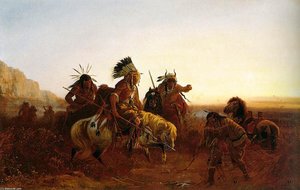
carl wimar
1828 - 1862 , Germany
Lyhyesti esiteltynä
- Artistic Movement Or Style: Romanticism
- Artists Or Movements Influenced By This Artist: ['Düsseldorf School']
- Artists Who Influenced This Artist: ['Emanuel Leutze']
- Date Of Birth: February 20, 1828
- Full Name: Karl Ferdinand Wimar
- Nationality: German-American
- Notable Artworks:
- The Abduction of Boone's Daughter by the Indians
- The Lost Trail
- Place Of Birth: Siegburg, Germany

