

 Katso seinällä
 Lähetä
 Jaa
Jaa
 Tarkemmat tiedot
 Guide
Guide

 Lataa kuva
 Samanlaisia kohteita
 Röntgenkuvaus
 Diaesitys
 Tilastot
William Henry Hastie


 Lue lisää
Osta korkearesoluutioinen, parannettu digitaalikuva, joka on laadultaan huomattavasti parempi kuin verkkosivuston esikatselu.
Jokainen tiedosto valmistellaan huolellisesti omien asiantuntijoidemme toimesta käyttäen edistyneitä työkaluja ja ammattitaitoista manuaalista retusointia. Varmistamme, että jokaisessa kuvassa on poikkeuksellinen selkeys, tarkka värintoisto ja hienovaraiset yksityiskohdat.
Lopputiedosto toimitetaan sähköpostitse 72 tunnin kuluessa, ja se on optimoitu välittömään käyttöön ammattimaisissa, toimituksellisissa ja painoympäristöissä. Laatu on sama, johon huipputason suunnittelustudiot, kustantajat ja galleriat luottavat.
Digitaalinen kuva
Lataa korkearesoluutioinen tiedosto henkilökohtaiseen näyttelyyn, tulostamiseen ja luoviin projekteihin. ( Vaihda tulosteeseen Tilaa käsinmaalattu jäljennös)
Sisältyy jokaiseen digitaalisen kuvan tilaukseen
Asiantunteva digitaalinen toimitus, laatu taattu
Kun valitset OriginalUniqueArt.com-palvelun, et saa vain kuvaa – saat ammattimaisesti viimeistellyn digitaalisen taideteoksen, joka on luotu tarkkuudella ja jonka takaa tulee tyytyväisyystakuu. Tässä on kaikki, mitä tilauksesi sisältää, automaattisesti:

Nopea sähköpostitoimitus
Saat korkearesoluutioisen digitaalisen kuvatiedostosi sähköpostiisi 72 tunnin kuluessa tilauksesta – valmiina käytettäväksi välittömästi.

Tekoälyllä optimoitu digitaalinen tiedosto
Teoksesi on optimoitu ammattimaisesti edistyneiden tekoälytyökalujen ja manuaalisen jälkikäsittelyn avulla, mikä takaa maksimaalisen yksityiskohtaisuuden, selkeyden ja väritarkkuuden.

Ilmainen elinikäinen uudelleenlähetys
Oletko vahingossa poistanut tai kadottanut tiedostosi? Ei hätää – lähetämme sen sinulle uudelleen milloin tahansa täysin maksutta.

Ei tuontimaksuja – koskaan
Nauti taiteestasi välittömästi ilman tullimaksuja, veroja tai toimituskuluja – digitaaliset lataukset ovat aina verovapaita.

Värintoiston tarkkuustakuu
Varmistamme, että digitaalinen kuvasi vastaa alkuperäisiä värejä mahdollisimman tarkasti käyttämällä ammattilaistason työkaluja ja värinhallintaa.

100 päivän tyytyväisyystakuu
Jos et ole tyytyväinen digitaaliseen kuvaasi, muokkaamme sitä tai palautamme 100% hinnan 100 päivän kuluessa – kysymystä ei esitetä.

100% Rahat takaisin -takuu
Et ole tyytyväinen? Saat täyden hyvityksen 100 päivän kuluessa digitaalisen tiedostosi vastaanottamisesta – kysymystä ei esitetä.

Suurtilaaja-alennukset
Osta 3 kuvaa, säästä 10% - Osta 5, säästä 15% - Osta 10+, säästä 20%. Erinomainen valinta luoviin projekteihin, gallerioille ja toimistoille.
William Henry Hastie: A Portrait of Dignity and Progress
The William Henry Hastie portrait, painted by Betsy Graves Reyneau in 1944, stands as a powerful testament to both artistic skill and historical significance. This oil on canvas artwork, currently residing within the esteemed collection of the Hirshhorn Museum and Sculpture Garden in the United States, captures a pivotal moment in American history and celebrates the achievements of an extraordinary individual. As an art expert for OriginalUniqueArt.com, I am delighted to share insights into this remarkable piece.
The Artist and Her Vision
Betsy Graves Reyneau (1880-1964) was a dedicated American painter recognized for her compelling series of portraits depicting prominent African Americans. Her work gained prominence through the exhibition "Portraits of Outstanding Americans of Negro Origin," a project that aimed to showcase the contributions and achievements of Black individuals in America. Reyneau's artistic vision centered on capturing not just likeness, but also the essence and character of her subjects with grace and poise. She faced personal adversity, defying societal expectations to pursue her passion for art, and later became an active participant in civil rights causes. Her grandfather was Michigan Supreme Court Justice Benjamin F. Graves, a connection that subtly influenced her artistic journey.
A Detailed Examination of the Painting
The portrait depicts William Henry Hastie seated comfortably in a chair, his hands crossed with an air of quiet confidence and sophistication. The composition is carefully balanced, drawing attention to Hastie's dignified presence. The background features a wall adorned with classic wood paneling, adding a touch of timeless elegance to the scene. Reyneau’s masterful use of oil on canvas creates a rich, textured surface that invites close inspection. The lighting is dramatic and deliberate, highlighting Hastie’s facial features and casting subtle shadows that enhance the sense of depth and realism. The inclusion of a cigarette held delicately in his hand adds a layer of complexity – perhaps symbolizing sophistication or a contemplative nature.
Historical Context and Significance
This portrait transcends mere representation; it is an important historical document. William Henry Hastie was a trailblazer, the first African American to serve as a federal judge and Governor of the United States Virgin Islands. His career exemplified dedication to justice and equality during a period of significant racial discrimination. The painting's inclusion in the "Portraits of Outstanding Americans of Negro Origin" exhibition played a crucial role in raising awareness and fostering appreciation for African American accomplishments, challenging prevailing prejudices and celebrating Black excellence. It stands as a visual representation of progress and resilience within the context of mid-20th century America.
Emotional Impact and Artistic Merit
Beyond its historical importance, the William Henry Hastie portrait evokes a profound sense of dignity, authority, and quiet contemplation. Reyneau’s skill in capturing Hastie's character shines through – conveying not only his professional stature but also an underlying strength and intelligence. The painting’s realism, combined with the subtle theatrical lighting, creates a captivating visual experience that resonates deeply with viewers. It is a testament to the power of art to both document history and inspire admiration for individuals who have made significant contributions to society.
- View more paintings by Betsy Graves Reyneau on https://OriginalUniqueArt.com.
- Learn about the Hirshhorn Museum and Sculpture Garden and its collection: /art/list/?Filter=AQSDFX-Betsy-Graves-Reyneau-Charles-Hamilton-Houston.
Taiteilijan elämäkerta
A Legacy of Dignity: The Life and Art of Betsy Graves Reyneau
In the tapestry of American art history, few threads are as poignant or as purposeful as those woven by Betsy Graves Reyneau. Born in 1888 in Battle Creek, Michigan, Reyneau was a woman whose life was defined by a profound defiance of the status quo. Growing up under the intellectual influence of her father’s legal profession and the prestigious lineage of her grandfather, Michigan Supreme Court Justice Benjamin F. Graves, she possessed an early inclination toward justice and formal excellence. Yet, her path was not one of easy conformity; she famously navigated societal expectations and familial disapproval to claim her place in the world of fine art. Her journey took her from the rigorous studios of the School of the Museum of Fine Arts in Boston to the culturally rich landscapes of France, where she immersed herself in European traditions, eventually returning to the United States with a refined mastery of realism and an eye for the subtle nuances of the human spirit.
Reyneau’s artistry was never merely about the replication of form; it was an act of profound social witness. During an era when the narratives of African Americans were often marginalized or distorted, she utilized her brush to assert their undeniable dignity. Her most significant contribution to the American canon emerged through her collaboration with the Harmon Foundation during the monumental “Portraits of Outstanding Americans of Negro Origin” exhibition series, which toured from 1944 to 1954. Alongside fellow artist Laura Wheeler Waring, Reyneau undertook a sacred task: capturing the essence of Black excellence. Through her meticulous attention to detail and her ability to convey character through light and shadow, she transformed portraiture into a tool for civil rights advocacy, ensuring that the faces of leadership and intellect were etched permanently into the national consciousness.
Mastery of the Portrait and Historical Significance
The technical brilliance of Reyneau’s work lies in her ability to blend photorealism with an emotive depth that transcends simple likeness. Her portraits are characterized by a sense of quiet strength and poise, achieved through a masterful command of oil on canvas. When one examines her depictions of historical titans, the texture of the paint and the deliberate use of lighting serve to elevate the subject beyond the temporal. Her work does not merely document a face; it documents a legacy. This is perhaps most evident in her iconic portrait of George Washington Carver. This piece was not only a triumph of her realist technique but also a landmark moment in American curation, as it represented the first portrait of an African American to enter a national American collection, signaling a seismic shift in the recognition of Black contributions to the nation's cultural fabric.
Her oeuvre serves as a gallery of the most influential figures of her time, creating a visual pantheon of progress. Her subjects included:
- Mary McLeod Bethune: Captured with the grace and authority of a foundational leader in education and civil rights.
- Joe Louis: Rendered with a strength that mirrored his status as a global icon of resilience.
- Thurgood Marshall: Portrayed with the intellectual gravity that would later define his role in the Supreme Court.
- William Henry Hastie: A study in dignity and sophistication, currently preserved in the esteemed Hirshhorn Museum.
Beyond the canvas, Reyneau’s life was an extension of her art. As a suffragette and a dedicated advocate for equality, she lived the principles of justice that she painted. Her work remains a vital bridge between the struggle for civil rights and the evolution of American portraiture. To look upon a Reyneau portrait is to witness a moment of historical reclamation—a time when the brush was used to demand that the world see, recognize, and respect the profound humanity of all its citizens.
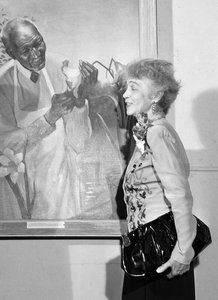
Betsy Graves Reyneau
1880 - 1964 , United States of America
Pähkinänkuoressa
- Artistic Movement Or Style: Realism
- Date Of Birth: 1880
- Date Of Death: 1964
- Full Name: Betsy Graves Reyneau
- Nationality: American
- Notable Artworks: ['Portraits of Outstanding Americans of Negro Origin']
- Place Of Birth: Battle Creek, United States