
 Esikatselu
 Jaa teos
 Jaa
Jaa
 Tiedot
 Opas
Opas

 Lataa kuva
 Samanlaisia kohteita
 Röntgenkuvaus
 Diaesitys
 Tilastot
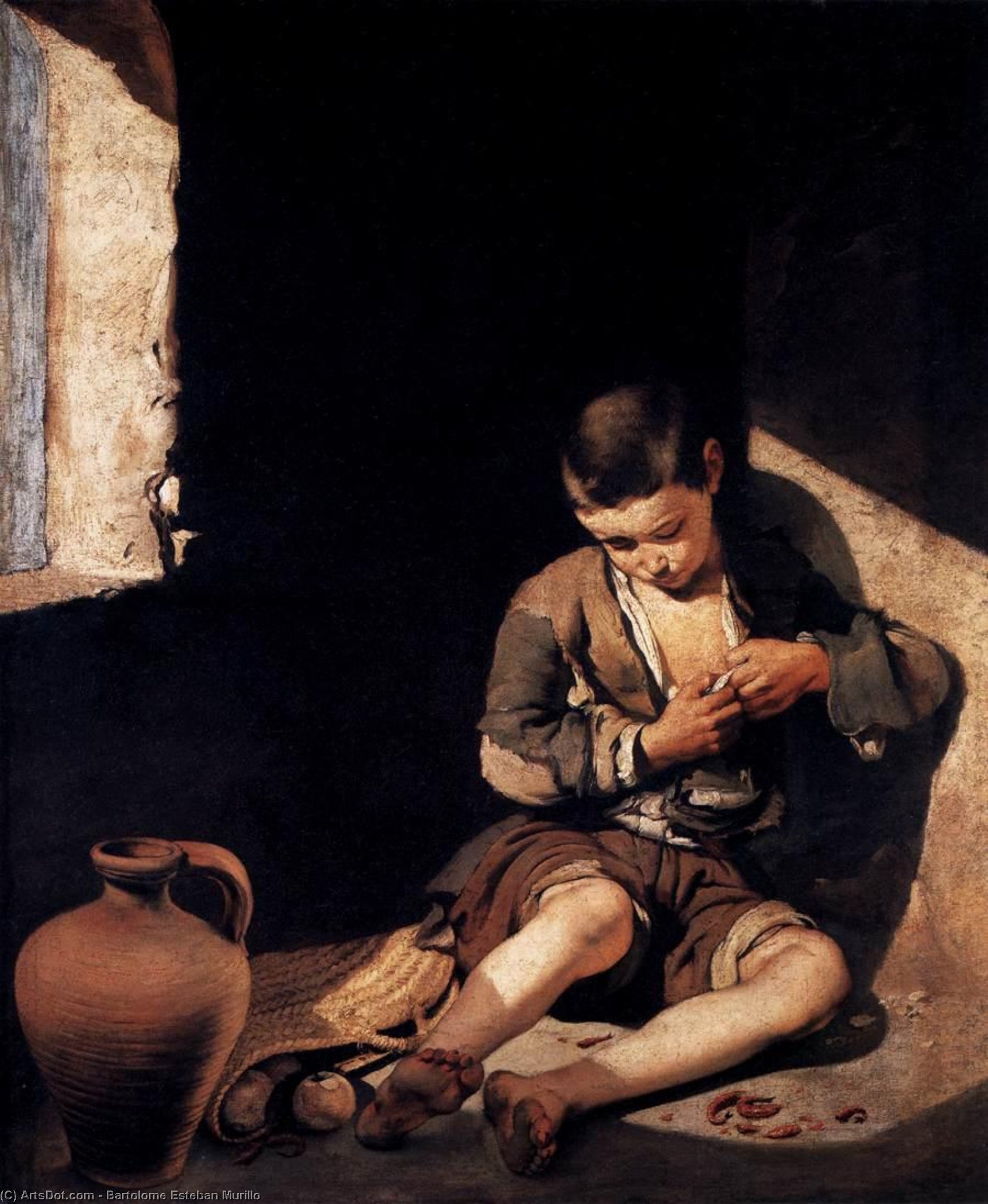
The Young Beggar
 Oil On Canvas
- WallArt
- Baroque
 1650
1650- Early Modern
 134.0 x 100.0 cm
 Lue lisää
Saat tulostusvalmiin tiedoston, jonka laatu ylittää verkkonäkymän huomattavasti. Jokainen myymämme digitaalinen kuva on peräisin arkistomme korkearesoluutioisesta mestariteoksesta — yleensä 5 000–15 000 pikselin levyisenä — joten voit tulostaa suuria kokoja, rajata tiukasti tai toistaa hienovaraiset yksityiskohdat luottavaisin mielin.
Mikään tiedosto ei lähde studiostamme muuttamatta. Digitaalinen asiantuntija vertaa värejä alkuperäiseen maalaukseen ja korjaa niitä tarvittaessa, minkä jälkeen hän parantaa kuvan selkeyttä ja yksityiskohtia ammattimaisilla retusointityökaluilla — säilyttäen aina uskollisena taiteilijan siveltimenjäljen ja tyylin. Lopputuloksena on kuva, joka näyttää maalauselta, eikä suodatetulta skannaukselta.
Hyväksyt työn ennen valmistumistaan: asiantuntijamme lähettää kuvan tarkistettavaksi sähköpostitse 72 tunnin kuluessa. Etkö ole tyytyväinen? Pyydä parannuksia tai korjauksia, tai pyydä hyvitystä, mikäli laatu ei vastaa odotuksia.
Tämä on laatua, johon kustantamot, design-studiot, galleriat ja painotalot luottavat.
Digitaalinen kuva
Lataa korkearesoluutioinen tiedosto henkilökohtaiseen näyttelyyn, tulostamiseen ja luoviin projekteihin. ( Vaihda tulosteeseen Osta käsinmaalattu taideteos)
Sisältyy jokaiseen digitaalisen kuvan tilaukseen
Asiantunteva digitaalinen toimitus, laatu taattu
Kun valitset OriginalUniqueArt.com-palvelun, et saa vain kuvaa – saat ammattimaisesti viimeistellyn digitaalisen taideteoksen, joka on luotu tarkkuudella ja jonka takaa tulee tyytyväisyystakuu. Tässä on kaikki, mitä tilauksesi sisältää, automaattisesti:

Nopea sähköpostitoimitus
Saat korkearesoluutioisen digitaalisen kuvatiedostosi sähköpostiisi 72 tunnin kuluessa tilauksesta – valmiina käytettäväksi välittömästi.

Tekoälyllä parannettu digitaalinen tiedosto
Teoksesi on optimoitu ammattimaisesti edistyneiden tekoälytyökalujen ja manuaalisen jälkikäsittelyn avulla, mikä takaa maksimaalisen yksityiskohtaisuuden, selkeyden ja väritarkkuuden.

Ilmainen uudelleenlähetys elinikäisesti
Oletko vahingossa poistanut tai kadottanut tiedostosi? Ei hätää – lähetämme sen sinulle uudelleen milloin tahansa täysin maksutta.

Ei tuontimaksuja – koskaan
Nauti taiteestasi välittömästi ilman tullimaksuja, veroja tai toimituskuluja – digitaaliset lataukset ovat aina verovapaita.

Värintoiston tarkkuustakuu
Varmistamme, että digitaalinen kuvasi vastaa alkuperäisiä värejä mahdollisimman tarkasti käyttämällä ammattilaistason työkaluja ja värinhallintaa.

100 päivän tyytyväisyystakuu
Jos et ole tyytyväinen digitaaliseen kuvaasi, muokkaamme sitä tai palautamme 100% hinnan 100 päivän kuluessa – kysymystä ei esitetä.

100% Rahat takaisin -takuu
Et ole tyytyväinen? Saat täyden hyvityksen 100 päivän kuluessa digitaalisen tiedostosi vastaanottamisesta – kysymystä ei esitetä.

Määräalennukset
Osta 3 kuvaa, säästä 10% - Osta 5, säästä 15% - Osta 10+, säästä 20%. Erinomainen valinta luoviin projekteihin, gallerioille ja toimistoille.
A Boy in the Shadows
A single light source falls from above and to the right, striking the skin of a young boy seated on the ground. He occupies a dimly lit interior, his small frame positioned slightly off-center within the frame. His hands are occupied with a quiet, focused task: searching for and removing lice from his clothing. This act of self-grooming occurs amidst the debris of survival. To his left, a large earthenware jug provides a heavy, cylindrical weight to the composition. Nearby, a basket spills apples onto the floor, and the remains of a prawn or crab lie scattered near his bare, dirty feet. The room is filled with earthy tones—browns, tans, and muted reds—that settle into the deep shadows cast against the wall.
The Weight of Seville
The year is 1650, and the streets of Seville hold many such orphaned children. This painting captures a moment of survival in seventeenth-century Spain, where poverty was a constant presence. The boy's clothes are torn and patched with scraps of other rags, reflecting the harsh reality of life for the street urchins of the era. Through the use of chiaroscuro, the artist creates a sharp contrast between the bright highlights on the boy's shirt and the heavy darkness of the background. The technique involves layering thin glazes of oil paint to achieve soft, naturalistic skin tones and the rough texture of the ceramic pot. There is a quiet dignity in his posture, even as he attends to the pests clinging to his body. A heavy silence rests upon the room.
Kysymykset ja vastaukset
Mistä maasta Baroque-tyylinen teos "The Young Beggar" on peräisin?
The Young Beggar on Bartolomé Esteban Murillo tekemä teos, joka on syntynyt Baroque-suuntauksen vaikutuksesta; taiteilija on kotoisin Espanja. Taiteilijan alkuperä yhdistää teoksen Baroque-tyyliin, jota Espanja-maasta kotoisin olevat taiteilijat edustavat.
Mikä painokoko on suositeltava teokselle Bartolomé Esteban Murillo:n "The Young Beggar"?
Bartolomé Esteban Murillo:n "The Young Beggar"-teokselle suositellaan Large kokoista jäljennöstä. Kokoa voidaan muuttaa säilyttäen alkuperäiset kuvasuhteet.
Mihin vaiheeseen Bartolomé Esteban Murillo urasta teos "The Young Beggar" sijoittuu, kun otetaan huomioon sen valmistumispäivämäärä?
Teoksen 1650 valmistumisvuoden perusteella "The Young Beggar" sijoittuu Bartolomé Esteban Murillo:n tuotantokaudelle Baroque.
Taiteilijan esittely
A Life Bathed in Andalusian Light
Bartolomé Esteban Murillo, a name synonymous with the golden age of Spanish Baroque painting, emerged from the vibrant heart of Seville in 1618. His life, though marked by personal tragedy and societal shifts, blossomed into an artistic career that captured the spirit of his time—a period of religious fervor, social change, and burgeoning artistic innovation. Born to Gaspar Esteban, a barber-surgeon, and María Pérez Murillo, within a large family of fourteen children, young Bartolomé experienced early loss with the passing of both parents in quick succession during his childhood. This hardship led him into the guardianship of his sister’s husband, Juan Agustín Lagares, a pivotal figure who would indirectly guide his artistic path. Murillo's initial training began under Juan del Castillo, a local artist and relative through his mother, laying the foundation for a style that would eventually become uniquely his own. The early years were steeped in the realist traditions prevalent in Seville, absorbing influences from masters like Zurbarán, Ribera, and Cano—artists who prioritized stark realism and dramatic intensity. However, Murillo’s genius lay not in mere imitation but in transforming these foundations into something softer, more luminous, and profoundly human.From Realism to Radiant Grace
Murillo's artistic journey wasn’t a sudden leap to fame but rather an evolution marked by distinct phases. His early works, heavily influenced by the austere realism of his contemporaries, showcased a meticulous attention to detail and a somber palette. Young Man with a Basket of Fruit (Personification of Summer), created around 1640-50, exemplifies this period—a grounded depiction of everyday life rendered with remarkable precision. The figures are depicted in natural light, capturing the essence of the season. Yet, even in these early pieces, hints of the tenderness and emotional depth that would define his mature style began to emerge. The Young Beggar, painted circa 1645, demonstrates a growing sensitivity towards human suffering, echoing the influence of Velázquez’s masterful portrayals of everyday people. The painting captures the vulnerability and quiet dignity of a young child in poverty, a theme that would recur throughout Murillo's career. As Murillo matured, his style underwent a remarkable transformation. He moved away from the stark realism of his predecessors, embracing a more polished and refined aesthetic that resonated with the tastes of Seville’s burgeoning bourgeois and aristocratic classes. This shift was particularly evident in his religious works, where he infused traditional iconography with an unprecedented sense of warmth, grace, and emotional accessibility. St. Jerome, painted between 1650-52, stands as a testament to this mature style—a softly luminous depiction that radiates serenity and devotion. The figure is bathed in golden light, conveying a profound sense of contemplation and spiritual peace.A Master of Religious Sentiment and Genre Scenes
Murillo’s artistic output was remarkably diverse, encompassing religious paintings, genre scenes, portraits, and mythological subjects. However, he is most celebrated for his depictions of the Immaculate Conception—a subject that captivated him throughout his career and resulted in numerous variations, each imbued with a unique sense of ethereal beauty. These works, characterized by their delicate brushwork, luminous colors, and graceful compositions, became immensely popular and established Murillo as the preeminent painter of religious imagery in Spain. He skillfully blended traditional iconography with a deeply human touch, creating images that were both reverent and emotionally engaging. Beyond his sacred subjects, Murillo also excelled at capturing the everyday lives of ordinary people. His genre scenes—depictions of flower girls, street urchins, and beggars—offer a poignant glimpse into the social realities of 17th-century Seville. These paintings are not merely observational studies; they are imbued with a deep sense of empathy and compassion, elevating the humble subjects to a level of dignity and grace. He possessed an extraordinary ability to capture the innocence of childhood, portraying young children with remarkable realism and tenderness. The figures in these scenes often interact with each other, creating a sense of community and shared humanity.Influences and Development
Murillo’s artistic development was shaped by a complex interplay of influences. Initially, he absorbed the stark realism and tenebrist techniques of masters like Zurbarán and Ribera, artists who dominated the Seville art scene in the preceding decades. However, Murillo quickly distinguished himself through his softer palette, luminous colors, and emphasis on human emotion—qualities that set him apart from his predecessors. A pivotal moment in his artistic evolution occurred during a visit to Madrid in 1658, where he encountered the works of Titian, Rubens, and Van Dyck. These encounters profoundly influenced his style, leading him to adopt a more dynamic composition, richer colors, and a greater sense of elegance. He also drew inspiration from the religious art of the Venetian Renaissance, particularly its emphasis on beauty, grace, and emotional intensity. Murillo’s style evolved over time, reflecting both his artistic influences and his own personal vision. His early works are characterized by their meticulous detail and somber palette, while his later paintings are marked by a greater sense of light, color, and emotional warmth.Legacy and Enduring Influence
Bartolomé Esteban Murillo’s impact on the course of Spanish art—and indeed, European painting—is undeniable. He established a distinctive style that blended religious devotion with humanistic sentiment, creating works that resonated deeply with audiences across social strata. His influence extended far beyond his native Spain, inspiring generations of artists throughout Europe. Gainsborough and Greuze, among others, acknowledged their debt to Murillo’s luminous style and sensitive portrayals of human emotion. He trained numerous pupils in his Seville workshop, ensuring the continuation of his artistic legacy. His paintings can be found in prestigious museums worldwide, including the Museo del Prado in Madrid, the Hermitage Museum in Saint Petersburg, the Wallace Collection in London, and the Timken Museum of Art in San Diego—testaments to his enduring appeal and historical significance. Murillo’s art continues to captivate viewers with its beauty, grace, and profound humanity, solidifying his place as one of the most beloved and influential painters of the Spanish Baroque period. His ability to infuse religious imagery with emotional depth and portray everyday life with empathy ensures that his work remains relevant and inspiring centuries after his death in 1682.
Bartolomé Esteban Murillo
1618 - 1682 , Espanja
Pähkinänkuoressa
- Artistic Movement Or Style: Barokki
- Artists Or Movements Influenced By This Artist:
- Gainsborough
- Greuze
- Artists Who Influenced This Artist:
- Zurbarán
- Ribera
- Date Of Birth: 1. tammikuuta 1618
- Date Of Death: 3. huhtikuuta 1682
- Full Name: Bartolomé Esteban Murillo
- Nationality: Espanjalainen
- Notable Artworks:
- Immakula
- Nuori tyttö
- Jeremia
- Place Of Birth: Sevilla, Espanja