

 Katso seinällä
 Lähetä
 Jaa
Jaa
 Tarkemmat tiedot
 Opas
Opas

 Lataa kuva
 Samanlaisia kohteita
 Röntgenkuvaus
 Diaesitys
 Tilastot
The Two Trinities
 Oil On Canvas
- WallArt
- Baroque
 1682
1682- Early Modern
 293.0 x 207.0 cm
 Lue lisää
Käsinmaalattu öljyvärinen jäljennös
Käsinmaalattu öljyväri kankaalle haluamassasi koossa ja kehyksissä, taiteilijoidemme valmistamana tilauksesta. ( Vaihda tulosteeseen Siirry digitaaliseen kuvaan)




P118B €10

P118H €10

P118W €10

P438Z €10

P508JH €12

P508YH €12

P805H €10

P805Z €10

P919BZ €10

P919G €10

P919XJ €10

P959ZH €10

P968JZ €12

W106C €8

W218G €10

W218JH €8

W218Y €10

W307PJ €10

W316G €10

W316PJ €8

W316Y €10

W398PJ €8

W4111J €10

W500HY €15

W500JH €15

W692G €12

W849H €8

W940BG €15

W953PJ €8




Valitse valmiista mitoistamme sellaiset, jotka vastaavat teoksen alkuperäisiä mittasuhteita.

Voit syöttää omat mitat sopimaan tiettyyn kehykseen tai tilaan. Jos valitsemasi koko ei vastaa alkuperäisen kuvan mittasuhteita, rajaamme taideteoksen tai jatkamme maalausta käsin maalatuilla elementeillä. Digitaalinen esikatselu lähetetään hyväksyttäväksi ennen tuotannon aloittamista.
Huomioithan, että näytöllä oleva esikatselu ei vastaa todellista rajausta tai jatkamista. Vain digitaalinen mallikuva näyttää lopullisen sommittelun tarkasti.
Vaikka mittatilaustyöt ovat mahdollisia, suosittelemme valitsemaan mitan ennalta määritetystä listasta alkuperäisten mittasuhteiden säilyttämiseksi.
Tilauksen jälkeen OriginalUniqueArt.com -tiimi lähettää asiakkaalle sähköpostitse ohjeet ja esikatselukuvan.
Maailmanlaajuinen toimitus () 3–4 viikossa tavallisen 5 viikon sijaan. (13 lokakuu). Laadusta ei tingitä.

Ilmainen pikatoimitus ympäri maailman

Korkealaatuinen pellavakangas

Kattava kuljetusvakuutus

Tulliveron palautustakuu

Takuu täydellisestä värien vastaavuudesta

100 päivän palautusoikeus valmistusvirhetapauksissa

100% rahat takaisin -takuu

Määräalennus saatavilla
 Lasivaihtoehto on saatavilla vain alle 110 cm kokoisille teoksille

The Two Trinities
Reproduktiotapa
Replikaatin koko
-


Kokonaishinta
€ 302
The Two Trinities: A Baroque Masterpiece by Murillo
Bartolomé Esteban Murillo's "The Two Trinities," painted in 1682, stands as a pinnacle of Spanish Baroque art. This oil on canvas (measuring 293 x 207 cm) is housed within the National Gallery and exemplifies the era’s dramatic style, rich colors, and profound religious symbolism. The painting depicts a scene centered around the Holy Family – Mary, Jesus, and Joseph – enveloped by celestial figures, creating a powerful visual narrative of faith and divine grace.
Composition and Symbolism
The composition is meticulously structured, employing a pyramidal arrangement that draws the viewer's eye towards Christ Child at the apex. Mary kneels in reverent prayer, her gaze fixed upon Jesus, while Joseph stands beside her, offering a gesture of blessing. The background teems with swirling clouds populated by cherubic angels and illuminated by a radiant dove – a potent symbol of the Holy Spirit. This arrangement visually represents the two trinities: the Holy Trinity (God the Father, Jesus Christ, and the Holy Spirit) and the earthly trinity (the Virgin Mary, Jesus, and Saint Joseph). The stepped platform upon which the figures stand elevates their importance, reinforcing the sacred nature of the scene.
- Earth Tones: The painting’s palette is dominated by warm earth tones – reds, oranges, and browns – creating a sense of warmth and inviting reverence.
- Cherubic Angels: Numerous cherubs populate the background, enhancing the overall religious theme and adding to the ethereal atmosphere.
- Holy Family Depiction: The central focus on the Virgin Mary and Jesus emphasizes their pivotal roles in Christian theology.
Artistic Style and Technique
Murillo’s style is firmly rooted in the Baroque tradition, characterized by its dramatic use of light and shadow (chiaroscuro) to create a sense of depth and emotional intensity. The lighting emanates from above, highlighting key figures and intensifying the contrasts between light and dark areas. While perspective is somewhat flattened – a common feature of Baroque painting prioritizing emotional impact over strict realism – atmospheric perspective suggests depth through muted colors and less detailed rendering in distant elements. Murillo’s technique showcases smooth brushstrokes and rich pigment layering, typical of oil on canvas paintings. Textures range from the soft folds of drapery to the rougher surfaces of clouds and angels.
Historical Context and Emotional Impact
Created during a period of intense religious fervor in Spain, "The Two Trinities" reflects the Counter-Reformation’s emphasis on emotional engagement with faith. Murillo's work aimed to inspire devotion through its beauty and accessibility. The painting evokes feelings of serenity, reverence, and awe. It invites viewers to contemplate the divine presence within the human realm, offering a moment of spiritual reflection. Murillo's ability to portray tenderness and grace in religious subjects made him one of the most celebrated painters of his time, and this work remains a testament to his skill and enduring legacy.
Kysymykset ja vastaukset
Miltä aikakaudelta Bartolomé Esteban Murillo:n "The Two Trinities" on peräisin?
"The Two Trinities" kuuluu Early Modern aikakauteen.
Voinko tutkia teosta "The Two Trinities" yksityiskohtaisemmin?
Teosta "The Two Trinities" voi tutkia kerros kerrokselta teoksen X-säteily -sivulla, joka on interaktiivinen katselija ja konservointityön valupöytää mukaillen luotu näkymä, sisältäen yksitoista kuvan optista kerrosta.
Ovatko teoksen Bartolomé Esteban Murillo:n "The Two Trinities" värit kylläisiä vai hillittyjä?
Teoksen Bartolomé Esteban Murillo:n "The Two Trinities" väreissä on Balanced Soft kylläisyys. Kylläisyys kuvaa värien voimakkuutta tai himmeyttä.
Miksi teoksen "The Two Trinities" tekijänoikeustila on sellainen kuin se on?
Bartolomé Esteban Murillo teos "The Two Trinities" on tekijänoikeusvapaa – sen tekijänoikeussuoja on päättynyt. Tekijänoikeusajat lasketaan taiteilijan kuolinvuodesta, ja Bartolomé Esteban Murillo kuoli vuonna 1682.
Onko Bartolomé Esteban Murillo:n "The Two Trinities" -teoksesta saatavilla tietolomaketta opiskelijoille?
Teoksesta Bartolomé Esteban Murillo:n "The Two Trinities" on saatavilla Opas -sivu: tulostettava tietolomake teoksesta, joka on suunniteltu opiskelijoita ja luokkahuonekäyttöä varten.
Missä asennossa Bartolomé Esteban Murillo:n "The Two Trinities" on?
Bartolomé Esteban Murillo:n "The Two Trinities" on Portrait-muotoinen sommitelma. Suhteet kannattaa tarkistaa ennen tulostekoon valitsemista.
Mikä on teoksen Bartolomé Esteban Murillo:n "The Two Trinities" luminanssi?
Teoksen Bartolomé Esteban Murillo:n "The Two Trinities" luminanssi on Soft Shadow.
Mistä "The Two Trinities" kertoo?
Teoksen "The Two Trinities" aiheina ovat religious, holy family, trinity, angels, baroque, virgin mary, jesus, joseph.
Taiteilijan elämäkerta
A Life Bathed in Andalusian Light
Bartolomé Esteban Murillo, a name synonymous with the golden age of Spanish Baroque painting, emerged from the vibrant heart of Seville in 1618. His life, though marked by personal tragedy and societal shifts, blossomed into an artistic career that captured the spirit of his time—a period of religious fervor, social change, and burgeoning artistic innovation. Born to Gaspar Esteban, a barber-surgeon, and María Pérez Murillo, within a large family of fourteen children, young Bartolomé experienced early loss with the passing of both parents in quick succession during his childhood. This hardship led him into the guardianship of his sister’s husband, Juan Agustín Lagares, a pivotal figure who would indirectly guide his artistic path. Murillo's initial training began under Juan del Castillo, a local artist and relative through his mother, laying the foundation for a style that would eventually become uniquely his own. The early years were steeped in the realist traditions prevalent in Seville, absorbing influences from masters like Zurbarán, Ribera, and Cano—artists who prioritized stark realism and dramatic intensity. However, Murillo’s genius lay not in mere imitation but in transforming these foundations into something softer, more luminous, and profoundly human.From Realism to Radiant Grace
Murillo's artistic journey wasn’t a sudden leap to fame but rather an evolution marked by distinct phases. His early works, heavily influenced by the austere realism of his contemporaries, showcased a meticulous attention to detail and a somber palette. Young Man with a Basket of Fruit (Personification of Summer), created around 1640-50, exemplifies this period—a grounded depiction of everyday life rendered with remarkable precision. The figures are depicted in natural light, capturing the essence of the season. Yet, even in these early pieces, hints of the tenderness and emotional depth that would define his mature style began to emerge. The Young Beggar, painted circa 1645, demonstrates a growing sensitivity towards human suffering, echoing the influence of Velázquez’s masterful portrayals of everyday people. The painting captures the vulnerability and quiet dignity of a young child in poverty, a theme that would recur throughout Murillo's career. As Murillo matured, his style underwent a remarkable transformation. He moved away from the stark realism of his predecessors, embracing a more polished and refined aesthetic that resonated with the tastes of Seville’s burgeoning bourgeois and aristocratic classes. This shift was particularly evident in his religious works, where he infused traditional iconography with an unprecedented sense of warmth, grace, and emotional accessibility. St. Jerome, painted between 1650-52, stands as a testament to this mature style—a softly luminous depiction that radiates serenity and devotion. The figure is bathed in golden light, conveying a profound sense of contemplation and spiritual peace.A Master of Religious Sentiment and Genre Scenes
Murillo’s artistic output was remarkably diverse, encompassing religious paintings, genre scenes, portraits, and mythological subjects. However, he is most celebrated for his depictions of the Immaculate Conception—a subject that captivated him throughout his career and resulted in numerous variations, each imbued with a unique sense of ethereal beauty. These works, characterized by their delicate brushwork, luminous colors, and graceful compositions, became immensely popular and established Murillo as the preeminent painter of religious imagery in Spain. He skillfully blended traditional iconography with a deeply human touch, creating images that were both reverent and emotionally engaging. Beyond his sacred subjects, Murillo also excelled at capturing the everyday lives of ordinary people. His genre scenes—depictions of flower girls, street urchins, and beggars—offer a poignant glimpse into the social realities of 17th-century Seville. These paintings are not merely observational studies; they are imbued with a deep sense of empathy and compassion, elevating the humble subjects to a level of dignity and grace. He possessed an extraordinary ability to capture the innocence of childhood, portraying young children with remarkable realism and tenderness. The figures in these scenes often interact with each other, creating a sense of community and shared humanity.Influences and Development
Murillo’s artistic development was shaped by a complex interplay of influences. Initially, he absorbed the stark realism and tenebrist techniques of masters like Zurbarán and Ribera, artists who dominated the Seville art scene in the preceding decades. However, Murillo quickly distinguished himself through his softer palette, luminous colors, and emphasis on human emotion—qualities that set him apart from his predecessors. A pivotal moment in his artistic evolution occurred during a visit to Madrid in 1658, where he encountered the works of Titian, Rubens, and Van Dyck. These encounters profoundly influenced his style, leading him to adopt a more dynamic composition, richer colors, and a greater sense of elegance. He also drew inspiration from the religious art of the Venetian Renaissance, particularly its emphasis on beauty, grace, and emotional intensity. Murillo’s style evolved over time, reflecting both his artistic influences and his own personal vision. His early works are characterized by their meticulous detail and somber palette, while his later paintings are marked by a greater sense of light, color, and emotional warmth.Legacy and Enduring Influence
Bartolomé Esteban Murillo’s impact on the course of Spanish art—and indeed, European painting—is undeniable. He established a distinctive style that blended religious devotion with humanistic sentiment, creating works that resonated deeply with audiences across social strata. His influence extended far beyond his native Spain, inspiring generations of artists throughout Europe. Gainsborough and Greuze, among others, acknowledged their debt to Murillo’s luminous style and sensitive portrayals of human emotion. He trained numerous pupils in his Seville workshop, ensuring the continuation of his artistic legacy. His paintings can be found in prestigious museums worldwide, including the Museo del Prado in Madrid, the Hermitage Museum in Saint Petersburg, the Wallace Collection in London, and the Timken Museum of Art in San Diego—testaments to his enduring appeal and historical significance. Murillo’s art continues to captivate viewers with its beauty, grace, and profound humanity, solidifying his place as one of the most beloved and influential painters of the Spanish Baroque period. His ability to infuse religious imagery with emotional depth and portray everyday life with empathy ensures that his work remains relevant and inspiring centuries after his death in 1682.
Bartolomé Esteban Murillo
1618 - 1682 , Espanja
Tietoa taiteilijasta
- Artistic Movement Or Style: Barokki
- Artists Or Movements Influenced By This Artist:
- Gainsborough
- Greuze
- Artists Who Influenced This Artist:
- Zurbarán
- Ribera
- Date Of Birth: 1. tammikuuta 1618
- Date Of Death: 3. huhtikuuta 1682
- Full Name: Bartolomé Esteban Murillo
- Nationality: Espanjalainen
- Notable Artworks:
- Immakula
- Nuori tyttö
- Jeremia
- Place Of Birth: Sevilla, Espanja
Aiheeseen liittyvät artikkelit

Bartolomé Esteban Murillo: Divine Light & Social Commentary in Golden Age Seville
Explore the captivating world of Bartolomé Esteban Murillo, a master of Spanish Baroque painting. Discover his luminous religious scenes, tender genre paintings & lasting legacy in Golden Age Seville. Learn more at OriginalUniqueArt.

The Dramatic Flourish: Exploring the Baroque Movement's Enduring Legacy in Art History
Explore the dramatic world of Baroque art! Discover iconic artists like Caravaggio & Rubens, defining techniques, and its lasting impact on art history. Expert insights for collectors & enthusiasts at OriginalUniqueArt.

Theatricality & Triumph: Baroque Drama in Painting & Sculpture
Explore the dramatic world of Baroque art! Discover its history, defining characteristics, & lasting influence on painting & sculpture. Expert insights into Caravaggio, Zurbarán, and Bernini – plus high-quality reproductions at OriginalUniqueArt.
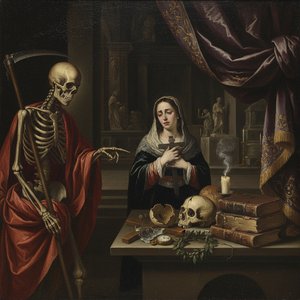
Juan de Valdés Leal: Baroque Realism, Memento Mori & Theatricality of Spanish Grief
Explore the powerful Baroque realism of Juan de Valdés Leal (1622-1690). Discover his somber masterpieces, iconic 'In Ictu Oculi', and profound explorations of mortality. Museum-quality reproductions available at OriginalUniqueArt.
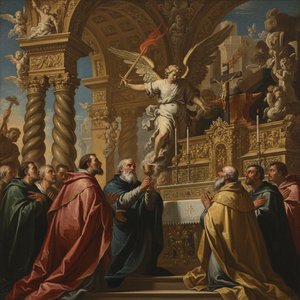
The Golden Age Reforged: Dramatic Realism & Religious Zeal in Spanish Baroque Art
Explore the dramatic world of Spanish Baroque art! Discover masters like Zurbarán & the powerful influence of religious zeal on painting techniques – a guide for collectors and enthusiasts.