Tekstin koko

() ·

Sinulle käsin tehty maalaus

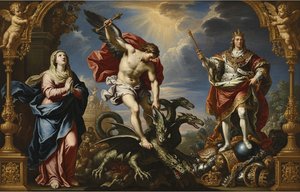
St. Augustine with the Virgin and Child

Käsinmaalattu öljyvärinen jäljennös

Käsinmaalattu öljyväri kankaalle haluamassasi koossa ja kehyksissä, taiteilijoidemme valmistamana tilauksesta. ( Vaihda tulosteeseen Siirry digitaaliseen kuvaan)

Keräilykohteen kuvaus

Experience Murillo's 'St. Augustine with the Virgin & Child,' a stunning Baroque masterpiece brimming with faith, vibrant colors, and exquisite detail. Explore its rich symbolism and historical significance.

Taiteilijan elämäkerta

Bartolomé Esteban Murillo (1618-1682) oli espanjalainen barokkimaalari, tunnettu lempeistä uskonnollisista ja arkielämän maalauksista. Hänen tyylinsä yhdistää kauneuden ja tunteellisuuden.

alkaen ·

Luku 1

Kuinka suuren sen tulisi olla?

Vedä liukusäädintä vaihtaaksesi kokoa; vasemmalla oleva kuva näyttää kehyksen todellisen leveyden. Alkuperäiset mittasuhteet säilyvät.

Vakiokoko
räätälöity
CM
INCH

Valitse valmiista mitoistamme sellaiset, jotka vastaavat teoksen alkuperäisiä mittasuhteita.

leveys
korkeus

Kirjoita tarvitsemasi leveys ja korkeus, jotta teos sopii kehyksiisi tai seinällesi. Koska kyseessä on käsinmaalattu teos, taiteilija voi maalata hieman enemmän kuvan ympärille tai rajata sitä hieman, jos haluat eri muotoisen koon — valinta on sinun. Lähetämme sinulle digitaalisen mallikuvan hyväksyttäväksi ennen kuin maalaus alkaa. Tällä sivulla näkyvä kuva ei vastaa lopullista tulosta — vain mallikuva näyttää sen.

Luku 2

Miten teoksen tulisi saapua?

Valitse kangaspinnan reunat

Valitse kehys

Corner sample of the WhiteWrap canvas edge finish, stretched on massiivipuu bars
Valkoinen reuna €1
Corner sample of the BlurSideWrap canvas edge finish, stretched on massiivipuu bars
pehmennetty reuna €1
Corner sample of the ExtendedWrap canvas edge finish, stretched on massiivipuu bars
Jatkuva reuna €1
Corner sample of the P118B picture frame: valettu polystyreeni, 5 cm wide and 3 cm thick
P118B €10
Corner sample of the P118H picture frame: valettu polystyreeni, 5 cm wide and 3 cm thick
P118H €10
Corner sample of the P118W picture frame: valettu polystyreeni, 5 cm wide and 3 cm thick
P118W €10
Corner sample of the P438Z picture frame: valettu polystyreeni, 5.5 cm wide and 3.5 cm thick
P438Z €10
Corner sample of the P508JH picture frame: valettu polystyreeni, 7 cm wide and 3.5 cm thick
P508JH €12
Corner sample of the P508YH picture frame: valettu polystyreeni, 7 cm wide and 3.5 cm thick
P508YH €12
Corner sample of the P805H picture frame: valettu polystyreeni, 5 cm wide and 3.5 cm thick
P805H €10
Corner sample of the P805Z picture frame: valettu polystyreeni, 5 cm wide and 3.5 cm thick
P805Z €10
Corner sample of the P919BZ picture frame: valettu polystyreeni, 7 cm wide and 3.5 cm thick
P919BZ €10
Corner sample of the P919G picture frame: valettu polystyreeni, 7 cm wide and 3.5 cm thick
P919G €10
Corner sample of the P919XJ picture frame: valettu polystyreeni, 7 cm wide and 3.5 cm thick
P919XJ €10
Corner sample of the P959ZH picture frame: valettu polystyreeni, 5 cm wide and 3 cm thick
P959ZH €10
Corner sample of the P968JZ picture frame: valettu polystyreeni, 6 cm wide and 4 cm thick
P968JZ €12
Corner sample of the W106C picture frame: massiivipuu, 5 cm wide and 3 cm thick
W106C €8
Corner sample of the W218G picture frame: massiivipuu, 5 cm wide and 3 cm thick
W218G €10
Corner sample of the W218JH picture frame: massiivipuu, 5 cm wide and 3 cm thick
W218JH €8
Corner sample of the W218Y picture frame: massiivipuu, 5 cm wide and 3 cm thick
W218Y €10
Corner sample of the W307PJ picture frame: massiivipuu, 6 cm wide and 3 cm thick
W307PJ €10
Corner sample of the W316G picture frame: massiivipuu, 6 cm wide and 3 cm thick
W316G €10
Corner sample of the W316PJ picture frame: massiivipuu, 6 cm wide and 3 cm thick
W316PJ €8
Corner sample of the W316Y picture frame: massiivipuu, 6 cm wide and 3 cm thick
W316Y €10
Corner sample of the W398PJ picture frame: massiivipuu, 5 cm wide and 3 cm thick
W398PJ €8
Corner sample of the W4111J picture frame: massiivipuu, 6.5 cm wide and 3.5 cm thick
W4111J €10
Corner sample of the W500HY picture frame: massiivipuu, 7 cm wide and 5 cm thick
W500HY €15
Corner sample of the W500JH picture frame: massiivipuu, 7 cm wide and 5 cm thick
W500JH €15
Corner sample of the W692G picture frame: massiivipuu, 8 cm wide and 4 cm thick
W692G €12
Corner sample of the W849H picture frame: massiivipuu, 5 cm wide and 3 cm thick
W849H €8
Corner sample of the W940BG picture frame: massiivipuu, 7.5 cm wide and 4.5 cm thick
W940BG €15
Corner sample of the W953PJ picture frame: massiivipuu, 6 cm wide and 3.5 cm thick
W953PJ €8
Corner sample of the H24-GOLD picture frame: kaiverrettua puuta ja gessoa, 10 cm wide and 6 cm thick
H24-GOLD €30
Corner sample of the H24-SILVER picture frame: kaiverrettua puuta ja gessoa, 10 cm wide and 6 cm thick
H24-SILVER €30
Corner sample of the H36-GOLD picture frame: kaiverrettua puuta ja gessoa, 15 cm wide and 6.5 cm thick
H36-GOLD €45
Corner sample of the H36-SILVER picture frame: kaiverrettua puuta ja gessoa, 15 cm wide and 6.5 cm thick
H36-SILVER €45
Kehyksen esikatselu
Kehystetty

Kehystys: . Kokonaismitat kehyksen kanssa: .

Luku 3

Kuka sen maalaa, ja pitäisikö mitään muuttaa?

Esimerkkejä muutettavista asioista: Vaihda kasvot asiakkaan valokuvaan; Lisää lemmikki (esim. vaihda kissa koiraksi); Lisää piilotettu viesti taustalle; Vaihda taustan maisemaa tai elementtejä.


Tilauksen jälkeen OriginalUniqueArt.com -tiimi lähettää asiakkaalle sähköpostia ohjeita varten ja toimittaa luonnoksen esikatselun

Maailmanlaajuinen toimitus () 3–4 viikossa tavallisen 5 viikon sijaan. (3 marraskuu). Laadusta ei tingitä.

Luku 4

Viimeiset silaukset

Nimikyltti, kuten museossa?

Kaiverretun pronssilaatan tiedot

This elegant plaque features the artist's name and the title of the artwork, finely engraved for a timeless presentation.

It is made from bronze with a refined, elegant finish. The text is precisely laser-engraved for a sharp and permanent result. Measuring 9x2 cm, the plaque is compact yet easy to read. It's built to be durable and scratch-resistant, offering a professional, museum-quality look. Mounting is simple thanks to the included adhesive backing.

Läpinäkyvän akryylilaatan tiedot

The plaque includes essential engraved details such as the artist's name, the title of the artwork, the date it was created, the type of media used-like oil on canvas or watercolor-a brief description of the piece, and a QR code that links to the complete artwork information.

It is crafted from clear acrylic, offering a sleek, modern appearance. The text is UV-engraved in black to ensure strong visual contrast. With a size of 10x15 cm, it ensures optimal readability. It comes equipped with two metal hooks for secure wall mounting. The plaque is designed to be weather-resistant, making it suitable for various environments, and it includes interactive features that work seamlessly with smartphone scanning.

Mustan akryylilaatan tiedot

This elegant plaque includes engraved information such as the artist's name, the title of the artwork, the date it was created, the type of media used (like oil on canvas or watercolor), a short description of the artwork, and a QR code for quick access to more information.

The plaque itself is made from refined black acrylic with a premium finish. The text is laser-engraved in white for high contrast and readability. Its size is 10x15 cm, designed to be easy to read. It comes with two metal hooks for professional mounting. The design is sleek and fits any interior style. It is also weather-resistant and durable, with built-in digital integration for mobile compatibility.

Suojaava lakka?

Milloin tarvitset sen?

Luku 5

Maalauksesi juuri niin kuin tilasit

St. Augustine with the Virgin and Child

Reproduktiotekniikka

Replikaatin koko

-

Kokenut huipputaiteilija

Lisää yksityiskohtia, hienostuneisuutta ja enemmän aikaa tuotantoon

-

Reproduktion kehystysvaihtoehdot

-

-

Teoksille tai reproduktioille, joiden mikä tahansa sivu on suurempi kuin 105 cm (noin 41 tuumaa), kehys toimitetaan osina purettuna sarjana. Tämä menetelmä varmistaa turvallisen toimituksen ja ehkäisee vaurioita kuljetuksen aikana.

Vaatii ammattimaista kokoamista – kyseessä ei ole tee-se-itse-tuote.
Sarja on koottava ja kangas kiristettävä kokeneen kehystysammattilaisen toimesta käyttäen puuliimaa (ei sisälly pakkaukseen), kangaspinnetteitä ja puristimia, jotta kehyksen kulmat pysyvät suorina liiman kuivuessa. Virheellinen kokoaminen tai epätasainen kankaan kiristys voi vaurioittaa teosta pysyvästi, eikä tällaiset vauriot ala takuun piiriin.

  • Kaikki massiivipuupalat sisältyvät, tarkasti mittojen mukaan leikattuina.

  • Kootaan mukana tulevilla ruuveilla sekä kulmaliitoksia varten tarvittavalla puuliimalla, jota ei toimiteta, joten se on hankittava kehystäjältä.

  • Vaatii ammattilaisvälineitä, jotka eivät sisälly pakkaukseen: kankaan venytyspihdit (kiristin) ja puristimet, joilla pidetään kehyksen puut suorassa liiman kuivuessa.

Tärkeää:
Kulmaliitoksissa tarvitaan puuliimaa, kehyksien osat on pidettävä puristimilla, kunnes liima on täysin kuivunut, ja koottuun kehykseen jännitettävän kankaan kiristämiseen tarvitaan kangaspenssipihti. Mikään näistä ei sisälly pakkaukseen. Suosittelemme varmistamaan kokeneen kehystäjän saatavuuden ennen tämän kokoisen kehyksen tilaamista.

Nimilaatta

-

-

Suojalakkaus

Kiiltävä lakka (syventää värejä, suojaa valolta ja kosteudelta)

-

Mukauta taideteokseni

Esimerkkejä muokattavista asioista: Vaihda kasvot asiakkaan omaan valokuvaan; Lisää lemmikki (esim. vaihda kissa koiraan); Lisää taustalle piilotettu viesti; Muuta taustan maisemaa tai elementtejä.

-

Pikatoimitus

Maailmanlaajuinen toimitus () 3–4 viikossa tavallisen 5 viikon sijaan. (3 marraskuu). Laadusta ei tingitä.

-

Pikatoimitus

Maailmanlaajuinen toimitus () 5 viikon kuluessa. (10 marraskuu).

Sisältyy hintaan

Kokonaishinta

€ 268

Kokonaishinta € 268

Lasivaihtoehto on saatavilla vain alle 110 cm kokoisille teoksille

Sisältyy jokaiseen tilaukseen

  • Ilmainen pikatoimitus ympäri maailman
  • Korkealaatuinen pellavakangas
  • Kattava kuljetusvakuutus
  • Tulliveron palautustakuu
  • Takuu täydellisestä värien vastaavuudesta
  • 100 päivän palautusoikeus (vain valmistusvirheet)
  • 100% rahat takaisin -takuu
  • Määräalennus tarjolla

A Vision of Faith: St. Augustine with the Virgin and Child by Murillo

This captivating painting depicts a tender and profound religious scene featuring St. Augustine alongside the Virgin Mary and her infant son, Jesus. Executed in the vibrant style characteristic of Bartolomé Esteban Murillo, one of Spain’s most celebrated Baroque painters, this work exemplifies his mastery of light, color, and composition to evoke deep spiritual emotion. The generous size (250 x 139 cm) allows for a remarkable level of detail and creates an immersive experience for the viewer. The presence of several angels, delicately rendered and hovering around the Christ Child, further elevates the scene’s ethereal quality. Encased within a classic gold frame, this piece exudes an air of timeless elegance and reverence.

Baroque Devotion: Style and Technique

Murillo's artistic career flourished during the Baroque period (roughly 1600-1750), a time marked by dramatic compositions, rich colors, and intense emotional expression. This painting perfectly embodies these characteristics. While his early works showed influences from artists like Zurbarán, Murillo developed a distinctive style characterized by its *luminosity* and idealized beauty. He employed a technique of layering translucent glazes to achieve a soft, almost luminous effect – particularly noticeable in the Virgin Mary’s garments and the angelic figures. The use of vibrant yet harmonious colors—rich reds, blues, and golds—creates a sense of warmth and divine grace. Observe how Murillo skillfully uses *chiaroscuro* (the contrast between light and dark) to highlight key elements within the composition, drawing the viewer's eye towards the central figures of Mary and Jesus.

Historical Context & Symbolism

Painted during a period of intense religious fervor in Spain, this artwork reflects the Counter-Reformation’s emphasis on devotional imagery. St. Augustine, a pivotal figure in Christian theology known for his writings on faith and grace, is depicted here in a moment of profound contemplation and reverence towards the Virgin Mary. The crown atop Mary's head signifies her status as Queen of Heaven, a common motif in Baroque art. The angels surrounding the Christ Child symbolize divine messengers and protectors. Beyond its religious significance, this painting also reflects the patronage system prevalent at the time; works like these were often commissioned by wealthy individuals or institutions to adorn churches and private residences, demonstrating their piety and social standing.

Emotional Resonance & Lasting Appeal

This "St. Augustine with the Virgin and Child" is more than just a religious depiction; it's an invitation to contemplate faith, devotion, and the divine. Murillo’s ability to imbue his figures with such tenderness and humanity creates a powerful emotional connection with the viewer. The serene expressions of Mary and St. Augustine, combined with the ethereal presence of the angels, evoke a sense of peace and spiritual solace. The painting's enduring appeal lies in its timeless message of faith and hope, making it a treasured addition to any collection or interior space seeking an infusion of beauty and inspiration.

Kysymykset ja vastaukset

Mikä on Bartolomé Esteban Murillo:n "St. Augustine with the Virgin and Child" todellinen koko?

Alkuperäisen teoksen Bartolomé Esteban Murillo:n "St. Augustine with the Virgin and Child" mitat ovat 250 x 139 cm.

Miten teoksen Bartolomé Esteban Murillo:n "St. Augustine with the Virgin and Child" väripaletti on kuvattu?

Bartolomé Esteban Murillo:n "St. Augustine with the Virgin and Child"-teoksessa käytetään Earthy-väripalettia. Paletti tiivistää teoksen yleisen värikarakterin.

Ovatko teoksen Bartolomé Esteban Murillo:n "St. Augustine with the Virgin and Child" värit kirkkaita vai hillittyjä?

Bartolomé Esteban Murillo:n "St. Augustine with the Virgin and Child"-teoksen värit ilmentävät Balanced Soft kylläisyyttä ja Balanced voimakkuutta.

Lisää tästä teoksesta

Esikatselu Esikatsele AR-tilassa Vaihda tulosteeseen Siirry digitaaliseen kuvaan Jaa teos
Tiedot Opas Lisää suosikkeihin Lataa kuva Samanlaisia kohteita Röntgenkuvaus Diaesitys Kysymykset ja vastaukset Tilastot

Lukuina

  • 29valittavissa olevat kehykset
  • standardikoot, omissa mittasuhteissaan
  • 5viikkoja maalaamiseen ja toimitukseen

Tietoa alkuperäisteoksesta

Mitat
250.0 x 139.0 cm
Bartolomé Esteban Murillo

Bartolomé Esteban Murillo

1618 - 1682, Espanja

Pikaaakkaukset taiteilijasta Bartolomé Esteban Murillo

  • Artistic Movement Or Style: Barokki
  • Artists Or Movements Influenced By This Artist:
    • Gainsborough
    • Greuze
  • Artists Who Influenced This Artist:
    • Zurbarán
    • Ribera
  • Date Of Birth: 1. tammikuuta 1618
  • Date Of Death: 3. huhtikuuta 1682
  • Full Name: Bartolomé Esteban Murillo
  • Nationality: Espanjalainen
  • Notable Artworks:
    • Immakula
    • Nuori tyttö
    • Jeremia
  • Place Of Birth: Sevilla, Espanja

Taiteilijan elämäkerta

A Life Bathed in Andalusian Light

Bartolomé Esteban Murillo, a name synonymous with the golden age of Spanish Baroque painting, emerged from the vibrant heart of Seville in 1618. His life, though marked by personal tragedy and societal shifts, blossomed into an artistic career that captured the spirit of his time—a period of religious fervor, social change, and burgeoning artistic innovation. Born to Gaspar Esteban, a barber-surgeon, and María Pérez Murillo, within a large family of fourteen children, young Bartolomé experienced early loss with the passing of both parents in quick succession during his childhood. This hardship led him into the guardianship of his sister’s husband, Juan Agustín Lagares, a pivotal figure who would indirectly guide his artistic path. Murillo's initial training began under Juan del Castillo, a local artist and relative through his mother, laying the foundation for a style that would eventually become uniquely his own. The early years were steeped in the realist traditions prevalent in Seville, absorbing influences from masters like Zurbarán, Ribera, and Cano—artists who prioritized stark realism and dramatic intensity. However, Murillo’s genius lay not in mere imitation but in transforming these foundations into something softer, more luminous, and profoundly human.

From Realism to Radiant Grace

Murillo's artistic journey wasn’t a sudden leap to fame but rather an evolution marked by distinct phases. His early works, heavily influenced by the austere realism of his contemporaries, showcased a meticulous attention to detail and a somber palette. Young Man with a Basket of Fruit (Personification of Summer), created around 1640-50, exemplifies this period—a grounded depiction of everyday life rendered with remarkable precision. The figures are depicted in natural light, capturing the essence of the season. Yet, even in these early pieces, hints of the tenderness and emotional depth that would define his mature style began to emerge. The Young Beggar, painted circa 1645, demonstrates a growing sensitivity towards human suffering, echoing the influence of Velázquez’s masterful portrayals of everyday people. The painting captures the vulnerability and quiet dignity of a young child in poverty, a theme that would recur throughout Murillo's career. As Murillo matured, his style underwent a remarkable transformation. He moved away from the stark realism of his predecessors, embracing a more polished and refined aesthetic that resonated with the tastes of Seville’s burgeoning bourgeois and aristocratic classes. This shift was particularly evident in his religious works, where he infused traditional iconography with an unprecedented sense of warmth, grace, and emotional accessibility. St. Jerome, painted between 1650-52, stands as a testament to this mature style—a softly luminous depiction that radiates serenity and devotion. The figure is bathed in golden light, conveying a profound sense of contemplation and spiritual peace.

A Master of Religious Sentiment and Genre Scenes

Murillo’s artistic output was remarkably diverse, encompassing religious paintings, genre scenes, portraits, and mythological subjects. However, he is most celebrated for his depictions of the Immaculate Conception—a subject that captivated him throughout his career and resulted in numerous variations, each imbued with a unique sense of ethereal beauty. These works, characterized by their delicate brushwork, luminous colors, and graceful compositions, became immensely popular and established Murillo as the preeminent painter of religious imagery in Spain. He skillfully blended traditional iconography with a deeply human touch, creating images that were both reverent and emotionally engaging. Beyond his sacred subjects, Murillo also excelled at capturing the everyday lives of ordinary people. His genre scenes—depictions of flower girls, street urchins, and beggars—offer a poignant glimpse into the social realities of 17th-century Seville. These paintings are not merely observational studies; they are imbued with a deep sense of empathy and compassion, elevating the humble subjects to a level of dignity and grace. He possessed an extraordinary ability to capture the innocence of childhood, portraying young children with remarkable realism and tenderness. The figures in these scenes often interact with each other, creating a sense of community and shared humanity.

Influences and Development

Murillo’s artistic development was shaped by a complex interplay of influences. Initially, he absorbed the stark realism and tenebrist techniques of masters like Zurbarán and Ribera, artists who dominated the Seville art scene in the preceding decades. However, Murillo quickly distinguished himself through his softer palette, luminous colors, and emphasis on human emotion—qualities that set him apart from his predecessors. A pivotal moment in his artistic evolution occurred during a visit to Madrid in 1658, where he encountered the works of Titian, Rubens, and Van Dyck. These encounters profoundly influenced his style, leading him to adopt a more dynamic composition, richer colors, and a greater sense of elegance. He also drew inspiration from the religious art of the Venetian Renaissance, particularly its emphasis on beauty, grace, and emotional intensity. Murillo’s style evolved over time, reflecting both his artistic influences and his own personal vision. His early works are characterized by their meticulous detail and somber palette, while his later paintings are marked by a greater sense of light, color, and emotional warmth.

Legacy and Enduring Influence

Bartolomé Esteban Murillo’s impact on the course of Spanish art—and indeed, European painting—is undeniable. He established a distinctive style that blended religious devotion with humanistic sentiment, creating works that resonated deeply with audiences across social strata. His influence extended far beyond his native Spain, inspiring generations of artists throughout Europe. Gainsborough and Greuze, among others, acknowledged their debt to Murillo’s luminous style and sensitive portrayals of human emotion. He trained numerous pupils in his Seville workshop, ensuring the continuation of his artistic legacy. His paintings can be found in prestigious museums worldwide, including the Museo del Prado in Madrid, the Hermitage Museum in Saint Petersburg, the Wallace Collection in London, and the Timken Museum of Art in San Diego—testaments to his enduring appeal and historical significance. Murillo’s art continues to captivate viewers with its beauty, grace, and profound humanity, solidifying his place as one of the most beloved and influential painters of the Spanish Baroque period. His ability to infuse religious imagery with emotional depth and portray everyday life with empathy ensures that his work remains relevant and inspiring centuries after his death in 1682.

Pikaista tietoa

  • Movement: Spanish Baroque
  • Artistic style: Luminous, vibrant colors
  • Dimensions: 250 x 139 cm
  • Title: St. Augustine with the Virgin and Child

Taidevisat

Jokaisessa kysymyksessä on vain yksi oikea vastaus.

Kysymys 1:
Who is the artist of "St. Augustine with the Virgin and Child"?
Kysymys 2:
What artistic period is Bartolomé Esteban Murillo associated with?
Kysymys 3:
Based on the description, what indicates that the woman holding the baby in the painting is likely the Virgin Mary?
Kysymys 4:
What does the gold frame contribute to the overall appearance of the painting?
Kysymys 5:
Which of the following best describes Murillo's early artistic influences?