

 Lähetä
 Jaa
Jaa
 Tarkemmat tiedot
 Opas
Opas

 Lataa kuva
 Samanlaisia kohteita
 Diaesitys
 Tilastot
Kuori


 Lue lisää
Tällä sivulla esitettyä taideteosta suojaa tekijänoikeuslaki, mikä tarkoittaa, ettemme voi laillisesti luoda tai myydä täsmälleen samanlaista jäljennöstä. Tämä suoja toteutetaan kansainvälisten sopimusten, kuten esimerkiksi Berne-konventio ja kansallisilla laeilla, mukaan lukien niillä määritellyt Yhdysvaltain tekijänoikeuslaki – Luku 17. Kaikki oikeudet pidätetään. Luvaton kopiointi tai jäljittely on kielletty.
Tämä menetelmä noudattaa täysin tekijänoikeussäännöksiä, sillä se ei sisällä suojatun taideteoksen kopioimista tai jäljentämistä. Sen sijaan kyseessä on luova uudelleentulkinta – uusi maalaus, joka ammentaa vaikutteita alkuperäisestä, mutta ei ole sen identtinen kopio.
Giclée- ja taideprintit
Museolaatuisia giclée- tai kankaitaulun tulosteita nopealla tuotannolla ja joustavilla viimeistelyvaihtoehdoilla. ( Tilaa käsinmaalattu jäljennös Siirry digitaaliseen kuvaan)




































Valitse valmiista mitoistamme sellaiset, jotka vastaavat teoksen alkuperäisiä mittasuhteita.

Kirjoita tarvitsemasi leveys ja korkeus, jotta tuloste sopii kehyskokoon tai seinällesi. Tulostetta voidaan vain leikata, sitä ei voi koskaan tehdä suuremmaksi kuin alkuperäinen kuva, joten eri muotoinen koko aiheuttaa osan kuvasta katoamisen. Lähetämme sinulle digitaalisen mallikuvan hyväksyttäväksi ennen kuin aloitamme tulostuksen. Tällä sivulla näkyvä kuva ei näytä lopullista leikkausta — vain mallikuva näyttää sen.
Maailmanlaajuinen toimitus () 2 viikossa tavallisen 4–5 viikon sijaan. (22 lokakuu)

Ilmainen pikatoimitus ympäri maailman

Korkealaatuinen pellavakangas

Kattava kuljetusvakuutus

Tulliveron palautustakuu

Takuu täydellisestä värien vastaavuudesta

100 päivän palautusoikeus valmistusvirhetapauksissa

100% rahat takaisin -takuu

Määräalennus saatavilla
 Lasivaihtoehto on saatavilla vain alle 110 cm kokoisille teoksille

Kuori
Giclée- ja taideprintit
Replikaatin koko
-


Kokonaishinta
€ 70
Barbara Hepworthin "Figura Archaean" – Modern Sculptuur en Symboliek Uit Het Britse Kunstenaarschap
Barbara Hepworth (1903–1975), geboren in Wakefield, Yorkshire, was een baanbrekende Engelse kunstenaar en beeldhouwer die haar naam heeft geschreven in de geschiedenis van moderne sculptuur. Haar opleiding aan het Leeds School of Art en vervolgens een county scholarship naar het Royal College of Art (RCA) in Londen vormden de basis voor een artistieke carrière die gekenmerkt werd door innovatie en een zoektocht naar nieuwe vormen van expressie. Hepworth behoorde tot een kleine groep vrouwelijke kunstenaars die internationale erkenning verwierf, wat haar positie als een belangrijke stem binnen het Britse kunstenaarschap onderstreepte. Haar werk staat symbool voor de geest van het tijdperk en verklaart waarom het nog steeds aanspreekbaar is voor kunstliefhebbers en verzamelaars wereldwijd.Een Unieke Benadering tot Sculptuur
Hepworth’s stijl werd sterk beïnvloed door de surrealistische beweging, maar haar kunstenaarschap ging verder dan eenvoudige imitatie. Ze ontwikkelde een eigen manier van werken die gekenmerkt werd door een aandacht voor natuurlijke vormen en een gebruik van technische innovaties. Een belangrijk kenmerk van haar oeuvre is het gebruik van een combinatie van verschillende materialen, zoals steen en bronzen, waardoor ze prachtige sculpturen kon creëren die zowel fysiek als emotioneel aanspreekbaar waren. Haar kunstenaarschap werd gekenmerkt door een zoektocht naar nieuwe vormen van expressie en een aandacht voor de essentie van het beeldhouwerijmateriaal.“Figura Archaean”: Een Symbool Voor Stilte en Beweging
De sculptuur "Figura Archaean" (1959), gemaakt van steen, is een voorbeeld van Hepworth’s stijl en filosofie. Het kunstwerk staat op een pedestal en wordt gekenmerkt door een centrale holle ruimte die een gevoel van stilte en beweging oproept. De vormgeving is eenvoudig maar elegant, waarbij de natuurlijke vormen van het materiaal centraal staan. Een belangrijke bron van inspiratie voor Hepworth was de zoektocht naar nieuwe vormen van expressie en een aandacht voor de essentie van het beeldhouwerijmateriaal. Het kunstwerk kan worden gezien als een uitnodiging tot contemplatie en een manier om verbinding te maken met de natuurlijke wereld. De sculptuur werd geplaatst in The Hepworth Wakefield, Wakefield, United Kingdom. Een prachtige reproductie biedt een kans om deze tijdloze schoonheid thuis te brengen.Technische Innovaties en Het Susse Frères Atelier
Hepworth’s kunstenaarschap stond bekend om haar technische innovaties en haar samenwerking met het Susse Frères atelier in Parijs, waar haar sculpturen werden gegoten in bronzen. Deze samenwerking was essentieel voor het creëren van prachtige kunstwerken die de natuurlijke schoonheid van het materiaal optimaal weergaverden. Het atelier Susse Frères stond bekend om zijn expertise in het gieten van bronzen en hij speelde een belangrijke rol bij het succes van Hepworth’s oeuvre. Een hoogwaardige reproductie kan deze technische innovaties opnieuw aanspreekbaar maken voor een nieuw publiek.Een Laatste Inspiratie Voor De Moderne Kunst
Barbara Hepworth’s werk blijft inspireren kunstliefhebbers en kunstenaars wereldwijd. Haar sculpturen zijn een prachtige manier om de geest van het tijdperk te ervaren en een erkenning voor de schoonheid van natuurlijke vormen en eenvoudige vormgeving. Een reproductie biedt een kans om deze tijdloze schoonheid thuis te brengen en een stukje kunstgeschiedenis mee naar huis te nemen. De sculptuur "Figura Archaean" blijft een symbool voor stilte, beweging en een zoektocht naar nieuwe vormen van expressie.Kysymykset ja vastaukset
Ovatko teoksen Barbara Hepworth:n "Kuori" värit kylläisiä vai hillittyjä?
Teoksen "Kuori" väripaletti on kylläisyydeltään Vaimea.
Kuka on luonut teoksen "Kuori" ja mikä sen tyylisuunta on?
Barbara Hepworth loi teoksen "Kuori" Abstraction-Création-suuntauksen piirissä.
Miten teoksen Barbara Hepworth:n "Kuori" väripaletti on kuvattu?
Teoksen Barbara Hepworth:n "Kuori" väripalettia kuvataan sanoin Maanläheinen. Se on tiivis kuvaus teoksen väreistä.
Taiteilijan elämäkerta
nuoruvuodet ja koulutus
dame barbara hepworth, arvostettu englantilainen taiteilija ja kuvanveistäjä, syntyi 10. tammikuuta 1903 Wakefieldissä, Yorkshiressa. Hän opiskeli Leeds School of Artissa vuodesta 1920 alkaen ja myöhemmin hän voitti maakunnan apurajan opiskellakseen Royal College of Artissa (RCA) Lontoossa vuosina 1921–1924, jolloin hän suoritti tutkintonsa.taiteellinen ura
- dame barbara hepworthin työ on modernismin ja erityisesti modernin kuvanveiston mestarillinen esimerkki. Hän oli yksi harvoista naistaiteilijoista, joka saavutti kansainvälistä mainetta.
- Vuonna 1933 hän oli mukana perustamassa Unit One -taidesuuntausta yhdessä ben nicholsonin, paul nashin ja muiden taiteilijoiden kanssa, tavoitteenaan yhdistää surrealismi ja abstraktio brittiläisessä taiteessa.
- Hepworthin varhaiselle tuotannolle oli ominaista abstraktio sekä hänen osallistumisensa pariisilaisessa Abstraction-Création -taidesuuntauksessa.
merkittäviä teoksia ja näyttelyitä
- Oval Form (Trezion), pronssinen veistos, kuuluu Kimbell Art Museumin kokoelmaan Fort Worthissa, Yhdysvalloissa. (katso OriginalUniqueArt-palvelussa)
- Two Forms -veistos on esillä Hepworth Wakefieldissa, Wakefieldissä, Yhdistyneessä kuningaskunnassa. (katso OriginalUniqueArt-palvelussa)
- Totem, marmoriveistos, on myös osa Hepworth Wakefieldin kokoelmaa. (katso OriginalUniqueArt-palvelussa)
perintö ja museokokoelmat
barbara hepworthin työt ovat laajalti tunnustettuja, ja hänen veistoksensa sekä maalauksensa ovat osa lukuisia museoita ympäri maailmaa. Taiteilijan nimeä kantava Hepworth Wakefield kätkee sisäänsä lukemattomia mestariteoksia tunnetuilta taiteilijoilta, mukaan lukien Hepworthin omat teokset. (löydä lisää Hepworth Wakefieldistä OriginalUniqueArt-palvelusta)johtopäätös
dame barbara hepworthin edelläkävijämäinen työ modernissa brittiläisessä kuvanveistossa on jättänyt pysyvän jäljen taidemaailmaan. Hänen perintönsä jatkaa inspiroimista niin taiteilijoita kuin taiteen ystäviäkin, ja hänen teoksensa säilyvät todisteena hänen innovatiivisesta hengestään ja taiteellisesta neroudestaan. lisää tietoa Barbara Hepworthista Wikipediassa
Barbara Hepworth
1903 - 1975 , Yhdistynyt kuningaskunta
Tietoa taiteilijasta
- Artistic Movement Or Style: Modernisme
- Artists Or Movements Influenced By This Artist: ['Abstraction']
- Artists Who Influenced This Artist: ['Henry Moore']
- Date Of Birth: 10 janvier 1903
- Date Of Death: 20 mai 1975
- Full Name: Jocelyn Barbara Hepworth
- Nationality: Britannique
- Notable Artworks:
- Oval Form
- Two Forms
- Pierced Hemisphere I
- Place Of Birth: Wakefield, Yorkshire
Aiheeseen liittyvät artikkelit

The Enduring Form: Exploring Themes & Techniques in Sculpture Across Historical Periods
Explore the rich history of sculpture from ancient masterpieces to contemporary innovations. Discover key techniques, influential artists & investment potential for discerning art collectors.
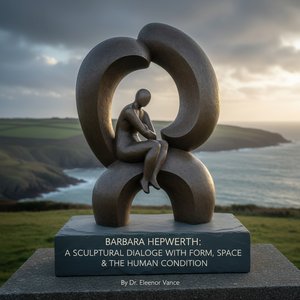
Barbara Hepworth: A Sculptural Dialogue with Form, Space & the Human Condition
Explore the profound world of Barbara Hepworth's sculpture. Discover her artistic evolution, iconic forms, and lasting influence on modern art. A guide for collectors & enthusiasts.

The Enduring Form: Sculpture Across History, Technique & Emotional Resonance
Explore the rich history of sculpture with OriginalUniqueArt. Discover key techniques, influential artists & investment potential for discerning collectors. Expert insights into valuing and collecting timeless masterpieces.

10 legendaarista pronssiveistosta, jotka mullistivat taiteen – OriginalUniqueArt.com
Tutustu 10 legendaariseen pronssiveistokseen, jotka ovat muokanneet taiteen historiaa! Michelangelo, Rodin ja muut mestarit. Löydä inspiraatiota sisustukseesi ja tutki upeita taideteoksia OriginalUniqueArt.com-sivustolta.

10 legendaarista pronssiveistosta, jotka mullistivat taiteen – OriginalUniqueArt.com
Tutustu 10 legendaariseen pronssiveistokseen, jotka ovat muuttaneet taiteen historiaa! Rodinista Michelangeloon – opi mestareiden tarinat ja löydä täydellinen taideteos kotiisi OriginalUniqueArt.com:ssa. Laadukkaat jäljennökset & sisustusideat.


