
 Esikatselu
 Jaa teos
 Jaa
Jaa
 Tiedot
 Opas
Opas

 Lataa kuva
 Samanlaisia kohteita
 Röntgenkuvaus
 Diaesitys
 Q&A
Q&A Tilastot
Delos

- 76.0 x 54.0 cm


 Lue lisää
Tällä sivulla esitettyä taideteosta suojaa tekijänoikeuslaki, mikä tarkoittaa, ettemme voi laillisesti luoda tai myydä täsmälleen samanlaista jäljennöstä. Tämä suoja toteutetaan kansainvälisten sopimusten, kuten esimerkiksi Berne-konventio ja kansallisilla laeilla, mukaan lukien niillä määritellyt Yhdysvaltain tekijänoikeuslaki – Luku 17. Kaikki oikeudet pidätetään. Luvaton kopiointi tai jäljittely on kielletty.
Tämä menetelmä noudattaa täysin tekijänoikeussäännöksiä, sillä se ei sisällä suojatun taideteoksen kopioimista tai jäljentämistä. Sen sijaan kyseessä on luova uudelleentulkinta – uusi maalaus, joka ammentaa vaikutteita alkuperäisestä, mutta ei ole sen identtinen kopio.
Giclée- ja taideprintit
Museolaatuisia giclée- tai kankaitaulun tulosteita nopealla tuotannolla ja joustavilla viimeistelyvaihtoehdoilla. ( Osta käsinmaalattu taideteos Siirry digitaaliseen kuvaan)




P118B €10

P118H €10

P118W €10

P438Z €10

P508JH €12

P508YH €12

P805H €10

P805Z €10

P919BZ €10

P919G €10

P919XJ €10

P959ZH €10

P968JZ €12

W106C €8

W218G €10

W218JH €8

W218Y €10

W307PJ €10

W316G €10

W316PJ €8

W316Y €10

W398PJ €8

W4111J €10

W500HY €15

W500JH €15

W692G €12

W849H €8

W940BG €15

W953PJ €8




Valitse valmiista mitoistamme sellaiset, jotka vastaavat teoksen alkuperäisiä mittasuhteita.

Syötä tarvitsemasi leveys ja korkeus, jotta tuloste sopii kehyksiisi tai seinällesi. Tulostetta voidaan vain leikata, sitä ei voida koskaan suurentaa alkuperäistä kuvaa suuremmaksi, joten eri muotoinen koko aiheuttaa osan kuvasta katoamisen. Lähetämme sinulle digitaalisen mallikuvan hyväksyttäväksi ennen kuin aloitamme tulostuksen. Tällä sivulla näkyvä kuva ei näytä lopullista rajausta — vain mallikuva näyttää sen.
Maailmanlaajuinen toimitus () 2 viikossa tavallisen 4–5 viikon sijaan. (31 lokakuu)

Ilmainen pikatoimitus ympäri maailman

Korkealaatuinen pellavakangas

Kattava kuljetusvakuutus

Tulliveron palautustakuu

Takuu täydellisestä värien vastaavuudesta

100 päivän palautusoikeus (vain valmistusvirheet)

100% rahat takaisin -takuu

Määräalennus tarjolla
 Lasivaihtoehto on saatavilla vain alle 110 cm kokoisille teoksille

Delos
Giclée- ja taideprintit
Replikaatin koko
-


Kokonaishinta
€ 71
Delos: A Meditation on Form and Void by Barbara Hepworth
Barbara Hepworth’s “Delos,” created in 1971, is more than just a painting; it's an invitation to contemplate the relationship between solidity and emptiness, form and space. The work immediately draws the eye with its striking palette of yellows and blacks – a deliberate contrast that speaks volumes about the artist’s core concerns. The dominant yellow, reminiscent of sun-drenched stone or aged parchment, provides a warm, almost luminous backdrop for the carefully sculpted voids represented by the stark black circles. These aren't merely decorative elements; they are crucial to understanding Hepworth’s intention – to suggest a profound sense of absence and the inherent tension within any form.
Hepworth, a pivotal figure in 20th-century British art, was deeply influenced by both European modernism and her own experiences with sculpture. Her work moved beyond representational imagery, seeking instead to capture essential qualities – weight, texture, and the dynamic interplay of positive and negative space. “Delos” echoes this approach, translating the tactile experience of three-dimensional form into a two-dimensional plane. The painting’s genesis lies partly in Hepworth's fascination with Greek mythology, particularly the island of Delos, sacred to Apollo and Artemis and renowned for its ancient ruins. The title itself acts as a direct reference to this historical and symbolic significance, grounding the abstract composition within a rich cultural context.
Technique and Composition: A Study in Contrasts
The painting’s technique is deceptively simple yet remarkably sophisticated. Hepworth employed a layered approach, building up the yellow ground with thin washes of color to create subtle tonal variations. The black circles are not painted directly onto the surface; rather, they appear as carefully applied areas of concentrated pigment, suggesting a deliberate process of carving or subtraction. This technique reinforces the idea of form emerging from void – a central theme in Hepworth’s oeuvre. The placement of the circles is equally important. The largest circle dominates the center of the composition, acting as a visual anchor and drawing the eye inward. Smaller circles are strategically positioned around it, creating a dynamic balance between stability and movement.
Hepworth's use of color is particularly noteworthy. The yellow isn’t a bright, cheerful hue; it possesses a muted quality, hinting at age and weathering – qualities that resonate with the ancient ruins of Delos itself. The black circles, conversely, are intensely dark, creating a powerful contrast that demands attention. This interplay of light and shadow generates a sense of depth and volume, inviting the viewer to explore the painting’s surface and contemplate its hidden dimensions.
Symbolism and Emotional Resonance
Beyond its formal qualities, “Delos” is imbued with a profound sense of symbolism. The circles can be interpreted as representing the absence of something – perhaps loss, memory, or the unknowable mysteries of the universe. They also evoke the idea of holes or voids within forms, suggesting that even the most solid and substantial objects are ultimately defined by their emptiness. This concept aligns with Hepworth’s broader exploration of the relationship between form and space, a theme she consistently revisited throughout her career.
The painting's emotional impact is subtle yet deeply affecting. It doesn’t offer easy answers or explicit narratives; instead, it invites contemplation and introspection. There’s a sense of quiet melancholy, a recognition of the transient nature of existence, and a profound appreciation for the beauty that can be found in emptiness. “Delos” ultimately serves as a reminder that true understanding often arises not from filling every space with detail, but from embracing the power of suggestion and allowing the mind to complete the picture.
A Legacy of Form and Space
Barbara Hepworth’s “Delos” stands as a testament to her pioneering spirit and her profound insights into the nature of art. It's a work that transcends its simple composition, offering viewers a glimpse into the artist’s inner world and inviting them to engage in a dialogue with timeless themes of form, space, and existence. Reproductions of this piece offer an accessible way to experience Hepworth’s vision, bringing her evocative exploration of emptiness and solidity into any interior space – a reminder that sometimes, the most powerful art is found not in what is shown, but in what is left unsaid.
Kysymykset ja vastaukset
Kuinka paljon valoa "Delos" värit näyttävät heijastavan?
Teoksen "Delos" värit heijastavat Luminous luminanssia.
Mistä voin ostaa painoksen teoksesta Barbara Hepworth:n "Delos"?
Voit tilata teoksen Barbara Hepworth:n "Delos" painoksena suoraan sen Taidevedos -sivulta: taideteosvedos puuvillakangas- tai arkistoluokan kankaalle painettuna.
Missä teosta Barbara Hepworth:n "Delos" voidaan tällä hetkellä nähdä?
Teos Barbara Hepworth:n "Delos" on esillä The Hepworth Wakefield, Wakefield, Yhdistynyt kuningaskunta-museossa. Museoluettelo viittaa alkuperäisteokseen, ei jäljennöksiin.
Taiteilijan elämäkerta
nuoruvuodet ja koulutus
dame barbara hepworth, arvostettu englantilainen taiteilija ja kuvanveistäjä, syntyi 10. tammikuuta 1903 Wakefieldissä, Yorkshiressa. Hän opiskeli Leeds School of Artissa vuodesta 1920 alkaen ja myöhemmin hän voitti maakunnan apurajan opiskellakseen Royal College of Artissa (RCA) Lontoossa vuosina 1921–1924, jolloin hän suoritti tutkintonsa.taiteellinen ura
- dame barbara hepworthin työ on modernismin ja erityisesti modernin kuvanveiston mestarillinen esimerkki. Hän oli yksi harvoista naistaiteilijoista, joka saavutti kansainvälistä mainetta.
- Vuonna 1933 hän oli mukana perustamassa Unit One -taidesuuntausta yhdessä ben nicholsonin, paul nashin ja muiden taiteilijoiden kanssa, tavoitteenaan yhdistää surrealismi ja abstraktio brittiläisessä taiteessa.
- Hepworthin varhaiselle tuotannolle oli ominaista abstraktio sekä hänen osallistumisensa pariisilaisessa Abstraction-Création -taidesuuntauksessa.
merkittäviä teoksia ja näyttelyitä
- Oval Form (Trezion), pronssinen veistos, kuuluu Kimbell Art Museumin kokoelmaan Fort Worthissa, Yhdysvalloissa. (katso OriginalUniqueArt-palvelussa)
- Two Forms -veistos on esillä Hepworth Wakefieldissa, Wakefieldissä, Yhdistyneessä kuningaskunnassa. (katso OriginalUniqueArt-palvelussa)
- Totem, marmoriveistos, on myös osa Hepworth Wakefieldin kokoelmaa. (katso OriginalUniqueArt-palvelussa)
perintö ja museokokoelmat
barbara hepworthin työt ovat laajalti tunnustettuja, ja hänen veistoksensa sekä maalauksensa ovat osa lukuisia museoita ympäri maailmaa. Taiteilijan nimeä kantava Hepworth Wakefield kätkee sisäänsä lukemattomia mestariteoksia tunnetuilta taiteilijoilta, mukaan lukien Hepworthin omat teokset. (löydä lisää Hepworth Wakefieldistä OriginalUniqueArt-palvelusta)johtopäätös
dame barbara hepworthin edelläkävijämäinen työ modernissa brittiläisessä kuvanveistossa on jättänyt pysyvän jäljen taidemaailmaan. Hänen perintönsä jatkaa inspiroimista niin taiteilijoita kuin taiteen ystäviäkin, ja hänen teoksensa säilyvät todisteena hänen innovatiivisesta hengestään ja taiteellisesta neroudestaan. lisää tietoa Barbara Hepworthista Wikipediassa
Barbara Hepworth
1903 - 1975 , Yhdistynyt kuningaskunta
Pähkinänkuoressa
- Artistic Movement Or Style: Modernisme
- Artists Or Movements Influenced By This Artist: ['Abstraction']
- Artists Who Influenced This Artist: ['Henry Moore']
- Date Of Birth: 10 janvier 1903
- Date Of Death: 20 mai 1975
- Full Name: Jocelyn Barbara Hepworth
- Nationality: Britannique
- Notable Artworks:
- Oval Form
- Two Forms
- Pierced Hemisphere I
- Place Of Birth: Wakefield, Yorkshire
Aiheeseen liittyvät artikkelit

The Enduring Form: Exploring Themes & Techniques in Sculpture Across Historical Periods
Explore the rich history of sculpture from ancient masterpieces to contemporary innovations. Discover key techniques, influential artists & investment potential for discerning art collectors.

10 legendaarista pronssiveistosta, jotka mullistivat taiteen – OriginalUniqueArt.com
Tutustu 10 legendaariseen pronssiveistokseen, jotka ovat muuttaneet taiteen historiaa! Rodinista Michelangeloon – opi mestareiden tarinat ja löydä täydellinen taideteos kotiisi OriginalUniqueArt.com:ssa. Laadukkaat jäljennökset & sisustusideat.
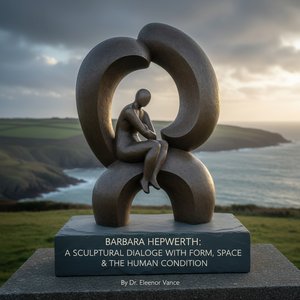
Barbara Hepworth: A Sculptural Dialogue with Form, Space & the Human Condition
Explore the profound world of Barbara Hepworth's sculpture. Discover her artistic evolution, iconic forms, and lasting influence on modern art. A guide for collectors & enthusiasts.

10 legendaarista pronssiveistosta, jotka mullistivat taiteen – OriginalUniqueArt.com
Tutustu 10 legendaariseen pronssiveistokseen, jotka ovat muokanneet taiteen historiaa! Michelangelo, Rodin ja muut mestarit. Löydä inspiraatiota sisustukseesi ja tutki upeita taideteoksia OriginalUniqueArt.com-sivustolta.

The Enduring Form: Sculpture Across History, Technique & Emotional Resonance
Explore the rich history of sculpture with OriginalUniqueArt. Discover key techniques, influential artists & investment potential for discerning collectors. Expert insights into valuing and collecting timeless masterpieces.


