

 Katso seinällä
 Lähetä
 Jaa
Jaa
 Tarkemmat tiedot
 Opas
Opas

 Lataa kuva
 Samanlaisia kohteita
 Röntgenkuvaus
 Diaesitys
 Tilastot
Red Gaze
 Acrylic On Canvas
- WallArt
- Expressionist Modernism
 1910
1910- 19th Century
 22.0 x 28.0 cm
 Arnold Schönberg Center
 Lue lisää
Käsinmaalattu öljyvärinen jäljennös
Käsinmaalattu öljyväri kankaalle haluamassasi koossa ja kehyksissä, taiteilijoidemme valmistamana tilauksesta. ( Vaihda tulosteeseen Siirry digitaaliseen kuvaan)




P118B €10

P118H €10

P118W €10

P438Z €10

P508JH €12

P508YH €12

P805H €10

P805Z €10

P919BZ €10

P919G €10

P919XJ €10

P959ZH €10

P968JZ €12

W106C €8

W218G €10

W218JH €8

W218Y €10

W307PJ €10

W316G €10

W316PJ €8

W316Y €10

W398PJ €8

W4111J €10

W500HY €15

W500JH €15

W692G €12

W849H €8

W940BG €15

W953PJ €8




Valitse valmiista mitoistamme sellaiset, jotka vastaavat teoksen alkuperäisiä mittasuhteita.

Kirjoita tarvitsemasi leveys ja korkeus, jotta teos sopii kehyskehyksiisi tai seinällesi. Koska kyseessä on käsinmaalattu teos, taiteilija voi maalata hieman enemmän kuvan ympärille tai rajata sitä hieman, jos haluat eri muotoisen koon — valinta on sinun. Lähetämme sinulle digitaalisen mallikuvan hyväksyttäväksi ennen kuin maalaus alkaa. Tällä sivulla näkyvä kuva ei vastaa lopullista tulosta — vain mallikuva näyttää sen.
Tilauksen jälkeen OriginalUniqueArt.com -tiimi lähettää asiakkaalle sähköpostitse ohjeet ja esikatselukuvan.
Maailmanlaajuinen toimitus () 3–4 viikossa tavallisen 5 viikon sijaan. (21 lokakuu). Laadusta ei tingitä.

Ilmainen pikatoimitus ympäri maailman

Korkealaatuinen pellavakangas

Kattava kuljetusvakuutus

Tulliveron palautustakuu

Takuu täydellisestä värien vastaavuudesta

100 päivän palautusoikeus valmistusvirhetapauksissa

100% rahat takaisin -takuu

Määräalennus saatavilla
 Lasivaihtoehto on saatavilla vain alle 110 cm kokoisille teoksille

Red Gaze
Reproduktiotapa
Replikaatin koko
-


Kokonaishinta
€ 262
A Descent into Torment: Unveiling Schönberg’s “Red Gaze”
Arnold Schönberg's "Red Gaze," painted in 1910, isn't merely a portrait; it’s a visceral plunge into the heart of human anguish. Executed during a period of radical artistic experimentation, this work embodies the composer’s intensely personal and often unsettling vision – a vision he sought to translate directly onto canvas with startling immediacy. The painting, currently residing within the hallowed halls of the Arnold Schönberg Center in Vienna, Austria, immediately commands attention with its arresting focus on a face dominated by a searing red gaze. This isn't a gentle observation; it’s an intrusion, a direct confrontation with a state of profound distress.
- Subject & Composition: The central figure is rendered in a strikingly simplified manner, prioritizing emotional impact over realistic representation. The close-up perspective intensifies the feeling of claustrophobia and vulnerability, drawing the viewer into the subject’s tormented experience.
- Color Palette: Predominantly red and yellow hues dominate the canvas, creating an atmosphere of feverish intensity. The strategic use of these colors – traditionally associated with passion, danger, and even madness – amplifies the painting's unsettling effect.
The Roots of Atonality: Contextualizing Schönberg’s Vision
To fully appreciate “Red Gaze,” one must understand the artistic climate in which it was created. Schönberg, a pivotal figure in the development of atonality – music devoid of traditional tonal centers – was pushing boundaries with his compositions like "Pierrot Lunaire." This experimentation extended to his visual art, where he rejected conventional representational techniques in favor of conveying raw emotion and psychological states. Elsa Bienenfeld’s observation that Schönberg aimed for “a fulgurant clarity” – a sudden flash of insight – perfectly encapsulates this approach. He wasn't striving for beauty or harmony; he was attempting to capture the unsettling, almost unbearable truth of human experience.
- Musical Influence: Schönberg’s musical innovations directly informed his painting style. The fragmented harmonies and dissonances found in works like the Fourth Quartet are mirrored in the fractured composition and jarring color choices of “Red Gaze.”
- The Second Viennese School: This painting represents a key element of the Second Viennese School, alongside artists such as Gustav Klimt and Egon Schiele, who sought to express psychological realities through unconventional forms.
Symbolism & Emotional Resonance
"Red Gaze" is profoundly unsettling, evoking a sense of dread and vulnerability. The phrase “a vein bursts in the brain” – Schönberg’s own description of one of his quartet movements – speaks volumes about the painting's intended effect. It suggests an overwhelming surge of emotion, a moment of catastrophic breakdown. The painting doesn’t offer answers; it presents a raw, unfiltered glimpse into a tormented soul. The use of quick, hastily veiled lights adds to this sense of urgency and instability, as if the subject is struggling to maintain control against forces beyond their comprehension.
- Interpretation: Some scholars interpret the red gaze as representing suppressed rage or unacknowledged guilt, while others see it as a symbol of existential anxiety. The ambiguity is deliberate, inviting viewers to project their own fears and anxieties onto the canvas.
- Technique: Schönberg’s technique involved rapid brushstrokes and a layering of colors, creating a textured surface that further enhances the painting's sense of urgency and movement.
A Timeless Expression of Human Suffering
"Red Gaze" remains a powerfully evocative work, demonstrating Schönberg’s extraordinary ability to translate his musical innovations into a visual language of intense emotion. Its unsettling beauty and profound psychological depth continue to captivate viewers over a century later. This meticulously crafted reproduction offers an unparalleled opportunity to experience this seminal artwork firsthand, bringing its haunting intensity into your space.
Kysymykset ja vastaukset
Miten teoksen "Red Gaze" tyyli suhteutuu sen tekijän aikakauteen?
Teoksessa Arnold Schoenberg:n "Red Gaze" Expressionist Modernism-suuntaus ja Modernismi-aikakausi kohtaavat.
Mikä väri erottuu eniten teoksessa "Red Gaze"?
Quinacridone Magenta (#75534c) on Arnold Schoenberg:n "Red Gaze" -teoksen hallitseva väri.
Kuinka suuri alkuperäinen "Red Gaze" on?
Teoksen "Red Gaze" alkuperäiset mitat ovat 22 x 28 cm. Alkuperäiset mitat ovat hyödyllinen vertailukohta, kun valitset reproduktion kokoa.
Taiteilijan elämäkerta
nuoruus ja musiikilliset alkuvaiheet
arnold schoenberg, itävalais-amerikkalainen säveltäjä, syntyi 13. syyskuuta 1874 Wienissä, Itävallassa. Hänen varhaisvuosia leimasi vaatimaton alku, sillä hänen isänsä toimi kenkäkauppiaana. Tästä huolimatta schoenbergin synnynnäinen intohimo musiikkiin johti hänet pitkältin itseoppineeksi tällä taiteen alalla.musiikillinen kehitys ja merkittävät teokset
schoenbergin varhaiset teokset, kuten verklärte nacht (1899), ilmentivät brahmsilaista ja wagnerilaista synteesiä. Edetessään hänestä tuli toisen wieniläiskoulukunnan keskeinen hahmo yhdessä anton webernin ja alban bergin kanssa. Hänen sävellyksensä, mukaan lukien jousikvartetto nro 2 (1907–1908), erwartung (1909) ja pierrot lunaire (1912), osoittivat hänen innovatiivista lähestymistapaansa atonaalisuuteen.opetus, emigraatio ja myöhempi elämä
schoenberg erosi Preussin taideakatemian jäsenyydestään vuonna 1933 natsien valtaannousun seurauksena, sillä he leimasivat hänen musiikkinsa "rappeutuneeksi". Hän opetti sen jälkeen Yhdysvalloissa, muun muassa Kalifornian yliopistossa Los Angelesissa (1936–1944), jonka tilat on nimetty hänen kunniakseen. [https://OriginalUniqueArt.rel/arnold-schoenberg](löydä lisää schoenbergin elämästä ja teoksista OriginalUniqueArt-palvelusta).- schoenberg tutki elokuvamusiikkia ja kirjoitti enemmän tonaalista musiikkia valmistuen kammarisinfonia nro 2:n vuonna 1939.
- hän satiirisoi fasistisia tyrannia Byronin hengessä teoksessaan ode to napoleon (1942).
- sodan jälkeinen Wien tarjosi hänelle kunniakansalaisuuden, mutta hän oli sairas, kuten hänen jousutrio (1946) kuvaa.
perintö ja vaikutus
maailman oppaessa holokaustista, schoenberg muistutti sen uhreja teoksellaan a survivor from warsaw (1947). Israelin konservatorio ja musiikkiakatemia valitsi hänet kunniapresidentiksi vuonna 1951. [https://OriginalUniqueArt.com/@@/a@d3bqc7-the-museum-destroyed-by-fire-(united-states)](lue lisää hänen työnsä vaikutuksesta OriginalUniqueArt-palvelussa). keskeiset kohdat:- schoenbergin innovatiivinen musiikki oli yksi 20. vuosisadan klassisen musiikin vaikutusvaltaisimmista ja kiistellyimmistä tyyleistä.
- vähintään kolme säveltäjäsukupolvea jatkoi sen muodollisia periaatteita.
- hänen esteettiset ja musiikkihistorialliset näkemyksensä vaikuttivat musiikkitieteilijöihin Theodor W. Adorno ja Carl Dahlhaus.

Arnold Schoenberg
1874 - 1951 , Itävalta
Tietoa taiteilijasta
- Artistic Movement Or Style: Dodekafonia; Ekspressionismi
- Artists Or Movements Influenced By This Artist:
- Anton Webern
- Alban Berg
- Artists Who Influenced This Artist:
- Johannes Brahms
- Richard Wagner
- Date Of Birth: 13. syyskuuta 1874
- Date Of Death: 1951
- Full Name: Arnold Schoenberg
- Nationality: Itävalmen-amerikkalainen
- Notable Artworks:
- Suite, op. 29
- Music Typewriter
- Staffliner
- Place Of Birth: Wien, Itävalta
Aiheeseen liittyvät artikkelit

Geometrisen abstraktion mestariteokset: Taidetta kotiin OriginalUniqueArtilta
Tutustu geometrisen abstraktion 10 mestariteokseen! Piet Mondrian, Kandinsky ja muut taiteilijat muovasivat modernin taiteen historiaa. Löydä inspiraatiota kotiisi OriginalUniqueArtilta – laadukkaat taideprintit ja sisustusehdotukset odottavat. Tutki kokoelma verkossa!

Wassily Kandinskin 25 mestariteosta: Värien ja muodon syvä maailma | OriginalUniqueArt
Tutustu Wassily Kandinskin 25 vaikuttavinta teosta! Uppoudu abstraktin taiteen maailmaan, värien symboliikkaan ja modernin ekspressionismin historiaan. Löydä inspiraatiota kodin sisustukseen OriginalUniqueArt.com:ista – laadukkaat taideprintit ja reproduktiot.
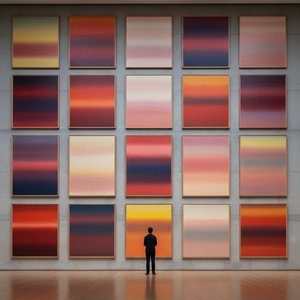
Mark Rothkon 25 mestariteosta: Värien syvyydessä – Taidetta kotiisi OriginalUniqueArtilta
Tutustu Mark Rothkon 25 mestariteokseen ja syvälliseen maailmaan abstraktin ekspressionismin parissa. Löydä tunteelliset väritaulut, taidehistorian helmet ja inspiraatiota kotiisi OriginalUniqueArtilta. Tutki kokoelma verkossa!

Abstraktin ekspressionismin mestariteokset: Taidetta ja inspiraatiota kotiisi
Tutustu abstraktin ekspressionismin 10 mestariteokseen! Jackson Pollock, Mark Rothko ja muut taiteilijat inspiroivat tunteellisuudellaan. Löydä upeita taidemaalauksia kotiisi OriginalUniqueArt.comista – museolaatuista laatua ja sisustusehdotuksia.

Beyond Form & Color: Geometric Abstraction's Evolution in 20th/21st Century Art
Explore the evolution of geometric abstraction from Cubism to contemporary art. Discover key artists like Malevich & Mondrian, investment insights, and expert collecting advice at OriginalUniqueArt.


