Symbolist Painting · 1879
Spring Evening (Arnold Böcklin, 1879)
Arnold Böcklin (1827–1901) on luonut teoksen Spring Evening. Se on peräisin vuodelta 1879. Se kuuluu Symbolist Painting-liikkeeseen. Se on valmistettu materiaalilla Oil On Panel. Teos sijaitsee Szépművészeti Múzeum -museossa paikassa Budapest, Unkari. Koko on 67 × 129 cm.
- 1879
- Oil On Panel
- 67 × 129 cm
- Szépművészeti Múzeum, Budapest

 Esikatselu

 Käsinmaalattu öljymaalaus
 Jaa teos
 Jaa
 Tiedot-arkki


 Lataa kuva
 Samanlaisia kohteita
 Röntgenkuvaus
 Diaesitys
 Kysymykset ja vastaukset

 Tilastot
Spring Evening lyhyesti
- Otsikko
- Spring Evening
- Taiteilija
- Arnold Böcklin (1827–1901)
- Taiteilija syntynyt
- Basel, Sveitsi
- Päivämäärä
- 1879
- Tekniikka
- Oil On Panel
- Mitat
- 67 × 129 cm
- Missä teos on nähtävissä
- Szépművészeti Múzeum, Budapest, Unkari
- Tyylisuunta
- Symbolist Painting
- Aihe
- mythology, nymphs, pan, forest, evening, landscape
Mitä Spring Evening esittää?
The Ethereal Embrace of Spring Evening
Arnold Böcklin’s “Spring Evening,” painted in 1879, isn't merely a depiction of a woodland scene; it’s an immersion into a realm of melancholic beauty and profound symbolism. Created during his time in Florence – a city that profoundly shaped his artistic vision – the painting captures a fleeting moment of enchantment, steeped in the atmosphere of late Romanticism and foreshadowing the rise of Symbolism. The canvas breathes with a quiet intensity, dominated by muted greens, blues, and browns, creating an almost dreamlike quality that immediately draws the viewer into its hushed world.
At the heart of the composition stands a woman, her posture suggesting both contemplation and vulnerability. Her hand gently resting on her head is a gesture simultaneously of yielding and quiet strength – she’s not passively observing but actively engaged with the scene unfolding before her. Beside her sits a man, seemingly lost in thought as he peruses a book, his presence offering a grounding element to the ethereal atmosphere. A bear, rendered with surprising tenderness, interacts playfully with both figures, blurring the lines between human and animal, nature and civilization. This carefully orchestrated tableau speaks of harmony, connection, and the delicate balance of the natural world.
A Symphony of Symbolism
Böcklin’s work is deeply rooted in mythology and folklore, drawing heavily on ancient Greek and Roman traditions. The central figure, often interpreted as Pan – the god of nature, shepherds, and wild music – plays his pipes, summoning a chorus of unseen nymphs from the surrounding forest. These dryads, with their flowing hair and graceful movements, represent the spirit of the woods, embodying both beauty and danger. The bear itself is a potent symbol, frequently associated with strength, wisdom, and primal instincts—a reminder of humanity’s connection to the earth.
The painting's muted palette contributes significantly to its symbolic weight. The cool blues and greens evoke a sense of melancholy and introspection, while the browns ground the scene in the tangible reality of the forest floor. The lighting is soft and diffused, creating an atmosphere of twilight—a liminal space between day and night, representing transition, mystery, and perhaps even mortality. Böcklin masterfully uses color not to simply depict a landscape but to convey complex emotions and ideas.
Technique and Artistic Influences
“Spring Evening” exemplifies Böcklin’s distinctive artistic style, characterized by meticulous detail, rich textures, and an almost obsessive attention to the natural world. He employed a technique of layering thin glazes of oil paint, building up color gradually to achieve remarkable depth and luminosity. The brushwork is subtle yet expressive, conveying both the smoothness of the forest floor and the intricate details of the foliage.
Böcklin’s artistic journey was profoundly influenced by his time in Düsseldorf, where he studied under Schirmer and became associated with the Düsseldorf School of Painting. However, it was in Florence that he truly developed his unique Symbolist vision, drawing inspiration from the city's rich cultural heritage and its connection to antiquity. The painting also reflects the influence of Romanticism, particularly the emphasis on emotion, imagination, and the sublime beauty of nature—themes central to the movement.
A Timeless Resonance
“Spring Evening” continues to resonate with viewers today because it taps into universal themes of longing, connection, and the search for meaning. Its evocative atmosphere and symbolic richness invite contemplation and offer a glimpse into the artist’s deeply personal vision. The painting's enduring appeal lies in its ability to transport us to another time and place—a world where myth and reality intertwine, and where the beauty of nature is inextricably linked to the mysteries of the human soul.
Missä museossa teos Spring Evening on?
Szépművészeti Múzeum
Budapest, Unkari
Szépművészeti Múzeum: Alkuperä ja historia Szépművészeti Múzeum -museon perustaminen virallistettiin vuoden 1896 vuosituhannen lain myötä. Tämä lainsäädännöllinen päätös pyrki luomaan Budapestiin, Unkariin, omistautuneen instituution kauniille taiteille. Tähän tarkoitukseen valittu paikka oli aiemmin Rotunda-paviljongin asuttamalla alueella, rakennuksella, joka oli pystytetty esittelemään Feszty-körkép-teosta.


Spring Evening korkearesoluutioiset kuvat

Arnold Böcklin, Spring Evening (1879), Szépművészeti Múzeum. Tekijänoikeudet vapaat.
Kysymyksiä teoksesta Spring Evening, vastaukset
Missä voin nähdä alkuperäisen teoksen Arnold Böcklin:n "Spring Evening"?
Alkuperäinen Arnold Böcklin:n "Spring Evening" on osa Szépművészeti Múzeum, Budapest, Unkari-museon kokoelmaa. Reproduktio mahdollistaa teoksen näyttämisen kotona.
Milloin teos Arnold Böcklin:n "Spring Evening" on luotu?
"Spring Evening" on peräisin vuodelta 1879. Teoksen valmistumisajankohta sijoittaa sen Arnold Böcklin uran ja aikakauden kontekstiin.
Millä tekniikalla "Spring Evening" on tehty?
"Spring Evening" on toteutettu tekniikalla Oil On Panel.
Mitkä ovat alkuperäisen "Spring Evening" mitat?
Alkuperäisen teoksen Arnold Böcklin:n "Spring Evening" mitat ovat 67 x 129 cm.
Mitä Arnold Böcklin:n "Spring Evening" esittää?
Teoksen "Spring Evening" aiheina ovat mythology, nymphs, pan, forest, evening, landscape, symbolism, böcklin.
Onko teoksen Arnold Böcklin:n "Spring Evening" kuva vapaasti käytettävissä?
Tekijänoikeustiedot teokselle Arnold Böcklin:n "Spring Evening": teos on vapaasti käytettävissä – tekijänoikeussuoja on päättynyt. Tämä määrittää, voidaanko kuvasta tehdä vapaasti jäljennöksiä.
Kenen teokseksi "Spring Evening" on merkitty?
Teos "Spring Evening" on yhdistetty Arnold Böcklin.
Mihin taidesuuntaukseen Arnold Böcklin:n "Spring Evening" kuuluu?
Teoksen Arnold Böcklin:n "Spring Evening" tyylisuunta on Symbolist Painting. Tämä luokittelu sijoittaa teoksen muiden samankaltaisten taiteilijoiden ja teosten joukkoon.
Mihin Arnold Böcklin'n uran vaiheeseen "Spring Evening" kuuluu?
"Spring Evening" edustaa taiteilijan Arnold Böcklin tuotantokautta Late Period."
Tietoa taiteilijasta, Arnold Böcklin
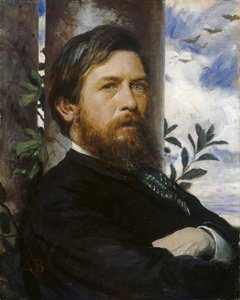
1827–1901, Sveitsi
Arnold Böcklin
Saaren varjo Basel, Sveitsi, tarjoaa lähtöpisteen elämälle, jota määrittää jännite aineellisen ja aavemaisen välillä. 16. lokakuuta 1827 syntynyt nuori mies, Christian Frederick Böcklinin ja Ursula Lippen poika, siirtyi lopulta isänsä silkkikaupan maailmasta Düsseldorfin akatemian kurinalaisiin saleihin. Schirmerin ohjauksessa hän alkoi omaksua maiseman kieltä, taidoksi, jota hän myöhemmin käytti ihmissielun maantiedon kartoittamiseen.
Tietoa kohteesta Arnold Böcklin Arnold Böcklinn merkittävimpiä teoksia
Myös Arnold Böcklin -teoksia
 Kuolleiden saari (ensimmäinen versio)1880
 Itsekuva kuoleman soittaessa viulua
 Sota1896
 The Isle of the Dead (Version 2)1880

Esseitä teoksesta Spring Evening
 French artworks of the 1880sFrench Impressionist masterpieces by Claude Monet, Pierre-Auguste Renoir, and Georges Seurat. Find museum-quality reproductions on Original…
 Symphony of Sunlight: The Luminous Legacy of Pine Tree Landscapes in Art HistoryExplore the luminous history of pine landscapes through Sorolla and Shishkin. Discover the magic of forest art today.
 En Plein Air Serenity: Exploring the Luminous Beauty of Impressionist Garden ArtExplore the luminous history of Impressionist garden art through Monet and Van Gogh. Discover the magic of plein air painting today.