

 Katso seinällä
 Lähetä
 Jaa
Jaa
 Tarkemmat tiedot
 Opas
Opas

 Lataa kuva
 Samanlaisia kohteita
 Röntgenkuvaus
 Diaesitys
 Tilastot
Sleeping Diana Watched by Two Fauns
 Acrylic On Canvas
- WallArt
- Symbolist Painting
 1877
1877 50.0 x 774.0 cm
 Kunstpalast
 Lue lisää
Giclée- ja taideprintit
Museolaatuisia giclée- tai kankaitaulun tulosteita nopealla tuotannolla ja joustavilla viimeistelyvaihtoehdoilla. ( Tilaa käsinmaalattu jäljennös Siirry digitaaliseen kuvaan)




P118B $10

P118H $10

P118W $10

P438Z $10

P508JH $12

P508YH $12

P805H $10

P805Z $10

P919BZ $10

P919G $10

P919XJ $10

P959ZH $10

P968JZ $12

W106C $8

W218G $10

W218JH $8

W218Y $10

W307PJ $10

W316G $10

W316PJ $8

W316Y $10

W398PJ $8

W4111J $10

W500HY $15

W500JH $15

W692G $12

W849H $8

W940BG $15

W953PJ $8




Valitse valmiista mitoistamme sellaiset, jotka vastaavat teoksen alkuperäisiä mittasuhteita.

Voit syöttää omat mitat sopiaksesi tiettyyn kehykseen tai tilaan. Jos valittu koko ei vastaa alkuperäisen kuvan mittasuhteita, rajaamme teosta tai laajennamme kuvaa peilatulla tai yhtenäisellä reunalla. Digitaalinen mallikuva lähetetään hyväksyttäväksi ennen tuotannon aloittamista.
Huomaathan, että näytöllä näkyvä esikatselu ei vastaa lopullista rajausta tai laajennusta. Vain mallikuva näyttää lopullisen sommittelun tarkasti.
Vaikka räätälöityjä kokoja on saatavilla, suosittelemme valitsemaan mitat valmiista listasta alkuperäisten mittasuhteiden säilyttämiseksi.
Maailmanlaajuinen toimitus () 2 viikossa tavallisen 4–5 viikon sijaan. (26 syyskuu)

Ilmainen pikatoimitus ympäri maailman

Korkealaatuinen pellavakangas

Kattava kuljetusvakuutus

Tulliveron palautustakuu

Takuu täydellisestä värien vastaavuudesta

100 päivän palautusoikeus valmistusvirhetapauksissa

100% rahat takaisin -takuu

Määräalennus saatavilla
 Lasivaihtoehto on saatavilla vain alle 110 cm kokoisille teoksille

Sleeping Diana Watched by Two Fauns
Giclée- ja taideprintit
Replikaatin koko
-


Kokonaishinta
$ 80
The Enigmatic Realm of Arnold Böcklin’s “Sleeping Diana”
Arnold Böcklin's "Sleeping Diana Watched by Two Fauns," painted in 1877-85, is not merely a depiction of a serene woodland scene; it’s an immersion into a realm of potent symbolism and haunting beauty. This tempera on panel masterpiece, currently residing in the Museum Kunstpalast in Düsseldorf, immediately draws the viewer into a world where classical mythology intertwines with unsettling introspection. The painting's power lies not just in its exquisite detail – the dappled sunlight filtering through ancient trees, the delicate folds of Diana’s gown – but in the palpable tension between innocence and primal instinct, restraint and desire.
Böcklin, a key figure in the Symbolist movement, rejected the naturalism prevalent in earlier art. Instead, he sought to evoke emotions and ideas through suggestive imagery, often drawing upon folklore, mythology, and the darker aspects of human experience. His work frequently explores themes of death, decay, and the subconscious—elements subtly woven into this particular composition. The painting’s genesis is rooted in a fascination with the ancient world, particularly Roman art and literature, combined with a deeply personal exploration of mortality and the fleeting nature of beauty.
A Dance of Contrasts: Goddess and Creatures
At the heart of “Sleeping Diana” lies a captivating interplay of figures. The goddess Diana, depicted in a state of languid repose upon a moss-covered rock, embodies purity, chastity, and the hunt—attributes traditionally associated with her role as protector of young women. Her serene expression and graceful posture suggest both vulnerability and an underlying strength. However, this idealized image is dramatically contrasted by the two fauns flanking her. These creatures, rendered with a touch of unsettling realism, possess a distinctly animalistic quality, their hands almost touching in a gesture that hints at a suppressed, perhaps even forbidden, attraction.
The positioning of the fauns—one reaching out tentatively towards Diana, the other holding back—creates a dynamic tension. It’s not a violent confrontation, but rather a delicate negotiation between opposing forces: the divine and the earthly, the rational and the instinctual, the controlled and the wild. The subtle shift in their postures suggests a moment suspended in time, a fleeting glimpse into a primal drama.
Technique and Atmosphere – A Palette of Twilight
Böcklin’s masterful technique contributes significantly to the painting's evocative atmosphere. He employed a rich, layered application of tempera paint, creating a sense of depth and texture that captures the dappled light filtering through the trees. The color palette is dominated by muted greens, browns, and blues—tones reminiscent of twilight or early morning—which imbue the scene with a melancholic beauty. Böcklin’s use of chiaroscuro – the dramatic contrast between light and shadow – further enhances the painting's emotional impact, drawing attention to Diana’s form while simultaneously shrouding the surrounding landscape in mystery.
Notably, Böcklin was influenced by the Italian Renaissance color palettes, particularly those favored during the Early Renaissance. This influence is evident in the warm, earthy tones and the overall sense of harmony and balance within the composition. The meticulous detail in rendering the foliage and the subtle nuances of light and shadow demonstrate Böcklin’s exceptional skill as a landscape painter.
Symbolism and Enduring Resonance
“Sleeping Diana Watched by Two Fauns” is replete with symbolic meaning, inviting multiple interpretations. The painting can be read as an allegory for the tension between desire and restraint, innocence and experience, or perhaps even the struggle to maintain control over one’s impulses. The fauns themselves are often interpreted as representing the darker aspects of human nature—the primal instincts that lie beneath the surface of civilized society. Diana's sleep can be seen as a state of vulnerability, while the watchful fauns embody the constant threat of temptation and transgression.
Despite its somewhat unsettling undertones, “Sleeping Diana” remains a profoundly beautiful and captivating work of art. It’s a testament to Böcklin’s ability to capture not just visual beauty but also the complex emotions and psychological states that lie beneath the surface of human experience. Reproductions of this iconic painting continue to resonate with viewers today, offering a glimpse into a world where myth, symbolism, and timeless beauty converge.
Taiteilijan elämäkerta
Early Life and Training
Arnold Böcklin, a name synonymous with haunting beauty and profound melancholy, was born on October 16, 1827, in Basel, Switzerland—a city steeped in history and artistic tradition. His father, Christian Frederick Böcklin, descended from an old family connected to the silk trade, while his mother, Ursula Lippe, hailed from the same city as well. From a young age, Arnold displayed a keen interest in art, enrolling at the Zeichenschule (drawing school) of Basel under the guidance of Ludwig Adam Kelterborn. This foundational training provided him with essential skills and an appreciation for classical techniques. Four years later, in 1845, he moved to Düsseldorf, Germany, where he joined the prestigious Düsseldorf Academy and studied under the renowned landscape painter Johann Wilhelm Schirmer. It was here that Böcklin’s artistic journey truly began, forging a connection with fellow students like Anselm Feuerbach—a relationship that would profoundly influence his creative development. The Düsseldorf school of painting, known for its emphasis on realism and dramatic landscapes, provided Böcklin with a crucial platform to hone his skills and explore diverse artistic approaches.Artistic Career and Symbolism
Böcklin’s artistic trajectory led him through various European cities—Paris, where he worked at the Louvre, and Rome, where he was deeply immersed in the city's classical heritage. These experiences profoundly shaped his style, introducing him to a rich tapestry of influences ranging from Renaissance masters to contemporary trends. His early works often featured allegorical and mythological figures set against evocative landscapes, exploring themes of mortality, dreams, and the subconscious—elements that would become central to his artistic vision. Notable examples from this period include *Nymph and Satyr* (1858) and *Sappho* (1859), which showcased a burgeoning talent for creating atmospheric scenes filled with symbolic resonance. A particularly significant work during this time was *Great Park*, an early exploration of ancient mythology that demonstrated his ability to weave narrative and emotion into his compositions. Later, Böcklin’s style evolved, incorporating elements of Romanticism and Pre-Raphaelitism, culminating in his most celebrated achievement: the five versions of *Isle of the Dead* (1880-1886). This monumental series, inspired by the English cemetery in Florence—where his daughter was buried—became an enduring symbol of Böcklin’s artistic legacy.The Isle of the Dead and Last Years
The *Isle of the Dead*, a sprawling and intensely evocative work, represents the pinnacle of Böcklin's career. Each version of this painting offers a unique interpretation of death and remembrance, employing a haunting blend of symbolism, color, and composition to create an atmosphere of profound melancholy. The series’ success not only cemented Böcklin’s reputation but also captivated artists and composers alike—inspiring works by figures such as the Russian composer Sergei Rachmaninoff, who set four poems related to the painting to music. In his later years, Böcklin's artistic focus shifted towards more introspective and symbolic themes, often depicting solitary figures or enigmatic landscapes imbued with a sense of mystery and foreboding. Works like *Odysseus and Calypso* (1883) and *The Pest* (1898) reveal a deepening engagement with the darker aspects of human existence—a characteristic that foreshadowed the rise of Expressionism in the 20th century. Despite facing health challenges, including a debilitating illness that affected his ability to paint, Böcklin continued to create until his death on January 16, 1901, in San Domenico, Italy.Legacy and Influence
Arnold Böcklin’s impact on the art world is undeniable. He is widely regarded as one of the most important figures of the Symbolist movement—a late-Romantic artistic current that emphasized subjective experience, emotional intensity, and the exploration of the subconscious. His work resonated deeply with artists seeking to move beyond traditional representational techniques and express their inner worlds through evocative imagery. Böcklin’s influence extended far beyond the confines of Symbolism, inspiring Surrealist painters like Salvador Dalí, who recognized in his art a premonition of the dreamlike landscapes that would characterize the Surrealist movement. Clement Greenberg famously described Böcklin's work as "one of the most consummate expressions" of its time—a testament to the enduring power and originality of his vision. His distinctive style, characterized by its haunting beauty, symbolic depth, and exploration of mortality, continues to captivate audiences today, solidifying Arnold Böcklin’s place as a pivotal figure in the history of art.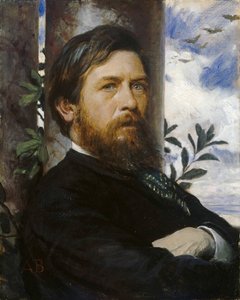
Arnold Böcklin
1827 - 1901 , Sveitsi
Tietoa taiteilijasta
- Artistic Movement Or Style: Symbolismi
- Artists Or Movements Influenced By This Artist:
- Hans Thoma
- Pre-Raphaelistit
- Artists Who Influenced This Artist:
- Schirmer
- Feuerbach
- Date Of Birth: 16. lokakuuta 1827
- Date Of Death: 16. tammikuuta 1901
- Full Name: Arnold Böcklin
- Nationality: Sveitsiläinen
- Notable Artworks:
- Kuolleiden saari
- Nymfi ja satyri
- Sappho
- Place Of Birth: Basel, Sveitsi
Aiheeseen liittyvät artikkelit

Timeless Legends: The Eternal Allure of Mythological Figures in Masterpiece Art
Explore the profound beauty of mythological figures through the lens of art history. From Renaissance masterpieces to custom oil reproductions, discover how legendary tales of heroism and divinity are immortalized in fine art for discerning collectors.
Echoes of Olympus: Mythological Narratives in Western Art Through the Ages
Explore the captivating history of mythological narratives in Western art! From ancient Greece to modern masterpieces, discover iconic artworks & symbolism. Expert analysis and high-quality reproductions at OriginalUniqueArt.
Timeless Legends: A Curated Guide to the Eternal Allure of Mythological Masterpieces
Embark on a sophisticated journey through the eternal allure of mythological art. Discover how master painters breathe life into ancient legends, from Greek deities to Baroque masterpieces, and learn to curate these timeless narratives within your own exquisite art collection.
Franz von Stuck: Symbolism, Decadence & the Pursuit of Ideal Beauty
Explore the captivating world of Franz von Stuck, a leading Symbolist painter. Discover his mythological masterpieces, decadent themes, & investment potential. Expert analysis for discerning collectors.
Henkilökohtaiset mytologiat öljyvärimaalauksessa: Tarinoiden visuaalinen tulkinta ja symbolien voima
Tutustu henkilökohtaisten mytologioiden kiehtovaan maailmaan öljyvärimaalauksessa. Syvennä ymmärrystäsi symbolismin voimasta ja tarinankerronnan taiteesta. Asiantuntija-analyysi keräilijöille ja taideharrastajille.
