

 Katso seinällä
 Lähetä
 Jaa
Jaa
 Tarkemmat tiedot
 Opas
Opas

 Lataa kuva
 Samanlaisia kohteita
 Röntgenkuvaus
 Diaesitys
 Tilastot
Shield with Gorgon


 Lue lisää
Giclée- ja taideprintit
Museolaatuisia giclée- tai kankaitaulun tulosteita nopealla tuotannolla ja joustavilla viimeistelyvaihtoehdoilla. ( Tilaa käsinmaalattu jäljennös Siirry digitaaliseen kuvaan)




P118B €10

P118H €10

P118W €10

P438Z €10

P508JH €12

P508YH €12

P805H €10

P805Z €10

P919BZ €10

P919G €10

P919XJ €10

P959ZH €10

P968JZ €12

W106C €8

W218G €10

W218JH €8

W218Y €10

W307PJ €10

W316G €10

W316PJ €8

W316Y €10

W398PJ €8

W4111J €10

W500HY €15

W500JH €15

W692G €12

W849H €8

W940BG €15

W953PJ €8




Valitse valmiista mitoistamme sellaiset, jotka vastaavat teoksen alkuperäisiä mittasuhteita.

Kirjoita tarvitsemasi leveys ja korkeus, jotta tuloste sopii kehyskokoon tai seinällesi. Tulostetta voidaan vain leikata, sitä ei voi koskaan tehdä suuremmaksi kuin alkuperäinen kuva, joten eri muotoinen koko aiheuttaa osan kuvasta katoamisen. Lähetämme sinulle digitaalisen mallikuvan hyväksyttäväksi ennen kuin aloitamme tulostuksen. Tällä sivulla näkyvä kuva ei näytä lopullista leikkausta — vain mallikuva näyttää sen.
Maailmanlaajuinen toimitus () 2 viikossa tavallisen 4–5 viikon sijaan. (22 lokakuu)

Ilmainen pikatoimitus ympäri maailman

Korkealaatuinen pellavakangas

Kattava kuljetusvakuutus

Tulliveron palautustakuu

Takuu täydellisestä värien vastaavuudesta

100 päivän palautusoikeus valmistusvirhetapauksissa

100% rahat takaisin -takuu

Määräalennus saatavilla
 Lasivaihtoehto on saatavilla vain alle 110 cm kokoisille teoksille

Shield with Gorgon
Giclée- ja taideprintit
Replikaatin koko
-


Kokonaishinta
€ 70
Shield with Gorgon – A Meditation on Mortality and Ancient Myth
The sculpture “Shield with Gorgon’s Head,” created by Arnold Böcklin in 1897, stands as a haunting testament to the artist's fascination with Greco-Roman mythology and his profound contemplation of death. Exhibited prominently at the Musée d’Orsay in Paris, this piece transcends mere representation; it invites viewers into a realm of psychological exploration where beauty intertwines with unsettling truths. Böcklin, deeply influenced by Nietzschean philosophy – specifically the concept of eternal recurrence – sought to capture not just an image but an experience, mirroring the cyclical nature of existence and confronting us with our inevitable demise.Style and Technique: Symbolist Precision
Böcklin’s style aligns perfectly with the tenets of Symbolism, a movement that rejected realism in favor of conveying emotions and ideas through suggestive imagery rather than literal depiction. Unlike Impressionists who aimed to capture fleeting moments of light and color, Böcklin meticulously crafted his sculpture using a technique rooted in meticulous observation and symbolic distillation. The artist employed a combination of modeling clay and bronze casting – a process demanding considerable skill and patience – to achieve an astonishing level of detail. Notice the subtle gradations of tone within the Gorgon’s head; these aren't merely aesthetic choices but deliberate efforts to convey texture and depth, mirroring the complexities of human emotion. The smooth surface contrasts sharply with the rough contours of the snake’s coils, creating a visual dialogue that underscores the sculpture’s thematic concerns.Historical Context: Nietzschean Echoes and Late Romantic Sentiment
Böcklin's artistic output flourished during the waning years of the Romantic era, a period characterized by an obsession with emotion, imagination, and the sublime—experiences perceived as exceeding human comprehension yet simultaneously elevating the soul. However, Böcklin’s vision extended beyond traditional Romantic tropes; he actively engaged with the burgeoning intellectual currents of his time, particularly Nietzsche's proclamation that “God is dead.” This existential crisis fueled Böcklin’s exploration of themes like nihilism and mortality—concepts central to both Nietzschean thought and Symbolist art. The sculpture reflects a broader cultural preoccupation with confronting death not as an end but as a transformative stage in the cosmic cycle, mirroring Nietzsche's assertion that life itself is an affirmation of eternal recurrence.Symbolism Unleashed: Gorgon’s Head – Terror and Transformation
The Gorgon Medusa represents more than just monstrous horror; she embodies the terrifying power of transformation—a concept inextricably linked to Böcklin’s Symbolist worldview. According to Greek mythology, Medusa possessed snakes for hair that turned anyone who gazed upon them into stone. This image served as a potent symbol of inescapable fate and the destructive force of repressed emotions. The sculptor skillfully captures this duality: the Gorgon's gaze exudes palpable terror, yet simultaneously hints at an underlying process of metamorphosis—a suggestion that confronting death can lead to profound spiritual renewal. Böcklin’s deliberate use of serpentine coils reinforces this symbolism, representing both constriction and liberation – mirroring the artist’s own preoccupation with reconciling beauty and darkness.Emotional Impact: A Confrontation With Eternity
Ultimately, “Shield with Gorgon’s Head” compels viewers to confront their own mortality—to grapple with the inescapable reality that life is finite yet perpetually reborn. The sculpture's unsettling stillness invites contemplation, prompting us to consider our place within the grand scheme of cosmic time. Böcklin doesn’t offer comfort or reassurance; instead, he presents a stark portrait of existence stripped bare – confronting us with the beauty and terror inherent in accepting death as an inevitable component of life’s eternal dance. It is precisely this unflinching gaze—this refusal to shy away from uncomfortable truths—that secures “Shield with Gorgon’s Head”'s enduring power as a masterpiece of Symbolist art and a timeless meditation on the human condition.Kysymykset ja vastaukset
Mikä sijoittelu sopii teoksen Arnold Böcklin:n "Shield with Gorgon" formaattiin?
Arnold Böcklin:n "Shield with Gorgon" -teoksen Square -muoto on suositeltava Living Room-tilaan. Muoto ja tila ohjaavat yhdessä reproduktion sijoittelua.
Miten teoksen "Shield with Gorgon" aihe liittyy Arnold Böcklin'n tavallisiin teemoihin?
Arnold Böcklin:n tunnettujen teemojen – greek mythology, symbolism, death, mortality themes, romantic idealism vision, classical forms beauty, medieval gothic style – joukossa "Shield with Gorgon" tuo oman painopisteensä aiheeseen mythology, gorgon, snake, sculpture, classical, death, symbolism, medieval.
Mistä "Shield with Gorgon" on valmistettu?
Arnold Böcklin käytti tekniikkana Acrylic On Canvas-tekniikkaa teoksessa "Shield with Gorgon". Tekniikka määrittelee alkuperäisen teoksen materiaalisen luonteen.
Taiteilijan elämäkerta
Early Life and Training
Arnold Böcklin, a name synonymous with haunting beauty and profound melancholy, was born on October 16, 1827, in Basel, Switzerland—a city steeped in history and artistic tradition. His father, Christian Frederick Böcklin, descended from an old family connected to the silk trade, while his mother, Ursula Lippe, hailed from the same city as well. From a young age, Arnold displayed a keen interest in art, enrolling at the Zeichenschule (drawing school) of Basel under the guidance of Ludwig Adam Kelterborn. This foundational training provided him with essential skills and an appreciation for classical techniques. Four years later, in 1845, he moved to Düsseldorf, Germany, where he joined the prestigious Düsseldorf Academy and studied under the renowned landscape painter Johann Wilhelm Schirmer. It was here that Böcklin’s artistic journey truly began, forging a connection with fellow students like Anselm Feuerbach—a relationship that would profoundly influence his creative development. The Düsseldorf school of painting, known for its emphasis on realism and dramatic landscapes, provided Böcklin with a crucial platform to hone his skills and explore diverse artistic approaches.Artistic Career and Symbolism
Böcklin’s artistic trajectory led him through various European cities—Paris, where he worked at the Louvre, and Rome, where he was deeply immersed in the city's classical heritage. These experiences profoundly shaped his style, introducing him to a rich tapestry of influences ranging from Renaissance masters to contemporary trends. His early works often featured allegorical and mythological figures set against evocative landscapes, exploring themes of mortality, dreams, and the subconscious—elements that would become central to his artistic vision. Notable examples from this period include *Nymph and Satyr* (1858) and *Sappho* (1859), which showcased a burgeoning talent for creating atmospheric scenes filled with symbolic resonance. A particularly significant work during this time was *Great Park*, an early exploration of ancient mythology that demonstrated his ability to weave narrative and emotion into his compositions. Later, Böcklin’s style evolved, incorporating elements of Romanticism and Pre-Raphaelitism, culminating in his most celebrated achievement: the five versions of *Isle of the Dead* (1880-1886). This monumental series, inspired by the English cemetery in Florence—where his daughter was buried—became an enduring symbol of Böcklin’s artistic legacy.The Isle of the Dead and Last Years
The *Isle of the Dead*, a sprawling and intensely evocative work, represents the pinnacle of Böcklin's career. Each version of this painting offers a unique interpretation of death and remembrance, employing a haunting blend of symbolism, color, and composition to create an atmosphere of profound melancholy. The series’ success not only cemented Böcklin’s reputation but also captivated artists and composers alike—inspiring works by figures such as the Russian composer Sergei Rachmaninoff, who set four poems related to the painting to music. In his later years, Böcklin's artistic focus shifted towards more introspective and symbolic themes, often depicting solitary figures or enigmatic landscapes imbued with a sense of mystery and foreboding. Works like *Odysseus and Calypso* (1883) and *The Pest* (1898) reveal a deepening engagement with the darker aspects of human existence—a characteristic that foreshadowed the rise of Expressionism in the 20th century. Despite facing health challenges, including a debilitating illness that affected his ability to paint, Böcklin continued to create until his death on January 16, 1901, in San Domenico, Italy.Legacy and Influence
Arnold Böcklin’s impact on the art world is undeniable. He is widely regarded as one of the most important figures of the Symbolist movement—a late-Romantic artistic current that emphasized subjective experience, emotional intensity, and the exploration of the subconscious. His work resonated deeply with artists seeking to move beyond traditional representational techniques and express their inner worlds through evocative imagery. Böcklin’s influence extended far beyond the confines of Symbolism, inspiring Surrealist painters like Salvador Dalí, who recognized in his art a premonition of the dreamlike landscapes that would characterize the Surrealist movement. Clement Greenberg famously described Böcklin's work as "one of the most consummate expressions" of its time—a testament to the enduring power and originality of his vision. His distinctive style, characterized by its haunting beauty, symbolic depth, and exploration of mortality, continues to captivate audiences today, solidifying Arnold Böcklin’s place as a pivotal figure in the history of art.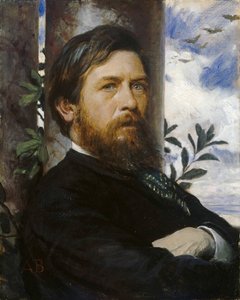
Arnold Böcklin
1827 - 1901 , Sveitsi
Tietoa taiteilijasta
- Artistic Movement Or Style: Symbolismi
- Artists Or Movements Influenced By This Artist:
- Hans Thoma
- Pre-Raphaelistit
- Artists Who Influenced This Artist:
- Schirmer
- Feuerbach
- Date Of Birth: 16. lokakuuta 1827
- Date Of Death: 16. tammikuuta 1901
- Full Name: Arnold Böcklin
- Nationality: Sveitsiläinen
- Notable Artworks:
- Kuolleiden saari
- Nymfi ja satyri
- Sappho
- Place Of Birth: Basel, Sveitsi
Aiheeseen liittyvät artikkelit

Theatricality & Triumph: Baroque Drama in Painting & Sculpture
Explore the dramatic world of Baroque art! Discover its history, defining characteristics, & lasting influence on painting & sculpture. Expert insights into Caravaggio, Zurbarán, and Bernini – plus high-quality reproductions at OriginalUniqueArt.

The Enduring Form: Exploring Themes & Techniques in Sculpture Across Historical Periods
Explore the rich history of sculpture from ancient masterpieces to contemporary innovations. Discover key techniques, influential artists & investment potential for discerning art collectors.

10 legendaarista pronssiveistosta, jotka mullistivat taiteen – OriginalUniqueArt.com
Tutustu 10 legendaariseen pronssiveistokseen, jotka ovat muuttaneet taiteen historiaa! Rodinista Michelangeloon – opi mestareiden tarinat ja löydä täydellinen taideteos kotiisi OriginalUniqueArt.com:ssa. Laadukkaat jäljennökset & sisustusideat.

The Enduring Form: Sculpture Across History, Technique & Emotional Resonance
Explore the rich history of sculpture with OriginalUniqueArt. Discover key techniques, influential artists & investment potential for discerning collectors. Expert insights into valuing and collecting timeless masterpieces.

10 legendaarista pronssiveistosta, jotka mullistivat taiteen – OriginalUniqueArt.com
Tutustu 10 legendaariseen pronssiveistokseen, jotka ovat muokanneet taiteen historiaa! Michelangelo, Rodin ja muut mestarit. Löydä inspiraatiota sisustukseesi ja tutki upeita taideteoksia OriginalUniqueArt.com-sivustolta.
