Romanticism · 1890
Honeymoon (Arnold Böcklin, 1890)
Arnold Böcklin (1827–1901) on luonut teoksen Honeymoon. Se on peräisin vuodelta 1890. Se kuuluu Romanticism-liikkeeseen. Se on valmistettu materiaalilla Oil On Canvas. Teos sijaitsee Städel Museum -museossa paikassa Frankfurt, Saksa. Koko on 72 × 52 cm.
- 1890
- Oil On Canvas
- 72 × 52 cm
- Städel Museum, Frankfurt

 Esikatselu

 Käsinmaalattu öljymaalaus
 Jaa teos
 Jaa
 Tiedot-arkki


 Lataa kuva
 Samanlaisia kohteita
 Röntgenkuvaus
 Diaesitys
 Kysymykset ja vastaukset

 Tilastot
Honeymoon lyhyesti
- Otsikko
- Honeymoon
- Taiteilija
- Arnold Böcklin (1827–1901)
- Taiteilija syntynyt
- Basel, Sveitsi
- Päivämäärä
- 1890
- Tekniikka
- Oil On Canvas
- Mitat
- 72 × 52 cm
- Missä teos on nähtävissä
- Städel Museum, Frankfurt, Saksa
- Tyylisuunta
- Romanticism
- Aikakausi
- 19th Century
- Aihe
- romantic landscape, mountain view, intimate scene, atmospheric art, detailed texture, ethereal mood
Mitä Honeymoon esittää?
A Moment of Sublime Romance: Arnold Böcklin’s “Honeymoon”
Arnold Böcklin's "Honeymoon," painted in 1890, is more than just a picturesque landscape; it’s a carefully constructed meditation on love, aspiration, and the profound connection between humanity and nature. Measuring 72 x 52 cm, this oil-on-canvas work exemplifies Böcklin's signature style within the Symbolist movement – a style characterized by its evocative mood, symbolic resonance, and meticulous attention to detail. The scene depicts a young couple perched atop a rugged rock formation, overlooking a vast, hazy expanse that speaks of both beauty and mystery. It’s a tableau designed not merely to represent a romantic encounter but to evoke a deeply felt emotion within the viewer.
Romanticism's Embrace: Composition and Technique
- Compositional Strength: The figures, centrally placed yet subtly distanced, draw the eye immediately, establishing a powerful focal point. The horizontal thrust of the rocky outcrop anchors the scene while simultaneously directing the gaze towards the distant landscape. This deliberate arrangement creates a sense of depth and stability, crucial elements within Böcklin’s approach.
- Meticulous Brushwork: Böcklin's technique is immediately apparent in the incredibly detailed brushwork. Layer upon layer of oil paint has been skillfully applied to build up the textures of the stone – rough, weathered, and undeniably ancient – as well as the flowing drapery of the woman’s dress and the delicate strands of her hair. This painstaking process imbues the painting with a remarkable tactile quality.
- Atmospheric Perspective: The use of atmospheric perspective—the subtle blurring of details in the background to suggest distance—further enhances the illusion of depth, transporting the viewer into this serene, almost dreamlike setting.
Symbolic Layers: Interpretation and Meaning
“Honeymoon” is rich with symbolic meaning, reflecting Böcklin’s fascination with themes of mortality, mythology, and the human condition. The elevated position of the figures on the rocky outcrop can be interpreted as a representation of aspiration – a desire to reach for something beyond the mundane. The vast landscape behind them symbolizes the immensity of emotion or experience, suggesting that love is both intensely personal and profoundly connected to the wider world. The muted color palette—browns, ochres, and greens—contributes to the painting’s melancholic yet hopeful mood, reminiscent of Romanticism's exploration of intense feelings and the sublime.
A Masterpiece of the Symbolist Era
Painted in 1890, “Honeymoon” stands as a testament to Arnold Böcklin’s mastery of the Symbolist style. His ability to capture not just visual beauty but also profound emotional and symbolic resonance is evident in every detail. This artwork offers a glimpse into the heart of the Symbolist movement – a movement that sought to express ideas and emotions through evocative imagery, rather than literal representation. A hand-painted reproduction of “Honeymoon” would bring this timeless piece into any interior space, offering a touch of Romantic elegance and contemplative beauty.
Missä museossa teos Honeymoon on?
Städel Museum
Frankfurt, Saksa
Städel Museumin juuret ja historia Städel Museumin tarina saa alkunsa Frankfurtilaisen pankkiirin ja taiteen suosijan Johann Friedrich Städelin henkilökohtaisesta kokoelmasta. Vuonna 1815 perustettu säätiö muuttui viralliseksi instituutioksi vuonna 1817, ja Städelin visio oli syvä: hän halusi säilyttää arvokkaat omaisuutensa ja avata taiteen maailman yleisölle. Hänen testamentissaan museon ytimeksi muodostui lähes 500 maalausta, 4 600 piirustusta sekä 10 000 grafiikan teosta, jotka kutsuivat katsojat historian äärelle.


Honeymoon korkearesoluutioiset kuvat

Arnold Böcklin, Honeymoon (1890), Städel Museum. Tekijänoikeudet vapaat.
Kysymyksiä teoksesta Honeymoon, vastaukset
Missä teosta Arnold Böcklin:n "Honeymoon" voidaan tällä hetkellä nähdä?
Alkuperäinen Arnold Böcklin:n "Honeymoon" on osa Städel Museum, Frankfurt, Saksa-museon kokoelmaa. Reproduktio mahdollistaa teoksen näyttämisen kotona.
Milloin teos Arnold Böcklin:n "Honeymoon" on luotu?
Arnold Böcklin:n "Honeymoon" on luotu vuonna 1890.
Mitä tekniikkaa teoksessa Arnold Böcklin:n "Honeymoon" on käytetty?
Teoksen Arnold Böcklin:n "Honeymoon" tekniikka on Oil On Canvas. Vedosten tavoitteena on jäljitellä tämän tekniikan ulkoasua.
Mitkä ovat alkuperäisen Arnold Böcklin:n "Honeymoon" mitat?
Teoksen Arnold Böcklin:n "Honeymoon" mitat ovat 72 x 52 cm. Vedoksia voi tilata muissa koossa säilyttäen samat mittasuhteet.
Mitä "Honeymoon" esittää?
Teoksen "Honeymoon" aiheina ovat romantic landscape, mountain view, intimate scene, atmospheric art, detailed texture, ethereal mood, symbolism, vintage painting.
Onko Arnold Böcklin:n "Honeymoon" vapaasti käytettävissä oleva teos?
Tekijänoikeuksien osalta teos "Honeymoon" on vapaasti käytettävissä – tekijänoikeussuoja on päättynyt.
Kuka on luonut teoksen "Honeymoon"?
"Honeymoon" on Arnold Böcklin:n luoma teos. Tällä sivulla olevat tiedot kuvaavat Arnold Böcklin:n alkuperäistä työtä.
Mihin tyylisuuntaan "Honeymoon" kuuluu?
Arnold Böcklin:n "Honeymoon" kuuluu Romanticism-suuntaukseen. Tämä tyylisuunta antaa teokselle sen tyylillisen kontekstin.
Mihin Arnold Böcklin'n uran vaiheeseen "Honeymoon" kuuluu?
Arnold Böcklin'n uralla teos "Honeymoon" sijoittuu aikakaudelle Mature Period. Tämä vaihe auttaa vertaamaan sitä taiteilijan muihin teoksiin.
Tietoa taiteilijasta, Arnold Böcklin
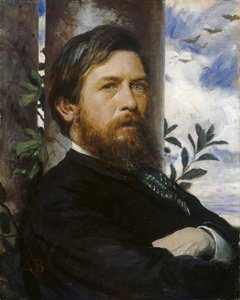
1827–1901, Sveitsi
Arnold Böcklin
Saaren varjo Basel, Sveitsi, tarjoaa lähtöpisteen elämälle, jota määrittää jännite aineellisen ja aavemaisen välillä. 16. lokakuuta 1827 syntynyt nuori mies, Christian Frederick Böcklinin ja Ursula Lippen poika, siirtyi lopulta isänsä silkkikaupan maailmasta Düsseldorfin akatemian kurinalaisiin saleihin. Schirmerin ohjauksessa hän alkoi omaksua maiseman kieltä, taidoksi, jota hän myöhemmin käytti ihmissielun maantiedon kartoittamiseen.
Tietoa kohteesta Arnold Böcklin Arnold Böcklinn merkittävimpiä teoksia
Myös Arnold Böcklin -teoksia
 Kuolleiden saari (ensimmäinen versio)1880
 Itsekuva kuoleman soittaessa viulua
 Sota1896
 The Isle of the Dead (Version 2)1880

Esseitä teoksesta Honeymoon
 A Study in Melancholy: Finding Human Sorrow within the Post-Impressionist TraditionExplore the profound expression of grief through Munch, Van Gogh, and Degas. Discover the soul of Post-Impressionism with our expert study.
 The Language of Brushstrokes: Decoding Emotion and Technique in Art HistoryExplore the profound connection between technique and emotion. From the sculptural depth of impasto to classical mastery, decode the langua…
 Nature's Sublime Majesty: The Emotional Resonance and Spiritual Depth of Romantic Landscape PaintingExplore the spiritual depth of German Romanticism and Caspar David Friedrich's sublime landscapes. Discover the power of nature's majesty n…