

 Katso seinällä
 Lähetä
 Jaa
Jaa
 Tarkemmat tiedot
 Opas
Opas

 Lataa kuva
 Samanlaisia kohteita
 Röntgenkuvaus
 Diaesitys
 Tilastot
Centaur Watching Fish
 Oil On Canvas
- WallArt
- Symbolism
 1878
1878- 19th Century
 43.0 x 70.0 cm
 Kunsthaus Zürich
 Lue lisää
Giclée- ja taideprintit
Museolaatuisia giclée- tai kankaitaulun tulosteita nopealla tuotannolla ja joustavilla viimeistelyvaihtoehdoilla. ( Tilaa käsinmaalattu jäljennös Siirry digitaaliseen kuvaan)




P118B €10

P118H €10

P118W €10

P438Z €10

P508JH €12

P508YH €12

P805H €10

P805Z €10

P919BZ €10

P919G €10

P919XJ €10

P959ZH €10

P968JZ €12

W106C €8

W218G €10

W218JH €8

W218Y €10

W307PJ €10

W316G €10

W316PJ €8

W316Y €10

W398PJ €8

W4111J €10

W500HY €15

W500JH €15

W692G €12

W849H €8

W940BG €15

W953PJ €8




Valitse valmiista mitoistamme sellaiset, jotka vastaavat teoksen alkuperäisiä mittasuhteita.

Kirjoita tarvitsemasi leveys ja korkeus, jotta tuloste sopii kehyskokoon tai seinällesi. Tulostetta voidaan vain leikata, sitä ei voi koskaan tehdä suuremmaksi kuin alkuperäinen kuva, joten eri muotoinen koko aiheuttaa osan kuvasta katoamisen. Lähetämme sinulle digitaalisen mallikuvan hyväksyttäväksi ennen kuin aloitamme tulostuksen. Tällä sivulla näkyvä kuva ei näytä lopullista leikkausta — vain mallikuva näyttää sen.
Maailmanlaajuinen toimitus () 2 viikossa tavallisen 4–5 viikon sijaan. (20 lokakuu)

Ilmainen pikatoimitus ympäri maailman

Korkealaatuinen pellavakangas

Kattava kuljetusvakuutus

Tulliveron palautustakuu

Takuu täydellisestä värien vastaavuudesta

100 päivän palautusoikeus valmistusvirhetapauksissa

100% rahat takaisin -takuu

Määräalennus saatavilla
 Lasivaihtoehto on saatavilla vain alle 110 cm kokoisille teoksille

Centaur Watching Fish
Giclée- ja taideprintit
Replikaatin koko
-


Kokonaishinta
€ 70
A Silent Meditation on Nature and Mortality
In the quietude of Arnold Böcklin’s 1878 masterpiece, “Centaur Watching Fish,” the viewer is invited into a realm where the boundaries between the mythological and the terrestrial dissolve. This evocative oil on canvas, currently held in the prestigious Kunsthaus Zürich, serves as a profound gateway into the Symbolist movement—a period of art history dedicated to exploring the hidden psychological depths of the human soul. Rather than presenting a mere scene from ancient legend, Böcklin crafts an immersive experience that speaks to the universal themes of solitude and the silent, rhythmic pulse of the natural world. The centaur, a creature of dual nature, reclines upon a serene shoreline, his gaze fixed upon the movement beneath the water's surface, creating a moment of suspended animation that feels both eternal and fleeting.
The composition is masterfully orchestrated to evoke a sense of Romantic reverie. Utilizing a horizontal format, Böcklin emphasizes the reclining posture of the centaur, grounding the mythological figure within a landscape of soft sands and swaying grasses. The artist deliberately eschews the rigid precision of strict realism in favor of an emotional truth. Through the use of diffused lighting and gentle shadows, he establishes an atmosphere of melancholic stillness. This technique allows the viewer to feel the weight of the silence, as if the very air around the creature is heavy with contemplation. It is a painting that does not demand attention through spectacle, but rather earns it through a subtle, haunting intimacy.
The Mastery of Texture and Atmosphere
Technically, “Centaur Watching Fish” is a triumph of texture and perspective. Böcklin employs the impasto technique with remarkable skill, applying thick, deliberate layers of paint to render the coarse fur of the centaur’s equine half. This tactile richness provides a palpable sense of physicality, making the creature feel present and breathing within the frame. To balance this heavy texture, the artist utilizes atmospheric perspective to create an illusion of infinite depth. By reducing color saturation and softening the details of the distant horizon, he simulates a hazy, dreamlike distance that reinforces the theme of isolation. This method draws a direct lineage from the Romantic masters like Caspar David Friedrich, using the landscape as a mirror for spiritual introspection.
The color palette is a sophisticated arrangement of earthy tones—ochres, deep browns, and muted beiges—which lends the work an organic, timeless quality. These warm, grounded hues are contrasted by the subtle, shimmering light reflecting off the water, drawing the eye toward the focal point of the centaur’s quiet observation. For the collector or interior designer, this piece offers a unique aesthetic versatility; its somber yet tranquil mood provides a sophisticated anchor for a room, offering a sense of historical depth and intellectual gravity that more contemporary works may lack.
Symbolism: The Intersection of Myth and Being
Beyond its visual splendor, the painting functions as a complex symbolic tapestry. The centaur itself—a hybrid of human intellect and animal instinct—serves as a powerful metaphor for the duality of existence. As he watches the fish, there is a profound sense of the relationship between humanity and the untamed elements of nature. The act of watching becomes a meditation on mortality; the stillness of the figure suggests a resignation to the cycles of life and death that govern both man and beast. There is a touch of sadness in his solitude, yet it is a beautiful, dignified melancholy that celebrates the quiet dignity of existence.
For those seeking to bring a piece of this profound emotional landscape into their personal spaces, a high-quality reproduction of this work offers more than just decoration. It provides a window into a bygone era of artistic exploration, a constant reminder of the beauty found in silence and the enduring power of myth. Whether placed in a library, a study, or a curated gallery space, “Centaur Watching Fish” continues to provoke thought, inviting all who encounter it to pause, breathe, and reflect upon the silent wonders of the world.
Kysymykset ja vastaukset
Millainen tunnelma teoksella "Centaur Watching Fish" on?
Teoksen Arnold Böcklin:n "Centaur Watching Fish" tunnelmaa kuvataan olevan Romantic. Tämä luokittelu voi auttaa löytämään teokselle sopivan ympäristön.
Voinko nähdä teoksen Arnold Böcklin:n "Centaur Watching Fish" omalla seinälläni ennen ostopäätöstä?
Teoksen Arnold Böcklin:n "Centaur Watching Fish" voi esikatsella omalla seinällään teoksen AR-esikatselu -sivun kautta käyttämällä lisättyä todellisuutta yhteensopivalla laitteella.
Onko teos "Centaur Watching Fish" yleisvaikutelmaltaan enemmän vaalea vai tumma?
Teoksen Arnold Böcklin:n "Centaur Watching Fish" kirkkaus on balanced ja luminanssi Soft Shadow.
Taiteilijan elämäkerta
Early Life and Training
Arnold Böcklin, a name synonymous with haunting beauty and profound melancholy, was born on October 16, 1827, in Basel, Switzerland—a city steeped in history and artistic tradition. His father, Christian Frederick Böcklin, descended from an old family connected to the silk trade, while his mother, Ursula Lippe, hailed from the same city as well. From a young age, Arnold displayed a keen interest in art, enrolling at the Zeichenschule (drawing school) of Basel under the guidance of Ludwig Adam Kelterborn. This foundational training provided him with essential skills and an appreciation for classical techniques. Four years later, in 1845, he moved to Düsseldorf, Germany, where he joined the prestigious Düsseldorf Academy and studied under the renowned landscape painter Johann Wilhelm Schirmer. It was here that Böcklin’s artistic journey truly began, forging a connection with fellow students like Anselm Feuerbach—a relationship that would profoundly influence his creative development. The Düsseldorf school of painting, known for its emphasis on realism and dramatic landscapes, provided Böcklin with a crucial platform to hone his skills and explore diverse artistic approaches.Artistic Career and Symbolism
Böcklin’s artistic trajectory led him through various European cities—Paris, where he worked at the Louvre, and Rome, where he was deeply immersed in the city's classical heritage. These experiences profoundly shaped his style, introducing him to a rich tapestry of influences ranging from Renaissance masters to contemporary trends. His early works often featured allegorical and mythological figures set against evocative landscapes, exploring themes of mortality, dreams, and the subconscious—elements that would become central to his artistic vision. Notable examples from this period include *Nymph and Satyr* (1858) and *Sappho* (1859), which showcased a burgeoning talent for creating atmospheric scenes filled with symbolic resonance. A particularly significant work during this time was *Great Park*, an early exploration of ancient mythology that demonstrated his ability to weave narrative and emotion into his compositions. Later, Böcklin’s style evolved, incorporating elements of Romanticism and Pre-Raphaelitism, culminating in his most celebrated achievement: the five versions of *Isle of the Dead* (1880-1886). This monumental series, inspired by the English cemetery in Florence—where his daughter was buried—became an enduring symbol of Böcklin’s artistic legacy.The Isle of the Dead and Last Years
The *Isle of the Dead*, a sprawling and intensely evocative work, represents the pinnacle of Böcklin's career. Each version of this painting offers a unique interpretation of death and remembrance, employing a haunting blend of symbolism, color, and composition to create an atmosphere of profound melancholy. The series’ success not only cemented Böcklin’s reputation but also captivated artists and composers alike—inspiring works by figures such as the Russian composer Sergei Rachmaninoff, who set four poems related to the painting to music. In his later years, Böcklin's artistic focus shifted towards more introspective and symbolic themes, often depicting solitary figures or enigmatic landscapes imbued with a sense of mystery and foreboding. Works like *Odysseus and Calypso* (1883) and *The Pest* (1898) reveal a deepening engagement with the darker aspects of human existence—a characteristic that foreshadowed the rise of Expressionism in the 20th century. Despite facing health challenges, including a debilitating illness that affected his ability to paint, Böcklin continued to create until his death on January 16, 1901, in San Domenico, Italy.Legacy and Influence
Arnold Böcklin’s impact on the art world is undeniable. He is widely regarded as one of the most important figures of the Symbolist movement—a late-Romantic artistic current that emphasized subjective experience, emotional intensity, and the exploration of the subconscious. His work resonated deeply with artists seeking to move beyond traditional representational techniques and express their inner worlds through evocative imagery. Böcklin’s influence extended far beyond the confines of Symbolism, inspiring Surrealist painters like Salvador Dalí, who recognized in his art a premonition of the dreamlike landscapes that would characterize the Surrealist movement. Clement Greenberg famously described Böcklin's work as "one of the most consummate expressions" of its time—a testament to the enduring power and originality of his vision. His distinctive style, characterized by its haunting beauty, symbolic depth, and exploration of mortality, continues to captivate audiences today, solidifying Arnold Böcklin’s place as a pivotal figure in the history of art.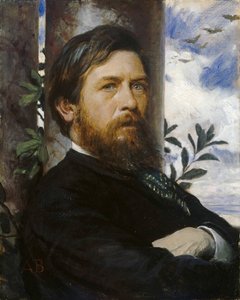
Arnold Böcklin
1827 - 1901 , Sveitsi
Tietoa taiteilijasta
- Artistic Movement Or Style: Symbolismi
- Artists Or Movements Influenced By This Artist:
- Hans Thoma
- Pre-Raphaelistit
- Artists Who Influenced This Artist:
- Schirmer
- Feuerbach
- Date Of Birth: 16. lokakuuta 1827
- Date Of Death: 16. tammikuuta 1901
- Full Name: Arnold Böcklin
- Nationality: Sveitsiläinen
- Notable Artworks:
- Kuolleiden saari
- Nymfi ja satyri
- Sappho
- Place Of Birth: Basel, Sveitsi
Aiheeseen liittyvät artikkelit

Romantic Realism's Finest: 10 Masterpieces for Your Home | OriginalUniqueArt
Explore 10 defining masterpieces of Romantic Realism! Discover Courbet, Millet & Daumier's powerful paintings—capturing emotion and social realities. Find museum-quality reproductions for your home at OriginalUniqueArt.com.

The Enduring Power of Painting: A Historical & Contemporary Exploration of Form and Emotion
Explore the rich history & enduring techniques of oil painting with OriginalUniqueArt. Discover masterpieces, learn about art collecting, and find authentic handmade reproductions crafted by skilled artists.

The Enduring Legacy of Oil on Canvas: Technique, History & Aesthetic Impact
Explore the rich history & techniques of oil painting – from Renaissance masters to Impressionism. Discover pigments, layering methods, and why this timeless medium endures. Expert insights for artists & art enthusiasts.

Oil on Canvas: A Historical & Technical Exploration of a Timeless Artistic Medium
Explore the rich history & enduring techniques of oil painting on canvas. Discover the science behind its longevity, conservation practices, and contemporary relevance. Expert insights for art enthusiasts.

Öljyvärimaalauksen kestävä perintö: tekniikka, historia ja nykyaikainen käytäntö
Tutustu öljyvärimaalauksen rikkaaseen historiaan, tekniikoihin ja merkittäviin mestareihin. Opi säilyttämään ja restauroimaan taidetta sekä löydä uudet innovaatiot tässä ajattomassa taidemuodossa.
