

 Katso seinällä
 Lähetä
 Jaa
Jaa
 Tarkemmat tiedot
 Opas
Opas

 Lataa kuva
 Samanlaisia kohteita
 Röntgenkuvaus
 Diaesitys
 Tilastot
Cupid and Psyche
 Acrylic On Canvas
- WallArt
- Neoclassical Sculpture
 1796
1796- 19th Century
 150.0 x 68.0 cm
 Louvren museo
 Lue lisää
Käsinmaalattu öljyvärinen jäljennös
Käsinmaalattu öljyväri kankaalle haluamassasi koossa ja kehyksissä, taiteilijoidemme valmistamana tilauksesta. ( Vaihda tulosteeseen Siirry digitaaliseen kuvaan)




P118B €10

P118H €10

P118W €10

P438Z €10

P508JH €12

P508YH €12

P805H €10

P805Z €10

P919BZ €10

P919G €10

P919XJ €10

P959ZH €10

P968JZ €12

W106C €8

W218G €10

W218JH €8

W218Y €10

W307PJ €10

W316G €10

W316PJ €8

W316Y €10

W398PJ €8

W4111J €10

W500HY €15

W500JH €15

W692G €12

W849H €8

W940BG €15

W953PJ €8




Valitse valmiista mitoistamme sellaiset, jotka vastaavat teoksen alkuperäisiä mittasuhteita.

Kirjoita tarvitsemasi leveys ja korkeus, jotta teos sopii kehyskehyksiisi tai seinällesi. Koska kyseessä on käsinmaalattu teos, taiteilija voi maalata hieman enemmän kuvan ympärille tai rajata sitä hieman, jos haluat eri muotoisen koon — valinta on sinun. Lähetämme sinulle digitaalisen mallikuvan hyväksyttäväksi ennen kuin maalaus alkaa. Tällä sivulla näkyvä kuva ei vastaa lopullista tulosta — vain mallikuva näyttää sen.
Tilauksen jälkeen OriginalUniqueArt.com -tiimi lähettää asiakkaalle sähköpostitse ohjeet ja esikatselukuvan.
Maailmanlaajuinen toimitus () 3–4 viikossa tavallisen 5 viikon sijaan. (26 lokakuu). Laadusta ei tingitä.

Ilmainen pikatoimitus ympäri maailman

Korkealaatuinen pellavakangas

Kattava kuljetusvakuutus

Tulliveron palautustakuu

Takuu täydellisestä värien vastaavuudesta

100 päivän palautusoikeus valmistusvirhetapauksissa

100% rahat takaisin -takuu

Määräalennus saatavilla
 Lasivaihtoehto on saatavilla vain alle 110 cm kokoisille teoksille

Cupid and Psyche
Reproduktiotapa
Replikaatin koko
-


Kokonaishinta
€ 263
The Mythic Heart of Antonio Canova’s Masterpiece
Antonio Canova's "Cupid and Psyche" isn’t merely a sculpture; it’s a frozen moment of profound yearning, a testament to the enduring power of love against the backdrop of classical mythology. Completed in 1796, this marble masterpiece transcends its subject matter, offering a glimpse into the burgeoning Romantic sensibility while firmly rooted in the elegant formalism of Neoclassicism. The story itself—the tale of Cupid’s obsessive pursuit and Psyche's arduous journey to earn his love—resonates with universal themes of devotion, sacrifice, and ultimately, triumph over adversity. Canova masterfully captures this narrative through a dynamic composition that balances poised elegance with palpable emotion.

The sculpture depicts the pivotal moment when Cupid, having overcome the wrath of Venus, descends upon Psyche, bestowing upon her a kiss that awakens her from a deathlike slumber. Canova’s genius lies in his ability to convey this intense exchange with subtle gestures and exquisitely rendered anatomy. The figures are not rigidly posed; instead, they move within a single, fluid action—a delicate balance between anticipation and fulfillment. Psyche, bathed in an ethereal light, reaches out towards Cupid, her hand poised to receive the kiss, while Cupid himself is captured mid-motion, his wings partially unfurled as he gently touches her breast. The sculpture’s diagonal composition draws the eye directly into this intimate tableau, creating a powerful sense of immediacy.
Neoclassical Form and Romantic Emotion
“Cupid and Psyche” stands at the fascinating intersection of two artistic movements: Neoclassicism and Romanticism. Canova, deeply influenced by the classical ideals of balance, harmony, and proportion, meticulously adheres to the formal conventions of Neoclassicism. The smooth surfaces of the marble, the idealized forms of the figures, and the carefully controlled drapery all reflect this commitment to classical aesthetics. However, beneath this surface lies a profound emotional depth that anticipates the Romantic emphasis on feeling, passion, and individualism. Canova doesn’t simply depict a mythological scene; he captures the very essence of love—its intensity, its vulnerability, and its transformative power.
The choice of marble itself is significant. Marble was considered the material of gods and heroes in antiquity, lending an air of timelessness and reverence to the sculpture. Canova’s masterful manipulation of the stone – the subtle gradations of light and shadow, the delicate textures of skin and fabric – elevates the work beyond mere representation, imbuing it with a remarkable sense of realism and vitality.
Symbolism and Artistic Technique
The sculpture is rich in symbolic detail. Cupid’s quiver, filled with arrows, represents his role as the god of love, while Psyche's veiled face suggests her initial state of unconsciousness and vulnerability. The vase that caused Psyche to faint symbolizes the obstacles she had to overcome to earn Cupid’s affection. Canova’s technical skill is equally impressive. He employed a technique known as *contrapposto*, where the figures are slightly off-balance, creating a sense of naturalism and movement. This subtle shift in weight adds dynamism to the composition and draws attention to the emotional core of the scene.
Furthermore, Canova’s meticulous study of human anatomy is evident in every detail—the delicate curve of Psyche's neck, the muscular tension in Cupid’s arm, the flowing folds of their garments. He achieved this level of realism through countless hours of observation and dissection, demonstrating a profound understanding of the human form.
A Timeless Legacy
“Cupid and Psyche” remains one of Antonio Canova's most celebrated works, admired for its beauty, emotional depth, and technical mastery. It’s a sculpture that continues to captivate viewers centuries after its creation, reminding us of the enduring power of love—a force capable of overcoming even the greatest obstacles. Reproductions of this iconic piece offer an opportunity to bring this timeless masterpiece into your home or studio, allowing you to experience firsthand the artistry and emotion that define Canova’s legacy.
Kysymykset ja vastaukset
Miten teoksen "Cupid and Psyche" värit sointuvat yhteen?
Teoksen "Cupid and Psyche" väriharmonia on merkitty muodossa Strong Color Unity.
Mistä voin ladata teoksen Antonio Canova:n "Cupid and Psyche"?
Teoksen Antonio Canova:n "Cupid and Psyche" voi ladata sen Lataa -sivulta muodossa korkearesoluutioinen digitaalinen kuvalataus.
Mikä tila sopii yhteen teoksen Antonio Canova:n "Cupid and Psyche" värien kanssa?
Earthy väripalettinsa ansiosta Antonio Canova:n "Cupid and Psyche" on suositeltava Living Room-tilaan. Värit ovat yksi tämän suosituksen perusteista.
Taiteilijan elämäkerta
Antonio Canova: Elämää marmorissa
- Syntynyt: Possagno, Italia (1757)
- Kuollut: 1822
Antonio Canova seisoo läntisen taidehistorian jättiläisenä, ja häntä pidetään laajalti aikakautensa merkittävimpänä neoklassisena kuvanveistäjänä. Hänen mestarillinen kykynsä työstää marmoria ja kykynsä täyttää klassiset muodot syvällä tunteella varmistivat hänen paikkansa kaikkien aikojen suurimpien taiteilijoiden joukassa. Canovan varhaista elämää muovasi häntä ympäröivä taiteellinen ilmapiiri Possagnossa, Italiassa, missä hän kasvoi kivimies Pietro Canovan poikana.
Varhaiset vuodet ja koulutus
- Perhetausta: Isän ammatti tarjosi ensimmäisen kosketuksen kiven työstämiseen, ja hänen isoisänsä, Pasino Canova, joka oli alttareihin ja mataliin reliefeihin erikoistunut kuvanveistäjä, pelasi ratkaisevan roolin nuoren taiteilijan lahjakkuuden vaalimisessa.
- Varhainen taiteellinen kehitys: Jo ennen kymmenvuotiaiden ikää Canova osoitti poikkeuksellista taitoa luoden pieniä marmoripappeja, jotka ilmaisivat hänen synnynnäistä kykyään. Hän opiskeli Giuseppe Bernardin ('Torretto') ja Giovanni Ferrarin alaisuudessa hioen taitojaan entisestään.
- Akateemiset opinnot: Hänen opintonsa Venetsian kuvataideakatemiassa (Accademia di Belle Arti di Venezia) toivat mukanaan lukuisia palkintoja, mikä vahvisti hänen mainettaan lupaavana nuorena taiteilijana. Luostarissa sijaitseva työpaja tarjosi hänelle tilan kehittää käsityötään.
- Varhaiset tilaukset: Varhaiset työt, kuten Orfeus- ja Eurydice-patsaat senaattori Giovanni Falierille (1775–1777), osoittivat nousevaa rokokoo-tyyliä, joka ennusti hänen myöhempää neoklassista hienostuneisuuttaan.
Nousu kuuluisuuteen ja neoklassinen tyyli
- Neoklassismin määrittely: Canovan teoksia leimaavat elegantit muodot, idealisoidut hahmot sekä paluu antiikin Kreikan ja Rooman esteettisiin periaatteisiin. Hän vältti taitavasti barokkitaiteen melodramaattisuutta, mutta vastusti samalla kylmyyttä, joka usein liittyi aikaisempiin klassiseen uudistukseen pyrkimiseen.
- Keskeiset teokset ja tunnustus: Veistokset kuten Amor ja Psyche (n. 1787–1793), Katuvainen Magdaleena ja Herkules ja Lichas vakiinnuttivat hänen maineensa ympäri Eurooppaa. Hänen työtään arvostettiin korkealle kuninkaallisten ja aateliston keskuudessa.
- Maineen rakentaminen: Canova edisti uraansa strategisesti julkaisemalla grafiikkaa teoksistaan ja luomalla marmoriversioita kipsivaloksista, mikä varmisti hänen taiteensa laajan leviämisen.
- Kansainvälinen ylistys: Euroopan laajuiset tilaukset, kuten Theseus ja Minotauros -patsas Girolamo Zulianille (Venetsian lähettiläs Roomassa), sinetöivät hänen asemansa yhtenä Euroopan juhlimimmista taiteilijoista.
Merkittävät teokset ja perintö
- Huomattavat veistokset: Mainittujen teosten lisäksi Canovan merkittäviin työhön kuuluvat Venus Italica, La Musa Polyhymnia, Kolme kreetiläistä tanssimassa sekä hänen koskettava kuvauksensa Eurydicesta.
- Monumentaaliset tilaukset: Hän sai arvostettuja hautamuistomerkkitehtäviä, joista tunnetuin on upea Paavi Klemens XIII:n hauta Pietarinkirkossa Roomassa – todiste hänen taidostaan sekä kuvanveistossa että arkkitehtonisessa suunnittelussa.
- Gipsoteca Antonio Canova: Gipsoteca Antonio Canova -museo kätkee sisäänsä hänen merkittävimmän kokoelmansa, tarjoten arvokasta tietoa hänen luovasta prosessistaan ja taiteellisesta kehityksestään.
- Vaikutus seuraaviin sukupolviin: Canovan vaikutus ulottui kauas hänen elinaikansa yli muovaten neoklassisen kuvanveiston suuntaa ja inspiroiden sukupolvia taiteilijoita teknisellä mestaruudellaan ja ilmaisullisella voimallaan.
Historiallinen merkitys
- Neoklassismin ruumiillistuma: Antonio Canovasta tuli synonyymi neoklassiselle liikkeelle, edustaen sen ihanteita järjestyksestä, selkeydestä ja paluusta antiikin klassisuuteen.
- Hovikuvanveistäjä ja diplomaatti: Hänen asemansa lukuisien eurooppalaisten hallitsijoiden hovikuvanveistäjänä antoi hänelle huomattavaa poliittista vaikutusvaltaa ja mahdollisti taiteellisen maun muokkaamisen koko mantereen laajuisesti.
- Tekninen innovaatio: Canovan vertaansa vailla oleva taito työstää marmoria rikkoi rajoja siitä, mikä pidettiin mahdollisena, asettaen uuden standardin kuvanveistolliselle erinomaisuudelle.
- Kestävä taiteellinen perintö: Hänen veistoksensa jatkavat lumoamista yleisöä ympäri maailmaa, vahvistaen hänen paikkaansa yhtenä historian tärkeimmistä ja vaikutusvaltaisimmista taiteilijoista.

Antonio Canova
1757 - 1822 , Italia
Tietoa taiteilijasta
- Artistic Movement Or Style: Neoklassismi
- Artists Or Movements Influenced By This Artist: ['Myöhemmät neoklassiset']
- Artists Who Influenced This Artist: ['Barokk veistäjät']
- Date Of Birth: 1757
- Date Of Death: 1822
- Full Name: Antonio Canova
- Nationality: Italian
- Notable Artworks:
- Cupid Psyche
- Magdalena
- Herkules Lihas
- Place Of Birth (City And Country): Possagno, Italia
Aiheeseen liittyvät artikkelit

The Enduring Form: Exploring Themes & Techniques in Sculpture Across Historical Periods
Explore the rich history of sculpture from ancient masterpieces to contemporary innovations. Discover key techniques, influential artists & investment potential for discerning art collectors.

The Enduring Allure of Marble in Art History: From Classical Sculpture to Modern Abstraction
Explore the captivating history of marble sculpture from ancient Greece to modern art. Discover renowned artists like Canova & Michelangelo, carving techniques, and investment insights at OriginalUniqueArt.
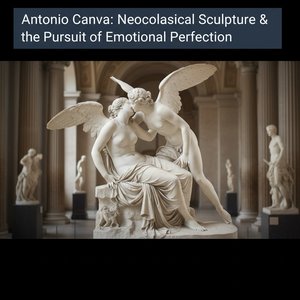
Antonio Canova: Neoclassical Sculpture & the Pursuit of Emotional Perfection
Explore the life & art of Antonio Canova, the greatest Neoclassical sculptor. Discover his masterpieces, innovative techniques, and lasting influence on fine art collecting. Expert insights for discerning investors.

10 legendaarista pronssiveistosta, jotka mullistivat taiteen – OriginalUniqueArt.com
Tutustu 10 legendaariseen pronssiveistokseen, jotka ovat muuttaneet taiteen historiaa! Rodinista Michelangeloon – opi mestareiden tarinat ja löydä täydellinen taideteos kotiisi OriginalUniqueArt.com:ssa. Laadukkaat jäljennökset & sisustusideat.

The Enduring Form: Sculpture Across History, Technique & Emotional Resonance
Explore the rich history of sculpture with OriginalUniqueArt. Discover key techniques, influential artists & investment potential for discerning collectors. Expert insights into valuing and collecting timeless masterpieces.
