
 Esikatselu
 Jaa teos
 Jaa
Jaa
 Tiedot
 Opas
Opas

 Lataa kuva
 Samanlaisia kohteita
 Röntgenkuvaus
 Diaesitys
 Kysymykset ja vastaukset
 Tilastot
Toys


 Lue lisää
Tällä sivulla esitettyä taideteosta suojaa tekijänoikeuslaki, mikä tarkoittaa, ettemme voi laillisesti luoda tai myydä täsmälleen samanlaista jäljennöstä. Tämä suoja toteutetaan kansainvälisten sopimusten, kuten esimerkiksi Berne-konventio ja kansallisilla laeilla, mukaan lukien niillä määritellyt Yhdysvaltain tekijänoikeuslaki – Luku 17. Kaikki oikeudet pidätetään. Luvaton kopiointi tai jäljittely on kielletty.
Tämä menetelmä noudattaa täysin tekijänoikeussäännöksiä, sillä se ei sisällä suojatun taideteoksen kopioimista tai jäljentämistä. Sen sijaan kyseessä on luova uudelleentulkinta – uusi maalaus, joka ammentaa vaikutteita alkuperäisestä, mutta ei ole sen identtinen kopio.
Giclée- ja taideprintit
Museolaatuisia giclée- tai kankaitaulun tulosteita nopealla tuotannolla ja joustavilla viimeistelyvaihtoehdoilla. ( Osta käsinmaalattu taideteos Siirry digitaaliseen kuvaan)




P118B €10

P118H €10

P118W €10

P438Z €10

P508JH €12

P508YH €12

P805H €10

P805Z €10

P919BZ €10

P919G €10

P919XJ €10

P959ZH €10

P968JZ €12

W106C €8

W218G €10

W218JH €8

W218Y €10

W307PJ €10

W316G €10

W316PJ €8

W316Y €10

W398PJ €8

W4111J €10

W500HY €15

W500JH €15

W692G €12

W849H €8

W940BG €15

W953PJ €8




Valitse valmiista mitoistamme sellaiset, jotka vastaavat teoksen alkuperäisiä mittasuhteita.

Syötä tarvitsemasi leveys ja korkeus, jotta tuloste sopii kehyksiisi tai seinällesi. Tulostetta voidaan vain leikata, sitä ei voida koskaan suurentaa alkuperäistä kuvaa suuremmaksi, joten eri muotoinen koko aiheuttaa osan kuvasta katoamisen. Lähetämme sinulle digitaalisen mallikuvan hyväksyttäväksi ennen kuin aloitamme tulostuksen. Tällä sivulla näkyvä kuva ei näytä lopullista rajausta — vain mallikuva näyttää sen.
Maailmanlaajuinen toimitus () 2 viikossa tavallisen 4–5 viikon sijaan. (3 marraskuu)

Ilmainen pikatoimitus ympäri maailman

Korkealaatuinen pellavakangas

Kattava kuljetusvakuutus

Tulliveron palautustakuu

Takuu täydellisestä värien vastaavuudesta

100 päivän palautusoikeus (vain valmistusvirheet)

100% rahat takaisin -takuu

Määräalennus tarjolla
 Lasivaihtoehto on saatavilla vain alle 110 cm kokoisille teoksille

Toys
Giclée- ja taideprintit
Replikaatin koko
-


Kokonaishinta
€ 72
Andreas Gursky’s “Toys”: A Monument to Industrial Scale and Global Branding
The photograph captures Andreas Gursky's painting "Toys," displayed in an art gallery setting, presenting a striking visual meditation on consumer culture and the pervasive influence of corporate logos within our contemporary environment. More than just a depiction of an artwork, it’s an exploration of how Gursky utilizes meticulous composition and photographic technique to convey profound ideas about globalization and the homogenization of experience. The painting itself is dominated by a colossal industrial building—a testament to architectural grandeur—emblazoned with the logos of Toyota and Toys ‘R Us. This deliberate juxtaposition immediately establishes a dialogue between manufacturing prowess and playful consumerism, hinting at the complex relationship between production and consumption that characterizes our modern world. The geometric precision of the structure underscores Gursky’s stylistic commitment to Bernd and Hilla Becher's influential approach: documenting industrial landscapes with unwavering objectivity and emphasizing repetitive patterns. Gursky’s photographic process—a slow shutter speed—transforms the building into an ethereal expanse, blurring the human presence within its vastness. This technique isn’t merely aesthetic; it serves as a crucial element in conveying Gursky's overarching concern for capturing the essence of his subject matter – the scale and order inherent in industrial spaces. The resulting image feels strangely desolate, inviting contemplation on the impact of these monumental structures on our daily lives and fostering a sense of awe alongside a subtle critique of unchecked commercial expansion. The gallery space surrounding “Toys” is deliberately minimized, furthering this feeling of isolation and elevating the artwork itself to prominence. This minimalist framing reinforces Gursky’s stylistic ethos—a dedication to stripping away extraneous detail to reveal the core principles governing his chosen subject. The photograph's sharp focus ensures that every element contributes to the overall impression, highlighting the artist’s meticulous attention to visual precision. Ultimately, “Toys” embodies Gursky’s signature style: large-scale photography characterized by detailed observation and a masterful grasp of photographic technique. It speaks to themes of standardization, economic dominance, and the subtle erosion of individuality within a globally interconnected society. The painting's stark monochrome palette amplifies its impact, emphasizing geometric forms and conveying an emotional resonance that transcends mere visual representation—a quiet contemplation on the monumental scale of industrial progress and its inescapable imprint upon our cultural landscape.Kysymykset ja vastaukset
Onko Andreas Gursky:n "Toys" -teoksesta saatavilla opiskelijoille suunnattua tietolomaketta?
Opas teokseen "Toys" on teoksen Opas -sivu – tulostettava tietolomake, joka sisältää teoksen kuvatekstin, tekijätiedot ja tunnistetaulukon (taiteilija, päivämäärät, tekniikka, alkuperäinen koko, kokoelma).
Kuinka voimakkaita värit ovat teoksessa Andreas Gursky:n "Toys"?
Andreas Gursky:n "Toys"-teoksessa on Monochromatic väri-intensiteetti.
Mikä on teoksen Andreas Gursky:n "Toys" hallitseva väri?
Rosy Brown (#a5a198) on Andreas Gursky:n "Toys" -teoksen hallitseva väri.
Taiteilijan elämäkerta
A Vision of the Global Landscape: The Life and Art of Andreas Gursky
Born in Leipzig, East Germany, in 1955, Andreas Gursky’s artistic journey is inextricably linked to the shifting political landscape of post-war Europe. His family's relocation to West Germany in 1957, settling first in Essen and then Düsseldorf, proved formative, not only geographically but also professionally. Both his father, Willy Gursky, and grandfather, Hans Gursky, were photographers, instilling within him a deep understanding of the medium from an early age. This familial legacy provided a foundation upon which he would build a career that redefined contemporary photography. Gursky’s initial studies at Folkwang University of the Arts in Essen (1978-1981) exposed him to a more subjective approach, influenced by photographers like Otto Steinert and Michael Schmidt. However, it was his subsequent enrollment at the Kunstakademie Düsseldorf (1981-1987), under the tutelage of Bernd and Hilla Becher, that truly shaped his artistic trajectory. The Bechers’ meticulous, objective documentation of industrial architecture – their systematic cataloging of water towers, blast furnaces, and gas tanks – instilled in Gursky a rigorous approach to image-making, emphasizing clarity, precision, and an almost anthropological detachment.From Industrial Documentation to Global Perspectives
Gursky’s early work reflected the influence of his mentors, with series like *Pförtnerbilder* (1981–85) focusing on security personnel in office buildings – a subtle exploration of power dynamics and surveillance within the modern workplace. He also turned his lens to the industrial heartland of the Ruhr Valley, documenting the interplay between nature and industry. However, around 1988, Gursky began experimenting with larger photographic formats, a pivotal shift that would become a defining characteristic of his style. This coincided with the burgeoning digital revolution, and in the 1990s, he embraced digital manipulation techniques, combining images and perspectives to create highly detailed, often abstract compositions. This wasn’t simply about altering reality; it was about revealing underlying structures and patterns that are normally invisible to the naked eye. Influenced by British landscape photographer John Davies' high vantage point images, Gursky began to elevate his perspective, offering viewers a panoramic view of contemporary life. He also acknowledged a lesser influence from American photographer Joel Sternfeld, whose work contributed to his developing aesthetic sensibility. This combination of technical innovation and conceptual rigor allowed him to move beyond mere documentation towards a more profound exploration of globalization, consumerism, and the relationship between individuals and large-scale systems.Iconic Images and Recurring Themes
Andreas Gursky’s work is instantly recognizable for its scale, detail, and often unsettling beauty. Images like *99 Cent* (1999), a vibrant depiction of the interior of a 99-cent store, are not simply records of consumer culture; they are meticulously constructed compositions that transform everyday objects into fields of color and pattern. *Rhein II* (1999), perhaps his most famous work, exemplifies his mastery of digital manipulation. The image of the Rhine River was extensively altered to create abstract bands of color, blurring the line between reality and artifice. This photograph not only achieved a record-breaking auction price – over $4 million – but also sparked debate about the nature of photography in the digital age. *Sha Tin* (2004), showcasing densely populated housing in Hong Kong, is another powerful example of his ability to capture the overwhelming scale and complexity of modern urban life. Recurring themes throughout Gursky’s oeuvre include the anonymity of contemporary spaces – shopping malls, factories, office buildings – and the feeling of being overwhelmed by information and choice. His *Ocean I-VI* (2009-2010) series pushed the boundaries of photographic representation even further, utilizing high-definition satellite photographs augmented with internet sources to create vast, almost abstract depictions of the world’s oceans.Legacy and Impact on Contemporary Art
Andreas Gursky has received numerous accolades throughout his career, including the Förderpreis des Landes Nordrhein-Westfalen für junge Künstler (1988), the Citibank Private Bank Photography Prize (1998), and the Infinity Award for Art from the International Center of Photography (2001). However, his true legacy lies in his profound impact on contemporary photography. He is widely considered one of the most important photographers of his generation, significantly expanding the possibilities of the medium through his large-scale prints and innovative use of digital manipulation. His work has influenced a wide range of artists working with photography and other media, and he is often associated with the “Düsseldorf School” of photography, alongside Thomas Ruff and Thomas Struth. Gursky’s photographs command high prices in the art market, reflecting their critical acclaim and cultural significance. More importantly, his work continues to be exhibited internationally and remains a subject of scholarly study, solidifying his place as a pivotal figure in contemporary art history – an artist who has not only documented our world but also challenged us to see it in new and unexpected ways. His ability to transform the mundane into the monumental, and the real into the abstract, ensures that his work will continue to resonate with audiences for generations to come.
Andreas Gursky
1955 - , Germany
Pähkinänkuoressa
- Full Name: Andreas Gursky
- Nationality: German
- Date Of Birth: 1955
- Place Of Birth: Leipzig, Germany
- Notable Artworks:
- 99 Cent
- Rhein II
- Sha Tin
- Ocean I-VI
- Toys
- Artistic Movement Or Style: Düsseldorf School
- Artists Who Influenced This Artist:
- Bernd Becher
- Hilla Becher
- John Davies
- Joel Sternfeld
- Artists Or Movements Influenced By This Artist:
- Contemporary artists
- Photography
Aiheeseen liittyvät artikkelit

Romanttisen maisemamaalauksen mestariteokset: Taidetta ja inspiraatiota kotiin
Uppoudu romanttisen maisemamaalauksen maailmaan! Tutustu Caspar David Friedrichin, Turnerin ja muiden mestareiden ikonisiin teoksiin. Löydä inspiraatiota kotiisi taiteen avulla OriginalUniqueArt.comista – laadukkaat taideprintit ja sisustusideoita.

Timeless Contrast: A Professional Guide to Black and White Photography for Large-Scale Hotel Decor
A professional guide for hotel designers on utilizing black and white photography for large-scale decor. Learn to master scale, texture, and monochrome contrast to create impactful, high-end hospitality environments through efficient, bulk art procurement solutions.

Evocations of Place: A Historical Journey Through Landscape Art
Explore the rich history of landscape art with OriginalUniqueArt. Discover renowned artists, movements like Impressionism & Romanticism, and expert guidance for collecting timeless pieces. Find your perfect serene escape today!
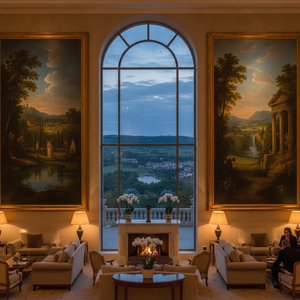
Curating Atmosphere: A Professional Guide to Selecting Romantic Landscape Paintings for Large-Scale Hospitality Interiors
A professional guide for hotel designers on selecting romantic landscape paintings for large-scale interiors. Discover expert strategies for sourcing high-quality oil reproductions, managing bulk orders, and integrating museum-grade art into hospitality projects with ease.

Impressionist Landscapes for Large-Scale Hospitality Decor: A Professional Guide to Light, Color, and Texture
A professional guide for hotel designers and procurement managers on selecting Impressionist landscapes. Learn to leverage light, color, and texture through high-quality, hand-painted oil reproductions and large-scale custom solutions for premium hospitality environments.