

 Esikatselu
 Jaa
Jaa Jaa
Jaa
 Tarkemmat tiedot

 Lataa
Lataa
 Samanlaisia
 Röntgenkuva
 Diaesitys
Resurrection

 Näytä lisää
Giclée-printit ja taideprintit
Museolaatuisia giclée- tai kankaitaulun tulosteita nopealla tuotannolla ja joustavilla viimeistelyvaihtoehdoilla. ( Osta käsintehty maalaus Osta kuva)




































Valitse valmiista mitoistamme sellaiset, jotka vastaavat teoksen alkuperäisiä mittasuhteita.

Voit syöttää omat mitat sopiaksesi tiettyyn kehykseen tai tilaan. Jos valittu koko ei vastaa alkuperäisen kuvan mittasuhteita, rajaamme teosta tai laajennamme kuvaa peilatulla tai yhtenäisellä reunalla. Digitaalinen mallikuva lähetetään hyväksyttäväksi ennen tuotannon aloittamista.
Huomaathan, että näytöllä näkyvä esikatselu ei vastaa lopullista rajausta tai laajennusta. Vain mallikuva näyttää lopullisen sommittelun tarkasti.
Vaikka räätälöityjä kokoja on saatavilla, suosittelemme valitsemaan mitat valmiista listasta alkuperäisten mittasuhteiden säilyttämiseksi.
Toimitus maailmanlaajuisesti () kahdessa viikossa tavallisen 4–5 viikon sijaan. (29 elokuu)

Ilmainen pikatoimitus ympäri maailman

Korkealaatuinen pellavakangas

Kattava kuljetusvakuutus

Tulliveron palautustakuu

Täydellinen värien vastaavuustakuu

60 päivän palautusoikeus (vain valmistusvirheet)

100% rahat takaisin -takuu

Määräalennus tarjous
 Lasivaihtoehto on saatavilla vain alle 110 cm kokoisina teoksina

Resurrection
Giclée-printit ja taideprintit
Replikaatin koko
-


Kokonaishinta
$ 80
Resurrection by Andrea del Castagno: A Fresco of Divine Ascent
- Subject Matter: This fresco depicts the pivotal moment of Christ's resurrection, a cornerstone event in Christian theology. The scene portrays Jesus being lifted from his tomb, accompanied and assisted by three angels – one on each side and another hovering above. The presence of other figures, some seemingly mourning or observing, adds depth to the narrative and emphasizes the profound impact of this miraculous occurrence.
- Artistic Style & Technique: Andrea del Castagno, a prominent figure in the Early Renaissance period (1400s-early 1500s), masterfully employs the fresco technique. This involved painting directly onto wet plaster, ensuring permanence and vibrancy of color. His style is characterized by a blend of Byzantine influence—evident in the stylized figures and drapery—and emerging Renaissance naturalism. While not as overtly realistic as later Renaissance works, Castagno’s attention to detail and spatial arrangement demonstrates a move towards greater depth and perspective.
The Artist: Andrea del Castagno – A Florentine Innovator
- Biography: Born in 1419 near Florence, Andrea del Castagno was significantly influenced by the pioneering works of Masaccio and Giotto. He established himself as a leading painter in Florence, known for his dramatic frescoes and innovative approach to portraiture. His career included significant commissions such as the equestrian monument of Niccolò da Tolentino and frescoes at Sant'Apollonia. Despite a relatively short life (he died in 1457), Castagno left an indelible mark on Florentine art, influencing later generations like Cosme Tura.
- Unique Characteristics: Castagno’s artistic personality is marked by a certain austerity and intellectual rigor. He wasn't solely focused on emotional expression; instead, he sought to convey a sense of monumentality and clarity in his compositions. His nickname, "Andrea degli Impiccati" (Andrea of the Hanged), stemmed from his early work depicting portraits of executed citizens on a public building – a testament to his willingness to engage with challenging subjects.
Historical Context & Symbolism
- Renaissance Florence: The fresco was created around 1447, during a period of significant artistic and intellectual flourishing in Florence. The Renaissance witnessed a renewed interest in classical art and learning, leading to innovations in perspective, anatomy, and composition. Castagno’s work reflects this broader cultural shift.
- Religious Significance: The Resurrection is arguably the most important event in Christian belief, signifying victory over death and offering hope for eternal life. The depiction of angels assisting Christ underscores his divine power and the heavenly realm's involvement in this momentous occasion. The presence of onlookers represents humanity witnessing and receiving the promise of redemption.
- Symbolic Elements: While interpretations can vary, the composition likely aims to convey a sense of solemnity and awe. The angels’ gestures could symbolize divine assistance and triumph. The figures' expressions, though somewhat restrained compared to later Renaissance styles, contribute to the overall atmosphere of reverence.
Emotional Impact & Artistic Legacy
- Atmosphere: The fresco evokes a powerful sense of drama and spiritual significance. Despite the relatively static poses, the scene conveys an undeniable feeling of awe and wonder at witnessing this miraculous event. The use of light and shadow enhances the emotional intensity.
- Influence & Legacy: Andrea del Castagno’s “Resurrection” stands as a testament to his unique artistic vision and technical skill. While perhaps not as widely celebrated as some of his contemporaries, his work demonstrates a crucial transition in Florentine painting—bridging the gap between late Gothic styles and the full flowering of the Renaissance. His influence can be seen in subsequent generations of artists who sought to combine intellectual rigor with expressive power.
Taiteilijan elämäkerta
Andrea del Castagno, A Florentine Renaissance Master: The Life and Art of Andrea del Castagno
Andrea del Castagno, a pivotal figure in the Early Renaissance, emerged from the Tuscan countryside near Florence around 1419 to leave an indelible mark on the artistic landscape. His life, though shrouded in some mystery, was one of innovation, dramatic realism, and a departure from the more stylized conventions that preceded him. Born in Castagnoli, not far from Monte Falterona, young Andrea’s early years were touched by conflict; his family resided in Corella during periods of war between Florence and Milan before returning home. It was under the patronage of Bernardo de' Medici in 1440 that he truly entered the Florentine art world, an entry marked by a rather grim commission – painting portraits of citizens executed after the Battle of Anghiari on the facade of the Palazzo del Podestà. This act earned him the chilling nickname “Andrea degli Impiccati” (Andrea of the Hanged), a testament to the political turbulence and stark realities of the era, and a shadow that followed him throughout his career. While details regarding his formal training remain scarce, it is widely believed he studied under both Fra Filippo Lippi and Paolo Uccello, absorbing their techniques while forging his own distinct path. His early works, such as the fresco of the Crucifixion and Saints in the Ospedale di Santa Maria Nuova (1440-1441), already demonstrate a keen interest in perspective and figures that bear the clear influence of Masaccio’s groundbreaking naturalism.Early Life and Artistic Training
Little is known about Andrea del Castagno's formative years, yet scholars believe he honed his skills primarily under Fra Filippo Lippi and Paolo Uccello – masters who championed a revolutionary approach to painting characterized by meticulous observation and the pursuit of accurate representation. Lippi’s influence instilled in Castagno a profound appreciation for detail and expressive gesture, while Uccello's dedication to perspective provided him with invaluable tools for creating illusionistic space—a technique that would become central to his artistic style. The lack of comprehensive biographical information contributes to the artist’s enigmatic aura, fueling speculation about his personal life and motivations. Despite this scarcity of documentation, Castagno’s early output speaks volumes about his burgeoning talent and intellectual curiosity.Evolution of Style and Major Works
Castagno's artistic journey was one of continuous development, moving away from decorative approaches towards a more profound realism and psychological depth. His frescoes in San Tarasio Chapel, Venice (1442), represent an early expression of this evolving style, demonstrating his burgeoning mastery of perspective and capturing the solemn beauty of religious iconography. Simultaneously, he undertook significant commissions within St Mark’s Basilica (1442-1443), culminating in the poignant “Death of the Virgin,” a masterpiece that exemplifies Castagno's ability to convey profound emotion through carefully crafted composition and nuanced shading—a hallmark of his distinctive artistic vision. However, it was the Last Supper fresco at Sant’Apollonia in Florence, completed around 1447, that cemented his reputation as a master. This work is considered not merely a painting but a pivotal moment in Renaissance art; its exceptional detail, naturalistic portrayal of the apostles' reactions, and innovative use of perspective captivated contemporaries and profoundly influenced later artists – most notably Leonardo da Vinci, who is believed to have studied it intently before embarking on his own iconic rendition of the scene. The Assumption with Saints Julian and Miniato (c. 1449-1450), now housed in Berlin, further exemplifies his evolving style, showcasing a masterful command of color and sculptural form. Finally, Castagno’s ambitious undertaking – the equestrian statue of Niccolò da Tolentino (1456) – within Florence Cathedral stands as a testament to his technical prowess and artistic ambition.Influences and Artistic Legacy
Andrea del Castagno did not work in isolation; his art was deeply informed by the giants who came before him. The pioneering use of perspective and naturalism championed by Masaccio served as a cornerstone of his artistic philosophy, while the expressive figures of Giotto di Bondone provided an early source of inspiration. He synthesized these influences into something uniquely his own – a style characterized by stark contrasts in light and shadow that heightened dramatic effect, and a commitment to portraying human emotion with unflinching honesty. This emphasis on realism and detailed observation wasn’t confined to Florence; it resonated throughout Italy, significantly impacting subsequent generations of artists, particularly those associated with the Ferrarese school. Cosme Tura, Francesco del Cossa, and Ercole de’ Roberti all demonstrate a clear debt to Castagno's innovations, carrying forward his legacy of naturalistic representation and psychological depth. He brought to painting what Banco and Donatello brought to sculpture, as one contemporary observer noted, solidifying his place among the most important artists of his time.Historical Significance and Remembrance
Andrea del Castagno’s contribution to Renaissance art is undeniable—he ushered in a new era of artistic expression characterized by unprecedented realism and psychological insight. His frescoes continue to inspire awe and admiration, serving as tangible reminders of Florence's cultural brilliance during the Quattrocento. Despite the controversies surrounding his life – notably the disputed claim regarding Domenico Veneziano’s murder – Castagno remains an artist whose work transcends time, securing his place in art history as a pioneer of naturalism and a champion of emotional truthfulness. His legacy lives on through reproductions that allow audiences worldwide to experience the beauty and power of his artistic vision.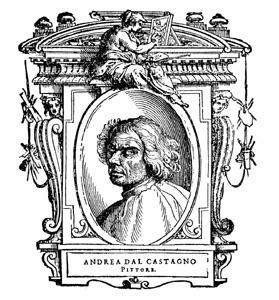
Andrea del Castagno
1419 - 1457 , Italia
Pikatiedot
- Artistic Movement Or Style: Renaissance art
- Artists Who Influenced This Artist:
- Masaccio
- Giotto
- Fra Filippo Lippi
- Date Of Birth: c. 1419
- Date Of Death: 19 août 1457
- Full Name: Andrea del Castagno
- Nationality: Italian
- Notable Artworks:
- Last Supper
- Crucifixion
- Resurrection
- Place Of Birth: Castagnoli, Italia
Liittyvät artikkelit
Fresko perinnön vartijana: Maalaa sukuhistoriasi seinille
Elävöitä sukuhistoriasi upeilla freskoilla! Opas seinämaalausten suunnitteluun, symboliikkaan ja toteutukseen. Inspiraatiota ja vinkkejä perintösi vaalimiseen.

Celestial Messengers: Angels in Painting – A Historical & Artistic Exploration
Explore the captivating history of angels in painting! Discover symbolism, iconic Renaissance & Byzantine masterpieces, and renowned artists. Expert insights for art lovers & collectors at OriginalUniqueArt.
The Enduring Legacy of Fresco Painting: Techniques, History & Contemporary Relevance
Explore the rich history & enduring artistry of fresco painting – from Giotto to Michelangelo! Discover techniques, conservation efforts, & modern applications. Learn how OriginalUniqueArt brings this timeless art form to your home.

The Enduring Legacy of Fresco: Technique, History & Artistic Expression Across Cultures
Explore the rich history & enduring legacy of fresco painting! Discover ancient techniques, Giotto's masterpieces, and modern applications. Expert insights for art lovers & professionals.

Celestial Messengers: A Comprehensive Exploration of Angelic Representation in Art History
Explore the captivating history of angels in art! Discover symbolism, iconic Renaissance masterpieces & renowned artists. Expert insights for art lovers & collectors at OriginalUniqueArt.



