

 Katso seinällä
 Lähetä
 Jaa
Jaa
 Tarkemmat tiedot
 Opas
Opas

 Lataa kuva
 Samanlaisia kohteita
 Röntgenkuvaus
 Diaesitys
 Tilastot
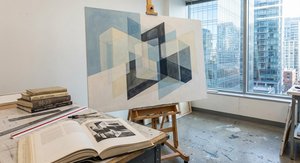
Variations on a Six Sided Object


 Lue lisää
Tällä sivulla esitettyä taideteosta suojaa tekijänoikeuslaki, mikä tarkoittaa, ettemme voi laillisesti luoda tai myydä täsmälleen samanlaista jäljennöstä. Tämä suoja toteutetaan kansainvälisten sopimusten, kuten esimerkiksi Berne-konventio ja kansallisilla laeilla, mukaan lukien niillä määritellyt Yhdysvaltain tekijänoikeuslaki – Luku 17. Kaikki oikeudet pidätetään. Luvaton kopiointi tai jäljittely on kielletty.
Kunnioittavana ja laillisena vaihtoehtona tarjoamme alkuperäisestä inspiroituneita, yksilöllisiä ja käsinmaalattuja taideteoksia. Taitavat ja ammattimaiset taiteilijamme tutkivat huolellisesti alkuperäisen teoksen tyyliä, tunnelmaa ja taiteellista ydintä luodakseen uuden, ainutlaatuisen teoksen, joka herättää saman tunteen – säilyttäen samalla oman itsenäisen alkuperäisyytensä.
Tämä menetelmä noudattaa täysin tekijänoikeussäännöksiä, sillä se ei sisällä suojatun taideteoksen kopioimista tai jäljentämistä. Sen sijaan kyseessä on luova uudelleentulkinta – uusi maalaus, joka ammentaa vaikutteita alkuperäisestä, mutta ei ole sen identtinen kopio.
Käsinmaalattu öljyvärinen jäljennös
Käsinmaalattu öljyväri kankaalle haluamassasi koossa ja kehyksissä, taiteilijoidemme valmistamana tilauksesta. ( Vaihda tulosteeseen Siirry digitaaliseen kuvaan)




P118B €10

P118H €10

P118W €10

P438Z €10

P508JH €12

P508YH €12

P805H €10

P805Z €10

P919BZ €10

P919G €10

P919XJ €10

P959ZH €10

P968JZ €12

W106C €8

W218G €10

W218JH €8

W218Y €10

W307PJ €10

W316G €10

W316PJ €8

W316Y €10

W398PJ €8

W4111J €10

W500HY €15

W500JH €15

W692G €12

W849H €8

W940BG €15

W953PJ €8




Valitse valmiista mitoistamme sellaiset, jotka vastaavat teoksen alkuperäisiä mittasuhteita.

Kirjoita tarvitsemasi leveys ja korkeus, jotta teos sopii kehyskehyksiisi tai seinällesi. Koska kyseessä on käsinmaalattu teos, taiteilija voi maalata hieman enemmän kuvan ympärille tai rajata sitä hieman, jos haluat eri muotoisen koon — valinta on sinun. Lähetämme sinulle digitaalisen mallikuvan hyväksyttäväksi ennen kuin maalaus alkaa. Tällä sivulla näkyvä kuva ei vastaa lopullista tulosta — vain mallikuva näyttää sen.
Tilauksen jälkeen OriginalUniqueArt.com -tiimi lähettää asiakkaalle sähköpostitse ohjeet ja esikatselukuvan.
Maailmanlaajuinen toimitus () 3–4 viikossa tavallisen 5 viikon sijaan. (24 lokakuu). Laadusta ei tingitä.

Ilmainen pikatoimitus ympäri maailman

Korkealaatuinen pellavakangas

Kattava kuljetusvakuutus

Tulliveron palautustakuu

Takuu täydellisestä värien vastaavuudesta

100 päivän palautusoikeus valmistusvirhetapauksissa

100% rahat takaisin -takuu

Määräalennus saatavilla
 Lasivaihtoehto on saatavilla vain alle 110 cm kokoisille teoksille

Variations on a Six Sided Object
Reproduktiotapa
Replikaatin koko
-


Kokonaishinta
€ 263
Alvin D. Loving Jr.'s "Variations on a Six Sided Object" – A Geometric Meditation
This striking artwork, created in 1967 by the visionary artist Alvin D. Loving Jr., offers a compelling glimpse into the heart of his pioneering work within fabric abstraction. The painting immediately captivates with its bold geometric forms—a vibrant red triangle asserting itself on the left, a calming green square anchoring the central space, and a luminous yellow circle radiating warmth from the right. Smaller triangles punctuate the composition near the center, adding layers of visual interest, while a rich purple diamond introduces an element of luxurious depth towards the bottom left corner. The interplay of these shapes isn't merely decorative; it’s a carefully considered exploration of color relationships and spatial dynamics – a direct response to the influence of Josef Albers’ famed “Squares within Squares” technique.
Technique and Materiality: Embracing Abstraction
Loving’s approach, as evidenced in "Variations on a Six Sided Object," was rooted in a rigorous investigation of color theory and formal composition. While the precise materials used remain unspecified, it's highly probable that Loving employed acrylic paints, a medium he favored for its versatility and ability to achieve intense, saturated hues. The application technique – likely layering and blending—creates subtle gradations within each shape, preventing them from appearing flat or static. This meticulous attention to detail contributes significantly to the painting’s overall luminosity and tactile quality. The artist's deliberate use of hard-edged shapes speaks to a desire to strip away representational imagery, focusing instead on the pure essence of color and form.
Historical Context: The Rise of Fabric Abstraction
"Variations on a Six Sided Object" was produced during a pivotal moment in American art history – the late 1960s. This period witnessed a surge of experimentation within abstract expressionism, fueled by a desire to break free from traditional representational modes and explore new avenues for artistic expression. Alvin Loving Jr. stands as a key figure in this movement, particularly within the subgenre of “fabric abstraction.” This style, characterized by its emphasis on geometric forms, bold color combinations, and explorations of surface texture, sought to evoke the qualities of textiles – their patterns, folds, and tactile properties – through purely abstract means. Loving’s work aligns with a broader trend among artists seeking to redefine the boundaries of painting and engage with contemporary concerns about materiality and perception.
Symbolic Resonance: Form and Color as Language
Beyond its formal qualities, "Variations on a Six Sided Object" invites contemplation regarding the symbolic potential of color and shape. The deliberate selection of primary colors – red, green, yellow – carries associations with primal energy, growth, and illumination respectively. The geometric forms themselves can be interpreted as representing fundamental building blocks of visual experience. Loving’s use of these elements suggests a desire to communicate directly with the viewer's subconscious, bypassing rational thought and engaging with emotions on a visceral level. The six-sided object itself adds an intriguing layer of complexity, hinting at mathematical precision and perhaps even a subtle nod to architectural design.
Collecting and Displaying This Masterpiece
"Variations on a Six Sided Object" by Alvin D. Loving Jr. is more than just a painting; it’s a testament to the power of abstract art to provoke thought, evoke emotion, and transform our perception of the world. A hand-painted reproduction offers an exceptional opportunity to bring this iconic work into your home or office. Its vibrant colors and dynamic composition will undoubtedly serve as a focal point, adding sophistication and visual interest to any space. Consider framing it with a simple black border to further enhance its impact, or incorporating it into a larger collection of modern art. This piece is an investment in artistic legacy – a reminder of Alvin Loving Jr.’s groundbreaking contribution to the landscape of American art.
Kysymykset ja vastaukset
Mikä on teoksen Alvin D. Loving Jr.:n "Variations on a Six Sided Object" taidehistoriallinen merkitys?
Alvin D. Loving Jr.:n "Variations on a Six Sided Object" kuuluu Abstract Expressionism-suuntaukseen Modern-aikakaudella. Yhdessä ne antavat teokselle sen paikan taidehistoriassa.
Onko "Variations on a Six Sided Object" yksi Alvin D. Loving Jr.'n suosituimmista teoksista?
"Variations on a Six Sided Object" on luokiteltu kategoriaan Recognized.
Minkä tyyppinen teos Alvin D. Loving Jr.:n "Variations on a Six Sided Object" on?
"Variations on a Six Sided Object" on WallArt-teos.
Taiteilijan elämäkerta
Alvin D. Loving Jr.: Pioneer of Fabric Abstraction
Alvin Demar Loving Jr., better known as Al Loving, was an African-American abstract expressionist painter who profoundly impacted the landscape of American art in the late 1960s and 1970s. Born on September 19, 1935, in Detroit, Michigan, Loving’s artistic journey began at the University of Illinois at Urbana-Champaign where he earned a Bachelor of Fine Arts degree in 1963 before furthering his studies with an MFA from the University of Michigan, Ann Arbor. His formative mentorship under Al Mullen instilled within him a dedication to exploring innovative approaches to visual art and propelled him toward groundbreaking experimentation.- Early Influences: Loving’s artistic sensibilities were significantly shaped by Josef Albers's explorations of squares within squares—a technique that encouraged him to consider the fundamental principles of form and color relationships. This influence would become a cornerstone of his distinctive style.
- The Once Group & NYC Arrival: Recognizing the importance of collaborative dialogue, Loving joined the Once Group organization in 1968, fostering connections with fellow artists who shared similar ambitions for pushing artistic boundaries. Shortly thereafter, he relocated to New York City, immersing himself in the vibrant cultural milieu and establishing a studio within the infamous Hotel Chelsea—a space that would become synonymous with artistic creativity and bohemian spirit.
Hard-Edge Abstraction & Geometric Exploration
Loving’s artistic breakthrough arrived in 1968 when he began to produce hard-edge abstraction series inspired by Albers's work. He meticulously crafted polyhedrons of identical size, employing contrasting colors—often vibrant reds and yellows—to create visually arresting compositions. These pieces weren’t merely decorative; they represented a deliberate effort to distill visual experience into its purest form, prioritizing geometric precision over expressive gesture. Loving’s approach challenged conventional notions of painting, emphasizing structural integrity and the interplay of color hues. As he eloquently stated, “For me at the time, it was about painting the square until it was ‘enough,’ and that meant until it obtained form.” His work gained recognition through exhibitions at the Whitney Museum of American Art in 1968 and subsequently cemented his position as a leading figure in geometric abstraction.Fabric Constructions & Material Experimentation
Inspired by an encounter with abstract design in American quilts at the Whitney Museum of American Art, Loving embarked on a transformative artistic endeavor: fabric constructions. He began hanging strips of canvas from walls and ceilings—a bold departure from traditional easel painting—creating sculptural forms that simultaneously engaged with pictorial and spatial dimensions. Utilizing a sewing machine, he meticulously assembled these fragments together, resulting in expansive textile installations that captured the essence of movement and fluidity. Loving’s exploration extended beyond mere color; he experimented with dyeing fabrics to achieve nuanced tonal variations and textural contrasts. This innovative technique reflected his belief in embracing unconventional materials and processes as conduits for artistic expression.Notable Achievements & Legacy
Loving's career spanned decades of dedicated artistic practice, culminating in significant accomplishments that solidified his place within the annals of American art history. He received prestigious National Endowment for the Arts fellowships in 1970, 1974, and 1984—a testament to the recognition accorded to his pioneering contributions. Furthermore, he secured a Guggenheim Fellowship for Painting in 1986—an honor bestowed upon exceptionally talented artists who demonstrate exceptional creativity and artistic merit. Loving’s monumental mural painting *A Message to Demar and Lauri*, commissioned for The First National Bank Building in Detroit, served as a powerful symbol of civic engagement and artistic ambition. His enduring influence continues to inspire contemporary artists exploring innovative approaches to material abstraction and geometric composition—a legacy that underscores the significance of Loving's contribution to the evolution of American art.
Alvin D. Loving Jr.
1935 - 2005 , United States of America
Tietoa taiteilijasta
- Artistic Movement Or Style: Abstract expressionism, Hard-edge abstraction
- Artists Who Influenced This Artist:
- Josef Albers
- Al Mullen
- Full Name: Alvin Demar Loving Jr.
- Nationality: African-American
- Notable Artworks:
- Variations on a Six Sided Object
- Brownie, Sunny, Dave, and Al
- Place Of Birth: Detroit, United States of America
- Date Of Birth: 1935
- Date Of Death: 2005
Aiheeseen liittyvät artikkelit

Wassily Kandinskin 25 mestariteosta: Värien ja muodon syvä maailma | OriginalUniqueArt
Tutustu Wassily Kandinskin 25 vaikuttavinta teosta! Uppoudu abstraktin taiteen maailmaan, värien symboliikkaan ja modernin ekspressionismin historiaan. Löydä inspiraatiota kodin sisustukseen OriginalUniqueArt.com:ista – laadukkaat taideprintit ja reproduktiot.
Beyond Form & Color: Geometric Abstraction's Enduring Legacy in Art History
Explore the captivating world of geometric abstraction! Discover its origins, key artists like Malevich & Mondrian, and why this movement remains highly valued by art collectors today. Expert insights at OriginalUniqueArt.

Beyond Form & Color: Geometric Abstraction's Evolution in 20th/21st Century Art
Explore the evolution of geometric abstraction from Cubism to contemporary art. Discover key artists like Malevich & Mondrian, investment insights, and expert collecting advice at OriginalUniqueArt.

Neo-Abstract Art: The High-Impact Evolution of Modern Visual Energy and Geometric Sophistication
Discover the power of Neo-Abstract art. Explore how bold geometric forms and high-impact visual energy are redefining modern design. Learn to curate sophisticated, high-energy spaces with the latest trends in contemporary abstraction and structural color.

Geometrisen abstraktion mestariteokset: Taidetta kotiin OriginalUniqueArtilta
Tutustu geometrisen abstraktion 10 mestariteokseen! Piet Mondrian, Kandinsky ja muut taiteilijat muovasivat modernin taiteen historiaa. Löydä inspiraatiota kotiisi OriginalUniqueArtilta – laadukkaat taideprintit ja sisustusehdotukset odottavat. Tutki kokoelma verkossa!