

 Katso seinällä
 Lähetä
 Jaa
Jaa
 Tarkemmat tiedot
 Opas
Opas

 Lataa kuva
 Samanlaisia kohteita
 Röntgenkuvaus
 Diaesitys
 Tilastot
The Emerald


 Lue lisää
Käsinmaalattu öljyvärinen jäljennös
Käsinmaalattu öljyväri kankaalle haluamassasi koossa ja kehyksissä, taiteilijoidemme valmistamana tilauksesta. ( Vaihda tulosteeseen Siirry digitaaliseen kuvaan)




P118B €10

P118H €10

P118W €10

P438Z €10

P508JH €12

P508YH €12

P805H €10

P805Z €10

P919BZ €10

P919G €10

P919XJ €10

P959ZH €10

P968JZ €12

W106C €8

W218G €10

W218JH €8

W218Y €10

W307PJ €10

W316G €10

W316PJ €8

W316Y €10

W398PJ €8

W4111J €10

W500HY €15

W500JH €15

W692G €12

W849H €8

W940BG €15

W953PJ €8




Valitse valmiista mitoistamme sellaiset, jotka vastaavat teoksen alkuperäisiä mittasuhteita.

Kirjoita tarvitsemasi leveys ja korkeus, jotta teos sopii kehyskehyksiisi tai seinällesi. Koska kyseessä on käsinmaalattu teos, taiteilija voi maalata hieman enemmän kuvan ympärille tai rajata sitä hieman, jos haluat eri muotoisen koon — valinta on sinun. Lähetämme sinulle digitaalisen mallikuvan hyväksyttäväksi ennen kuin maalaus alkaa. Tällä sivulla näkyvä kuva ei vastaa lopullista tulosta — vain mallikuva näyttää sen.
Tilauksen jälkeen OriginalUniqueArt.com -tiimi lähettää asiakkaalle sähköpostitse ohjeet ja esikatselukuvan.
Maailmanlaajuinen toimitus () 3–4 viikossa tavallisen 5 viikon sijaan. (25 lokakuu). Laadusta ei tingitä.

Ilmainen pikatoimitus ympäri maailman

Korkealaatuinen pellavakangas

Kattava kuljetusvakuutus

Tulliveron palautustakuu

Takuu täydellisestä värien vastaavuudesta

100 päivän palautusoikeus valmistusvirhetapauksissa

100% rahat takaisin -takuu

Määräalennus saatavilla
 Lasivaihtoehto on saatavilla vain alle 110 cm kokoisille teoksille

The Emerald
Reproduktiotapa
Replikaatin koko
-


Kokonaishinta
€ 263
The Emerald: A Window into Alphonse Mucha's Art Nouveau World
Alphonse Mucha’s “The Emerald” is more than just a beautiful image; it’s a meticulously crafted portal to the heart of Art Nouveau, a movement that redefined aesthetics at the turn of the 20th century. This poster design, brimming with flowing lines, organic forms, and a profound sense of luxury, exemplifies Mucha's mastery of decorative art and his ability to capture the spirit of a burgeoning era. The piece immediately draws the eye with its vibrant color palette – warm browns, golds, and oranges punctuated by the arresting red-orange beak of the fantastical bird – creating an atmosphere of opulent serenity.
At its core, “The Emerald” is a study in controlled beauty. Mucha’s meticulous attention to detail is evident in every aspect of the composition. The woman, rendered with a delicate grace characteristic of Mucha's style, leans against a stylized bird – a creature simultaneously familiar and otherworldly – while lilies and leafy plants cascade downwards, anchoring the design and reinforcing its connection to nature, a key theme within Art Nouveau. The circular frame isn’t merely decorative; it elevates the entire scene, imbuing it with a sense of completeness and timeless elegance, hallmarks of Mucha's approach.
Decoding the Symbolism
Beyond its purely aesthetic qualities, “The Emerald” is rich in symbolic meaning. The woman herself embodies idealized feminine beauty – a recurring motif in Mucha’s work – but she transcends simple portraiture. Her pose and the surrounding elements suggest an embodiment of nature's grace and fertility. The bird, often interpreted as a symbol of transformation or exotic allure, adds a layer of mystery to the scene. The lilies, traditionally associated with purity and renewal, further enhance this sense of ethereal beauty. Together, these elements create a harmonious whole that speaks to themes of luxury, elegance, and perhaps even a touch of hidden sensuality – emotions Mucha skillfully evoked through his art.
The Art of Lithography
“The Emerald”’s remarkable detail is the result of Mucha's masterful use of lithography, a printing technique that allowed for incredibly fine linework and subtle color gradations. As a skilled lithographer himself, Mucha meticulously crafted each element of the design using stone or metal plates, applying ink with precision to achieve the desired effects. The process demanded patience and skill, resulting in an image that retains the textural qualities of paint – the draping fabric, the voluminous hair, the delicate petals of the flowers – despite being a poster reproduction. The smooth, polished appearance of the bird’s beak further demonstrates Mucha's attention to detail and his understanding of how different materials could be rendered effectively.
A Legacy of Art Nouveau
Created around 1900, “The Emerald” stands as a quintessential example of Alphonse Mucha’s contribution to the Art Nouveau movement. His work, alongside that of artists like Gustav Klimt and Aubrey Beardsley, helped shape the visual landscape of Europe at the turn of the century. Today, reproductions like this one allow us to appreciate not only Mucha's artistic talent but also the enduring appeal of his vision – a vision that celebrates beauty, nature, and the power of decorative art to transport us to another time and place.
Kysymykset ja vastaukset
Miten voin esikatsella teoksen Alphonse Mucha:n "The Emerald" reproduktiota?
"The Emerald"-teoksen Esikatselu -sivulla voit esikatsella teosta ennen tilaamista.
Mikä väri hallitsee teosta Alphonse Mucha:n "The Emerald"?
Teoksen "The Emerald" silmiinpistävin väri on Rosy Brown (#cba868). Hallitseva väri on hyödyllinen, kun teosta sovitetaan sisustukseen.
Mitä aiheita teoksessa Alphonse Mucha:n "The Emerald" esiintyy?
Teoksen "The Emerald" aiheina ovat woman, floral, art nouveau, alphonse mucha, decorative, elegant, mystical.
Taiteilijan elämäkerta
Early Life and Artistic Beginnings
Alphonse Maria Mucha syntyi 24. heinäkuuta 1860 pienessä Ivančicen kylässä, joka sijaitsee nykyisen Tšekin maakunnassa, lähellä Moravian alueen sydämessä. Hänen perheensä oli hyvin köyhä; isänsä Ondřej oli tuomioistuimen kirstuhenkilö, ja äitinsä Amálie oli myllärin tytär. Alphonse oli kuuden lapsen vanhin, ja kaikki heidän niminsä alkoivat kirjaimella "A". Jo nuorena Alphonse osoitti lahjakkuutta piirtämisessä; paikallinen kauppias ylisti hänen töitään ja antoi hänelle lahjaksi paperia, joka oli tuohon aikaan harvinainen ylellisyys. Hänellä oli myös intohimo musiikkiin: hän oli barokkiajan lauluääni ja viulunsoittaja. Alphonse halusi jatkaa opintojaan, mutta hänen perheensä ei pystynyt rahoittamaan niitä, sillä heillä oli jo velvollisuuksia kolmen sisaruksensa koulutuksen tukemisessa. Hän päätti kuitenkin omatoimisesti kehittää taitojaan ja pyrki ammattimaiseksi taiteilijaksi.Parisissa ja Art Nouveau:n Nousu
Alphonse muutti Pariisiin vuonna 1887, jossa hän jatkoi opintojaan Académie Julianillaan ja Académie Colarossi’llaan sekä tuotti aikakauslehtien ja mainosten kuvituksia. Satunnainen sattuma johti siihen, että hän törmäsi printtitalossa, jossa oli äkillinen tarve uudelle julisteelle näyttelijän Sarah Bernhardtin esitykseen Théâtre de la Renaissance Boulevard Saint-Martinin varrella vuonna 1894. Alphonse suostui tekemään litografisen julisteen kahden viikon sisällä, ja 1. tammikuuta 1895 Bernhardtin esityksen juliste oli valmis. Se teki Muchasta heti tunnetun Pariisissa, ja kaupunkilaiset olivat niin lumoutuneita siitä, että he yrittivät leikata julisteita alas kotiinsa. Alphonse alkoi saada uusia tilauksia, ja hänen tyylinsä, jota myöhemmin kutsuttiin Art Nouveau -tyyliksi, levisi nopeasti ympäri Eurooppaa. Hän osallistui Universal Exhibitioniin vuonna 1900, jossa hän koristeli Bosnian ja Hertsegovinan paviljonkia ja teki yhteistyötä Itävallan pavillonissa.Sarah Bernhardtin kanssa ja "Le Pater"
Muchan ura kukoisti Sarah Bernhardtin kanssa, jonka kanssa hän työskenteli vuosina 1894–1906. Hän suunnitteli julisteita ja asuja näyttelijälle useisiin esityksiin. Alphonse teki myös monia muita julisteita ja aikakauslehtikuvaajia sekä suunnittelutyötä koruille, matkapaloille, tapeteille ja teatteriympäristöille. Hänen tunnetuin teoksensa on "Le Pater" (1907), joka oli hänen mielensä mukaan tärkein tulos. Se on suuri symbolistinen maalauksia sarja, jossa Alphonse kuvaa slaavien historiaa ja päämääriä. Hän maalasi 20 monumentaalista kuvaa vuosina 1912–1926.Slaavilainen eepos ja perintö
Alphonse Muchan tyyli oli vaikutteita Tšekin taiteellisista traditioista sekä modernista eurooppalaisesta taidesuunnasta. Hänen ainutlaatuinen tyylinsä loi tien tuleville taiteilijoille Art Nouveau - ja Secessionism -liikkeissä. Hän inspiroi muita taiteilijoita, kuten Evaa Prokopcován. Alphonse Mucha kuoli 14. heinäkuuta 1939 Prahassa, Tšekkoslovakiassa. Hänen työnsä on edelleen suosittu ja hänen vaikutuksensa näkyy monissa suunnittelutyyleissä ja estetiikassa.Alphonse Muchan pääteokset
- The Slavonic Uprising - Esittelee yhdistelmän perinteisiä tšekiläisiä motiiveja ja modernia Art Nouveau -estetiikkaa.
- Salon des Cent
- Maalauksia, jotka pohjautuvat Gustave Moreaun teoksiin The Daughters of Tespio sekä Piero Dorazion teokseen La Ribambelle des Gobelins.
- Kuvituksia Sir Hubert von Herkomerin teoksesta Young Farmers Breaking Flax.
Lisätietoja
- Syntymäpäivä: 24. heinäkuuta 1860
- Kuolinpäivä: 14. heinäkuuta 1939
- Syntymäpaikka: Ivančice, Moravia (Tšekki)
- Sijainti: Praha, Tšekkoslovakia

Alphonse Mucha
1860 - 1939 , Tšekki
Tietoa taiteilijasta
- Artistic Movement Or Style: Art Nouveau
- Artists Or Movements Influenced By This Artist: ['Prokopcová']
- Artists Who Influenced This Artist:
- Renoir
- Moreau
- Date Of Birth: 24.7.1860
- Date Of Death: 14.7.1939
- Full Name: Alphonse Maria Mucha
- Nationality: Tšekkiläinen
- Notable Artworks:
- Slav Epic
- Gismonda
- Salon des Cent
- Place Of Birth: Ivančice, Tšekki
Aiheeseen liittyvät artikkelit
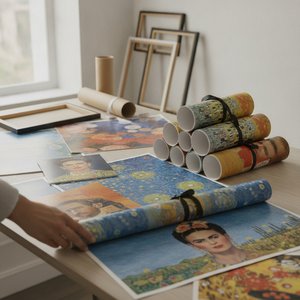
OriginalUniqueArt.com F.A.Q.: Premium Art Poster Prints – Vivid Colors & Versatile Sizing
Discover OriginalUniqueArt.com's premium art poster prints. Featuring 12-color archival pigments for vivid color fidelity and versatile sizing for bespoke decor. Expertly crafted museum-quality reproductions designed for discerning collectors and professional decorators.