

 Katso seinällä
 Lähetä
 Jaa
Jaa
 Tarkemmat tiedot
 Opas
Opas

 Lataa kuva
 Samanlaisia kohteita
 Röntgenkuvaus
 Diaesitys
 Tilastot
Autumn Flowers


 Lue lisää
Käsinmaalattu öljyvärinen jäljennös
Käsinmaalattu öljyväri kankaalle haluamassasi koossa ja kehyksissä, taiteilijoidemme valmistamana tilauksesta. ( Vaihda tulosteeseen Siirry digitaaliseen kuvaan)




P118B €10

P118H €10

P118W €10

P438Z €10

P508JH €12

P508YH €12

P805H €10

P805Z €10

P919BZ €10

P919G €10

P919XJ €10

P959ZH €10

P968JZ €12

W106C €8

W218G €10

W218JH €8

W218Y €10

W307PJ €10

W316G €10

W316PJ €8

W316Y €10

W398PJ €8

W4111J €10

W500HY €15

W500JH €15

W692G €12

W849H €8

W940BG €15

W953PJ €8




Valitse valmiista mitoistamme sellaiset, jotka vastaavat teoksen alkuperäisiä mittasuhteita.

Voit syöttää omat mitat sopimaan tiettyyn kehykseen tai tilaan. Jos valitsemasi koko ei vastaa alkuperäisen kuvan mittasuhteita, rajaamme taideteoksen tai jatkamme maalausta käsin maalatuilla elementeillä. Digitaalinen esikatselu lähetetään hyväksyttäväksi ennen tuotannon aloittamista.
Huomioithan, että näytöllä oleva esikatselu ei vastaa todellista rajausta tai jatkamista. Vain digitaalinen mallikuva näyttää lopullisen sommittelun tarkasti.
Vaikka mittatilaustyöt ovat mahdollisia, suosittelemme valitsemaan mitan ennalta määritetystä listasta alkuperäisten mittasuhteiden säilyttämiseksi.
Tilauksen jälkeen OriginalUniqueArt.com -tiimi lähettää asiakkaalle sähköpostitse ohjeet ja esikatselukuvan.
Maailmanlaajuinen toimitus () 3–4 viikossa tavallisen 5 viikon sijaan. (13 lokakuu). Laadusta ei tingitä.

Ilmainen pikatoimitus ympäri maailman

Korkealaatuinen pellavakangas

Kattava kuljetusvakuutus

Tulliveron palautustakuu

Takuu täydellisestä värien vastaavuudesta

100 päivän palautusoikeus valmistusvirhetapauksissa

100% rahat takaisin -takuu

Määräalennus saatavilla
 Lasivaihtoehto on saatavilla vain alle 110 cm kokoisille teoksille

Autumn Flowers
Reproduktiotapa
Replikaatin koko
-


Kokonaishinta
€ 259
A Portrait of a Moment: The Enigmatic Beauty of *Autumn Flowers*
Alfred Stevens’s *Autumn Flowers*, painted in 1867, isn't merely a depiction of a woman amidst flowers; it’s an exquisitely crafted meditation on stillness, light, and the subtle poetry of everyday life. At first glance, the painting presents a seemingly simple arrangement: a seated lady, her posture suggesting quiet contemplation, surrounded by a still-life tableau of fabrics, blossoms, and a delicately rendered table. Yet, beneath this surface lies a profound exploration of form, color, and the very essence of observation – a hallmark of Stevens’s unique artistic vision.
Stevens, a pivotal figure in 19th-century Belgian art, deliberately eschewed the prevailing trends of his time. Rejecting the fleeting effects of Impressionism's vibrant light and atmosphere, he instead focused on capturing an immutable quality – the frozen gesture, the fixed expression, the enduring presence of the subject. This deliberate choice is powerfully evident in *Autumn Flowers*. The woman’s hand, poised as if about to touch a flower, isn’t caught in motion; it's suspended, imbued with a sense of timelessness. Her gaze, directed slightly off-canvas, invites us into her private world, suggesting an inner life beyond the immediate scene.
The Language of Color and Texture: Stevens’s Masterful Technique
What immediately draws the eye is Stevens's extraordinary command of color and texture. He employs a remarkably restrained palette – primarily shades of grey, black, and muted browns – punctuated by flashes of pastel pink, chestnut brown, and the glossy sheen of the table cover. This deliberate limitation isn’t a sign of restraint but rather a strategic choice to emphasize form and light. The artist masterfully utilizes chiaroscuro, creating dramatic contrasts between light and shadow that sculpt the figures and objects with remarkable precision. Notice how the highlights on the woman's chignon and the delicate folds of her dress draw our attention while simultaneously deepening the shadows around her face, lending a sense of mystery and depth.
Stevens’s technique is equally noteworthy for its meticulous detail. He employs a smooth, almost polished surface – reminiscent of 17th-century Dutch masters like Rembrandt and Vermeer – achieved through careful layering of paint and the use of a knife to blend colors seamlessly. This creates an illusion of tactile reality, inviting us to reach out and touch the fabrics, feel the texture of the flowers, and appreciate the subtle variations in color and tone. The artist’s attention to detail extends beyond mere representation; it's a deliberate attempt to capture the *essence* of each element within the composition.
Symbolism and the Portrait of Modernity
Beyond its technical brilliance, *Autumn Flowers* is rich in symbolic meaning. The woman herself represents a type of modern femininity – poised, elegant, and seemingly detached from the bustle of Parisian life. Her attire, with its jet frills and flounces, speaks to the fashionable trends of the era while simultaneously conveying a sense of quiet dignity. The surrounding still-life elements—the fabrics, flowers, and table—are not merely decorative; they function as a carefully constructed visual language, hinting at themes of luxury, domesticity, and the fleeting beauty of life.
Stevens’s comparison to Gustave Vanzype – that the painting is a still life composed of the fabrics in which she is dressed and the things around her – reveals a deeper intention. He wasn't simply depicting a woman; he was creating a miniature world, a carefully orchestrated tableau that captures a specific moment in time and reflects the values and aesthetics of his era. The reference to Whistler’s ambition to “use colours to compete with the musician who uses sounds” underscores Stevens’s own desire to elevate color from mere decoration to an expressive element within the painting.
A Legacy of Stillness: Stevens's Enduring Appeal
*Autumn Flowers* stands as a testament to Alfred Stevens’s singular artistic vision. It is a painting that rewards careful observation, inviting us to linger and contemplate its subtle nuances. Its enduring appeal lies not in dramatic gestures or fleeting effects but in its quiet beauty, its masterful technique, and its profound exploration of the human condition. Reproductions of this captivating work offer a window into a bygone era, capturing the elegance and sophistication of 19th-century Parisian life while simultaneously reminding us of the timeless power of stillness and observation.
Kysymykset ja vastaukset
Voiko teosta Alfred Stevens:n "Autumn Flowers", jota säilytetään Kuninkaalliset Taidemuseot Brysselissä-museossa, jäljentää laillisesti?
Teos Alfred Stevens:n "Autumn Flowers", joka kuuluu Kuninkaalliset Taidemuseot Brysselissä kokoelmiin, on tekijänoikeusvapaa – sen tekijänoikeussuoja on päättynyt. Tämä tila määrittää, voidaanko kuvasta tehdä jäljennöksiä.
Kuinka harmonisia ovat teoksen Alfred Stevens:n "Autumn Flowers" värit?
Teoksen "Autumn Flowers" väriharmonia on merkitty muodossa Strong Color Unity.
Mikä koko ja suuntaus ovat suositeltavia teoksen Alfred Stevens:n "Autumn Flowers" tulosteelle?
Koko Medium, Portrait suuntaus: tämä on teokselle Alfred Stevens:n "Autumn Flowers" suositeltu tulostusasetus.
Voinko katsoa teosta "Autumn Flowers" koko näytön diashow'na?
Teoksen Alfred Stevens:n "Autumn Flowers" voi katsella diaesityksenä teoksen Diaesitys -sivulla.
Kuinka voimakkaita värit ovat teoksessa Alfred Stevens:n "Autumn Flowers"?
Alfred Stevens:n "Autumn Flowers" -teoksessa on Monochromatic väri-intensiteetti.
Mitä tekniikkaa teoksessa "Autumn Flowers" on käytetty ja milloin se on luotu?
"Autumn Flowers" on valmistettu vuonna 1867 käyttäen Oil On Canvas-tekniikkaa. Materiaali ja päivämäärä kertovat, miten ja milloin alkuperäisteos on tehty.
What aliases or alternate names does Alfred Stevens have?
Other names recorded for Alfred Stevens, creator of "Autumn Flowers", include Alfred Émile Léopold Stevens.
Miten teoksen Alfred Stevens:n "Autumn Flowers" värikompositio on rakennettu?
Teoksen Alfred Stevens:n "Autumn Flowers" värianalyysi osoittaa Serene kontrastin ja Strong Color Unity harmonian.
Taiteilijan elämäkerta
nuoru ja koulutus
Alfred Émile Léopold Stevens, arvostettu belgialainen taiteilija, syntyi Brysseliin 11. toukokuuta 1823. Hänen perheensä oli syvällä visuaalisen taiteen sydämessä; hänen vanhempi veljensä Joseph (1816–1892) ja poikansa Léopold (1866–1935) olivat molemmat taidemaalareita, kun taas toinen veli Arthur (1825–99) toimi taidekauppiaana ja kriitikkona.taiteellinen ura
Stevens aloitti taiteellisen matkansa Brysselin Académie Royale des Beaux-Artsissa, jossa hän opiskeli uusklassismin mestarin, François Navezın, johdatuksella. Vuonna 1843 hän siirtyi Pariisiin liittyäkseen veljensä Josephin seuraan ja pääsi École des Beaux-Arts -akatemiaan. Vaikka on kiistelty siitä, oliko hän Jean Auguste Dominique Ingresin oppilas, Stevensin varhaiset teokset, kuten vuonna 1849 allekirjoitettu ja päivätty The Pardon tai Absolution (Hermitage, Pietari), osoittavat hänen mestaruutensa perinteisessä naturalismissa, johon 1600-luvun hollantilainen genremaalaus vaikutti syvästi.nousu maineeseen
Stevensin työt esiteltiin yleisölle ensimmäisen kerran Brysselin salonissa vuonna 1851, mikä toi hänelle kolmannen luokan mitalin Pariisin salongissa vuonna 1853 sekä toisen luokan mitalin Pariisin maailmannäyttelyssä vuonna 1855. Hänen maalauksensa Ce qu'on appelle le vagabondage (Musée d'Orsay, Pariisi) herätti Napoleon III:n huomion, mikä johti merkittävään muutokseen köyhien kohtelun parantamisessa.merkittävät teokset ja perintö
- Vuonna 1866 maalattu La Dame en Rose eli Nainen vaaleanpunaisessa (Belgian kuninkaalliset kauniiden taiteiden museot, Bryssel) on täydellinen esimerkki Stevensin tuon ajan tyylistä, yhdistäen muodikasti pukeutuneen naisen ja yksityiskohtaisen tutkimuksen japanilaisista esineistä.
- Stevens sai Ranskan valtiolta ritarikunnan kunniamerkin (Chevalier) vuonna 1863 ja hänet ylennettiin Ranskan Kunniamerkin upseeriksi vuonna 1867.

Alfred Stevens
1823 - 1906 , Belgia
Tietoa taiteilijasta
- Artistic Movement Or Style: Akateeminen realismi
- Artists Who Influenced This Artist:
- Jean Auguste Dominique Ingres
- Hollantilaiset mestarit
- Date Of Birth: 11. toukokuuta 1823
- Date Of Death: 1906
- Full Name: Alfred Émile Léopold Stevens
- Nationality: Belgia
- Notable Artworks:
- La Dame en Rose
- Visit to the Studio
- Dessin préparatoire au 'Panorama du siècle', 'L'Impératrice Joséphine et sa Cour
- Place Of Birth: Bryssel, Belgia
Aiheeseen liittyvät artikkelit

Sir Alfred James Munningsin 25 mestariteosta: Hevosmaalausten lumo ja brittiläinen maalaisidylli
Tutustu Sir Alfred James Munningsin 25 lumoavinta mestariteosta! Uppoudu brittiläisen maalaisidyllin ja hevosmaalausten maailmaan. Löydä inspiraatiota kotiisi OriginalUniqueArt.com:ista – taideprintit museolaadulla.

Alfred Stevens: Capturing Parisian Life with Intimate Realism & Symbolist Flair
Explore the captivating world of Alfred Stevens, a pioneer of intimate realism & Symbolist painting. Discover his elegant portraits of Parisian women and learn about his Dutch influences & lasting legacy. Art history insights at OriginalUniqueArt.
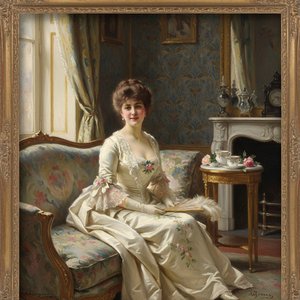
Alfred Stevens: Capturing Parisian Elegance & Fin-de-Siècle Intimacy
Discover the captivating world of Alfred Stevens, master of Parisian elegance & intimate portraiture. Explore his techniques, influences, and legacy – a prized collection for discerning art enthusiasts.

Romantic Realism's Finest: 10 Masterpieces for Your Home | OriginalUniqueArt
Explore 10 defining masterpieces of Romantic Realism! Discover Courbet, Millet & Daumier's powerful paintings—capturing emotion and social realities. Find museum-quality reproductions for your home at OriginalUniqueArt.com.
Realistisen taiteen mestariteoksia: 10 teosta, jotka vangitsevat todellisuuden – OriginalUniqueArt.fi
Tutustu 10 realistisen taiteen mestariteokseen! Courbet'sta Rembrandtiin – syvenny taidemaalareiden tarinoihin ja tekniikoihin. Löydä inspiraatiota sisustukseesi OriginalUniqueArt.com:ista. Tutki kokoelma verkossa!