

 Katso seinällä
 Lähetä
 Jaa
Jaa
 Tarkemmat tiedot
 Opas
Opas

 Lataa kuva
 Samanlaisia kohteita
 Röntgenkuvaus
 Diaesitys
 Tilastot
Nemo


 Lue lisää
Tällä sivulla esitettyä taideteosta suojaa tekijänoikeuslaki, mikä tarkoittaa, ettemme voi laillisesti luoda tai myydä täsmälleen samanlaista jäljennöstä. Tämä suoja toteutetaan kansainvälisten sopimusten, kuten esimerkiksi Berne-konventio ja kansallisilla laeilla, mukaan lukien niillä määritellyt Yhdysvaltain tekijänoikeuslaki – Luku 17. Kaikki oikeudet pidätetään. Luvaton kopiointi tai jäljittely on kielletty.
Tämä menetelmä noudattaa täysin tekijänoikeussäännöksiä, sillä se ei sisällä suojatun taideteoksen kopioimista tai jäljentämistä. Sen sijaan kyseessä on luova uudelleentulkinta – uusi maalaus, joka ammentaa vaikutteita alkuperäisestä, mutta ei ole sen identtinen kopio.
Giclée- ja taideprintit
Museolaatuisia giclée- tai kankaitaulun tulosteita nopealla tuotannolla ja joustavilla viimeistelyvaihtoehdoilla. ( Tilaa käsinmaalattu jäljennös Siirry digitaaliseen kuvaan)




P118B €10

P118H €10

P118W €10

P438Z €10

P508JH €12

P508YH €12

P805H €10

P805Z €10

P919BZ €10

P919G €10

P919XJ €10

P959ZH €10

P968JZ €12

W106C €8

W218G €10

W218JH €8

W218Y €10

W307PJ €10

W316G €10

W316PJ €8

W316Y €10

W398PJ €8

W4111J €10

W500HY €15

W500JH €15

W692G €12

W849H €8

W940BG €15

W953PJ €8




Valitse valmiista mitoistamme sellaiset, jotka vastaavat teoksen alkuperäisiä mittasuhteita.

Kirjoita tarvitsemasi leveys ja korkeus, jotta tuloste sopii kehyskokoon tai seinällesi. Tulostetta voidaan vain leikata, sitä ei voi koskaan tehdä suuremmaksi kuin alkuperäinen kuva, joten eri muotoinen koko aiheuttaa osan kuvasta katoamisen. Lähetämme sinulle digitaalisen mallikuvan hyväksyttäväksi ennen kuin aloitamme tulostuksen. Tällä sivulla näkyvä kuva ei näytä lopullista leikkausta — vain mallikuva näyttää sen.
Maailmanlaajuinen toimitus () 2 viikossa tavallisen 4–5 viikon sijaan. (22 lokakuu)

Ilmainen pikatoimitus ympäri maailman

Korkealaatuinen pellavakangas

Kattava kuljetusvakuutus

Tulliveron palautustakuu

Takuu täydellisestä värien vastaavuudesta

100 päivän palautusoikeus valmistusvirhetapauksissa

100% rahat takaisin -takuu

Määräalennus saatavilla
 Lasivaihtoehto on saatavilla vain alle 110 cm kokoisille teoksille

Nemo
Giclée- ja taideprintit
Replikaatin koko
-


Kokonaishinta
€ 70
Nemo – A Symphony of Geometric Form and Chance
Alexander Milne Calder’s “Nemo” stands as a testament to the enduring fascination with abstraction—a captivating exploration of color, shape, and movement that transcends mere visual representation. Created in 1947, this striking piece embodies Calder's signature approach: eschewing realism for a deliberate embrace of spontaneity and serendipity, mirroring the very essence of his celebrated mobiles.
The Visual Language of Equilibrium
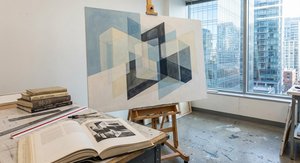
Dominating the canvas is an intricate composition featuring overlapping circles and squares—a bold declaration of geometric principles. The palette bursts with vibrant hues—primarily reds, yellows, and blues—that harmonize to create a dynamic visual experience. Calder meticulously crafted these shapes using a flat painting technique, prioritizing form over texture; there’s no visible brushwork, reflecting his unwavering commitment to precision and control despite the illusion of movement.
A Reflection of Constructivism's Legacy
“Nemo” firmly roots itself within the influential Constructivist movement of the early 20th century. Like its contemporaries—artists who sought to liberate art from traditional conventions—Calder aimed to convey emotion and ideas through simplified geometric forms, rejecting decorative embellishments in favor of intellectual rigor. This stylistic choice underscores Calder’s belief that art should communicate directly with the viewer's intellect as well as their senses.
Symbolism Embedded in Motionless Form
Despite its apparent stillness, “Nemo” pulsates with an underlying sense of dynamism—a subtle suggestion of movement achieved through the careful arrangement of shapes and colors. Calder’s genius lies in transforming static form into a conduit for conveying emotion; the overlapping circles and squares evoke feelings of balance, harmony, and perhaps even controlled chaos. The artist deliberately avoided explicit symbolism, allowing viewers to interpret the artwork's impact on their own emotional landscape.
A Monumental Contribution to Modern Art
Alexander Milne Calder’s “Nemo” represents more than just a beautiful painting—it embodies a pivotal moment in artistic history. His pioneering exploration of kinetic sculpture and his unwavering dedication to geometric abstraction paved the way for subsequent generations of artists, establishing him as one of the most influential sculptors of the 20th century. This artwork continues to inspire admiration for its elegance, innovation, and profound engagement with fundamental principles of visual art.
Kysymykset ja vastaukset
Mihin suuntaukseen ja mihin aikakauteen Alexander Calder:n "Nemo" sijoittuu?
Teoksessa Alexander Calder:n "Nemo" Modernism-suuntaus ja Modernismi-aikakausi kohtaavat.
Kuinka voimakas kontrasti teoksessa Alexander Calder:n "Nemo" on?
Teoksen Alexander Calder:n "Nemo" kontrastitaso on Statement.
Missä museossa alkuperäinen "Nemo" on esillä?
Voit nähdä alkuperäisteoksen "Nemo" kohteessa Biennale Internazionale dell'Antiquariato di Firenze, Firenze, Italia.
Taiteilijan elämäkerta
esittely alexander milne calderista
alexander milne calder oli skotlantilais-amerikkalainen kuvanveistäjä, joka syntyi Aberdeenissa, Skotlannissa vuonna 1846. Hänet tunnetaan parhaiten Philadelphia City Hallin arkkitehtonisista veistoksistaan, ja hänen taiteellinen perintönsä jatkui voimakkaana myös seuraavissa sukupolvissa; sekä hänen poikansa, alexander stirling calder, että lapsenlapsensa, alexander 'sandy' calder, nousivat merkittäviksi kuvanveistäjiksi 1900-luvulla.nuoruus ja ura
alexander milne calder aloitti uransa Skotlannissa työskennellen kuvanveistäjä john rhindin palveluksessa opiskeluaan Edinburghin kuninkaallisessa akatemiassa samalla kun hän hioi taitojaan. Myöhemmin hän siirtyi Lontooseen ja osallistui vaikuttavaan Albert Memorial -muistomerkin valmisteluun. Vuonna 1868 Calder muutti Yhdysvaltoihin ja asettui Philadelphiaan, missä hän syvensi osaamistaan opiskellen joseph a. baillyn johdolla ja osallistui thomas eakinsin kursseille Pennsylvania Academy of Fine Arts -taideakatemiassa.merkittävät teokset
alexander milne calderin tuotantoon kuuluu useita mestarillisia teoksia:- philadelphia city hall: valtava tilaustyö, joka koostui yli 250 marmori- ja pronssiosasta, ja jonka valmistaminen vei calderilta peräti 20 vuotta.
- william penn: kolossaalinen pronssipatsas, jonka tarkoituksena oli kruunata kaupungintalon torni.
- indian figure: veistos, joka toteutettiin ennen sen asettamista osaksi kaupungintaloa.
- eteläinen portti ja läntinen portti: värikkäillä valoilla valaistut osat, jotka ilmentävät calderin poikkeuksellista tarkkuutta ja yksityiskohtien tuntua.
perintö
alexander milne calderin perintö ulottuu kauas hänen omien teostensa ulkopuolelle, sillä sekä hänen poikansa että lapsenlapsensa nousivat taidehistorian merkittäviksi hahmoiksi. Hänen panoksensa maailman taiteeseen on nähtävissä useissa arvostetuissa museoissa, kuten smithsonian american art museum -museossa ja galleria civica di arte moderna e contemporanea torinossa. Jos haluat tutustua syvällisemmin alexander milne calderin elämään ja työhön, vieraile osoitteessa https://OriginalUniqueArt.com/@/alexander-milne-calder tai tutustu wahoo art timeline -aikajanaan saadaksesi kattavan katsauksen taidehistoriaan. On tärkeää huomata, että alexander milne calderin työtä ovat taiteen ystävien ja tutkijoiden arvostamia, mikä tekee hänestä merkittävän hahmon taidemaailmassa. Hänen panoksensa tulee säilymään juhlistettuna ja tutkimuksen kohteena vielä sukupolvien ajan.
Alexander Calder
1898 - 1976 , Iso Britannia
Tietoa taiteilijasta
- Artistic Movement Or Style: Architectural sculpture
- Artists Who Influenced This Artist: ['John Rhind']
- Date Of Birth: August 23, 1846
- Date Of Death: June 14, 1923
- Full Name: Alexander Milne Calder
- Nationality: Scottish-American
- Notable Artworks:
- Philadelphia City Hall
- William Penn statue
- Place Of Birth: Aberdeen, Scotland
Aiheeseen liittyvät artikkelit

Beyond Form & Color: Geometric Abstraction's Evolution in 20th/21st Century Art
Explore the evolution of geometric abstraction from Cubism to contemporary art. Discover key artists like Malevich & Mondrian, investment insights, and expert collecting advice at OriginalUniqueArt.

Neo-Abstract Art: The High-Impact Evolution of Modern Visual Energy and Geometric Sophistication
Discover the power of Neo-Abstract art. Explore how bold geometric forms and high-impact visual energy are redefining modern design. Learn to curate sophisticated, high-energy spaces with the latest trends in contemporary abstraction and structural color.
Beyond Form & Color: Geometric Abstraction's Enduring Legacy in Art History
Explore the captivating world of geometric abstraction! Discover its origins, key artists like Malevich & Mondrian, and why this movement remains highly valued by art collectors today. Expert insights at OriginalUniqueArt.

Wassily Kandinskin 25 mestariteosta: Värien ja muodon syvä maailma | OriginalUniqueArt
Tutustu Wassily Kandinskin 25 vaikuttavinta teosta! Uppoudu abstraktin taiteen maailmaan, värien symboliikkaan ja modernin ekspressionismin historiaan. Löydä inspiraatiota kodin sisustukseen OriginalUniqueArt.com:ista – laadukkaat taideprintit ja reproduktiot.

Geometrisen abstraktion mestariteokset: Taidetta kotiin OriginalUniqueArtilta
Tutustu geometrisen abstraktion 10 mestariteokseen! Piet Mondrian, Kandinsky ja muut taiteilijat muovasivat modernin taiteen historiaa. Löydä inspiraatiota kotiisi OriginalUniqueArtilta – laadukkaat taideprintit ja sisustusehdotukset odottavat. Tutki kokoelma verkossa!
