Valikko

() ·

A painting made for you, by hand

mein Agnes

Käsinmaalattu öljyvärinen jäljennös

Käsinmaalattu öljyväri kankaalle haluamassasi koossa ja kehyksissä, taiteilijoidemme valmistamana tilauksesta. ( Vaihda tulosteeseen Siirry digitaaliseen kuvaan)

Keräilykohteen kuvaus

Explore Albrecht Dürer’s ‘mein Agnes,’ a stunning 1494 black & white sketch showcasing his masterful realism & emotional depth. A key Renaissance artwork.

Taiteilijan elämäkerta

Albrecht Dürer: Saksalainen renessanssitaiteilija, tunnettu veistoksistaan, maalaustensa ja erityisesti kaiverruksistaan. Hänen teoksiaan on esillä maailman suurimmissa museoissa.

from ·

Chapter 1

How large should it be?

Slide to change the size; the picture on the left shows the frame at its real width. The proportions of the original are kept.

Vakiokoko
räätälöity
CM
INCH

Valitse valmiista mitoistamme sellaiset, jotka vastaavat teoksen alkuperäisiä mittasuhteita.

leveys
korkeus

Kirjoita tarvitsemasi leveys ja korkeus, jotta teos sopii kehyksiisi tai seinällesi. Koska kyseessä on käsinmaalattu teos, taiteilija voi maalata hieman enemmän kuvan ympärille tai rajata sitä hieman, jos haluat eri muotoisen koon — valinta on sinun. Lähetämme sinulle digitaalisen mallikuvan hyväksyttäväksi ennen kuin maalaus alkaa. Tällä sivulla näkyvä kuva ei vastaa lopullista tulosta — vain mallikuva näyttää sen.

Chapter 2

How should it arrive?

Choose the edges of the stretched canvas

Choose your frame

Corner sample of the WhiteWrap canvas edge finish, stretched on massiivipuu bars
White €1
Corner sample of the BlurSideWrap canvas edge finish, stretched on massiivipuu bars
Blurside €1
Corner sample of the ExtendedWrap canvas edge finish, stretched on massiivipuu bars
Extended €1
Corner sample of the P118B picture frame: valettu polystyreeni, 5 cm wide and 3 cm thick
P118B €10
Corner sample of the P118H picture frame: valettu polystyreeni, 5 cm wide and 3 cm thick
P118H €10
Corner sample of the P118W picture frame: valettu polystyreeni, 5 cm wide and 3 cm thick
P118W €10
Corner sample of the P438Z picture frame: valettu polystyreeni, 5.5 cm wide and 3.5 cm thick
P438Z €10
Corner sample of the P508JH picture frame: valettu polystyreeni, 7 cm wide and 3.5 cm thick
P508JH €12
Corner sample of the P508YH picture frame: valettu polystyreeni, 7 cm wide and 3.5 cm thick
P508YH €12
Corner sample of the P805H picture frame: valettu polystyreeni, 5 cm wide and 3.5 cm thick
P805H €10
Corner sample of the P805Z picture frame: valettu polystyreeni, 5 cm wide and 3.5 cm thick
P805Z €10
Corner sample of the P919BZ picture frame: valettu polystyreeni, 7 cm wide and 3.5 cm thick
P919BZ €10
Corner sample of the P919G picture frame: valettu polystyreeni, 7 cm wide and 3.5 cm thick
P919G €10
Corner sample of the P919XJ picture frame: valettu polystyreeni, 7 cm wide and 3.5 cm thick
P919XJ €10
Corner sample of the P959ZH picture frame: valettu polystyreeni, 5 cm wide and 3 cm thick
P959ZH €10
Corner sample of the P968JZ picture frame: valettu polystyreeni, 6 cm wide and 4 cm thick
P968JZ €12
Corner sample of the W106C picture frame: massiivipuu, 5 cm wide and 3 cm thick
W106C €8
Corner sample of the W218G picture frame: massiivipuu, 5 cm wide and 3 cm thick
W218G €10
Corner sample of the W218JH picture frame: massiivipuu, 5 cm wide and 3 cm thick
W218JH €8
Corner sample of the W218Y picture frame: massiivipuu, 5 cm wide and 3 cm thick
W218Y €10
Corner sample of the W307PJ picture frame: massiivipuu, 6 cm wide and 3 cm thick
W307PJ €10
Corner sample of the W316G picture frame: massiivipuu, 6 cm wide and 3 cm thick
W316G €10
Corner sample of the W316PJ picture frame: massiivipuu, 6 cm wide and 3 cm thick
W316PJ €8
Corner sample of the W316Y picture frame: massiivipuu, 6 cm wide and 3 cm thick
W316Y €10
Corner sample of the W398PJ picture frame: massiivipuu, 5 cm wide and 3 cm thick
W398PJ €8
Corner sample of the W4111J picture frame: massiivipuu, 6.5 cm wide and 3.5 cm thick
W4111J €10
Corner sample of the W500HY picture frame: massiivipuu, 7 cm wide and 5 cm thick
W500HY €15
Corner sample of the W500JH picture frame: massiivipuu, 7 cm wide and 5 cm thick
W500JH €15
Corner sample of the W692G picture frame: massiivipuu, 8 cm wide and 4 cm thick
W692G €12
Corner sample of the W849H picture frame: massiivipuu, 5 cm wide and 3 cm thick
W849H €8
Corner sample of the W940BG picture frame: massiivipuu, 7.5 cm wide and 4.5 cm thick
W940BG €15
Corner sample of the W953PJ picture frame: massiivipuu, 6 cm wide and 3.5 cm thick
W953PJ €8
Corner sample of the H24-GOLD picture frame: kaiverrettua puuta ja gessoa, 10 cm wide and 6 cm thick
H24-GOLD €30
Corner sample of the H24-SILVER picture frame: kaiverrettua puuta ja gessoa, 10 cm wide and 6 cm thick
H24-SILVER €30
Corner sample of the H36-GOLD picture frame: kaiverrettua puuta ja gessoa, 15 cm wide and 6.5 cm thick
H36-GOLD €45
Corner sample of the H36-SILVER picture frame: kaiverrettua puuta ja gessoa, 15 cm wide and 6.5 cm thick
H36-SILVER €45
Kehyksen esikatselu
Kehystetty

Moulding: . Overall size with the frame: .

Chapter 3

Who paints it, and should anything change?

Examples of what can be changed: Replace face with customer photo; Add pet (e.g., replace cat with dog); Include hidden message in background; Change background landscape or elements.
After order, OriginalUniqueArt.com team will email client for instructions and provide a mockup preview

Maailmanlaajuinen toimitus () 3–4 viikossa tavallisen 5 viikon sijaan. (29 lokakuu). Laadusta ei tingitä.

Chapter 4

The finishing touches

A nameplate, as in a museum?

Kaiverretun pronssilaatan tiedot

This elegant plaque features the artist's name and the title of the artwork, finely engraved for a timeless presentation.

It is made from bronze with a refined, elegant finish. The text is precisely laser-engraved for a sharp and permanent result. Measuring 9x2 cm, the plaque is compact yet easy to read. It's built to be durable and scratch-resistant, offering a professional, museum-quality look. Mounting is simple thanks to the included adhesive backing.

Läpinäkyvän akryylilaatan tiedot

The plaque includes essential engraved details such as the artist's name, the title of the artwork, the date it was created, the type of media used-like oil on canvas or watercolor-a brief description of the piece, and a QR code that links to the complete artwork information.

It is crafted from clear acrylic, offering a sleek, modern appearance. The text is UV-engraved in black to ensure strong visual contrast. With a size of 10x15 cm, it ensures optimal readability. It comes equipped with two metal hooks for secure wall mounting. The plaque is designed to be weather-resistant, making it suitable for various environments, and it includes interactive features that work seamlessly with smartphone scanning.

Mustan akryylilaatan tiedot

This elegant plaque includes engraved information such as the artist's name, the title of the artwork, the date it was created, the type of media used (like oil on canvas or watercolor), a short description of the artwork, and a QR code for quick access to more information.

The plaque itself is made from refined black acrylic with a premium finish. The text is laser-engraved in white for high contrast and readability. Its size is 10x15 cm, designed to be easy to read. It comes with two metal hooks for professional mounting. The design is sleek and fits any interior style. It is also weather-resistant and durable, with built-in digital integration for mobile compatibility.

A protective varnish?

When do you need it?

Chapter 5

Your painting, as you ordered it

mein Agnes

Reproduktiotekniikka

Replikaatin koko

-

Kokenut huipputaiteilija

Lisää yksityiskohtia, hienostuneisuutta ja enemmän aikaa tuotantoon

-

Reproduktion kehystysvaihtoehdot

-

-

Teoksille tai reproduktioille, joiden mikä tahansa sivu on suurempi kuin 105 cm (noin 41 tuumaa), kehys toimitetaan osina purettuna sarjana. Tämä menetelmä varmistaa turvallisen toimituksen ja ehkäisee vaurioita kuljetuksen aikana.

Vaatii ammattimaista kokoamista – kyseessä ei ole tee-se-itse-tuote.
Sarja on koottava ja kangas kiristettävä kokeneen kehystysammattilaisen toimesta käyttäen puuliimaa (ei sisälly pakkaukseen), kangaspinnetteitä ja puristimia, jotta kehyksen kulmat pysyvät suorina liiman kuivuessa. Virheellinen kokoaminen tai epätasainen kankaan kiristys voi vaurioittaa teosta pysyvästi, eikä tällaiset vauriot ala takuun piiriin.

  • Kaikki massiivipuupalat sisältyvät, tarkasti mittojen mukaan leikattuina.

  • Kootaan mukana tulevilla ruuveilla sekä kulmaliitoksia varten tarvittavalla puuliimalla, jota ei toimiteta, joten se on hankittava kehystäjältä.

  • Vaatii ammattilaisvälineitä, jotka eivät sisälly pakkaukseen: kankaan venytyspihdit (kiristin) ja puristimet, joilla pidetään kehyksen puut suorassa liiman kuivuessa.

Tärkeää:
Kulmaliitoksissa tarvitaan puuliimaa, kehyksien osat on pidettävä puristimilla, kunnes liima on täysin kuivunut, ja koottuun kehykseen jännitettävän kankaan kiristämiseen tarvitaan kangaspenssipihti. Mikään näistä ei sisälly pakkaukseen. Suosittelemme varmistamaan kokeneen kehystäjän saatavuuden ennen tämän kokoisen kehyksen tilaamista.

Nimilaatta

-

-

Suojalakkaus

Kiiltävä lakka (syventää värejä, suojaa valolta ja kosteudelta)

-

Mukauta taideteokseni

Esimerkkejä muokattavista asioista: Vaihda kasvot asiakkaan omaan valokuvaan; Lisää lemmikki (esim. vaihda kissa koiraan); Lisää taustalle piilotettu viesti; Muuta taustan maisemaa tai elementtejä.

-

Pikatoimitus

Maailmanlaajuinen toimitus () 3–4 viikossa tavallisen 5 viikon sijaan. (29 lokakuu). Laadusta ei tingitä.

-

Pikatoimitus

Maailmanlaajuinen toimitus () 5 viikon kuluessa. (5 marraskuu).

Sisältyy hintaan

Kokonaishinta

€ 265

Kokonaishinta € 265

Lasivaihtoehto on saatavilla vain alle 110 cm kokoisille teoksille

Included with every order

  • Ilmainen pikatoimitus ympäri maailman
  • Korkealaatuinen pellavakangas
  • Kattava kuljetusvakuutus
  • Tulliveron palautustakuu
  • Takuu täydellisestä värien vastaavuudesta
  • 100 päivän palautusoikeus (vain valmistusvirheet)
  • 100% rahat takaisin -takuu
  • Määräalennus tarjolla

Mein Agnes: A Portrait of Quiet Contemplation

Albrecht Dürer’s “Mein Agnes,” created in 1494, isn't merely a portrait; it’s a profound distillation of human emotion captured with an astonishingly delicate hand. This black and white sketch, now residing within the Albertina Museum in Vienna, offers a rare glimpse into the life of Agnes Dürer, the wife of one of the Renaissance’s most celebrated artists. More than just a depiction of a woman, it's a study in introspection, a moment frozen in time that speaks volumes about the complexities of marriage and the quiet beauty of everyday existence.

The drawing itself is remarkably intimate – a young Agnes, likely around eighteen years old, sits at a table, her head resting pensively on her right hand. Her gaze is averted, suggesting a private thought or perhaps a moment of melancholy. Dürer’s masterful use of hatching and cross-hatching creates an incredible sense of texture, mimicking the drape of her clothing and the softness of her hair. The lines aren't bold declarations; instead, they are subtle whispers that build volume and depth, drawing the viewer into the scene with a gentle invitation.

The Renaissance Context: Marriage and Artistic Patronage

To fully appreciate “Mein Agnes,” it’s crucial to understand the context of its creation. Dürer returned to Nuremberg in 1494 after an extended journey through Italy, a period that profoundly shaped his artistic vision. He had married Agnes Frey just weeks before, a union arranged by their families and reflecting the prevailing social norms of the time. Marriage was often viewed as a strategic alliance, but for Dürer, it also provided him with a model – a muse, in essence – to capture on paper. The arrangement highlights the role of women within Renaissance society, not just as wives and mothers, but as subjects worthy of artistic representation.

Furthermore, Dürer’s return coincided with the rise of wealthy patrons like Emperor Maximilian I, who commissioned elaborate artworks for his court. This patronage fueled a flourishing art market and encouraged artists to experiment with new techniques and styles. Dürer's ability to blend traditional Northern European realism with Italian Renaissance influences – evident in his meticulous observation of anatomy and perspective – made him one of the most sought-after artists of his era.

Technique and Symbolism: A Masterclass in Line

The technical brilliance of “Mein Agnes” lies primarily in Dürer’s command of line. He employs a technique known as *hatching*, layering parallel lines to create tonal variations, and *cross-hatching*, intersecting lines to build darker areas. This method allows him to render the subtle nuances of light and shadow with remarkable precision, giving the figure a tangible presence. The simplicity of the materials – paper and ink – belies the complexity of his execution; it’s a testament to Dürer's extraordinary skill.

Beyond its technical merits, “Mein Agnes” is rich in symbolism. The posture itself—head resting on hand—suggests contemplation, perhaps even sadness or vulnerability. It’s a quiet moment of introspection, offering a poignant contrast to the grand narratives often depicted in Renaissance art. The sketch's intimacy and directness are particularly striking, representing a departure from the more formal portraiture conventions of the period.

Emotional Resonance: A Window into the Human Heart

“Mein Agnes” is not simply a beautiful drawing; it’s an emotionally resonant work that invites viewers to connect with the subject on a deeply personal level. Dürer's ability to capture a fleeting moment of human emotion—a hint of melancholy, a suggestion of inner thought—is truly remarkable. The sketch possesses a timeless quality, reminding us of the universal experiences of love, loss, and introspection.

Reproductions of “Mein Agnes” offer an accessible way to experience this masterpiece firsthand. Whether displayed in a private residence or a public gallery, this intimate portrait continues to captivate audiences with its quiet beauty and profound emotional depth—a testament to the enduring legacy of Albrecht Dürer’s artistic genius.

Kysymykset ja vastaukset

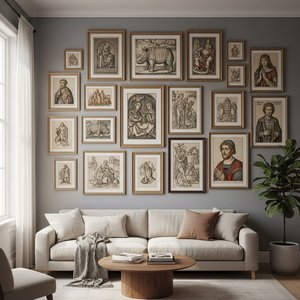
Missä Albrecht Dürer:n "mein Agnes" -teoksen reproduktio kannattaisi ripustaa?

Albrecht Dürer:n "mein Agnes"-teoksen Tall-muoto on suositeltava Living Room-tilaan. Muoto ja tila ohjaavat yhdessä reproduktion sijoittelua.

Miten teoksen "mein Agnes" tyyli suhteutuu sen tekijän aikakauteen?

Teoksessa Albrecht Dürer:n "mein Agnes" Renaissance-suuntaus ja Renessanssi-aikakausi kohtaavat.

Mitkä ovat alkuperäisen Albrecht Dürer:n "mein Agnes" mitat?

Teoksen "mein Agnes" alkuperäiset mitat ovat 156 x 98 cm. Alkuperäiset mitat ovat hyödyllinen vertailukohta, kun valitset reproduktion kokoa.

More about this painting

Esikatselu Esikatsele AR-tilassa Vaihda tulosteeseen Siirry digitaaliseen kuvaan Jaa teos
Tiedot Opas Lisää suosikkeihin Lataa kuva Samanlaisia kohteita Röntgenkuvaus Diaesitys Q&A Tilastot

In numbers

  • 1494the year it was painted
  • 29frames to choose from
  • standard sizes, in its own proportions
  • 5weeks to paint and deliver it
Albrecht Dürer

Albrecht Dürer

1471 - 1528, Saksa

Quick facts about Albrecht Dürer

  • Artistic Movement Or Style: Saksa renessanssi
  • Artists Or Movements Influenced By This Artist: ['Pohjoinen renessanssi']
  • Artists Who Influenced This Artist:
    • Leonardo da Vinci
    • Raphael
    • Giovanni Bellini
  • Date Of Birth: 21. toukokuuta 1471
  • Date Of Death: 6. huhtikuuta 1528
  • Full Name: Albrecht Dürer
  • Nationality: Saksalainen
  • Notable Artworks:
    • Apokalypsi
    • Melencolia I
    • Jeesuksen ristiinnaulitseminen
  • Place Of Birth: Nürnberg, Saksa

Taiteilijan elämäkerta

A Life Forged in Nuremberg: The Early Years and Apprenticeship

Albrecht Dürer, nimi joka on synonyymi Saksalaiselle renessanssille, nousi esiin Nürnbergin vilkkaassa käsityöläiskaupunkissa vuonna 1471. Hänen isänsä, Albrecht Dürer Senior, oli menestyksekäs kultaseppä, joka oli muuttanut Unkarista Saksaan ja tuonut mukanaan perinnön taitoa. Tämä ympäristö – metallin haju ja tarkka käden työn tarkkuus – loi pohjan nuoren Albrechtin taiteellisille taipumuksille. Vaikka isänsä näki hänestä kultasepinän, Albrecht osoitti pian poikkeuksellisen lahjakkuutensa piirtämisessä. Kolmetoista-vuotiaana hän siirtyi Michael Wolgemutin työpajaan, Nürnbergin johtavaan taiteilijaan tuona aikana. Tämä ei ollut pelkästään teknistä koulutusta; se oli uppoutumista valokirjoihin, maalattuihin paneeleihin ja – tärkeintä – puupiirrosten nousuun. Wolgemutin työpajan tuottama työmäärä, mukaan lukien laajat kuvaukset *Nürnbergin kalenterissa*, tarjosivat Dürerille ennennäkemätöntä pohjaa suunnittelulle, kompositiolle ja kuvan tekemisen mekaaniselle puolelle. Upea hopeakuvaporträtti vuodelta 1484, kun hän oli vain teini-ikäinen, on hämmästyttävä todiste hänen kehittyvästä lahjakkuudestaan – testamentti taiteellisesta identiteetistä, joka alkoi muotoutua. Vaikka isänsä näki hänestä kultasepinän, Albrecht osoitti pian poikkeuksellisen lahjakkuutensa piirtämisessä. Kolmetoista-vuotiaana hän siirtyi Michael Wolgemutin työpajaan, Nürnbergin johtavaan taiteilijaan tuona aikana. Tämä ei ollut pelkästään teknistä koulutusta; se oli uppoutumista valokirjoihin, maalattuihin paneeleihin ja – tärkeintä – puupiirrosten nousuun. Wolgemutin työpajan tuottama työmäärä, mukaan lukien laajat kuvaukset *Nürnbergin kalenterissa*, tarjosivat Dürerille ennennäkemätöntä pohjaa suunnittelulle, kompositiolle ja kuvan tekemisen mekaaniselle puolelle. Upea hopeakuvaporträtti vuodelta 1484, kun hän oli vain teini-ikäinen, on hämmästyttävä todiste hänen kehittyvästä lahjakkuudestaan – testamentti taiteellisesta identiteetistä, joka alkoi muotoutua.

The Italian Influence and Artistic Maturation

Dürerin intohimoinen halu ulottui Nürnbergin rajojen yli. Hän oli pakkomielessä uteliaisuus ja pyrkimys mestaruuteen maalauksessa, hän teki ensimmäisen matkansa Italiaan vuonna 1494. Tämä ei ollut pelkkää nähtävyyksiä; se oli pyhiinvaellus renessanssin sydäelle. Hän kohtasi mestareita kuten Rafael, Giovanni Bellini ja Leonardo da Vinci – taiteilijoita, jotka uudistasivat muodon, perspektiivin ja ihmisen ilmaisun mahdollisuuksia. Tämän kohtaamisen vaikutus oli syvällinen. Dürer imi klassisia motiiveja, harmonista kompositioa ja hienovaraista sfumatoa, joka oli tunnusomaista italialaiselle taiteelle, mutta hän ei koskaan luopunut pohjoismaisesta aistillisuudestaan tarkkuuden ja symbolisen syvyyden suhteen. Toinen matka Italiaan vuosina 1505–1507 vahvisti näitä vaikutteita entisestään, mahdollistaen hänet tutustumaan antiikin roomalaisten raunioihin ja hienosäätämään ymmärrystään anatomiasta ja suhteista. Tämä klassisen ja pohjoismaisen aistillisuuden yhdistelmä muuttui Dürerin ainutlaatuisen taiteellisen tyylin tunnusmerkiksi.

Mastering the Mediums: Painting, Engraving, and Woodcut

Dürer oli useiden materiaalien mestari, joista jokainen tarjosi hänelle erilaisia luovuuden kanavia. Hänen maalauksensa, vaikka niitä on vähemmän kuin printtejä, osoittavat hämmästyttävää hallintaa öljyvärimaalauksessa ja kykyä vangita sekä fyysinen samankaltaisuus että psykologinen syvyys. Teokset kuten *Rosmariinin juhla* (1506) paljastavat eloisan värimaailman, joka on saanut vaikutteita venetsialaisesta värityksestä. Kuitenkin printtaus – erityisesti kaiverrus ja puupiirros – oli se ala, jossa Dürer todella mullisti taiteellisen käytännön. Hän kohdensi nämä tekniikat itsenäisiksi taidemuodoiksi, jotka pystyivät välittämään monimutkaisia tarinoita ja syvällisiä tunteita. *Apokalypsin* sarja (1498), neljätoista puupiirrosta Raamatun Ilmestyskirjan kuvaukseen, osoitti hänen taitojaan tässä mediassa huolimatta sen sisäisistä rajoituksista. Myöhemmät kaiverrukset kuten *Melankolia I* (1514) ja *Jerome kirjastossa* (1514) ovat todiste hänen vertaansa vailla olevasta taidostaan – monimutkaisia kompositioita, jotka on täynnä symbolista merkitystä ja toteutettu huolellisesti. Hän ei pelkästään kuvannut todellisuutta; hän sisällytti siihen kerroksia älyllistä ja hengellistä merkitystä.

Major Achievements and Historical Significance

Dürer ei ollut vain taiteilija; hän oli tutkija, teoreetikko ja innovaattori, joka pyrki ymmärtämään taiteen luonnollisia periaatteita. Hän uskoi taiteen matemaattisiin perusteisiin ja omistautui tiukan tarkastelun perustamisen tutkimiselle. Hänen teoksensa *Neljä kirjaa ihmisproportioista* (1528) olivat uraauurtavia ajassaan, koska ne osoittivat hänen sitoutumistaan ​​tieteelliseen havainnoon ja rationaaliseen analyysiin. Nämä kirjoitukset eivät olleet pelkästään akateemisia harjoituksia; ne oli tarkoitettu nostamaan taiteilijoiden asema käsityöläisistä älykkäiksi toimijoiksi. Dürerin perintö ulottuu paljon hänen yksittäisten teostensa yli. Hän yhdisti pohjoismaiset traditiot ja renessanssin italialaiset ideat, tuoden klassisia motiiveja pohjoiseen taiteeseen säilyttäen samalla sen ainutlaatuisen luonteen. Hänen teoreettiset panoksensa perustivat uuden kehyksen taiteelliselle käytännölle, inspiroimatta sukupolvia taiteilijoita hänen teknisen taitonsa, innovatiivisen ajattelunsa ja syvällisen näkemyksensä avulla. Hän on edelleen yksi tärkeimmistä hahmoista länsimaiseen taiteen historiassa.

Influences and Enduring Impact

  • Michael Wolgemut: Dürerin alkuperäinen mentori, joka tarjosi hänelle perusteita piirtämisessä, maalauksessa ja puupiirrosten tekemisessä.
  • Leonardo da Vinci: Inspiroi Düreriä tutkimaan anatomiaa, perspektiiviä ja sfumatoa – hienovaraista sävyjen sekoittamista.
  • Raphael: Vaikutti Dürerin harmoniseen kompositioon ja ihannellisiin muotoihin.
  • Giovanni Bellini: Auttoi Düreriä ymmärtämään venetsialaista taidetta ja sen värejä.

Pikaista tietoa

  • Medium: Pen & ink on paper
  • Influences: Renaissance
  • Artistic style: Realism, expressive
  • Notable elements: Detailed hatching
  • Title: mein Agnes
  • Movement: Northern Renaissance

Taidevisat

Jokaisessa kysymyksessä on vain yksi oikea vastaus.

Kysymys 1:
What is the primary subject depicted in Albrecht Dürer’s ‘Mein Agnes’?
Kysymys 2:
The drawing 'Mein Agnes' is primarily executed using which technique?
Kysymys 3:
In what year was ‘Mein Agnes’ created?
Kysymys 4:
According to the description, what is suggested by the young girl’s posture and expression?
Kysymys 5:
What is a key characteristic of Albrecht Dürer’s artistic style as evidenced in ‘Mein Agnes’?