

 Katso seinällä
 Lähetä
 Jaa
Jaa
 Tarkemmat tiedot
 Opas
Opas

 Lataa kuva
 Samanlaisia kohteita
 Röntgenkuvaus
 Diaesitys
 Tilastot
Dancing Dryads
 Oil
Oil- WallArt
- Tonalism
 1879
1879- 19th Century
 23.0 x 18.0 cm
 Lue lisää
Käsinmaalattu öljyvärinen jäljennös
Käsinmaalattu öljyväri kankaalle haluamassasi koossa ja kehyksissä, taiteilijoidemme valmistamana tilauksesta. ( Vaihda tulosteeseen Siirry digitaaliseen kuvaan)




P118B $10

P118H $10

P118W $10

P438Z $10

P508JH $12

P508YH $12

P805H $10

P805Z $10

P919BZ $10

P919G $10

P919XJ $10

P959ZH $10

P968JZ $12

W106C $8

W218G $10

W218JH $8

W218Y $10

W307PJ $10

W316G $10

W316PJ $8

W316Y $10

W398PJ $8

W4111J $10

W500HY $15

W500JH $15

W692G $12

W849H $8

W940BG $15

W953PJ $8




Valitse valmiista mitoistamme sellaiset, jotka vastaavat teoksen alkuperäisiä mittasuhteita.

Voit syöttää omat mitat sopimaan tiettyyn kehykseen tai tilaan. Jos valitsemasi koko ei vastaa alkuperäisen kuvan mittasuhteita, rajaamme taideteoksen tai jatkamme maalausta käsin maalatuilla elementeillä. Digitaalinen esikatselu lähetetään hyväksyttäväksi ennen tuotannon aloittamista.
Huomioithan, että näytöllä oleva esikatselu ei vastaa todellista rajausta tai jatkamista. Vain digitaalinen mallikuva näyttää lopullisen sommittelun tarkasti.
Vaikka mittatilaustyöt ovat mahdollisia, suosittelemme valitsemaan mitan ennalta määritetystä listasta alkuperäisten mittasuhteiden säilyttämiseksi.
Tilauksen jälkeen OriginalUniqueArt.com -tiimi lähettää asiakkaalle sähköpostitse ohjeet ja esikatselukuvan.
Maailmanlaajuinen toimitus () 3–4 viikossa tavallisen 5 viikon sijaan. (27 syyskuu). Laadusta ei tingitä.

Ilmainen pikatoimitus ympäri maailman

Korkealaatuinen pellavakangas

Kattava kuljetusvakuutus

Tulliveron palautustakuu

Takuu täydellisestä värien vastaavuudesta

100 päivän palautusoikeus valmistusvirhetapauksissa

100% rahat takaisin -takuu

Määräalennus saatavilla
 Lasivaihtoehto on saatavilla vain alle 110 cm kokoisille teoksille

Dancing Dryads
Reproduktiotapa
Replikaatin koko
-


Kokonaishinta
$ 300
A Vision of Ethereal Grace
In the quiet, evocative realm of Albert Pinkham Ryder’s 1879 masterpiece, Dancing Dryads, the boundaries between the physical world and the dreamscape begin to dissolve. This intimate work captures a moment of pure, uninhibited joy as two figures emerge from the shadows of a primordial forest. The composition centers on the rhythmic movement of these nymphs, or dryads, whose bodies are caught in a delicate balance of motion and stillness. As they raise their arms toward the canopy, there is a palpable sense of liberation, an invitation to witness a ritual that feels both ancient and timeless. For the discerning collector, this piece offers more than mere decoration; it provides a window into a world where nature and spirit are inextricably entwined.
The technique employed by Ryder is nothing short of spellbinding, characterized by a heavy, almost sculptural application of paint that lends the scene a profound sense of depth. Unlike the bright, clear light of the Impressionists, Ryder utilizes a more somber, Tonalist palette, where shadows hold as much importance as the light itself. The trees surrounding the dancers are not merely background elements but are rendered with a textured, brooding presence that anchors the ethereal figures to the earth. This interplay of light and shadow—the chiaroscuro effect—creates a sense of mystery, making the viewer feel as though they have stumbled upon a secret, nocturnal celebration hidden deep within the American wilderness.
Symbolism and the Spirit of Tonalism
Beyond its visual beauty, Dancing Dryads serves as a profound exploration of Symbolist themes. In the late 19th century, artists began to move away from literal representations of reality toward more subjective, emotional truths. Ryder, a visionary precursor to modern abstraction, uses the dryads to symbolize the untamed vitality of the natural world. The dance is not merely a physical act but a metaphor for the cyclical rhythms of life, growth, and rebirth. The subtle presence of leaves and the textured bark of the trees suggest a living, breathing environment that responds to the dancers' energy, creating an atmosphere of enchantment that resonates deeply with those who find solace in the mysteries of nature.
For interior designers and art enthusiasts looking to curate a space of contemplation and elegance, this reproduction offers an unparalleled emotional impact. The painting’s ability to evoke a sense of nostalgia and quiet wonder makes it a perfect centerpiece for a study, a library, or a sophisticated living area. It possesses a unique gravity, drawing the eye inward and encouraging long periods of reflection. To possess such a work is to hold a fragment of American art history—a piece that bridges the gap between the rugged landscapes of New Bedford and the profound, dreamlike depths of the human imagination.
Taiteilijan elämäkerta
Early Life and Artistic Beginnings
Albert Pinkham Ryder, born March 19, 1847, in New Bedford, Massachusetts, remains a somewhat enigmatic figure in American art history. Details of his childhood are scarce, shrouded in the mists that would later become so characteristic of his paintings. However, it is known that he began to explore his artistic inclinations early on, capturing the landscapes of his native New Bedford with nascent skill. This coastal upbringing, steeped in the atmosphere of a bustling whaling port, undoubtedly left an indelible mark on his imagination and would resurface throughout his career as a recurring source of inspiration.Information about Ryder’s formative years is limited; he grew up in a family that adhered to strict Methodist beliefs, where women dressed Quaker fashion. In 1840 the family moved to New Bedford, then the greatest whaling port in America, shaping his worldview from an early age.
Ryder's artistic talent blossomed during his adolescence, fueled by observations of the rugged coastline and the dramatic skies above New Bedford Bay. He possessed a remarkable ability to translate visual impressions into expressive brushstrokes—a skill that would define his distinctive style.
Formal Training and European Influences
Ryder’s formal art education commenced with studies under William Edgar Marshall in New York City, providing him with foundational knowledge of traditional painting techniques. Subsequently, he enrolled at the National Academy of Design between 1870 and 1875, where he exhibited his debut work in 1873 and forged a lifelong friendship with Julian Alden Weir.
These formative years instilled in him a disciplined approach to artmaking and exposed him to the prevailing artistic sensibilities of the time. However, Ryder’s artistic vision transcended academic conventions; he actively sought inspiration from European masters—particularly those practicing the Barbizon School and the Hague School.
European Journeys and Artistic Transformation
Between 1877 and 1903, Ryder undertook four expeditions to Europe, immersing himself in the artistic landscape of the Old World. He was captivated by the Barbizon School’s commitment to naturalism and plein air painting—a method that prioritized direct observation of nature over studio reproductions.
Furthermore, he found profound resonance in the Hague School's muted color palettes and atmospheric landscapes, which emphasized mood and emotion rather than precise representation. These influences profoundly shaped Ryder’s artistic sensibilities, informing his compositional choices and contributing to the development of his signature style—characterized by ethereal light and evocative symbolism.
A Distinctive Artistic Style: Tonalism and Symbolism
Ryder's artistic approach was fundamentally rooted in Tonalism and Symbolism. Unlike Impressionists who aimed to capture fleeting moments of visual sensation, Ryder sought to convey deeper psychological states through subtle gradations of color and tonal values.
His paintings are imbued with a sense of mystery and contemplation—often depicting landscapes bathed in twilight or illuminated by moonlight. Ryder skillfully manipulated light and shadow to create dramatic effects, emphasizing the emotional resonance of his scenes.
He frequently employed symbolic imagery drawn from mythology and folklore—reflecting his belief that art could transcend mere visual representation and communicate spiritual truths. Ryder’s distinctive brushwork—characterized by broad, expressive strokes—further enhanced the textural quality of his canvases and contributed to their overall atmosphere.
Notable Works and Legacy
Ryder's oeuvre comprises numerous paintings that exemplify his artistic vision. Among his most celebrated works are Misty Moonlight, capturing the haunting beauty of a coastal nightscape; The Race Track, depicting a desolate landscape imbued with symbolic significance; and Siegfried & Rhine Maidens, illustrating a mythological narrative rendered in luminous color.
Ryder’s influence extended beyond his immediate contemporaries. He is considered a pioneer of American Tonalism—a movement that championed tonal harmonies and atmospheric effects—and a pivotal figure in the Symbolist tradition. His enduring legacy resides in his ability to transform personal experience into universal expressions of emotion and imagination.

Albert Pinkham Ryder
1847 - 1917 , Yhdysvallat
Tietoa taiteilijasta
- Artistic Movement Or Style: Tonalismi & Symbolismi
- Artists Who Influenced This Artist:
- Barbizon Koulu
- Hague Koulu
- Date Of Birth: 1847-03-19
- Date Of Death: 1917-03-28
- Full Name: Albert Pinkham Ryder
- Nationality: Amerikkalainen
- Notable Artworks:
- Misty Moonlight
- Siegfried & Rhine Maidens
- Place Of Birth: New Bedford, USA
Aiheeseen liittyvät artikkelit

The Enduring Muse: Women as Subject & Symbol in Art History
Explore the rich history of women in art – from iconic muses to groundbreaking artists. Discover feminist movements, global perspectives & reclaim female narratives with OriginalUniqueArt.
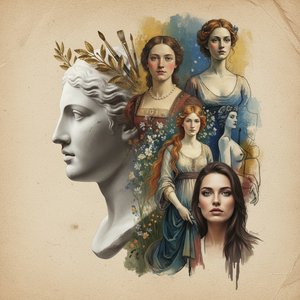
The Enduring Muse: Women as Subject & Symbol in Art History
Explore the rich history of women in art – from archetypal representations to contemporary voices challenging norms. Discover iconic artists & movements, and learn about reclaiming female narratives through painting and beyond.

The Enduring Allure of the Nude: A Historical & Artistic Exploration of the Human Form
Explore the captivating history of nude art! Discover iconic paintings & artists from classical to modern eras. Uncover symbolism, techniques & find museum-quality reproductions at OriginalUniqueArt.

The Eloquent Form: A Historical & Aesthetic Exploration of the Nude in Art
Explore the captivating history of the nude in art! From ancient Greece to modern masters, discover its evolving symbolism, techniques & enduring beauty. Expert insights for collectors and enthusiasts.
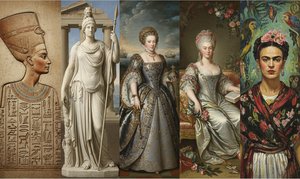
Portrayals of Power & Perception: A Historical Survey of Women in Art
Explore the rich history of women in art – from iconic muses to groundbreaking artists. Discover feminist movements & reclaim female narratives with OriginalUniqueArt. Expert insights for discerning collectors.
