
 Esikatselu
 Jaa teos
 Jaa
Jaa
 Tiedot
 Opas
Opas

 Lataa kuva
 Samanlaisia kohteita
 Röntgenkuvaus
 Diaesitys
 Q&A
Q&A Tilastot
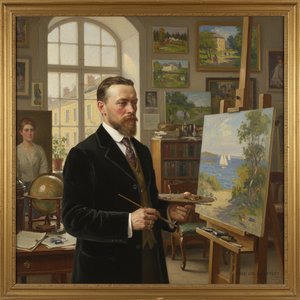
Louis Pasteur dans son laboratoire de l


 Lue lisää
Giclée- ja taideprintit
Museolaatuisia giclée- tai kankaitaulun tulosteita nopealla tuotannolla ja joustavilla viimeistelyvaihtoehdoilla. ( Osta käsinmaalattu taideteos Siirry digitaaliseen kuvaan)




P118B €10

P118H €10

P118W €10

P438Z €10

P508JH €12

P508YH €12

P805H €10

P805Z €10

P919BZ €10

P919G €10

P919XJ €10

P959ZH €10

P968JZ €12

W106C €8

W218G €10

W218JH €8

W218Y €10

W307PJ €10

W316G €10

W316PJ €8

W316Y €10

W398PJ €8

W4111J €10

W500HY €15

W500JH €15

W692G €12

W849H €8

W940BG €15

W953PJ €8




Valitse valmiista mitoistamme sellaiset, jotka vastaavat teoksen alkuperäisiä mittasuhteita.

Syötä tarvitsemasi leveys ja korkeus, jotta tuloste sopii kehyksiisi tai seinällesi. Tulostetta voidaan vain leikata, sitä ei voida koskaan suurentaa alkuperäistä kuvaa suuremmaksi, joten eri muotoinen koko aiheuttaa osan kuvasta katoamisen. Lähetämme sinulle digitaalisen mallikuvan hyväksyttäväksi ennen kuin aloitamme tulostuksen. Tällä sivulla näkyvä kuva ei näytä lopullista rajausta — vain mallikuva näyttää sen.
Maailmanlaajuinen toimitus () 2 viikossa tavallisen 4–5 viikon sijaan. (3 marraskuu)

Ilmainen pikatoimitus ympäri maailman

Korkealaatuinen pellavakangas

Kattava kuljetusvakuutus

Tulliveron palautustakuu

Takuu täydellisestä värien vastaavuudesta

100 päivän palautusoikeus (vain valmistusvirheet)

100% rahat takaisin -takuu

Määräalennus tarjolla
 Lasivaihtoehto on saatavilla vain alle 110 cm kokoisille teoksille

Louis Pasteur dans son laboratoire de l
Giclée- ja taideprintit
Replikaatin koko
-


Kokonaishinta
€ 71
A Vision of Scientific Eminence
In the quiet, focused atmosphere of a late 19th-century laboratory, Albert Edelfelt captures a moment that transcends mere portraiture to become an icon of human intellect. Louis Pasteur dans son laboratoire is not simply a depiction of a man at work; it is a profound meditation on the dawn of modern medicine. The painting presents the legendary chemist and biologist amidst the glass and shadows of his sanctuary, surrounded by the very tools that would eventually dismantle the ancient myths of disease. As the viewer gazes upon Pasteur, there is an immediate sense of being drawn into a private ritual of discovery, where every flask and test tube holds the potential for a life-saving revelation.
Edelfelt, a master of Academic Realism, employs a technique that breathes life into the inanimate. Through the masterful use of chiaroscuro, the artist orchestrates a dramatic interplay of light and shadow that sculpts Pasteur’s figure with remarkable anatomical precision. The light does not merely illuminate; it directs our attention to the concentrated gaze of the scientist and the delicate transparency of the laboratory glassware. His brushstrokes are smooth and deliberate, creating a seamless texture that allows the viewer to feel the cool surface of the glass and the heavy, purposeful presence of the man himself. This meticulous approach ensures that the painting possesses a timeless, sculptural quality that commands attention in any sophisticated interior.
The Intersection of Art and Discovery
To understand the emotional weight of this masterpiece, one must consider the historical fervor of 1886. This was an era defined by the tension between old superstitions and the burgeoning power of empirical evidence. By placing Pasteur within his laboratory, Edelfeltt provides a visual testament to the Victorian values of progress and meticulous observation. The composition is rich with symbolic weight; the experimental apparatus serves as more than mere background detail—it represents the tangible instruments of the Germ Theory, the very foundation upon which modern public health was built. There is a palpable sense of quiet dignity in Pasteur’s posture, reflecting a man who carries the weight of scientific responsibility on his shoulders.
For the discerning collector or interior designer, this work offers an unparalleled opportunity to introduce a piece of intellectual history into a living space. The painting’s palette, characterized by deep, earthy tones and luminous highlights, provides a sophisticated anchor for a room, evoking a sense of stability, wisdom, and prestige. Whether placed in a private library, a study, or a grand salon, a high-quality reproduction of this work serves as a conversation piece that celebrates the enduring triumph of the human spirit over the unknown. It is an invitation to contemplate the beauty of logic and the profound impact of a single mind dedicated to the service of humanity.
Kysymykset ja vastaukset
Mitä tekniikkaa teoksessa Albert Edelfelt:n "Louis Pasteur dans son laboratoire de l" on käytetty?
Teoksen Albert Edelfelt:n "Louis Pasteur dans son laboratoire de l" tekniikka on Oil On Canvas. Vedosten tavoitteena on jäljitellä tämän tekniikan ulkoasua.
Mikä on teoksen Albert Edelfelt:n "Louis Pasteur dans son laboratoire de l" tekniikka ja valmistumisvuosi?
"Louis Pasteur dans son laboratoire de l" on valmistettu vuonna 1886 tekniikalla Oil On Canvas.
Mihin taidesuuntaukseen Albert Edelfelt:n "Louis Pasteur dans son laboratoire de l" kuuluu?
Albert Edelfelt:n "Louis Pasteur dans son laboratoire de l" kuuluu Impressionistic Portraiture-suuntaukseen. Tämä tyylisuunta antaa teokselle sen tyylillisen kontekstin.
Taiteilijan elämäkerta
early life and education
Albert Gustaf Aristides Edelfelt, a Finnish painter who achieved international renown, was born on July 21, 1854, in Porvoo, Finland. His parents, Carl Albert Edelfelt and Alexandra Edelfelt (née Brandt), were Swedish-speaking Finns. From an early age, Edelfelt demonstrated an innate fascination with art—a passion that would propel him toward formal studies at the Drawing School of the Finnish Art Society in 1869. This formative experience laid the groundwork for his artistic journey and instilled within him a lifelong dedication to mastering his craft.artistic journey
Edelfelt’s artistic pursuits extended beyond Finland's borders, shaping him through exposure to diverse artistic traditions. He embarked on a significant educational voyage to Antwerp Academy of Art in 1873-74, where he honed his skills in history painting under the guidance of Jean-Léon Gérôme—a pivotal step in developing his stylistic sensibilities. Subsequently, he pursued further refinement at École nationale des beaux-arts in Paris (1874-78), continuing to learn from Gérôme and absorbing influences from Impressionism. A brief period spent in Saint Petersburg (1881-82) broadened his artistic horizons and introduced him to the stylistic nuances of Russian art.rise to prominence and notable works
Edelfelt’s career ascended rapidly following a triumphant performance at the Paris Universal Exposition of 1889, securing him a gold medal—a testament to his talent and dedication. Among his most celebrated paintings are “Portrait of Louis Pasteur,” which garnered him the Legion of Honor in 1886, capturing the likeness of the renowned scientist with remarkable accuracy and detail. Equally compelling is “Young Woman in Her Boudoir,” portraying femininity with grace and subtlety—a masterful depiction of light and shadow that exemplifies Edelfelt’s artistic prowess. Furthermore, “Under the Birches” stands as a poignant emblem of Finnish landscapes, conveying both beauty and melancholy through evocative brushstrokes and atmospheric perspective. And finally, "Girl from Porvoo" is an unforgettable portrait capturing the essence of youthful innocence and charm.legacy and impact
Albert Edelfelt’s contribution to Finnish art history is undeniable—he stands as one of the pioneers who ushered in a new era of realism within the nation's artistic landscape. His influence resonated deeply with younger artists like Akseli Gallen-Kallela and Gunnar Berndtson, whom he mentored during their formative years in Paris—solidifying his position as a pivotal figure in shaping Finnish art’s trajectory. Today, Edelfelt’s works are housed in prestigious museums across Europe, including Ateneum Museum in Helsinki, where they continue to inspire admiration for their artistic merit and historical significance. His legacy persists not only through the enduring beauty of his paintings but also through the lasting impact he had on subsequent generations of Finnish artists—a testament to his enduring contribution to art history.museum collections and commemoration
Edelfelt’s masterpieces are proudly displayed in Ateneum Museum, Helsinki, Finland, allowing visitors to immerse themselves in the splendor of his artistic vision. To honor his remarkable life and legacy, a €100 Albert Edelfelt commemorative coin was issued in 2004—celebrating the centenary of his birth anniversary. This symbolic gesture underscores the enduring appreciation for Edelfelt’s contribution to Finnish culture and art—a lasting reminder of his indelible mark on artistic history.
Albert Edelfelt
1854 - 1905 , Suomi
Pähkinänkuoressa
- Artistic Movement Or Style: Realismi
- Artists Or Movements Influenced By This Artist: ['Impressionismi']
- Artists Who Influenced This Artist:
- Jean-Léon Gérôme
- Akseli Gallen-Kallela
- Date Of Birth: 21 heinäkuuta 1854
- Date Of Death: 18 elokuuta 1905
- Full Name: Albert Gustaf Aristides Edelfelt
- Nationality: Suomalainen
- Notable Artworks:
- Louis Pasteurin muotokuva
- Nuori nainen boudoirissa
- Koivujen alla
- Place Of Birth: Porvoo, Suomi
Aiheeseen liittyvät artikkelit
Albert Edelfelt: A Pioneer of Finnish Realism & International Impressionist Circles
Explore the life & work of Albert Edelfelt, a pioneering Finnish Realist painter who bridged Impressionism & national identity. Discover his masterpieces and lasting influence on art history.

Paul Cézannen 25 mestariteosta: Taidetta kotiisi – OriginalUniqueArt.com
Tutustu Paul Cézannen 25 vaikuttavinta mestariteosta! Postimpressionismin huipputeoksia, still life -maalauksia ja ikonisia maisemia. Löydä taiteen tarinat ja inspiroi kotisi sisustusta OriginalUniqueArt.com:ssa. Tutki kokoelma verkossa!

Albert Charles Lebourg: A Study in Atmospheric Impressionism & Rural France
Explore the serene landscapes of Albert Charles Lebourg, a master of the Rouen School Impressionists. Discover his atmospheric paintings of the Seine and enduring legacy in 19th-century French art.

Top 10 Impressionismin Mestarityötä – Taidetta Kotiisi OriginalUniqueArtilta
Uppoudu impressionismin maailmaan! Tutustu 10 ikoniseen mestariteokseen Monet'sta Renoiriin. Taidetta kotiisi – löydä upeat taideprintit ja öljyvärimaalaukset OriginalUniqueArtilta. Explore the full collection online!

Valon ja värien vuosisata: Impressionismi vs. postimpressionismi vaativan keräilijän silmin
Syväluotaus impressionismin ja postimpressionismin maailmaan kokeneiden taidehistorioitsijoiden johdolla. Opas vaativille keräilijöille arvonmäärityksestä sijoituspotentiaaliin.
