

 Katso seinällä
 Lähetä
 Jaa
Jaa
 Tarkemmat tiedot
 Opas
Opas

 Lataa kuva
 Samanlaisia kohteita
 Röntgenkuvaus
 Diaesitys
 Tilastot
Jean-Baptiste Pasteur


 Lue lisää
Käsinmaalattu öljyvärinen jäljennös
Käsinmaalattu öljyväri kankaalle haluamassasi koossa ja kehyksissä, taiteilijoidemme valmistamana tilauksesta. ( Vaihda tulosteeseen Siirry digitaaliseen kuvaan)




P118B €10

P118H €10

P118W €10

P438Z €10

P508JH €12

P508YH €12

P805H €10

P805Z €10

P919BZ €10

P919G €10

P919XJ €10

P959ZH €10

P968JZ €12

W106C €8

W218G €10

W218JH €8

W218Y €10

W307PJ €10

W316G €10

W316PJ €8

W316Y €10

W398PJ €8

W4111J €10

W500HY €15

W500JH €15

W692G €12

W849H €8

W940BG €15

W953PJ €8




Valitse valmiista mitoistamme sellaiset, jotka vastaavat teoksen alkuperäisiä mittasuhteita.

Kirjoita tarvitsemasi leveys ja korkeus, jotta teos sopii kehyskehyksiisi tai seinällesi. Koska kyseessä on käsinmaalattu teos, taiteilija voi maalata hieman enemmän kuvan ympärille tai rajata sitä hieman, jos haluat eri muotoisen koon — valinta on sinun. Lähetämme sinulle digitaalisen mallikuvan hyväksyttäväksi ennen kuin maalaus alkaa. Tällä sivulla näkyvä kuva ei vastaa lopullista tulosta — vain mallikuva näyttää sen.
Tilauksen jälkeen OriginalUniqueArt.com -tiimi lähettää asiakkaalle sähköpostitse ohjeet ja esikatselukuvan.
Maailmanlaajuinen toimitus () 3–4 viikossa tavallisen 5 viikon sijaan. (26 lokakuu). Laadusta ei tingitä.

Ilmainen pikatoimitus ympäri maailman

Korkealaatuinen pellavakangas

Kattava kuljetusvakuutus

Tulliveron palautustakuu

Takuu täydellisestä värien vastaavuudesta

100 päivän palautusoikeus valmistusvirhetapauksissa

100% rahat takaisin -takuu

Määräalennus saatavilla
 Lasivaihtoehto on saatavilla vain alle 110 cm kokoisille teoksille

Jean-Baptiste Pasteur
Reproduktiotapa
Replikaatin koko
-


Kokonaishinta
€ 263
A Portrait of Genius: Albert Edelfelt’s Vision of Louis Pasteur
The painting of Louis Pasteur by Albert Edelfelt stands as an emblem of scientific achievement and humanist compassion—a testament to the transformative power of art when allied with intellectual curiosity. Completed in 1881, it transcends mere representation; instead, Edelfelt captured not just Pasteur’s physical likeness but also his profound dedication to unraveling the mysteries of life and combating disease. This remarkable artwork resides within the Musée d’Orsay in Paris, offering visitors a chance to contemplate its enduring legacy.The Artist's Approach: Collaboration and Observation
Albert Edelfelt wasn’t merely commissioned to depict Pasteur; he actively participated in shaping the portrait’s narrative. Driven by an unwavering belief in the importance of scientific inquiry, Edelfelt meticulously documented Pasteur’s laboratory environment—a deliberate decision that underscored his commitment to portraying Pasteur as a man deeply engaged with his craft. As evidenced by Edelfelt's correspondence with his mother, he undertook extensive preparatory sketches and studies, capturing Pasteur’s posture and facial expressions with painstaking accuracy. These detailed observations informed the artist’s vision, resulting in an image imbued with palpable sincerity and intellectual depth.Style and Technique: Impressionistic Realism
Edelfelt’s style exemplifies a harmonious blend of impressionistic realism—a hallmark of his era—characterized by luminous brushstrokes and subtle tonal gradations. He skillfully employed oil paints on canvas to achieve a velvety texture that conveys both the solidity of Pasteur's physique and the ethereal quality of scientific contemplation. The artist’s masterful use of light creates an atmosphere of quiet intensity, drawing viewers into Pasteur’s world and emphasizing his serene gaze—a symbol of unwavering resolve and intellectual perseverance. Edelfelt’s technique reflects a broader artistic movement that sought to capture fleeting moments of experience while maintaining fidelity to observed reality.Historical Context: Science and Art in Belle Époque Paris
The painting emerged during the Belle Époque, a period marked by unprecedented optimism and cultural flourishing in Paris—a time when science and art intertwined to celebrate human progress. Pasteur’s groundbreaking discoveries in microbiology revolutionized medicine and challenged prevailing scientific dogma, establishing him as a beacon of intellectual brilliance. Edelfelt recognized this significance, elevating Pasteur's portrait to the status of an icon—a visual embodiment of the virtues prized by the Parisian intelligentsia. The artwork served as a powerful affirmation of the humanist spirit that permeated Belle Époque society.Symbolism: Calm Reflection and Intellectual Integrity
Beyond its technical prowess, Edelfelt’s portrait resonates with symbolic meaning. Pasteur's seated posture exudes composure and thoughtfulness—a deliberate gesture conveying his unwavering dedication to scientific pursuits. His clasped hands symbolize both physical strength and mental focus—representing the artist’s conviction that intellectual integrity is paramount to achieving profound understanding. The inclusion of a simple chair underscores the importance of solitude and contemplation—essential conditions for fostering creativity and pursuing knowledge with earnestness.Emotional Impact: A Legacy of Inspiration
The painting continues to inspire admiration for its ability to convey both scientific rigor and human compassion. It serves as a poignant reminder that intellectual curiosity can coexist harmoniously with empathy—a message particularly relevant in our contemporary world. Edelfelt’s portrait transcends mere depiction; it embodies the spirit of inquiry and perseverance—qualities celebrated throughout history as catalysts for transformative change. Its enduring presence within the Musée d’Orsay ensures that Louis Pasteur's image—and Albert Edelfelt’s masterful artistic vision—will continue to captivate audiences for generations to come.Kysymykset ja vastaukset
Voinko esikatsella teosta Albert Edelfelt:n "Jean-Baptiste Pasteur" ennen tilaamista?
Voit esikatsella teoksen Albert Edelfelt:n "Jean-Baptiste Pasteur" reproduktiota avaamalla teoksen Esikatselu -sivun.
Onko teoksessa Albert Edelfelt:n "Jean-Baptiste Pasteur" värit kylläisiä vai hillittyjä?
Teoksen Albert Edelfelt:n "Jean-Baptiste Pasteur" väreissä on Subtle Color kylläisyys. Kylläisyys kuvaa värien voimakkuutta tai himmeyttä.
Kuka on luonut teoksen "Jean-Baptiste Pasteur" ja milloin?
Jean-Baptiste Pasteur on Albert Edelfeltn luoma teos vuodelta 1881.
Taiteilijan elämäkerta
early life and education
Albert Gustaf Aristides Edelfelt, a Finnish painter who achieved international renown, was born on July 21, 1854, in Porvoo, Finland. His parents, Carl Albert Edelfelt and Alexandra Edelfelt (née Brandt), were Swedish-speaking Finns. From an early age, Edelfelt demonstrated an innate fascination with art—a passion that would propel him toward formal studies at the Drawing School of the Finnish Art Society in 1869. This formative experience laid the groundwork for his artistic journey and instilled within him a lifelong dedication to mastering his craft.artistic journey
Edelfelt’s artistic pursuits extended beyond Finland's borders, shaping him through exposure to diverse artistic traditions. He embarked on a significant educational voyage to Antwerp Academy of Art in 1873-74, where he honed his skills in history painting under the guidance of Jean-Léon Gérôme—a pivotal step in developing his stylistic sensibilities. Subsequently, he pursued further refinement at École nationale des beaux-arts in Paris (1874-78), continuing to learn from Gérôme and absorbing influences from Impressionism. A brief period spent in Saint Petersburg (1881-82) broadened his artistic horizons and introduced him to the stylistic nuances of Russian art.rise to prominence and notable works
Edelfelt’s career ascended rapidly following a triumphant performance at the Paris Universal Exposition of 1889, securing him a gold medal—a testament to his talent and dedication. Among his most celebrated paintings are “Portrait of Louis Pasteur,” which garnered him the Legion of Honor in 1886, capturing the likeness of the renowned scientist with remarkable accuracy and detail. Equally compelling is “Young Woman in Her Boudoir,” portraying femininity with grace and subtlety—a masterful depiction of light and shadow that exemplifies Edelfelt’s artistic prowess. Furthermore, “Under the Birches” stands as a poignant emblem of Finnish landscapes, conveying both beauty and melancholy through evocative brushstrokes and atmospheric perspective. And finally, "Girl from Porvoo" is an unforgettable portrait capturing the essence of youthful innocence and charm.legacy and impact
Albert Edelfelt’s contribution to Finnish art history is undeniable—he stands as one of the pioneers who ushered in a new era of realism within the nation's artistic landscape. His influence resonated deeply with younger artists like Akseli Gallen-Kallela and Gunnar Berndtson, whom he mentored during their formative years in Paris—solidifying his position as a pivotal figure in shaping Finnish art’s trajectory. Today, Edelfelt’s works are housed in prestigious museums across Europe, including Ateneum Museum in Helsinki, where they continue to inspire admiration for their artistic merit and historical significance. His legacy persists not only through the enduring beauty of his paintings but also through the lasting impact he had on subsequent generations of Finnish artists—a testament to his enduring contribution to art history.museum collections and commemoration
Edelfelt’s masterpieces are proudly displayed in Ateneum Museum, Helsinki, Finland, allowing visitors to immerse themselves in the splendor of his artistic vision. To honor his remarkable life and legacy, a €100 Albert Edelfelt commemorative coin was issued in 2004—celebrating the centenary of his birth anniversary. This symbolic gesture underscores the enduring appreciation for Edelfelt’s contribution to Finnish culture and art—a lasting reminder of his indelible mark on artistic history.
Albert Edelfelt
1854 - 1905 , Suomi
Tietoa taiteilijasta
- Artistic Movement Or Style: Realismi
- Artists Or Movements Influenced By This Artist: ['Impressionismi']
- Artists Who Influenced This Artist:
- Jean-Léon Gérôme
- Akseli Gallen-Kallela
- Date Of Birth: 21 heinäkuuta 1854
- Date Of Death: 18 elokuuta 1905
- Full Name: Albert Gustaf Aristides Edelfelt
- Nationality: Suomalainen
- Notable Artworks:
- Louis Pasteurin muotokuva
- Nuori nainen boudoirissa
- Koivujen alla
- Place Of Birth: Porvoo, Suomi
Aiheeseen liittyvät artikkelit
The Enduring Legacy of French Art: Movements, Masters & Cultural Impact
Explore the rich history of French art, from the Salon to Impressionism & beyond. Discover iconic masters, key movements, and expert guidance for collecting timeless masterpieces. OriginalUniqueArt.

Charles-André van Loo: A Study in Rococo Portraiture & the French Court's Artistic Dynamics
Explore the elegant world of Charles-André van Loo, a master of Rococo portraiture at the French court. Discover his life, techniques, and enduring influence on 18th-century art. Hand-painted reproductions available.
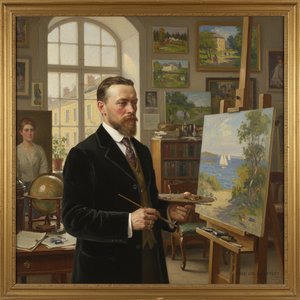
Albert Edelfelt: A Pioneer of Finnish Realism & International Impressionist Circles
Explore the life & work of Albert Edelfelt, a pioneering Finnish Realist painter who bridged Impressionism & national identity. Discover his masterpieces and lasting influence on art history.

Anne-Louis Girodet: Bridging Neoclassicism & Romanticism with Emotional Truth
Explore the captivating world of Anne-Louis Girodet, a pivotal figure bridging Neoclassicism & Romanticism. Discover his masterpieces and unique artistic vision with OriginalUniqueArt.

Top 10 Impressionismin Mestarityötä – Taidetta Kotiisi OriginalUniqueArtilta
Uppoudu impressionismin maailmaan! Tutustu 10 ikoniseen mestariteokseen Monet'sta Renoiriin. Taidetta kotiisi – löydä upeat taideprintit ja öljyvärimaalaukset OriginalUniqueArtilta. Explore the full collection online!
