

 Esikatselu
 Jaa
Jaa Jaa
Jaa
 Tarkemmat tiedot

 Lataa
Lataa
 Samanlaisia
 Röntgenkuva
 Diaesitys
Let My People Go


 Näytä lisää
Giclée-printit ja taideprintit
Museolaatuisia giclée- tai kankaitaulun tulosteita nopealla tuotannolla ja joustavilla viimeistelyvaihtoehdoilla. ( Osta käsintehty maalaus Osta kuva)




P118B $10

P118H $10

P118W $10

P438Z $10

P508JH $12

P508YH $12

P805H $10

P805Z $10

P919BZ $10

P919G $10

P919XJ $10

P959ZH $10

P968JZ $12

W106C $8

W218G $10

W218JH $8

W218Y $10

W307PJ $10

W316G $10

W316PJ $8

W316Y $10

W398PJ $8

W4111J $10

W500HY $15

W500JH $15

W692G $12

W849H $8

W940BG $15

W953PJ $8




Valitse valmiista mitoistamme sellaiset, jotka vastaavat teoksen alkuperäisiä mittasuhteita.

Voit syöttää omat mitat sopiaksesi tiettyyn kehykseen tai tilaan. Jos valittu koko ei vastaa alkuperäisen kuvan mittasuhteita, rajaamme teosta tai laajennamme kuvaa peilatulla tai yhtenäisellä reunalla. Digitaalinen mallikuva lähetetään hyväksyttäväksi ennen tuotannon aloittamista.
Huomaathan, että näytöllä näkyvä esikatselu ei vastaa lopullista rajausta tai laajennusta. Vain mallikuva näyttää lopullisen sommittelun tarkasti.
Vaikka räätälöityjä kokoja on saatavilla, suosittelemme valitsemaan mitat valmiista listasta alkuperäisten mittasuhteiden säilyttämiseksi.
Toimitus maailmanlaajuisesti () kahdessa viikossa tavallisen 4–5 viikon sijaan. (13 elokuu)

Ilmainen pikatoimitus ympäri maailman

Korkealaatuinen pellavakangas

Kattava kuljetusvakuutus

Tulliveron palautustakuu

Täydellinen värien vastaavuustakuu

60 päivän palautusoikeus (vain valmistusvirheet)

100% rahat takaisin -takuu

Määräalennus tarjous
 Lasivaihtoehto on saatavilla vain alle 110 cm kokoisina teoksina

Let My People Go
Giclée-printit ja taideprintit
Replikaatin koko
-


Kokonaishinta
$ 80
Teoksen kuvaus
A Testament to Struggle and Hope: Unpacking Aaron Douglas’ “Let My People Go”
Aaron Douglas's 1935-1939 painting, "Let My People Go," isn’t merely a depiction of an ancient biblical narrative; it’s a potent visual embodiment of the African American experience during the tumultuous era of the Harlem Renaissance and beyond. Born in Topeka, Kansas, in 1899, Douglas emerged as a pivotal voice within this movement, skillfully blending the dynamism of modernism with deeply rooted African traditions to create works that resonated powerfully with themes of racial injustice, resilience, and the enduring pursuit of freedom.
The painting immediately commands attention through its vibrant palette – a striking interplay of lavender hues, punctuated by bursts of yellow-gold and subtle greens. This isn’t a realistic portrayal; rather, Douglas employs a flattened perspective and simplified forms characteristic of both Art Deco and Cubism. Figures are rendered with bold outlines and geometric shapes, creating a sense of stylized urgency and movement. The composition itself is layered, suggesting a journey – not just across physical space, but through the complexities of history and oppression.
Biblical Roots and Symbolic Resonance
At its core, “Let My People Go” draws directly from the Exodus story in the Hebrew Bible, where God commands Moses to liberate his people from slavery in Egypt. Douglas translates this ancient narrative into a visual language that speaks directly to the realities of African Americans facing systemic discrimination and segregation in 1930s America. The central figure, a commanding presence bathed in light, embodies Moses himself – a leader guiding his people towards liberation. The arrows extending outwards from this figure symbolize divine direction and the relentless push for freedom.
However, Douglas doesn’t simply replicate the biblical scene; he imbues it with layers of symbolic meaning. The use of “Go Down Moses,” a spiritual song sung by enslaved people, references the coded language of resistance and hope embedded within its lyrics. This connection to the oral tradition highlights the importance of storytelling and community in preserving cultural identity during times of hardship. The painting’s title itself is a direct invocation of this powerful spiritual, underscoring the enduring legacy of struggle and the unwavering desire for emancipation.
Technique and Artistic Influences
Douglas's masterful technique lies in his skillful manipulation of color and form. He utilizes tempera on masonite, creating a surface that allows for rich layering and subtle tonal variations. The flattened perspective, reminiscent of Cubism, forces the viewer to actively engage with the composition, dissecting the figures and deciphering their symbolic roles. The strong geometric shapes – triangles, rectangles, and circles – contribute to the painting’s dynamic energy while simultaneously grounding it in a sense of order.
Furthermore, Douglas's work is deeply influenced by the Harlem Renaissance’s embrace of African motifs and artistic traditions. The stylized representation of figures, combined with the use of bold colors and simplified forms, reflects a conscious effort to reclaim African heritage and celebrate Black identity. The painting stands as a testament to Douglas’s ability to synthesize diverse influences into a uniquely powerful and evocative work of art.
A Legacy of Liberation
“Let My People Go” remains a profoundly relevant artwork today, serving as a poignant reminder of the ongoing struggle for racial justice. Its enduring power lies not only in its historical context but also in its universal themes of freedom, resilience, and hope. Displayed prominently at the Metropolitan Museum of Art, this painting continues to inspire dialogue and reflection on issues of inequality and social change. It’s a vital piece within the canon of American art, offering a compelling glimpse into the heart and soul of the Harlem Renaissance and beyond.
Taiteilijan elämäkerta
Aaron Douglas: A Voice of the Harlem Renaissance and Beyond
Born in Topeka, Kansas, in 1899, Aaron Douglas emerged as a pivotal figure during the vibrant era of the Harlem Renaissance—a period of unprecedented artistic and intellectual flourishing within African American communities. His life’s work was deeply intertwined with this movement, yet he ultimately forged his own distinctive path, leaving behind a legacy that continues to resonate today. From humble beginnings in a segregated Kansas town, Douglas's journey led him through Detroit, New York City, and finally to Fisk University in Nashville, Tennessee, where he dedicated himself to both teaching and creating art that powerfully addressed issues of race, segregation, and the complexities of Black identity.
Douglas’s early artistic development was shaped by a confluence of influences. His mother, Elizabeth Douglas, instilled in him a love for drawing from a young age, providing him with an initial foundation for his future career. He attended Topeka High School, where he honed his design skills and began to explore themes of social justice through his artwork. Following graduation, he moved to Detroit, working as a plasterer and molding sand for automobile radiators—a pragmatic necessity that allowed him to pursue his artistic ambitions while supporting himself financially. It was during this period that he encountered the transformative impact of W.E.B. Du Bois’s writings and began to actively engage with the burgeoning artistic community in Harlem.
Harlem Renaissance and Early Works
The 1920s marked a crucial turning point for Douglas, as he immersed himself fully within the heart of the Harlem Renaissance. He quickly established himself as a talented illustrator for prominent publications like *The Crisis* and *Opportunity*, magazines dedicated to promoting Black culture and social progress. His illustrations weren’t merely decorative; they were imbued with a powerful sense of narrative and symbolism, often depicting scenes of everyday life in Black communities while subtly critiquing the injustices of segregation and discrimination. Douglas's work during this period frequently incorporated elements of African art and iconography, reflecting his commitment to celebrating African heritage and fostering a sense of cultural unity.
Douglas’s distinctive style evolved throughout the 1920s and early 30s, drawing inspiration from both Cubism and Art Deco. He experimented with flattened perspectives, geometric shapes, and bold color palettes—techniques that allowed him to convey complex ideas in a visually arresting manner. His murals, particularly those commissioned by the New York Public Library, stand as monumental testaments to his artistic vision. These large-scale works depicted scenes of Black history, culture, and struggle, serving as powerful visual narratives for public spaces.
Mural Projects and Artistic Evolution
The 1934 commission for a series of murals at the 135th Street Branch of the New York Public Library marked a high point in Douglas’s career. These murals, titled “Aspects of Negro Life,” were groundbreaking for their time—a rare opportunity for an African American artist to undertake such a significant public art project. The murals explored themes of slavery, emancipation, Reconstruction, and the ongoing struggle for civil rights, utilizing a dynamic blend of historical imagery and symbolic representation. Douglas’s approach was deeply rooted in his belief that art could be a catalyst for social change, prompting viewers to confront uncomfortable truths about American history and challenge prevailing prejudices.
Following this monumental commission, Douglas continued to create murals and illustrations throughout the 1930s and 40s. He also embraced teaching as a vital component of his artistic practice, accepting a position at Fisk University in Nashville, Tennessee, in 1937. At Fisk, he established the Art Department—a pioneering initiative that provided aspiring Black artists with access to formal art education and mentorship. His time at Fisk was not just about imparting technical skills; it was about nurturing a generation of artists who would carry on his legacy of social consciousness and artistic innovation.
Legacy and Influence
Aaron Douglas’s impact extends far beyond the specific artworks he created. He played a crucial role in shaping the trajectory of African American art, providing a visual language for expressing complex emotions and experiences. His use of African motifs, combined with modernist techniques, established a distinctive aesthetic that influenced generations of artists—including Jacob Lawrence, Romare Bearden, and Faith Ringgold. Douglas’s work continues to be studied and celebrated as a powerful embodiment of the Harlem Renaissance and a testament to the enduring importance of art as a tool for social commentary and cultural affirmation.
Douglas's dedication to education and mentorship solidified his position as a leader in the field, leaving behind a profound legacy that extends beyond his artistic output. His commitment to fostering talent within the Black community ensured that his vision would continue to inspire artists long after his death in 1979.

Aaron Douglas
1899 - 1979 , United States of America
Pikatiedot
- Artistic Movement Or Style:
- Harlem Renaissance
- Cubism
- Art Deco
- Artists Or Movements Influenced By This Artist: ['Modern African-American art']
- Artists Who Influenced This Artist: ['Winold Reiss']
- Date Of Birth: May 26, 1899
- Date Of Death: February 2, 1979
- Full Name: Aaron Douglas
- Nationality: American
- Notable Artworks:
- Child
- Charleston
- Place Of Birth: Topeka, United States
Liittyvät artikkelit

Sisustussuunnittelijoiden suosikit: Miten seinämaalaukset muuttavat keittiöt ja kylpyhuoneet rauhoittaviksi tiloiksi tai moderneiksi gallerioiksi
Sisustussuunnittelijoiden suosikit seinämaalauksista! Luo rauhoittava keittiö tai moderni galleria in vinkeillä. Räätälöidyt taideteokset kotiisi – tutustu nyt!

Viidakkomaisemista kultalehtigeometriaan: Nykyajan kysytyimmät seinämaalaustyylit hotellisuunnittelussa
Tutustu uusimpiin seinämaalaustrendeihin hotellisuunnittelussa! Inspiroivia ideoita luonnonläheisyydestä ylellisiin kultalehtiteoksiin. Vahvista brändi-identiteettiäsi uniikilla taiteella – asiantuntijoiden vinkit ja suunnitteluohjeet.

Sisustuksen teeman ankkurointi muraaleilla: Kattava opas hotellisuunnittelijoille
Löydä kattava opas hotellien muraalisuunnitteluun! Asiantuntijavinkit teeman luomiseen, materiaaleihin ja taiteilijan valintaan. Inspiroidu esimerkeistä ja luo ainutlaatuinen tunnelma.

Miten räätälöity seinämaalaus vahvistaa brändisi visuaalista identiteettiä
Opi miten räätälöity seinämaalaus vahvistaa hotellisi brändi-identiteettiä ja luo unohtumattoman elämyksen vieraille. Asiantuntijaopas sisustussuunnittelijoille.
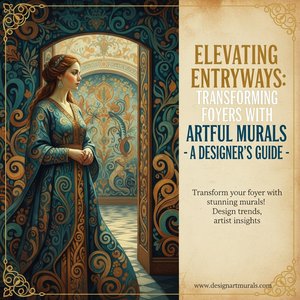
Muodonmuutos eteisessä: Taidokkaat seinämaalaukset luovat unohtumattoman ensivaikutelman
Luo unohtumaton ensivaikutelma hotellisi vierailla taidokkailla seinämaalauksilla. Inspiroidu esimerkeistä ja opi suunnitteluprosessi. tarjoaa räätälöityjä ratkaisuja.

