Johann Carl Loth muotokuva

44 tunnetuinta Johann Carl Loth -maalausta, jokainen ainutlaatuinen

Päivitetty marraskuu 2026 · järjestetty suosituimmuuspisteiden mukaan (jokaisen teoksen haut, vierailut ja tilaukset) · 47 teosta taiteilijalta Johann Carl Loth luettelossamme

Lyhyesti

Selene and Endymion (1670) on se Johann Carl Loth -maalaus, joka herättää eniten huomiota; alkuperäisteos kuuluu museolle Rijksmuseum, Amsterdam. Sen jälkeen katse siirtyy kohteisiin Jacob Blesses Ephraim and Manasseh (1692) ja Old Peasant Lighting a Pipe (1660). Johann Carl Lothin 47 teoksemme joukosta nämä 44 ovat kuuluisimpia; jokainen on ainutlaatuinen alkuperäisteos, joka on esitelty vuosiluvun, museon ja sen syyn kera, miksi teos on säilyttänyt suosionsa.

1632 – 1698, München Baroque Eniten teoksia: Bavarian State Painting Collections

Johann Carl Loth -taiteilijan 10 parasta maalausta gallerian silmin

1
Selene and Endymion (1670) tekijä Johann Carl Loth

Selene and Endymion

1670 · Oil On Canvas · Rijksmuseum, Amsterdam

In this dramatic oil painting, we find ourselves witnessing a moment of profound stillness and longing. The scene captures the mythological meeting between Selene, the personification of the Moon, and the sleeping Endymion. The composition moves with a heavy, diagonal energy, pulling the eye from the upper left down toward the lower right, following the curve of the figures. Endymion lies in a deep, earthly slumber, his muscular form rendered…

2
Jacob Blesses Ephraim and Manasseh (1692) tekijä Johann Carl Loth

Jacob Blesses Ephraim and Manasseh

1692 · Oil On Canvas · Kunsthistorisches Museum, Wien

In this 1692 oil on canvas, an aged, semi-nude patriarch leans forward to bestow a blessing upon two young boys, Ephraim and Manasseh. The composition is tightly packed, utilizing a dynamic, triangular formation that directs the viewer's eye toward the central elderly figure. The scene captures a moment of profound interpersonal drama, where the physical presence of the figures is emphasized through heavy drapery and muscular contours. Light falls theatrically…

3
Old Peasant Lighting a Pipe (1660) tekijä Johann Carl Loth

Old Peasant Lighting a Pipe

1660 · Oil On Canvas · Art Institute of Chicago, Chicago

A single, focused light source pierces a heavy darkness, illuminating a weathered face in a moment of profound concentration. This profile view captures an elderly man as he attends to a clay pipe, the thin stem acting as a visual guide through the composition. The scene is defined by a stark chiaroscuro, where deep shadows recede into an indeterminate background, pushing the subject into the immediate foreground. Every wrinkle in…

4
Music Lesson (1650) tekijä Johann Carl Loth

Music Lesson

1650 · Oil On Canvas · Muzeum Palacu Króla Jana Iii w Wilanowie, Varsova

In the oil painting Music Lesson by Johann Carl Loth, the artist employs an oval composition to frame a tightly cropped scene. The figures are arranged in a triangular formation, a structural choice that directs the viewer's eye toward the central action. A muscular male figure plays a pan flute, or syrinx, while an older man wearing a laurel wreath observes or instructs a younger woman. This arrangement creates a…

5
Diogenes (1650) tekijä Johann Carl Loth

Diogenes

1650 · Oil On Canvas · Minneapolis Institute of Art, Minneapolis

A muscular, bearded man emerges from a dark, near-black background in this 1650 oil painting. He is positioned in a tight, close-up composition that focuses on his upper torso and head. His skin is rendered with detailed musculature, particularly across the shoulder, chest, and arm. A single light source, a lit candle contained within a handheld lantern, casts sharp highlights onto his anatomy. This light creates a strong chiaroscuro effect,…

6
Susannah and the Elders (1650) tekijä Johann Carl Loth

Susannah and the Elders

1650 · Oil On Canvas · J. Paul Getty Museum, Los Angeles

In Susannah and the Elders, Johann Carl Loth brings a heavy, dramatic tension to the canvas. The scene unfolds from a narrative found within the Old Testament, capturing a moment of profound intrusion. Susannah finds herself cornered by two men, their presence a sudden and unsettling weight in her private space. The air feels thick with the gravity of this confrontation, as the figures press into a tight, triangular arrangement…

7
The Exposure of the Infant Moses (1665) tekijä Johann Carl Loth

The Exposure of the Infant Moses

1665 · Oil · Bavarian State Painting Collections, München

In The Exposure of the Infant Moses, Johann Carl Loth captures a heavy moment from the Book of Exodus. The scene centers on a small infant resting in a vessel upon the ground. A muscular man reaches toward the child, his body taut with effort. To the side, a woman collapses in grief, her hand pressed against her forehead as she faces a moment of profound despair. The weight of…

8
Christ Appears to Saint Anthony (1665) tekijä Johann Carl Loth

Christ Appears to Saint Anthony

1665 · Oil · Bavarian State Painting Collections, München

In this dramatic Baroque oil painting, titled Christ Appears to Saint Anthony, Johann Carl Loth captures a profound mystical encounter. Created about 1665, the work focuses on the intimate connection between the Christ Child and the saint. The composition centers on the upper bodies of these two figures, drawing the viewer into a private moment of spiritual presence. The Christ Child is depicted as a plump, nude infant leaning forward…

9
The Penitent Mary Magdalene (1665) tekijä Johann Carl Loth

The Penitent Mary Magdalene

1665 · Oil · Bavarian State Painting Collections, München

The Penitent Mary Magdalene emerges from the shadows as a profound oil painting by Johann Carl Loth. Created about 1665, the work captures a singular moment of spiritual intensity. The subject gazes upward, caught in a state of deep devotion that feels immediate and alive. Every brushstroke contributes to the weight of her presence within the frame.

10
John the Baptist (1665) tekijä Johann Carl Loth

John the Baptist

1665 · Oil · Bavarian State Painting Collections, München

This oil painting, titled John the Baptist, was executed by the German Baroque painter Johann Carl Loth. The work dates to about 1665. It presents a vertical portrait that focuses on the head and the upper torso of the subject. The figure is a muscular man characterized by a beard and a gaze directed upward and to his right. He is depicted in a state of intense spiritual or emotional…

Johann Carl Lothn kuuluisia maalauksia, numerot 11–44

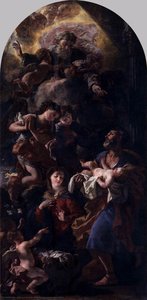
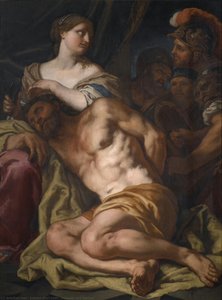
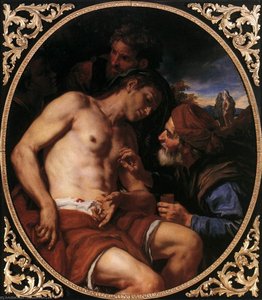
11Christ on the Cross (1665) tekijä Johann Carl LothChrist on the Cross1665 · Bavarian State Painting Collections 12Adoration of the Shepherds (1665) tekijä Johann Carl LothAdoration of the Shepherds1665 · Bavarian State Painting Collections 13David with the Head of Goliath (1665) tekijä Johann Carl LothDavid with the Head of Goliath1665 · Bavarian State Painting Collections 14Mockery of Christ (1665) tekijä Johann Carl LothMockery of Christ1665 · Bavarian State Painting Collections 15Isaac Blesses Jacob (1665) tekijä Johann Carl LothIsaac Blesses Jacob1665 · Bavarian State Painting Collections 16The Shame of Noah (1674) tekijä Johann Carl LothThe Shame of Noah1674 · Bavarian State Painting Collections 17The Dying Seneca (1665) tekijä Johann Carl LothThe Dying Seneca1665 · Bavarian State Painting Collections 18The Rescue of Agrippina, Mother of Nero (1665) tekijä Johann Carl LothThe Rescue of Agrippina, Mother of Nero1665 · Bavarian State Painting Collections 19Boy in Armor (1665) tekijä Johann Carl LothBoy in Armor1665 20Cato the Younger's Death (1672) tekijä Johann Carl LothCato the Younger's Death1672 · Statens Museum for Kunst 21Saint Joseph with the Christ Child (1680) tekijä Johann Carl LothSaint Joseph with the Christ Child1680 · Bavarian State Painting Collections 22Holy Family with the Christ Child John (1680) tekijä Johann Carl LothHoly Family with the Christ Child John1680 · Bavarian State Painting Collections 23Saint John the Baptist (1680) tekijä Johann Carl LothSaint John the Baptist1680 · Slovak National Gallery 24Saint Paul (1675) tekijä Johann Carl LothSaint Paul1675 · National Museum in Warsaw 25Faun playing the flute. (1675) tekijä Johann Carl LothFaun playing the flute.1675 · National Museum in Warsaw 26Martyrdom of Gerard of Csanád (1677) tekijä Johann Carl LothMartyrdom of Gerard of Csanád1677 · Musée des Beaux-Arts de Strasbourg 27Holy Family and God the Father (1681) tekijä Johann Carl LothHoly Family and God the Father1681 · San Silvestro 28The Guardian Angel and Archangel Michael (1691) tekijä Johann Carl LothThe Guardian Angel and Archangel Michael1691 · Bavarian State Painting Collections 29Saint Dominic Receives the Rosary (1691) tekijä Johann Carl LothSaint Dominic Receives the Rosary1691 · Bavarian State Painting Collections 30The Death of Cato. (1700) tekijä Johann Carl LothThe Death of Cato.1700 · National Museum in Warsaw 31Abraham Visited by the Angels tekijä Johann Carl LothAbraham Visited by the Angels 32Death of St Peter Martyr (1691) tekijä Johann Carl LothDeath of St Peter Martyr1691 · Basilica dei Santi Giovanni e Paolo 33Apollo, Pan, and Marsyas tekijä Johann Carl LothApollo, Pan, and MarsyasStaatliche Museen zu Berlin 34Eliezer ja Rebecca kaivoissa (1670) tekijä Johann Carl LothEliezer ja Rebecca kaivoissa1670 · Hermitage-museo 35Self-Portrait tekijä Johann Carl LothSelf-PortraitBavarian State Painting Collections 36The Crowning with thorns tekijä Johann Carl LothThe Crowning with thornsSuomen Kansallisgalleria 37Saint Sebastian tekijä Johann Carl LothSaint SebastianNational Gallery Prague 38Adam and Eve tekijä Johann Carl LothAdam and EveKedleston Hall 39Lot and His Daughters tekijä Johann Carl LothLot and His Daughters 40Samson and Delilah tekijä Johann Carl LothSamson and DelilahFondazione Brescia Musei 41Mercury Piping to Argus tekijä Johann Carl LothMercury Piping to ArgusNational Gallery 42Jupiter and Mercury at Philemon and Baucis tekijä Johann Carl LothJupiter and Mercury at Philemon and BaucisKunsthistorisches Museum 43The Good Samaritan tekijä Johann Carl LothThe Good SamaritanKunsthistorisches Museum 44The Good Samaritane (1676) tekijä Johann Carl LothThe Good Samaritane1676 · Kunstsammlungen Graf von Schönborn

Aiheet, jotka vangitsivat Johann Carl Lothin katseen

Nämä neljä aihetta toistuvat näissä alkuperäisteoksissa useimmin, jokaisesta löytyy hienoin esimerkki.

Museot, joissa Johann Carl Loth'n alkuperäisteokset sijaitsevat

Tämän sivun teoksista eniten sisältävät 8 museota.

Museo Kaupunki Johann Carl Loth teokset Tämän listan maalaukset
Bavarian State Painting Collections, MünchenBavarian State Painting Collections München 17 The Exposure of the Infant Moses, Christ Appears to Saint Anthony, The Penitent Mary Magdalene
Kunsthistorisches Museum, WienKunsthistorisches Museum Wien 3 Jacob Blesses Ephraim and Manasseh, Jupiter and Mercury at Philemon and Baucis, The Good Samaritan
National Museum in Warsaw, VarsovaNational Museum in Warsaw Varsova 3 Saint Paul, Faun playing the flute., The Death of Cato.
Rijksmuseum, AmsterdamRijksmuseum Amsterdam 1 Selene and Endymion
Art Institute of Chicago, ChicagoArt Institute of Chicago Chicago 1 Old Peasant Lighting a Pipe
Muzeum Palacu Króla Jana Iii w Wilanowie, VarsovaMuzeum Palacu Króla Jana Iii w Wilanowie Varsova 1 Music Lesson
Minneapolis Institute of Art, MinneapolisMinneapolis Institute of Art Minneapolis 1 Diogenes
J. Paul Getty Museum, Los AngelesJ. Paul Getty Museum Los Angeles 1 Susannah and the Elders

Johann Carl Loth vuosikymmenten varrelta: jokaisesta yksi ainutlaatuinen alkuperäisteos

Teokset vuosikymmenittäin

Valitse vuosikymmen nähdäksesi sen määrittäneen alkuperäisteoksen.

Johann Carl Lothn maalaukset: kysymyksiä gallerialle

Mikä on Johann Carl Loth tunnetuin teos?Paljasta vastaus

Selene and Endymion (1670), Rijksmuseum, Amsterdam. Seuraavina ovat Jacob Blesses Ephraim and Manasseh (1692) ja Old Peasant Lighting a Pipe (1660).

Missä iässä Johann Carl Loth loi teoksen Selene and Endymion?Paljasta vastaus

38 vuotta vanha: Selene and Endymion on peräisin vuodelta 1670, ja Johann Carl Loth on syntynyt vuonna 1632.

Mitkä ovat Johann Carl Loth kymmenen kuuluisinta maalausta?Paljasta vastaus

Selene and Endymion, Jacob Blesses Ephraim and Manasseh, Old Peasant Lighting a Pipe, Music Lesson, Diogenes, Susannah and the Elders, The Exposure of the Infant Moses, Christ Appears to Saint Anthony, The Penitent Mary Magdalene ja John the Baptist. Yllä oleva sijoitus kertoo kunkin teoksen vuosiluvun ja museon.

Kuinka monta Johann Carl Loth -teosta tunnetaan?Paljasta vastaus

Katalogissamme on 47 teosta taiteilijalta Johann Carl Loth, aikaväliltä 1650–1692.

Missä voi nähdä tunnetuimmat Johann Carl Loth -alkuperäisteokset?Paljasta vastaus

Pääasiassa Bavarian State Painting Collections (München), Kunsthistorisches Museum (Wien) ja National Museum in Warsaw (Varsova). Yllä oleva museotaulukko listaa ne kaikki.

Mihin ajanjaksoon Johann Carl Loth tunnituimmat maalauksensa sijoittuvat?Paljasta vastaus

Aikakaudella 1660s: 13 sivun 44 teoksista on tehty silloin, joista Old Peasant Lighting a Pipe.

Mikä on Johann Carl Loth kuuluisimmista maalauksista varhaisin ja mikä uusin?Paljasta vastaus

Tällä sivulla vanhin on Music Lesson (1650) ja uusin Jacob Blesses Ephraim and Manasseh (1692).

Mitä aiheita Johann Carl Loth suosi?Paljasta vastaus

Man (28), Drapery (15) ja Skin (11), yhteensä 44 teosta tällä sivulla.

Mitä materiaaleja Johann Carl Loth käytti eniten?Paljasta vastaus

Oil On Canvas, 23 teoksesta sivun 44 teoksesta.

Mihin taidesuuntaukseen Johann Carl Loth kuuluu?Paljasta vastaus

Baroque, tämän sivun alkuperäisteosten perusteella.

Mitä Johann Carl Loth alkuperäisteoksia voin nähdä museossa Bavarian State Painting Collections?Paljasta vastaus

The Exposure of the Infant Moses, Christ Appears to Saint Anthony ja The Penitent Mary Magdalene: Bavarian State Painting Collections, München -ssä on 17 tämän sivun teoksista.

Johann Carl Loth: taiteilijan muotokuva

Venetsialainen draaman mestari: Johann Carl Lothin elämä ja perintö

Vuosisadan seitsemerlukuinen Venetsia oli täynnä auringon kylvetyä, teatraalista tunnelmaa, jossa vain harvat taiteilijat pystyivät vangitsemaan jumalallisen ja maallisen välisen syvän jännitteen yhtä mestarillisesti kuin Johann Carl Loth. Noin vuonna 1632 Baijerin vaaliruhtinaskunnassa syntynyt Loth oli maalari, jonka identiteetti yhdisti saksalaisen taiteen vankat perinteet italialaisen barokin loistokkaaseen ja tunteikkaaseen loistoon. Vaikka hänen nimensä ei ehkä kaikuisikaan yhtä tutusti kuin Titianin, hänen läsnäolonsa Venetsian taidemaailmassa oli monumentaalinen. Biografi Arnold Houbraken ylisti häntä kuuluisasti yhtenä kolmesta suurmestarista, jotka kantavat nimeä "Karel" – arvostettu kunnianosoitus, joka nosti hänet sellaisten suurten nimien rinnalle kuin Karel Duijardin ja Carlo Maratta, merkiten hänen nousunsa eurooppalaisen maalaustaiteen eliitin joukkoon.

Lothin taiteellinen matka alkoi hänen isänsä, maalari Johann Ulrich Lothin, valvovan silmän alla. Isä antoi pojalleen teknisen kurinalaisuuden, joka mahdollisti myöhemmin kokeilut niin valtavassa mittakaavassa. Tämä varhainen koulutus Münchenissä loi pohjan kurinalaiselle sommittelulle, mutta vasta muutto Venetsiaan sytytti hänen luovuutensa todella paloon. Venetsian eläväisessä ympäristössä Loth omaksui Giovan Battista Langettin vaikutteet, ja hänen tyylistään tuli tunnistettava chiaroscuro – valon ja varjon dramaattinen vuoropuhelu – sekä taipumus tenebrismiin. Tämä tekniikka antoi hänelle mahdollisuuden veistää hahmoja esiin pimeydestä, antaen kangasille painon, mysteerin ja hengellisen kiireen tuntua, josta tuli hänen omintakeinen allekirjoituksensa.

Myytin ja pyhän tekstin kudelma

Lothin tuotannon todellinen loisto piilee hänen kykenevyydessään muuttaa kangas ihmishistorian eeppisimpien kertomusten näyttämöksi. Hän erikoistui suuriin historiallaisiin maalauksiin, joille oli tyypillistä tiheät ja ihmisvilinää täyttävät ryhmäkohtaukset, jotka vaativat valtavaa sommittelullista taitoa. Hänen aiheensa ammennettiin klassisen mytologian lähteistä ja Vanhan testamentin syvistä ulottuvuuksista; niitä ei käsitelty vain kuvituksina, vaan elävinä, hengittävinä draamoina. Olipa kyseessä jumalten taivaallinen väliintulo tai raamatullisten patriarkkojen koettelemukset, Loth käytti eloisia värejä ja vapautta ilmaisuvoimaista siveltimenjälkeä herättääkseen intensiivisiä tunteita.

Tämä mestaruus on nähtävissä teoksissa kuten Jupiter ja Merkurius Philemonin ja Bauciksen luona, jossa jumalallinen läsnäolo tuntuu äkillisenä, valaisevana valona, joka läpäisee kuolevaisen mökin vaatimattomat puitteet. Samoin hänen uskonnolliset sommitelmansa, kuten Pyhä perhe ja Jumala Isä, osoittavat syvää hallintaa ilmakehän syvyydessä ja pyhässä intimiteetissä. Hänen kykynsä kutoa monimutkaisia inhimillisiä tunteita – hartautta, pelkoa, kunnioitusta ja perheen rakkautta – näihin suuriin kertomuksiin varmisti, että hänen työnsä resonoi kauas Italian rajojen ulkopuolelle, houkutellen puoleensa arvostettuja suojelijoita, kuten Wienin Habsburgin hovin keisari Leopold I.

Vaikutus, yhteistyö ja kestävä merkitys

Lothin ura ei ollut yksinäinen ponnistus, vaan se oli merkitty merkittävällä taiteellisella synergialla. Venetsiassa hän teki hedelmällistä yhteistyötä muiden mestareiden, kuten Pietro Liberin, kanssa, toteuttaen yhdessä kunnianhimoisia tilaustöitä, jotka nostivat historialliselle tarinankerronnalle uusia standardeja. Hänen ateljeistaan tuli lahjakkuuksien majakka; hän toimi sukupolven maalaajien mentorina, mukaan lukien Michael Wenzel Halbax ja Johann Michael Rottmayr, varmistaen, että hänen tyylilliset tunnuksensa – dramaattinen valaistus ja teatraaliset sommitelmat – säilyisivät seuraavien vuosikymmenten barokin taiteessa. Jopa maalaustaiteen ulkopuolella Lothin maine houkutteli ovelle varakkaita matkailijoita ja taiteilijoita, kuten Cornelis de Bruijnin, tehden hänen studion elintärkeäksi solmukohdaksi eurooppalaisessa taideverkostossa.

Lähestyessään elämänsä loppua asuessaan Venetsiassa kuolemaansa asti vuonna 1698, Loth oli varmistanut perinnön, joka ylitti hänen saksalaiset juurensa. Hän oli maalari, joka hallitsi sekä yksittäisen hahmon intiimit varjot että ihmismassan kaoottisen energian. Nykyään hänen teoksensa sijaitsevat maailman arvostetuimmissa instituutioissa, Wienin Kunsthistorisches Museumissa aina Pietarin Eremitaasin museoon. Kyvyllään yhdistää nuoruutensa rakenteellinen kurinalaisuus ja venetsialaisen koulukunnan emotionaalinen sujuvuus, Johann Carl Loth pysyy barokin aikakauden määräävänä äänenä, muistuttaen meitä ajasta, jolloin taide oli ylevän, suuren ja teatraalisen tavoittelun huipentuma.