

A Legacy Forged in Passion and Taste: Museo Thyssen-Bornemisza
Nestled on the vibrant Paseo del Prado, a stone’s throw from the iconic Prado and Reina Sofía museums, the Thyssen-Bornemisza National Museum stands as more than just a repository of masterpieces; it's a meticulously curated journey through five centuries of European artistic evolution. Its story is inextricably linked to the discerning eye and boundless passion of Baron Heinrich Thyssen-Bornemisza and his family – a tale beginning with a private obsession that blossomed into one of Europe’s most significant art holdings, offering visitors an unparalleled opportunity to trace the threads connecting artistic movements and individual genius.
The museum's very existence is a testament to a singular vision: to assemble not merely a collection, but a narrative—a continuous, evolving story of Western art told through its greatest works. The Baron’s initial fascination with Italian Renaissance painting was later expanded to encompass virtually every major artistic style and movement, creating an encyclopedic collection that reveals the evolution of technique, subject matter, and aesthetic ideals over time.
The Building's Elegant Embrace
Designed by Lacasse in the 1980s, the museum’s architecture is a surprisingly modern structure that seamlessly integrates storage areas and circulation routes. The layout mirrors the chronological progression of the collection, guiding visitors through a rich and engaging narrative—a deliberate choice reflecting the Baron’s belief in art as a historical document. The muted palette of the interior walls – a distinctive salmon pink – was personally selected by Baroness Francesca Thyssen-Bornemisza, adding an unexpected layer of intimacy to the grand space.
A Golden Triangle Gem: Connecting Artistic Narratives
The Thyssen-Bornemisza is a vital component of Madrid’s “Golden Triangle of Art,” alongside the Prado and Reina Sofía, each contributing unique perspectives to the broader narrative of European artistic achievement. Unlike many museums that focus on specific periods or movements, the Thyssen’s holdings offer a remarkably cohesive narrative of European art history.
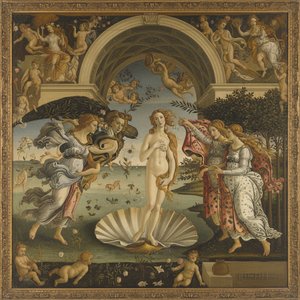
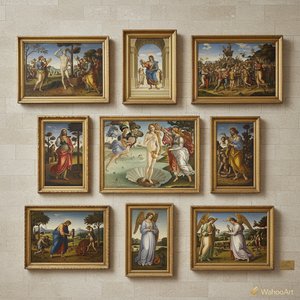
From Botticelli's ethereal “Birth of Venus” to Caravaggio’s dramatic depictions of biblical scenes, the museum showcases an astonishing range of artistic expression. The inclusion of works by lesser-known masters alongside those of international fame provides crucial context for appreciating the broader cultural landscape of each era.
A Journey Through Time: Exploring Artistic Evolution
The collection is organized chronologically, allowing visitors to witness the stylistic shifts and influences that shaped European art. Starting with early Renaissance masterpieces – including Jan van Eyck’s meticulous detail and Rogier van der Weyden’s profound spirituality – the museum progresses through Mannerism, Baroque, Rococo, Neoclassicism, Romanticism, Impressionism, Post-Impressionism, and ultimately reaches into the 20th century.
Notable works abound throughout the museum. “Christ and the Samaritan” by Duccio di Buoninsegna – a breathtaking 14th-century tempera panel that exemplifies the spiritual fervor of its time—is a highlight of the Early Renaissance section. The Baroque collection features dramatic compositions by Caravaggio, while the Impressionist gallery boasts Monet’s luminous landscapes and Renoir's vibrant portraits.
Beyond the Canvas: A Celebration of Artistic Legacy
The Thyssen-Bornemisza is more than just a collection of paintings; it’s an immersive experience shaped by the remarkable story of its founder, Hans Heinrich Thyssen-Bornemisza. His dedication to preserving and sharing this extraordinary legacy is evident in every gallery.