Wolf Huber portree

Wolf Huber maalid: 20 kuulsumat teost galeriin läbi

Uuendatud november 2026 · järjestatud meie populaarsusindeksi järgi (otsingud, külastused ja tellimused igale teosele) · 21 teost Wolf Huber meie kataloogis

Lühidalt

Galleriist vaadatuna on Wolf Huber kõige kuulsam teos Landscape with Castle (1545), mille originaal ripub Ducal Graphic Collection-is, Eggenfeld. Christ taking leave of his Mother. (1519) ja Saint Sebastian (1525) täidavad kolmikut, mille iga silm tunnistab. Kunstnii Wolf Huber 21 teose põhjal esitleb galeriis allpool 20 kõige kuulsumat, kus iga originaal on märgitud aastaga, muuseumiga ja kirjeldatud, mis teeb selle unikaalseks.

1485 – 1553, Feldkirch Northern renaissance Enamama teoseid: Kunsthistorisches Museum

Galeria 10 parimat Wolf Huber maali

3
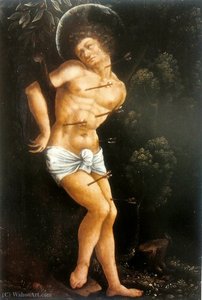
Saint Sebastian (1525) autor Wolf Huber

Saint Sebastian

1525 · Oil On Panel · Varssavi Rahvusmuuseum, Varssavi

A young man with pale skin is positioned slightly off-center, tied to a dark tree trunk within a wooded setting. His body is pierced by several arrows, and his torso shows defined musculature. He wears a white loincloth that contrasts with the deep, earthy tones of the background. The lighting originates from the upper left, casting soft shadows across his chest and abdomen to create a sense of three-dimensional volume.…

5
Epitaph of the Perger Family (1516) autor Wolf Huber

Epitaph of the Perger Family

1516 · Oil On Panel · Bavaria riiklikud maalidema kogumikud, München

Wolf Huber’s Epitaph of the Perger Family, executed about 1516, presents a dense assembly of figures within a somber funerary or religious setting. The composition is structured through several layers of subjects that create a sense of depth despite a relatively flat perspective, a hallmark of the early 16th-century Northern Renaissance style. On the left, a cluster of men dressed in period-appropriate Renaissance attire occupies the foreground and middle ground,…

6
Christ on the Mount of Olives (1527) autor Wolf Huber

Christ on the Mount of Olives

1527 · Oil On Panel · Bavaria riiklikud maalidema kogumikud, München

The scene unfolds in Christ on the Mount of Olives, a work by the Austrian-German artist Wolf Huber. Born in Feldkirch, Austria, Huber moves through the history of the Northern Renaissance as a versatile creator, working as a painter, printmaker, and architect. This specific composition captures a moment of profound spiritual tension, rendered with the expressive intensity that defines his hand.

7
Portrait of a (35-year-old) Man with Black Hat and Fur-Trimmed Coat (1528) autor Wolf Huber

Portrait of a (35-year-old) Man with Black Hat and Fur-Trimmed Coat

1528 · Oil

In this 1528 portrait, we encounter a man caught in a moment of quiet contemplation. He is positioned slightly off-center, his gaze directed away from us, as if lost in a thought that we are not permitted to share. The composition is a medium close-up, focusing on the upper body and the heavy textures that define his status. There is a profound sense of stillness here. The monochromatic palette, rendered…

8
Crucifixion of Christ (1522) autor Wolf Huber

Crucifixion of Christ

1522 · Oil · Kunsthistorisches Museum, Viin

The painting titled Crucifixion of Christ was executed by the artist Wolf Huber. This work dates to 1522. The composition depicts the central figure of Jesus on a cross, surrounded by a dense assembly of onlookers, soldiers, and mourners. The scene is framed within an arched structure, presenting a crowded arrangement of human figures against a dark, turbulent sky.

9
The Flight into Egypt (1525) autor Wolf Huber

The Flight into Egypt

1525 · Oil On Panel · Berliini Riigimuseumid, Berliin

The painting depicts the biblical story of the flight into Egypt, featuring Mary, Joseph, and baby Jesus traveling on a donkey. The scene is set against an expansive backdrop of mountains, which provides a sense of scale to the landscape. Within the composition, several other figures are present, including one man holding a staff and another individual carrying a bowl. Two cows can be seen in the background, with one…

10
The Lamentation of Christ (1524) autor Wolf Huber

The Lamentation of Christ

1524 · Oil On Panel · Louvre'i muuseum, Pariis

The painting depicts a religious scene centered on the body of Jesus, who lies horizontally across the middle of the frame. He is surrounded by a group of at least twelve figures, some of whom are kneeling while others stand in various states of mourning. The figures are positioned around the central form, their bodies oriented toward the deceased man. In the background, a landscape of mountains rises, providing a…

Wolf Huber maalid, järjestus 11 kuni 20

Teemad, mis püüdisid Wolf Huber pilma

Neli teemat, mis esinevad neis originaalkindel kõige sagedamini, ning iga teema parim näide.

Muuseumid, kus on säilitatud Wolf Huber originaalteosed

Kümne 8 muuseumi kollektsioonid, mis sisaldavad kõige rohkem sellel lehel esitatud teoseid.

Muuseumid Linn Wolf Huber teosid Selle nimekirja maalid
Kunsthistorisches Museum, ViinKunsthistorisches Museum Viin 4 Christ taking leave of his Mother., Allegory of Redemption, Crucifixion of Christ
Bavaria riiklikud maalidema kogumikud, MünchenBavaria riiklikud maalidema kogumikud München 2 Epitaph of the Perger Family, Christ on the Mount of Olives
Ducal Graphic Collection, EggenfeldDucal Graphic Collection Eggenfeld 1 Landscape with Castle
Varssavi Rahvusmuuseum, VarssaviVarssavi Rahvusmuuseum Varssavi 1 Saint Sebastian
Berliini Riigimuseumid, BerliinBerliini Riigimuseumid Berliin 1 The Flight into Egypt
Louvre'i muuseum, PariisLouvre'i muuseum Pariis 1 The Lamentation of Christ
Staatliche Graphische Sammlung, MünihStaatliche Graphische Sammlung Münih 1 Landscape near Feldkirch
National Gallery, LondonNational Gallery London 1 Christ taking leave of his Mother

Wolf Huber, iga kümnendiga üks signatuurpilt

Teosed aastakate kaupa

Vali vuosakülg, et näha selle ajastu definieerivat originaalteost.

Wolf Huber maalid: galerii vastused

Milline Wolf Huber maal on kõige kuulsam?Paljasta vastus

Landscape with Castle (1545), Ducal Graphic Collection, Eggenfeld. Järgnevad Christ taking leave of his Mother. (1519) ja Saint Sebastian (1525).

Kui vana Wolf Huber oli teose Landscape with Castle valmimisel?Paljasta vastus

60 aastat vanus: teos Landscape with Castle on pärinev aastast 1545 ning Wolf Huber sündis aastal 1485.

Millised on Wolf Huber top 10 maali?Paljasta vastus

Landscape with Castle, Christ taking leave of his Mother., Saint Sebastian, Allegory of Redemption, Epitaph of the Perger Family, Christ on the Mount of Olives, Portrait of a (35-year-old) Man with Black Hat and Fur-Trimmed Coat, Crucifixion of Christ, The Flight into Egypt ja The Lamentation of Christ. Ülemine reiting näitab iga teose puhul aastat ja muuseumi.

Kui palju teoseid Wolf Huber lõi?Paljasta vastus

Meie kataloogist leiate 21 teost kunstnikult Wolf Huber, mis on pärinevad ajastust 1516 kuni 1545.

Kust leiad Wolf Huber kõige kuulsamad originaalteosed?Paljasta vastus

Peamiselt Kunsthistorisches Museum (Viin), Bavaria riiklikud maalidema kogumikud (München) ja Ducal Graphic Collection (Eggenfeld) muuseumites. Ülalpool olevate muuseumite tabelis on nendest kõik loetletud.

Millal lõi Wolf Huber oma kuulsamad maalid?Paljasta vastus

Ajal 1520s: 8 20 sellel lehel olevat teost on sellel perioodil loodud, მათart közül Saint Sebastian.

Millised on Wolf Huber varased ja hilised kuulsad teosed?Paljasta vastus

Sellel lehel on kõige vanem teos Epitaph of the Perger Family (1516) ja kõige värskeim Landscape with Castle (1545).

Millist teemat Wolf Huber kõige rohkem käsitledas?Paljasta vastus

Trees (4), Clouds (4) ja People (4), kogu selle lehekülje 20 teose kohta.

Millises tehnikas töötas Wolf Huber kõige rohkem?Paljasta vastus

Oil On Panel, 8 teoseks 20 töödelt sellel lehel.

Millise suunaga on Wolf Huber seotud?Paljasta vastus

Northern renaissance ja Renaissance, seda lähtudes selle lehe originaalteostest.

Milliseid Wolf Huber originaalte Kunsthistorisches Museum kogumuses on?Paljasta vastus

Christ taking leave of his Mother., Allegory of Redemption ja Crucifixion of Christ: Kunsthistorisches Museum, Viin säilitab 4 selle lehel olevat teost.

Wolf Huber: kunstnik

A Master of the Danube School

In the vibrant tapestry of the Northern Renaissance, few threads are as intricately woven as those belonging to Wolf Huber. An Austrian-German painter, printmaker, and architect, Huber emerged as a leading figure of the Danube School, a movement that revolutionized the role of landscape in European art. While much of the Italian Renaissance focused on the perfection of human form and classical idealism, Huber and his contemporaries turned their gaze toward the untamed beauty of the natural world. His work captures the soul of the landscape, transforming dense forests, misty valleys, and dramatic mountain peaks from mere backdrops into profound, living subjects that resonate with spiritual depth.

Born in Feldkirch, Austria, Huber’s early life remains somewhat shrouded in the mists of history, though his presence in the artistic landscape becomes clearly established by the early sixteenth century. By 1515, he was living and working in Passau, Germany, a city that would serve as the primary stage for much of his illustrious career. Though the specifics of his formal training are unknown, it is believed he may have honed his skills within a family workshop. His artistic language suggests a sophisticated understanding of the Italian Renaissance, likely gained through travels to northern Italy, allowing him to blend the meticulous detail of the North with the masterful use of chiaroscuro and atmospheric perspective found in the South.

The Intersection of Spirit and Nature

Huber’s oeuvre is characterized by a remarkable ability to weave human narrative into the very fabric of the earth. In his religious compositions, such as The Flight into Egypt or Christ Taking Leave of His Mother, the landscape does not simply surround the figures; it participates in their emotional journey. He possessed a rare sensitivity to the lyrical qualities of nature, using expansive mountains and verdant trees to act as emotional extensions of his subjects' internal struggles and divine destinies. This technique allowed him to elevate biblical narratives into cosmic events, where the majesty of the terrain mirrors the weight of the spiritual moment.

Beyond his religious works, Huber’s mastery extended to the intimate realm of portraiture. In pieces like the Portrait of Jacob Ziegler, he demonstrates a profound command over light and texture. Through a meticulous layering of pigments, he achieved a velvety depth that brings the sitter to life, capturing the intellectual fervor and introspective thought of his subjects. His portraits often utilize a soft, frontal illumination that lends a sculptural quality to the human face, creating a dialogue between the individual and the atmospheric world unfolding behind them.

Architectural Legacy and Historical Significance

The versatility of Wolf Huber extended far beyond the easel and the printing press. He was a man of multifaceted talent, serving not only as a painter but also as an architect. His architectural contributions are evidenced by his work for local nobility, most notably his commission from Count Niklas II von Salm to rebuild the Neuberg Palace on the Inn River. The surviving fragments of this project reveal his ability to integrate the grander, decorative styles of the Italian Renaissance into the regional landscape, complete with rich, ornamental paintings.

As a court painter to the Duke of Bavaria, Ernst, Huber occupied a position of significant prestige, further cementing his role as a pillar of the German-Austrian artistic community. His legacy lies in his ability to bridge the gap between the human and the divine, the intimate and the expansive. Through his contributions to the Danube School, he helped establish a new way of seeing—one where the landscape is not just a setting for man, but a profound reflection of the eternal.