Portrait of Anthonis van Dyck

The 100 Most Famous Anthonis van Dyck Paintings, a Gallery Selection

Updated oktoober 2026 · ranked by our popularity score (searches, visits and orders for each work) · 1620 works by Anthonis van Dyck in our catalogue

In short

Of all the originals Anthonis van Dyck left, the most famous is Charles I kolmes pozitsjonis (1636), in the collection of the Royal Collection, London. Close behind it come Family Portrait (1621) and Portrait of Isabella Clara Eugenia as Widow (1628). Our catalog holds 1,620 works by Anthonis van Dyck; the gallery has kept the 100 the world admires most, each shown with its date, its museum and its story.

1599 – 1641, Antwerpen Baroque realism Most works: Bavaria riiklikud maalidema kogumikud

Anthonis van Dyck's top 10 paintings: the gallery's choice

1
Charles I kolmes pozitsjonis (1636) by Anthonis van Dyck

Charles I kolmes pozitsjonis

1636 · Õlimaal kangaruumil · Royal Collection, London

Sir Anthony van Dycki teos "Charles I kolmes positsioonis" on barokkportreekunstide väärtuslik näidis ja tõeline meistriteos. See 1635–1636. aastal maalitud õliõil on flamlase erakordse oskuse ja tema sügav mõju Euroopa kunstile imetlusväärne tunnistus. Tegemusetteos kuulub prestiežsesse Kuningliku kogukogu (Royal Collection) hulka ning ripub praegu Windsori lossi kuningasest lükati saalis, olles samal ajal ajaloolise suurepärasuse sümbol.

2
Family Portrait (1621) by Anthonis van Dyck

Family Portrait

1621 · Oil On Canvas · Hermitage muuseum, Stiiitlinburg

To gaze upon this magnificent family portrait is to step directly into the opulent drawing rooms of the early seventeenth century. It captures not merely three figures—a distinguished man, an elegant woman, and a cherished child—but an entire tableau of familial pride and societal standing. The composition itself speaks volumes; every fold of fabric, every carefully placed hand, contributes to a narrative of enduring connection. The rich, dramatic red background…

3
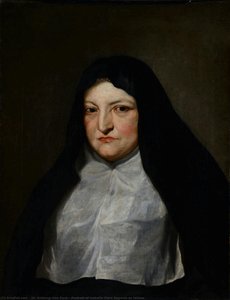
Portrait of Isabella Clara Eugenia as Widow (1628) by Anthonis van Dyck

Portrait of Isabella Clara Eugenia as Widow

1628 · Oil On Canvas · Museo de Arte de Ponce, Ponce

Sir Anthony van Dyck’s “Portrait of Isabella Clara Eugenia as Widow” is more than just a depiction of a noblewoman; it's a carefully constructed tableau of power, grief, and the enduring legacy of a formidable ruler. Painted in 1628, this oil-on-canvas work transports us to the heart of the Spanish Netherlands during a period of significant political and personal upheaval. Isabella Clara Eugenia, daughter of Philip II of Spain, served…

4
Jacqueline van Caestre (1622) by Anthonis van Dyck

Jacqueline van Caestre

1622 · Oil On Panel · Royal Łazienki Museum, Varshava

The portrait of Jacqueline van Caestre, painted in 1622 by the masterful Sir Anthony van Dyck, is more than a mere likeness; it’s a carefully constructed tableau of wealth, status, and burgeoning domesticity. Within its richly layered composition lies a captivating story of a noblewoman navigating the complexities of marriage and courtly life in 17th-century Antwerp. Van Dyck, already establishing his signature style—characterized by an almost sensual realism and a…

5
Susanna and the Elders (1622) by Anthonis van Dyck

Susanna and the Elders

1622 · Õlimaal kangaruumil · Alte Pinakothek, München

In the grand tapestry of the Flemish Baroque, few works capture the visceral intersection of vulnerability and voyeurism as profoundly as Sir Anthony van Dyck’s Susanna and the Elders. Painted around 1622, this monumental canvas is far more than a mere biblical illustration; it is a psychological drama frozen in time. The scene centers on Susanna, a figure of profound grace and purity, caught in a moment of harrowing intrusion.…

6
Genoese Noblewoman (1622) by Anthonis van Dyck

Genoese Noblewoman

1622 · Oil On Canvas · The Frick Collection, New York

Anthony van Dyck's "Genoese Noblewoman," painted circa 1625-1627, isn’t merely a portrait; it’s a meticulously crafted window into the opulent world of early 17th-century Genoa. This captivating work, now residing within The Frick Collection in New York City, offers a rare glimpse into the refined tastes and social dynamics of a wealthy Italian city-state – a vibrant hub of commerce, art, and cultural exchange during a period of immense artistic…

7
Henrietta Maria (1635) by Anthonis van Dyck

Henrietta Maria

1635 · Oil On Canvas

The gaze of Henrietta Maria meets the viewer through this commanding portrait by Anthony van Dyck. Executed in 1636, the work captures Henrietta Maria of France in a moment of poised royal dignity. She exists here as the Queen of England, a position she holds through her marriage to King Charles I. The painting functions as a visual declaration of her status and her presence within the English court.

8
Portrait of Queen Henrietta-Maria (1638) by Anthonis van Dyck

Portrait of Queen Henrietta-Maria

1638 · Oil On Canvas · Hermitage muuseum, Stiiitlinburg

To stand before this portrait is to encounter the quiet gravity of the seventeenth-century English court. The Queen stands slightly off-center, her figure anchored by the heavy weight of crimson drapery and a draped table. There is a certain stillness here, a moment caught between the political tensions of 1638 and the personal dignity of the sitter. Van Dyck uses light to sculpt her form, pulling her face and chest…

9
The healing of the paralytic (1620) by Anthonis van Dyck

The healing of the paralytic

1620 · Oil On Canvas · Bavaria riiklikud maalidema kogumikud, München

In this oil painting, titled The healing of the paralytic, Anthony van Dyck explores a moment of profound spiritual intervention. The work, which dates to about 1618-20, captures the immediate aftermath of a miracle. We find ourselves witnessing the precise instant of transition between infirmity and restoration. The subject matter is drawn from the New Testament, specifically the narratives found in Matthew 9:1-8 or John 5:1-15.

10
Portrait of Alexandre della Faille (1589-1653) (1632) by Anthonis van Dyck

Portrait of Alexandre della Faille (1589-1653)

1632 · Oil On Canvas · Belgia Kuninglikud Fine Artsi muuseumid, Brüssel

A dignified three-quarter length portrait, this work captures a middle-aged man positioned centrally against a dark, atmospheric background. The subject, Alexandre della Faille, is rendered with a sense of quiet authority and formal composure. A voluminous white ruff collar acts as the primary focal point, its crisp texture contrasting sharply against the heavy, dark fabric of his cloak. Light enters from the upper left, casting soft shadows across the right…

The Anthonis van Dyck selection continues, 11 to 100

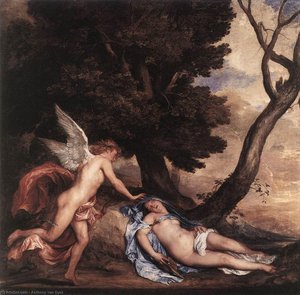
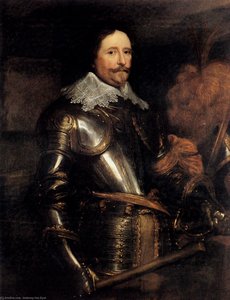
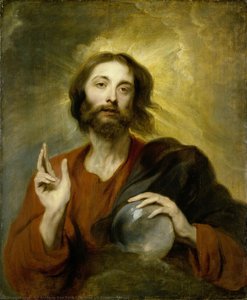
11Equestrian Portrait of Charles I of England (1620) by Anthonis van DyckEquestrian Portrait of Charles I of England1620 · Bavaria riiklikud maalidema kogumikud 12The Pietà (1629) by Anthonis van DyckThe Pietà1629 · Museo del Prado 13Portrait of Charles Louis, Elector Palatine (1617-1680), in exile (1637) by Anthonis van DyckPortrait of Charles Louis, Elector Palatine (1617-1680), in exile1637 14Portrait of Charles, Marquis de Vieuville (1635) by Anthonis van DyckPortrait of Charles, Marquis de Vieuville1635 · Chrysler Museum of Art 15Portrait of Charles I, King of the Great Britain (1600-1649) (1638) by Anthonis van DyckPortrait of Charles I, King of the Great Britain (1600-1649)1638 · Hermitage muuseum 16The Lomellini Family (1627) by Anthonis van DyckThe Lomellini Family1627 17Queen Henrietta Maria (1640) by Anthonis van DyckQueen Henrietta Maria1640 · Wallace Collection 18Portrait of Henrietta Maria of France, Queen of England, Scotland and Ireland (1637) by Anthonis van DyckPortrait of Henrietta Maria of France, Queen of England, Scotland and Ireland1637 19Moses and the Brazen Serpent (1530) by Anthonis van DyckMoses and the Brazen Serpent1530 20Christ on the Cross (1625) by Anthonis van DyckChrist on the Cross1625 · Courtauld Gallery 21Portrait of Queen Henriëtta Maria (1632) by Anthonis van DyckPortrait of Queen Henriëtta Maria1632 22Portrait of a Family (1620) by Anthonis van DyckPortrait of a Family1620 23Thomas Hamilton, 2nd Earl of Haddington, 1600 - 1640 (1637) by Anthonis van DyckThomas Hamilton, 2nd Earl of Haddington, 1600 - 16401637 · Šoti Rahvusportreegalerii 24Samson and Delilah (1630) by Anthonis van DyckSamson and Delilah1630 · Kunsthistorisches Museum 25Portrait of a Lady with her Daughter (1632) by Anthonis van DyckPortrait of a Lady with her Daughter1632 26Charles I (1600-49) on Horseback (1635) by Anthonis van DyckCharles I (1600-49) on Horseback1635 · Hampton Court Palace 27Cupid and Psyche (1640) by Anthonis van DyckCupid and Psyche1640 · Royal Collection 28Queen Henrietta Maria of England (1620) by Anthonis van DyckQueen Henrietta Maria of England1620 · Bavaria riiklikud maalidema kogumikud 29A Family Group (1634) by Anthonis van DyckA Family Group1634 · Detroit Institute of Arts 30Queen Henrietta Maria of England (1639) by Anthonis van DyckQueen Henrietta Maria of England1639 · Statens Museum For Kunst 31Saint Sebastian and the Angel (1631) by Anthonis van DyckSaint Sebastian and the Angel1631 · Galleria Sabauda 32Portrait of a painter (1640) by Anthonis van DyckPortrait of a painter1640 · Kunstmuseum Basel 33Queen Henrietta Maria (1635) by Anthonis van DyckQueen Henrietta Maria1635 · Staatliche Kunstsammlungen Dresden 34Christ on the Cross with Saint Catherine of Siena, Saint Dominic and an Angel (1620) by Anthonis van DyckChrist on the Cross with Saint Catherine of Siena, Saint Dominic and an Angel1620 · Royal Museum of Fine Arts Antwerp 35St Jerome (1620) by Anthonis van DyckSt Jerome1620 · Nationalmuseum 36Venetia, Lady Digby (1634) by Anthonis van DyckVenetia, Lady Digby1634 37Christ and the Penitent Magdalene (1620) by Anthonis van DyckChrist and the Penitent Magdalene1620 · Bavaria riiklikud maalidema kogumikud 38Crucifixion (1622) by Anthonis van DyckCrucifixion1622 · San Zaccaria 39Portrait Of Frederik Hendrik (1632) by Anthonis van DyckPortrait Of Frederik Hendrik1632 · Baltimore Kunstimuuseum 40Ottaviano Canevari (1627) by Anthonis van DyckOttaviano Canevari1627 · The Frick Collection 41Lamentation of Christ (1620) by Anthonis van DyckLamentation of Christ1620 · Bavaria riiklikud maalidema kogumikud 42Portrait of an English Gentleman (1635) by Anthonis van DyckPortrait of an English Gentleman1635 · Pitti palee 43Portrait of James Hay, 2nd Earl of Carlisle (c1612-1660) (1636) by Anthonis van DyckPortrait of James Hay, 2nd Earl of Carlisle (c1612-1660)1636 44Saint Sebastian (1620) by Anthonis van DyckSaint Sebastian1620 · Bavaria riiklikud maalidema kogumikud 45The Martyrdom of Saint Sebastian (1616) by Anthonis van DyckThe Martyrdom of Saint Sebastian1616 · Bavaria riiklikud maalidema kogumikud 46Sir Algernon Percy (1602–1668), 10th Earl of Northumberland, KG, His First Wife Lady Anne Cecil (d.1637), and Their Eldest Daughter, Lady Catherine Percy (1630–1638) (1635) by Anthonis van DyckSir Algernon Percy (1602–1668), 10th Earl of Northumberland, KG, His First Wife Lady Anne Cecil (d.1637), and Their Eldest Daughter, Lady Catherine Percy (1630–1638)1635 47Sir Kenelm Digby (1640) by Anthonis van DyckSir Kenelm Digby1640 · National Portrait Gallery 48Lord John Stuart and his Brother, Lord Bernard Stuart (1638) by Anthonis van DyckLord John Stuart and his Brother, Lord Bernard Stuart1638 49Portrait of an Old Man (1618) by Anthonis van DyckPortrait of an Old Man1618 · Liechtenstein Museum 50Portrait of a Man (1922) by Anthonis van DyckPortrait of a Man1922 · Bavaria riiklikud maalidema kogumikud 51Charles I in Three Positions (1636) by Anthonis van DyckCharles I in Three Positions1636 · Royal Collection 52Portrait of Nicolaes van der Borght (1620) by Anthonis van DyckPortrait of Nicolaes van der Borght1620 53Portrait of a Genovese Gentleman (1621) by Anthonis van DyckPortrait of a Genovese Gentleman1621 · Gemäldegalerie 54James Stuart (1612–1655), 1st Duke of Richmond and 4th Duke of Lennox (1636) by Anthonis van DyckJames Stuart (1612–1655), 1st Duke of Richmond and 4th Duke of Lennox1636 · English Heritage 55Mountjoy Blount (1597–1665), 1st Earl of Newport George (1608–1657), Lord Goring, and a Page (1639) by Anthonis van DyckMountjoy Blount (1597–1665), 1st Earl of Newport George (1608–1657), Lord Goring, and a Page1639 · Petworth House 56The Martyrdom of Saint Sebastian (1620) by Anthonis van DyckThe Martyrdom of Saint Sebastian1620 · Bavaria riiklikud maalidema kogumikud 57Rest on the Flight into Egypt (Madonna with Partridges) (1632) by Anthonis van DyckRest on the Flight into Egypt (Madonna with Partridges)1632 · Hermitage muuseum 58Portrait of a Man (1618) by Anthonis van DyckPortrait of a Man1618 · Liechtenstein Museum 59Marie de Raet (1631) by Anthonis van DyckMarie de Raet1631 · Wallace Collection 60Mozes and the brass snake (1620) by Anthonis van DyckMozes and the brass snake1620 61Portrait of Prince Charles Louis, Elector Palatine (1641) by Anthonis van DyckPortrait of Prince Charles Louis, Elector Palatine1641 62Charles Seton (1615–1672), 2nd Earl of Dunfermline, Lord Privy Seal (1640) by Anthonis van DyckCharles Seton (1615–1672), 2nd Earl of Dunfermline, Lord Privy Seal1640 63The Virgin and Child (1631) by Anthonis van DyckThe Virgin and Child1631 · Buckinghami palee 64Lord George Stuart (1638) by Anthonis van DyckLord George Stuart1638 · National Portrait Gallery 65Portrait of Wolfgang William of Palatine-Neuburg (1630) by Anthonis van DyckPortrait of Wolfgang William of Palatine-Neuburg1630 · Kunsthalle Bremen 66Queen Henrietta Maria (1760) by Anthonis van DyckQueen Henrietta Maria1760 · Birmingham Museum and Art Gallery 67Portrait of Emmanuel Philibert (1624) by Anthonis van DyckPortrait of Emmanuel Philibert1624 68Portrait of Charles V on Horseback (1620) by Anthonis van DyckPortrait of Charles V on Horseback1620 · Galleria degli Uffizi 69The Polish Rider (1620) by Anthonis van DyckThe Polish Rider1620 · Bavaria riiklikud maalidema kogumikud 70Charles I and the Knights of the Garter in Procession (1638) by Anthonis van DyckCharles I and the Knights of the Garter in Procession1638 · The Ashmolean Museum of Art And Archaeology 71Christus als Salvator Mundi (1620) by Anthonis van DyckChristus als Salvator Mundi1620 · Sanssouci bildigalerii 72Charles I (1600–1649) (1639) by Anthonis van DyckCharles I (1600–1649)1639 · National Trust 73Kuninganna Henrietta Maria (1636) by Anthonis van DyckKuninganna Henrietta Maria1636 · Metropolitan Museum of Art 74Lady Dacre (1633) by Anthonis van DyckLady Dacre1633 · Denver Art Museum 75Francis Junius (1591–1677) (1640) by Anthonis van DyckFrancis Junius (1591–1677)1640 · Bodleian Libraries 76Charles i - (16) by Anthonis van DyckCharles i - (16) 77Deux têtes d (1650) by Anthonis van DyckDeux têtes d1650 · Museum of Fine Arts 78Princess Henrietta of Lorraine (1611–1660), Attended by a Page (1634) by Anthonis van DyckPrincess Henrietta of Lorraine (1611–1660), Attended by a Page1634 · English Heritage 79Portrait of Father Jean-Charles della Faille, S.J. (1629) by Anthonis van DyckPortrait of Father Jean-Charles della Faille, S.J.1629 80Equestrian Portrait of Charles I, King of England (1640) by Anthonis van DyckEquestrian Portrait of Charles I, King of England1640 81François Langlois (1589–1647) (1637) by Anthonis van DyckFrançois Langlois (1589–1647)1637 · The Barber Institute of Fine Arts 82Portrait of Charles I, King of England (1640) by Anthonis van DyckPortrait of Charles I, King of England1640 · USC Fisher Museum of Art 83Christ carrying the Cross by Anthonis van DyckChrist carrying the CrossMusei di Strada Nuova 84Portrait of the Painter Cornelis de Wae (1627) by Anthonis van DyckPortrait of the Painter Cornelis de Wae1627 · Koninklijk Museum voor Schone Kunsten 85Ecce Homo (1626) by Anthonis van DyckEcce Homo1626 · The Barber Institute of Fine Arts 86Margareta Snyders (1620) by Anthonis van DyckMargareta Snyders1620 87Margareta de Vos (1620) by Anthonis van DyckMargareta de Vos1620 · The Frick Collection 88Portrait of Anna Dalkeith, Countess of Morton, and Lady Anna Kirk (1631) by Anthonis van DyckPortrait of Anna Dalkeith, Countess of Morton, and Lady Anna Kirk1631 · Hermitage muuseum 89Portrait Of Philip, Lord Wharton (1630) by Anthonis van DyckPortrait Of Philip, Lord Wharton1630 90Portrait of a Man (1618) by Anthonis van DyckPortrait of a Man1618 · Liechtenstein Museum 91Portrait of Henrietta Maria (1609–1699), Queen of England by Anthonis van DyckPortrait of Henrietta Maria (1609–1699), Queen of EnglandRahvusmuuseum Varssavis 92Portrait of James Hamilton (1630) by Anthonis van DyckPortrait of James Hamilton1630 · Liechtenstein Museum 93Charles I on Horseback (1635) by Anthonis van DyckCharles I on Horseback1635 · National Gallery 94Thomas Killigrew and (.) William, Lord Croft (1638) by Anthonis van DyckThomas Killigrew and (.) William, Lord Croft1638 · Royal Collection 95Alexander Henderson (c.1583–1646), Presbyterian Divine and Diplomatist (1641) by Anthonis van DyckAlexander Henderson (c.1583–1646), Presbyterian Divine and Diplomatist1641 · Šoti Rahvusportreegalerii 96The Lomellini Family (1626) by Anthonis van DyckThe Lomellini Family1626 · National Gallery of Scotland 97Samson ja Delila (1620) by Anthonis van DyckSamson ja Delila1620 98Abraham and Isaac (1617) by Anthonis van DyckAbraham and Isaac1617 · Národní Galerie 99Portrait of Anna van Craesbecke (1635) by Anthonis van DyckPortrait of Anna van Craesbecke1635 · Staatliche Museen 100A wooded ridge (1630) by Anthonis van DyckA wooded ridge1630 · Art Gallery of South Australia

Anthonis van Dyck's famous paintings, period by period

The subjects that held Anthonis van Dyck's eye

The four subjects that come back most often in these originals, each with its finest example.

The museums that keep Anthonis van Dyck's originals

The 8 museums that hold the most of the paintings on this page.

Museum City Works by Anthonis van Dyck Paintings from this list
Bavaria riiklikud maalidema kogumikud, MünchenBavaria riiklikud maalidema kogumikud München 57 The healing of the paralytic, Equestrian Portrait of Charles I of England, Queen Henrietta Maria of England
Hermitage muuseum, StiiitlinburgHermitage muuseum Stiiitlinburg 25 Family Portrait, Portrait of Queen Henrietta-Maria, Portrait of Charles I, King of the Great Britain (1600-1649)
Royal Collection, LondonRoyal Collection London 29 Charles I kolmes pozitsjonis, Cupid and Psyche, Charles I in Three Positions
Liechtenstein Museum, ViennaLiechtenstein Museum Vienna 23 Portrait of an Old Man, Portrait of a Man, Portrait of a Man
The Frick Collection, New YorkThe Frick Collection New York 8 Genoese Noblewoman, Ottaviano Canevari, Margareta de Vos
Wallace Collection, LondonWallace Collection London 9 Queen Henrietta Maria, Marie de Raet
National Portrait Gallery, LondonNational Portrait Gallery London 6 Sir Kenelm Digby, Lord George Stuart
Šoti Rahvusportreegalerii, EdinburghŠoti Rahvusportreegalerii Edinburgh 5 Thomas Hamilton, 2nd Earl of Haddington, 1600 - 1640, Alexander Henderson (c.1583–1646), Presbyterian Divine and Diplomatist

Anthonis van Dyck decade by decade: the original that defines each

Works per decade

Pick a decade to see the original that defines it.

Collectors' questions about Anthonis van Dyck's paintings

Which work is Anthonis van Dyck most famous for?Reveal the answer

Charles I kolmes pozitsjonis (1636), Royal Collection, London. Family Portrait (1621) and Portrait of Isabella Clara Eugenia as Widow (1628) come next.

What age was Anthonis van Dyck when Charles I kolmes pozitsjonis was made?Reveal the answer

37 years old: Charles I kolmes pozitsjonis dates from 1636, and Anthonis van Dyck was born in 1599.

What are the ten most famous Anthonis van Dyck paintings?Reveal the answer

Charles I kolmes pozitsjonis, Family Portrait, Portrait of Isabella Clara Eugenia as Widow, Jacqueline van Caestre, Susanna and the Elders, Genoese Noblewoman, Henrietta Maria, Portrait of Queen Henrietta-Maria, The healing of the paralytic and Portrait of Alexandre della Faille (1589-1653). The ranking above gives each one's year and museum.

How many paintings did Anthonis van Dyck leave?Reveal the answer

Our catalog holds 1,620 works by Anthonis van Dyck, dated from 1616 to 1641.

In which museums do Anthonis van Dyck's masterpieces hang?Reveal the answer

Mostly in Bavaria riiklikud maalidema kogumikud (München), Hermitage muuseum (Stiiitlinburg) and Royal Collection (London). The museum table above lists them all.

In which years did Anthonis van Dyck paint the most famous works?Reveal the answer

In 1630s: 44 of the 100 works on this page were made then, Charles I kolmes pozitsjonis among them.

What are the first and the last famous originals of Anthonis van Dyck?Reveal the answer

On this page, the earliest is The Martyrdom of Saint Sebastian (1616) and the latest Portrait of Prince Charles Louis, Elector Palatine (1641).

Which subjects did Anthonis van Dyck choose most often?Reveal the answer

Man (22), Portraiture (20) and Portrait (17), across the 100 works on this page.

Which technique did Anthonis van Dyck use most?Reveal the answer

Oil On Canvas, for 75 of the 100 works on this page.

To which art movement does Anthonis van Dyck belong?Reveal the answer

Baroque realism, judging by the originals on this page.

Which Anthonis van Dyck works hang at the Bavaria riiklikud maalidema kogumikud?Reveal the answer

The healing of the paralytic, Equestrian Portrait of Charles I of England and Queen Henrietta Maria of England: the Bavaria riiklikud maalidema kogumikud, München holds 10 of the works on this page.

Can I commission a reproduction of a Anthonis van Dyck painting?Reveal the answer

Yes, as a reproduction: the original stays in its museum, but any painting on this page can be painted by hand for you, made to order one at a time, from the painting's own page.

Anthonis van Dyck: life and work

Varane elu, pere ja õppimisaastad

Antwerpenis 22. märtsil 1599 sündinud Sir Anthony Van Dyck astus maailma, mis oli täis kaubandust ja käsitöömeistri oskusi. Ta oli seitsmus kolmest kaksteist lapsest, kes olid saanud Maria Cupers ja siidimüüja Francoïs "Frans" van Dijcki perekonna liikmed. Selline kasvatus jõustavates kodukeskkonnas pakkus kindlat vundamendi aega lapsenõu, kellel oli juba varajases vanuses eriline ja täiskasvanulike kunstide eeseläevne andekus. Veidi järel, vaid kümneastasena, algas tema ametlik õppimine maalikunstide valdkonnas Hendrick van Balen jäelendiga.

Tema kunstiline areng oli iseloomulik kiire tõus läbi flammi kunstimaailma traditsiooniliste struktuuride. Ta ei jäänud kauaks pelgaks õpilaseks; tehniline täpsus ja oskus võimaldasid tal liiguda kohtuoisese iseseisvuse poole hämmastavava kiirusega. Kuni 18. oktoobrit 1617 oli ta saavutanud olulise turningpunkti, olles võetud Antwerpeni Püha Luku gildisse vaba meistrina. See varane professionaalne tunnustus oli märguandek, et maailma on tulnud uue talent, mis ei jääks kauaks tema kodulinna piiridele.

  • Iseportreet (dateeritud 1613–14)

Peter Paul Rubensi mõju

Sir Anthony Van Dyck karjääri suund määrati ilmselguselt tema veedetud aja poolest Peter Paul Rubensi õpistikus. See ei olnud pelgalt tavapärane õpilaskool; noor kunstnik tõusis meisterliku assistendiks, ametikoht, mis nõudis nii tehnilist täpsust kui ka võimet omastada keeruline visuaalne keel. Rubens ise tunnistas oma õpilase erakordset talent, kirjeldades seda noort meest oma parima õpilasena. See mentorlus pakkus Sir Anthony Van Dyckile otsese sidla XVII sajandi juhtivate kunstiliste suundumistega, võimaldades tal näha otseapostse suurpõhjaliste kompositsioonide loomist ja produktiivse kunstilaboratori juhtimist.

Rubensi mõju noore kunstniku peal väljendus leidus ühises fookuses ekspressiivsuse, gestika ja vormi juures. Kuigi Sir Anthony Van Dyck arenes eventually välja pehmem ja kontrollitum stiil, veetis ta oma varajased aastad oma mentori energia ja täpne jälgemine emuleerides. Ta õppis elulise välgususe tõlendamist õli ja pigmendiks, oskus, mis võimaldas tal hiljem liikuda Rubensi stiili robustsest energiast suunas veelgi peenema ja sügavama väljenduseni. See õpistikus laidud tehniline alus pakkus vajalikud tööriistad tema hilisemale tõusule Euroopa õukondades.

Kunstusained Itaalias ja Genovas

Teisest küsimusest lähtudes, oli Sir Anthony Van Dyck juba oma teismikuae lõpus saavutanud edu iseseisva maalrina – saavutus, mis andis talle vajaliku impulsi ning jõudu madalates Liitudes asustamiseks. Aastate 1621 ja 1627 lõpu vahel kirjastas ta oma kunstilist teekonda läbi Itaalia. See reisimine ei olnud pelgalt suvaline rändamine, vaid strateegiline süvenemine Vahemere eliiti visuaalse keele maailma, mis teravandus tema oskust navigeerida Euroopa ningaristide keerukates sotsiaalsetes hierarhiides.

Tema viibimine Genovas osutus eriti oluliseks turningpunktiks. Ta leidis siit pideva kliendibaasi Genua patriidide seas, kelle aristokraatlik maitse ja tundlikkus leidsid täpselt oma vastavuse Sir Anthony Van Dyck arenevas stiilis. Tema portreed kohalikest peredest võeti linnas suure huviga vastu, kinnitades tema positsiooni kunstnikuna, kes suutas vangustada ülipeastu ühiskonna nõutava väärikuse ja elegantsi. Need portreed ei olnud pelgalt füüsilise sarnaseiduse pildid; ta läks kaugemale, püüdes vangistada oma modellide sotsiaalist staatust ja vaimulist olemust.

Teenimine Inglise õukonnas

Sir Anthony Van Dyck’i side Haigla krooniga algas veel kaua enne tema püsivat asustamist Londonis. Juba aastal 1620 astus ta kuningas I Jaakobi teenistusse, olles see lühiajaline kogemus, mis voorafutas tema laialdasi rändeid läbi Itaalia ja Spaanse Alandite. Need liikumisega ja mitmekülgsete tellimustega täidetud aastad valmistasid teda ette veelgi sügavamaks ja mõjuvamaks saabumiseks. Kuni 1632, mil ta oli naasnud Inglisse, oli ta asustanud õukonda, kus tema maine tippportreemaljana sai lõputult kinnitada. Samal aastal nimetati ta "kuninglikuks peavaldnikuks", ametikoht, mis tõi ta kohe kuningliku elu keskpunkti.

Tema kohalolu Londonis muutus monarhia visuaalse keele täielikult. Ta lahutas minekuga mineviku jäigastest ja formaalsetest portreetidest, eelistades kingastele ja aristokraatidele esitada vaatajale vaarutamatut elegantsust ja autoriteeti. Tema võime tabada oma portreteeritavate inimeste sügavaid iseloomulikke omadusi tõi talle Inglismaa juhtkunstniku staatuse. Ta ei lihtsalt dokumenteerinud näogisid; ta lõi võimunuse ja autoriteedi pilti, mis mõjutas Inglise õukonda põlvkondade vältel. Tema tööd sel perioodil lõid luua väärikust ja enesekindlust, mis määrkas kogu selle ajastu esteetika.

Tehnika ja kunstiline stiil

Sir Anthony Van Dyck besis tehnilist mitmekülgsust, mis võimaldas tal liivaliselt liikuda õlivärvi tiheda ja rikkaliku rakenduse ning otsekooneliste ja teravate veetseljoonade vahel. Kui tegu oli täiusliku joonistaja oskusega, siis ta mõistis sügavalt värvi rakendamise eelneva tugeva struktuurse aluse vajadust. Tema kompositsioonid tuganusid sageli vormide meistraliku ühendusele, kasutades dramaatilist valguse ja varju mängu, et defineerida oma teemede kontuure. See chiaroscuro ehk valo-varjo kontrastide kasutamine tõi esile sügavuse ja mahukuse tunde, eriti tema religioossetes ja müütilistes stseenides, kus valgus näib tulenevat pimedusest, et rõhutada konkreetset žesti või emotsioonilist väljendit.

Tema värvipalett oli iseloomulik sügavate, küllastunud toonide ja tekstuuride peenete detailide hoolikuse poolest. Olgu siis tegemist siidist läikega või naha peene tekstuuriga, ta säilotas raffinatset stiili, mis vältis paljude oma ajalike kunstnike rasket ja koormatud käsitlust. See täpsus ei piirdunud vaid tema ametlikud tellimusedega; võime püüda liikumust ja isikoomist võimaldas tal erineda erinevates žanrites, alates müütiliste narratiivide suurejoonelisusest kuni tema portreetide intiime psühholoogilise sügavuse kuni. Tal oli eriline talent kasutada valgust, et viidata portreteeritava ülevuse või sisemise temperamentiga, kasutades sageli voolavaid žeste ja hoolikalt valitud taustasid, et kehastada ükskõikvat isikut.

Pärand ja peristav mõju

Sir Anthony Van Dycki surm Londonis 9. detsembbril 1641 märkis lõppu kareerile, mis oli juba muetnud Euroopa õukondade visuaalse keele.

Järgides Peter Paul Rubensit, tõusis ta esile kui XVII sajandi kõige olulisem flaamla maalari. Tema kohalolu Inglismaa õukonnas kehtestas portreetidemaali standardi, mis mõjutas kunsti suunmist järgmiste 150 aasta jooksul. Ta omas eriline võime defineerida oma portreeditavate isikute sotsiaalset staatust ja iseloomu läbi peenikaasliku tehnika, mis sai standardiks järgnevale maalide põlvkondadele.

Tema mõju ulatus kaugele Inglismaa piiridest kaugemale. Kogu selle perioodi jooksul avaldas tema töö sügavat mõju kogu Euroopas loodud kunstile. Seda laialdast ulatust toetas tema mitmekorralikkus, liigudes religioossete narratiivide nõudmuste ja aristokraatide sofistikaste ebatavalisuste vahel. Ta ei lihtsalt kirjeldanud näo kontuure; ta lõi autoriteedi ja elegantsi pilti, mis sai eelistavaks esteetikaks neile, kes soovisid projiseerida oma võimu ja staatust.

  • Charles I in Three Positions (1636)
  • The Balbi Children
  • Self-Portrait (1622)

All 1620 works by Anthonis van Dyck →