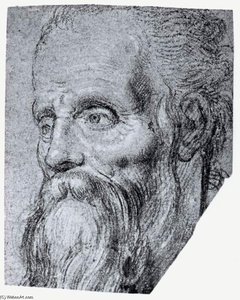
Simone Peterzano portree

14 kulubumatamatum Simone Peterzano maali, galeriiselektsioon

Uuendatud november 2026 · järjestatud meie populaarsusindeksi järgi (otsingud, külastused ja tellimused igale teosele) · 14 teost Simone Peterzano meie kataloogis

Lühidalt

Kõigist Simone Peterzano jäetud originaalteostest on kõige kuulsam Venus and Cupid (1554), mis kuulub Statens Museum For Kunst kogele linnas Kooberemaa. Järgnevad sellest Head of an Old Bearded Man (1578) ja Ecce Homo (1585). Meie kataloogist löytyb 14 teost kunstnikult Simone Peterzano; galeriist on säilitatud 14 maailmas kõige imetlustunud teost, millest iga on esitatud koos kuupäeva, museumi ja oma luguga.

1540 – 1599, Veneetsia Mannerism Enamama teoseid: Civiche Raccolte d'Arte

Simone Peterzano top 10 maalist: galeriis valitud teosed

1
Venus and Cupid (1554) (autor) Simone Peterzano

Venus and Cupid

1554 · Oil · Statens Museum For Kunst, Kooberemaa

This work, titled Venus and Cupid, was executed by the Italian Mannerist painter Simone Peterzano. The painting presents a quiet encounter between the mythological figures of Venus and her young son, Cupid. It is a piece that reflects the specific stylistic transitions occurring in late sixteenth-century Italy, capturing a moment of classical grace through a Mannerist lens.

2
Head of an Old Bearded Man (1578) (autor) Simone Peterzano

Head of an Old Bearded Man

1578 · Chalk · Museo Civici, Milano

The artwork, titled Head of an Old Bearded Man, is a focused portrait study by the artist Simone Peterzano. Created about 1578, this work captures the likeness of an elderly man. The subject's face is the singular point of interest, rendered with a quiet, heavy presence. It is a study of age and the physical weight of time.

3
Ecce Homo (1585) (autor) Simone Peterzano

Ecce Homo

1585 · Oil On Canvas · Kunsthistorisches Museum, Viin

This vertical oil on canvas portrait, dated 1585, focuses on the upper body of a man positioned slightly off-center. The subject is Christ, depicted with a crown of thorns upon his head and eyes cast downward. A strong sense of three-dimensional volume is achieved through highly directional lighting that emerges from the upper left, casting deep shadows across the right side of the face and torso. The color palette relies…

4
Study of a Half-Length Figure (1580) (autor) Simone Peterzano

Study of a Half-Length Figure

1580 · Charcoal · Civiche Raccolte d'Arte, Milan

In this intimate study, Simone Peterzano presents "Study of a Half-Length Figure," a work that focuses intently on the human form. Created about 1580, the drawing captures the torso and head of a nude female figure. The composition is tightly framed around the upper body, creating a sense of proximity that invites a quiet, close observation of the anatomy. There is a subtle tension in the way the subject is…

Kunstianikut Simone Peterzano nimekiri jätkub, 11 kuni 14

Teemad, mis püüdisid Simone Peterzano pilma

Neli teemat, mis esinevad neis originaalkindel kõige sagedamini, ning iga teema parim näide.

Muuseumid, kus on säilitatud Simone Peterzano originaalteosed

Kümne 5 muuseumi kollektsioonid, mis sisaldavad kõige rohkem sellel lehel esitatud teoseid.

Muuseum Linn Simone Peterzano teosed Selle nimekirja maalid
Civiche Raccolte d'Arte, MilanCiviche Raccolte d'Arte Milan 4 Study of a Half-Length Figure, Still-Life of Figs, Peapods and Cherries
Statens Museum For Kunst, KooberemaaStatens Museum For Kunst Kooberemaa 1 Venus and Cupid
Museo Civici, MilanoMuseo Civici Milano 1 Head of an Old Bearded Man
Kunsthistorisches Museum, ViinKunsthistorisches Museum Viin 1 Ecce Homo
Musée des Beaux-Arts de Strasbourg, StrasbourgMusée des Beaux-Arts de Strasbourg Strasbourg 1 Deposition of Christ

Simone Peterzano aastak aegades: originaalteos, mis määratleb iga ajastu

Teosed aastakate kaupa

Vali vuosakülg, et näha selle ajastu definieerivat originaalteost.

Sammlajate küsimused Simone Peterzano maalide kohta

Millise teosega on Simone Peterzano kõige kuulsam?Paljasta vastus

Venus and Cupid (1554), Statens Museum For Kunst, Kooberemaa. Järgnevad Head of an Old Bearded Man (1578) ja Ecce Homo (1585).

Kui vana oli Simone Peterzano, kui teos Venus and Cupid loodi?Paljasta vastus

14 aastat vanus: teos Venus and Cupid on pärinev aastast 1554 ning Simone Peterzano sündis aastal 1540.

Millised on kümne kõige kuulsama Simone Peterzano maalid?Paljasta vastus

Venus and Cupid, Head of an Old Bearded Man, Ecce Homo, Study of a Half-Length Figure, Autoportret simone peterzano, Madonna and child, An allegory of music, Still-Life of Figs, Peapods and Cherries ja Still-Life of Squash, Lilies, Peaches, and Pears. Ülemine reiting näitab iga teose puhul aastat ja muuseumi.

Kui palju maali Simone Peterzano jäeti?Paljasta vastus

Meie kataloogist leiate 14 teost kunstnikult Simone Peterzano, mis on pärinevad ajastust 1554 kuni 1585.

Mitteks muuseumides rihangavad Simone Peterzano meistriteosed?Paljasta vastus

Peamiselt Civiche Raccolte d'Arte (Milan), Statens Museum For Kunst (Kooberemaa) ja Museo Civici (Milano) muuseumites. Ülalpool olevate muuseumite tabelis on nendest kõik loetletud.

Millah aastades maalas Simone Peterzano oma kuulsamaid teoseid?Paljasta vastus

Ajal 1580s: 4 14 sellel lehel olevat teost on sellel perioodil loodud, sellest Ecce Homo.

Mis on Simone Peterzano esimene ja viimane kuuls fama originaalteos?Paljasta vastus

Sellel lehel on kõige vanem teos Venus and Cupid (1554) ja kõige värskeim Ecce Homo (1585).

Milliseid teemasid Simone Peterzano kõige sagedamini valis?Paljasta vastus

Man (2) ja Italian art (2), kogu selle lehekülje 14 teose kohta.

Minge pihta kunstisuunasse, kuhu Simone Peterzano kuulub?Paljasta vastus

Mannerism, seda lähtudes selle lehe originaalteostest.

Millised Simone Peterzano teosed on Civiche Raccolte d'Arte näituses?Paljasta vastus

Study of a Half-Length Figure, Still-Life of Figs ja Peapods and Cherries: Civiche Raccolte d'Arte, Milan säilitab 4 selle lehel olevat teost.

Simone Peterzano: elu ja looming

Simone Peterzano: Life and Legacy

Early Life and Training

  • Born: Venice, Italy in 1540.
  • Initial training under the tutelage of Titian, a master of Venetian Renaissance painting. This foundational experience deeply influenced Peterzano’s use of color and composition.
  • Peterzano's early career saw him move to Milan, where he began to establish himself as a painter of religious subjects.

Artistic Development and Style

  • Peterzano’s style evolved within the context of Mannerism, characterized by elongated figures, stylized poses, and dramatic compositions. However, he infused this with a Venetian sensibility learned from Titian.
  • His work demonstrates influences from other prominent artists of the time, including Veronese and Tintoretto, particularly in his use of vibrant colors and dynamic scenes.
  • Over time, Peterzano’s style became more monumental and austere, reflecting a shift towards a more restrained aesthetic.

Major Works and Achievements

  • Frescoes in San Maurizio al Monastero Maggiore (Milan): Early works showcasing his Venetian influences and establishing his reputation in Milan.
  • Frescoes at Garegnano Charterhouse (1578-1582): Considered one of his most significant achievements, these frescoes demonstrate a masterful command of composition and narrative.
  • Religious Paintings: Numerous altarpieces and devotional works for churches throughout Milan and the surrounding region, including “Madonna with Child and Saints” (Bioggio) and “St. Ambrose between Sts. Gervasius and Protasius” (Duomo of Milan).
  • Still Life paintings: Peterzano also created several still life paintings, demonstrating a keen eye for detail and texture.

Influence and Historical Significance

  • Peterzano’s most enduring legacy lies in his role as the teacher of Caravaggio, one of the most revolutionary artists in Baroque history. He instructed Caravaggio between 1584 and 1588.
  • While Caravaggio ultimately developed a highly individual style, Peterzano provided him with a solid foundation in technique and composition.
  • Peterzano’s work represents a bridge between the Mannerist tradition and the emerging Baroque style. His emphasis on dramatic lighting and emotional intensity foreshadowed developments in 17th-century painting.
  • Death: Peterzano died in Milan in 1596, leaving behind a significant body of work that continues to be studied and appreciated today.

Legacy and Further Study

  • Peterzano’s contributions to art history are increasingly recognized for their influence on Caravaggio and his role in the transition from Mannerism to Baroque.
  • His paintings offer valuable insights into the artistic climate of late 16th-century Italy.