Colin Gill portree

22 kulubumatamatumat Colin Gill maalist, millist on vaid üks

Uuendatud november 2026 · järjestatud meie populaarsusindeksi järgi (otsingud, külastused ja tellimused igale teosele) · 24 teost Colin Gill meie kataloogis

Lühidalt

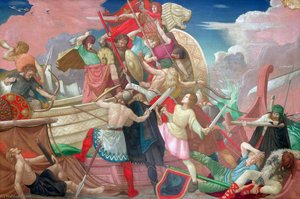
King Alfred's Longships Defeat the Danes, 877 (1927) on Colin Gill maalide kõige silmapaistvam teos; originaal kuulub museumi Parliamentary Art Collection, London. Pärast seda suunatakse pilk Evening after a Push (1919) ja Captain Albert Jacka (1893–1932), VC, MC and Bar (1919) suunas. Meie kataloogis olevatest Colin Gill 24 teosest on need 22 kõige kuulsumat, millist igaüks on esitatud koos aasta, muuseumi ja põhjusega, miks teos on püsiv.

1892 – 1940, Bexleyheath Expressionism Enamama teoseid: Imperial War Museum

Colin Gill top 10 maalist galeriist vaatenurgast

2
Evening after a Push (1919) autor Colin Gill

Evening after a Push

1919 · Oil On Canvas · Imperial War Museum, London

The artwork titled Evening after a Push was created by the artist Colin Gill. This specific work dates to about 1919. The artist, who was born in 1892 in Bexleyheath, United Kingdom, produced this piece during a period following the First World War. Gill's life concluded in 1940.

3
Captain Albert Jacka (1893–1932), VC, MC and Bar (1919) autor Colin Gill

Captain Albert Jacka (1893–1932), VC, MC and Bar

1919 · Oil On Canvas

In this 1919 oil portrait, we find ourselves in the presence of Captain Albert Jacka. The composition is intimate, a medium shot that focuses our attention on the man’s face and the structured lines of his military uniform. He is seated, a posture that suggests a moment of stillness amidst the heavy history of his service. The palette is restrained, dominated by olive and forest greens that lend a sense…

4
Heavy Artillery (1919) autor Colin Gill

Heavy Artillery

1919 · Oil On Canvas

In the chaotic aftermath of the Great War, Colin Gill captures a moment of intense, grinding labor within Heavy Artillery. Created in 1919, this large-scale work confronts the viewer with the sheer scale of industrial warfare. The scene unfolds as a crowded, restless landscape where the machinery of conflict meets the exhaustion of the men tasked with its upkeep. Two massive howitzers dominate the space, their surfaces covered in a…

5
Boadicea at Colchester, 61 AD (1938) autor Colin Gill

Boadicea at Colchester, 61 AD

1938 · Oil On Canvas

In this large-scale oil painting from 1938, we find ourselves drawn into a scene of profound drama set within a classical Roman environment. The composition is dense, crowded with figures that create a sense of vastness and immediate chaos. At the heart of this narrative is the central figure of Boadicea, surrounded by a multitude of onlookers and attendants whose expressions range from horror to compassion. The scale of the…

Colin Gill kuulsad maalid, numbrid 11 kuni 22

Teemad, mis püüdisid Colin Gill pilma

Neli teemat, mis esinevad neis originaalkindel kõige sagedamini, ning iga teema parim näide.

Muuseumid, kus on säilitatud Colin Gill originaalteosed

Kümne 3 muuseumi kollektsioonid, mis sisaldavad kõige rohkem sellel lehel esitatud teoseid.

Muuseumid Linn Colin Gill teosid Selle nimekirja maalid
Imperial War Museum, LondonImperial War Museum London 5 Evening after a Push, A Gunner, Heavy Artillery
Parliamentary Art Collection, LondonParliamentary Art Collection London 1 King Alfred's Longships Defeat the Danes, 877
Government Art Collection, LondonGovernment Art Collection London 1 Café Bar

Colin Gill aastakatega: iga aastakannaga üks unikaalne originaal

Teosed aastakate kaupa

Vali vuosakülg, et näha selle ajastu definieerivat originaalteost.

Colin Gill maalid: küsimused galeriile

Mis on Colin Gill kõige kuulsam teos?Paljasta vastus

King Alfred's Longships Defeat the Danes, 877 (1927), Parliamentary Art Collection, London. Järgnevad Evening after a Push (1919) ja Captain Albert Jacka (1893–1932), VC, MC and Bar (1919).

Mis vanuses luunud Colin Gill teos King Alfred's Longships Defeat the Danes, 877?Paljasta vastus

35 aastat vanus: teos King Alfred's Longships Defeat the Danes, 877 on pärinev aastast 1927 ning Colin Gill sündis aastal 1892.

Millised on Colin Gill kümneks kuulsumat maalatist?Paljasta vastus

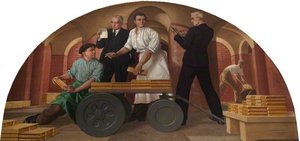
King Alfred's Longships Defeat the Danes, 877, Evening after a Push, Captain Albert Jacka (1893–1932), VC, MC and Bar, Heavy Artillery, Boadicea at Colchester, 61 AD, Moving Gold in the Old Gold Vault, A Gunner, Heavy Artillery, Fampoux ja The Captive. Ülemine reiting näitab iga teose puhul aastat ja muuseumi.

Kui palju teoseid kunstniku Colin Gill kohta on teada?Paljasta vastus

Meie kataloogist leiate 24 teost kunstnikult Colin Gill, mis on pärinevad ajastust 1918 kuni 1940.

Kust saab näha kõige kuulsamaid Colin Gill originaalteoseid?Paljasta vastus

Peamiselt Imperial War Museum (London), Parliamentary Art Collection (London) ja Government Art Collection (London) muuseumites. Ülalpool olevate muuseumite tabelis on nendest kõik loetletud.

Mille perioodi jooksul lõi Colin Gill oma tuntumad maalid?Paljasta vastus

Ajal 1910s: 11 22 sellel lehel olevat teost on sellel perioodil loodud, მათart közül Evening after a Push.

Milline kuuls Colin Gill maal on kõige varasem ja milline kõige hiljema?Paljasta vastus

Sellel lehel on kõige vanem teos The Captive (1918) ja kõige värskeim Catherine (1940).

Millist teemasid Colin Gill eelistas?Paljasta vastus

Soldiers (2) ja Isolation (2), kogu selle lehekülje 22 teose kohta.

Mida Colin Gill kõige rohkem kasutas oma maalide nimiseks?Paljasta vastus

Oil On Canvas, 4 teoseks 22 töödelt sellel lehel.

Millisse toomangu kuulub Colin Gill teos?Paljasta vastus

Expressionism, seda lähtudes selle lehe originaalteostest.

Mida Colin Gill originaalte ma näen Imperial War Museum muuseumis?Paljasta vastus

Evening after a Push, A Gunner ja Heavy Artillery: Imperial War Museum, London säilitab 5 selle lehel olevat teost.

Colin Gill: kunstniku portree

The Visionary of the Great War: The Life and Legacy of Colin Unwin Gill

To look upon the works of Colin Unwin Gill is to witness a profound dialogue between the brutal realities of modern warfare and the timeless elegance of classical tradition. Born in 1892, Gill possessed an artistic sensibility that was uniquely shaped by both his English heritage and his early exposure to the light and grandeur of Italy. His journey through the prestigious Slade School of Fine Art provided him with a foundation of disciplined draughtsmanship, yet it was his time in Rome—as the first recipient of the Rome Scholarship in Decorative Painting—that infused his work with a sense of monumental scale and decorative grace. This rare blend of classical training and contemporary observation would later become the hallmark of an artist capable of capturing the soul of a nation in its darkest hour.

The trajectory of Gill’s career was irrevocably altered by the outbreak of the First World War. Serving as a second lieutenant in the Royal Garrison Artillery, he experienced firsthand the harrowing landscape of the Western Front. His service was not merely one of combat but of technical observation; as a camouflage officer, he developed an acute eye for the interplay of light, shadow, and concealment. This period of intense, often traumatic experience—marked by the physical toll of gas poisoning and frostbite—became the crucible in which his most significant artistic themes were forged. When he eventually transitioned into the role of a war artist, he did so not as a detached observer, but as a man who had breathed the very dust and smoke of the trenches.

A Mastery of Memory and Symbolism

Gill’s contribution to the visual record of the Great War extends far beyond simple reportage. His work for the Imperial War Graves Commission and the British War Memorials Committee sought to transcend the immediate carnage to find a deeper, more spiritual resonance. In masterpieces such as Evening after a Resupply and Heavy Artillery, one finds a hauntingly beautiful use of expressionist style and dramatic lighting. He utilized large-scale oil canvases to create immersive environments where the heavy machinery of war is rendered with a startling, almost surreal realism. Through his brush, the patchwork camouflage of a howitzer or the weary posture of a soldier becomes a symbol of both human endurance and the overwhelming weight of industrial conflict.

The depth of his artistry can be observed through several key elements of his technique:

  • Emotional Realism: A profound ability to depict the psychological exhaustion of soldiers, moving past mere physical likeness to capture the internal landscape of loss and resilience.
  • Decorative Grandeur: The influence of his Roman training, which allowed him to approach large-scale murals with a sophisticated understanding of composition and monumental form.
  • Symbolic Depth: The use of light and shadow to create atmospheric tension, turning scenes of military life into allegories for the human condition.

An Enduring Artistic Significance

Though his life was tragically cut short in 1940, Colin Unwin Gill left behind a body of work that serves as a vital bridge between the classical past and the fractured modern era. His ability to weave together the decorative traditions of the early twentieth century with the raw, unvarnished truths of the battlefield ensured that his murals and portraits would remain much more than historical artifacts. They are living monuments to remembrance. Whether capturing the quiet tension of a Café Bar in wartime London or the stoic dignity of a decorated hero like Captain Albert Jacka, Gill’s art continues to resonate with an evocative power that speaks to the enduring strength of the human spirit amidst the shadows of history.