Beyond Reality: A Definitive Guide to the Raw Emotion and History of Expressionism
Explore the profound history of Expressionism. From Edvard Munch to Jackson Pollock, discover how artists used distortion and color to convey raw emotion. A definitive guide for art lovers seeking deep historical context and mastery in fine art reproductions.
Expressionism is a modernist movement, initially in poetry and painting, originating in Northern Europe around the beginning of the 20th century. Its typical trait is to present the world solely from a subjective perspective, distorting it radically ...
To understand Expressionism is to witness a profound rebellion against the tyranny of the visible world. At the dawn of the twentieth century, a seismic shift occurred within the creative consciousness of Northern Europe, as artists began to reject the objective documentation of reality in favor of a much more turbulent pursuit: the depiction of the human psyche. Unlike the Impressionists, who sought to capture the fleeting dance of light upon a lily pond or the atmospheric haze of a cathedral, the Expressionists turned their gaze inward. They were not interested in how a landscape looked under a midday sun, but rather how that landscape felt during a moment of profound isolation or existential dread.
This movement was characterized by a radical distortion of form and a deliberate use of jarring, non-naturalistic colors to evoke specific moods or ideas. It was an art of the subjective perspective, where the artist’s internal emotional state acted as a filter, stripping away the superficial layers of physical reality to reveal the raw, often uncomfortable, truths beneath. This era saw the birth of an avant-garde style that would permeate not just painting, but poetry, theatre, and film, creating a unified aesthetic of intensity that challenged the very foundations of traditional aesthetics.
From Impressionism to Inner Landscapes: The Evolution of Emotional Art
The Genesis of Emotion: From Impressionist Light to Abstract Expressionism The Soul of Color: A Journey into the Emotional Resonance of Lyrical Abstraction The Prelude to Abstraction: From Impressionist Light to Pure Emotion Abstract expressionism Ab...
The transition from the soft, dappled light of Impressionism to the visceral energy of Expressionism was not a sudden rupture, but a poetic unfolding of artistic intent. For decades, the art world found solace in the works of masters like Claude Monet and Pierre-Auguste Renoir, whose canvases celebrated the ephemeral beauty of the external world. These artists taught us that perception is shaped by atmosphere; however, as the twentieth century progressed, the focus began to drift from the eye toward the soul. The fascination with light paved the way for an exploration of color as an independent, psychological force.
Where a Monet landscape utilized color to describe the texture of a haystack, the pioneers of abstraction and expressionism began to use color to describe a heartbeat, a sorrow, or a sudden burst of joy. This evolution represented a movement from the external landscape to the internal landscape. The canvas ceased to be a window onto a garden and became a mirror reflecting the depths of human experience. This shift laid the essential groundwork for Lyrical Abstraction and later movements, where the boundaries of representation were pushed until they dissolved entirely into pure emotion and form.
The Architects of Angst: Key Figures and Masterpieces of Early Expressionism
A Sanctuary of Light: Unveiling the Musée d'Orsay Nestled along the banks of the Seine in the heart of Paris, the Musée d’Orsay is far more than a mere repository for historical artifacts; it is an immersive journey through time and artistic revoluti...
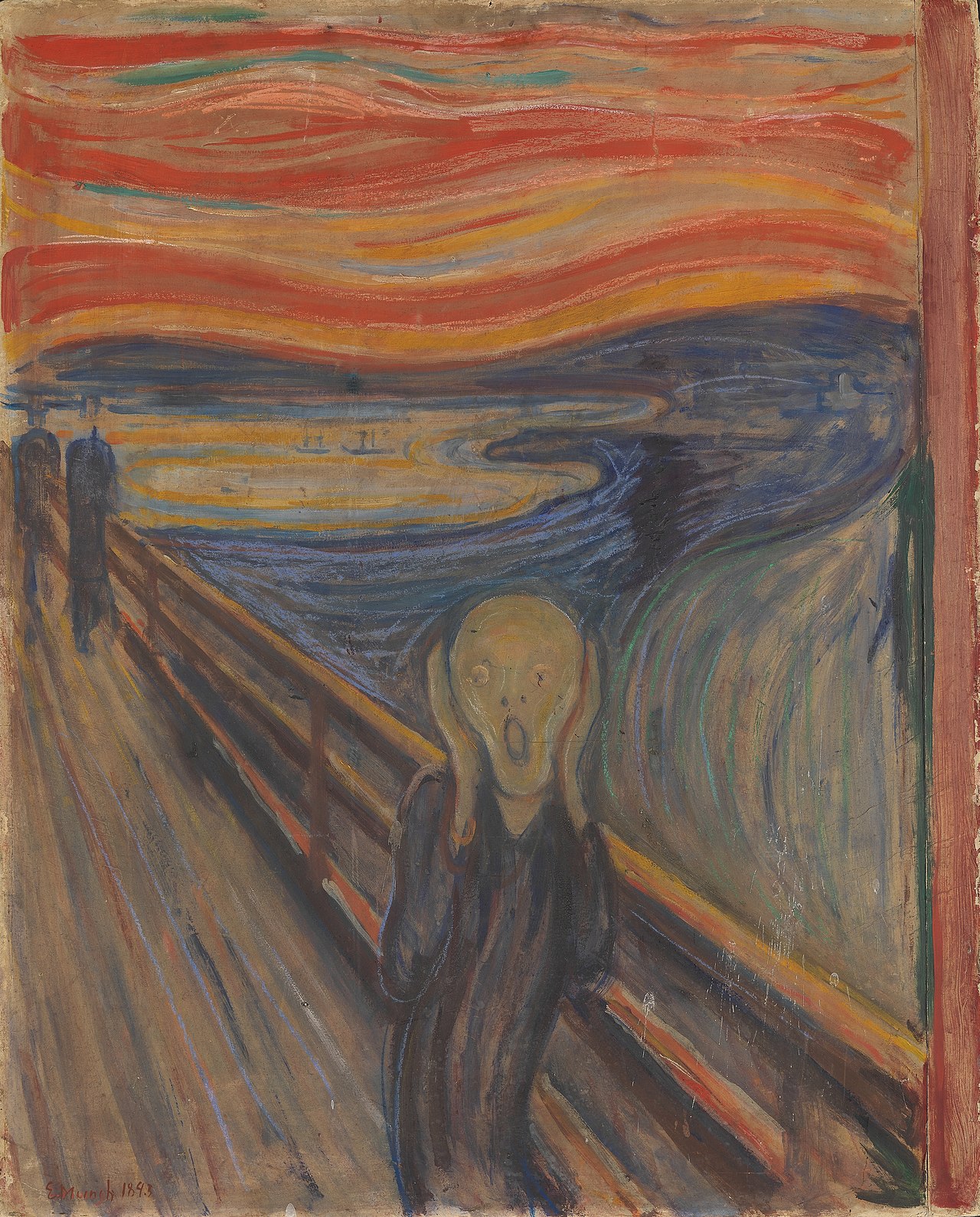
When we speak of the architects of this emotional revolution, certain names emerge from the shadows of history with undeniable power. Perhaps no work embodies the movement's capacity for psychological depth more than Edvard Munch’s The Scream. In its swirling, blood-red skies and agonized, skeletal figure, we see the quintessential Expressionist moment: a world distorted by an internal cry of terror. Alongside Munch, artists such as Ernst Ludwig Kirchner and Emil Nolde utilized jagged lines and clashing palettes to capture the frenetic, often unsettling energy of urban life and the primal forces of nature.
These artists did not merely paint scenes; they painted sensations. Their work was deeply intertwined with the social and political upheavments of the era, particularly within the Weimar Republic, where the tension of a changing world found its visual counterpart in the rough, aggressive handling of materials. To gaze upon these masterpieces is to encounter the very essence of modern anxiety, rendered through brushstrokes that refuse to be polite or decorative, demanding instead a visceral engagement from the viewer.
Post-War Echoes: The Rise and Impact of Abstract Expressionism
Abstract expressionism in the United States emerged as a distinct art movement in the aftermath of World War II and gained mainstream acceptance in the 1950s, a shift from the American social realism of the 1930s influenced by the Great Depression an...
As the twentieth century moved into the aftermath of World War II, the seeds of Expressionism found fertile ground in a new landscape: post-war America. The horrors of global conflict had shattered established norms, leaving a generation grappling with unprecedented trauma and uncertainty. From this climate of disillusionment emerged Abstract Expressionism, a movement that took the subjective impulse to its ultimate zenith. Emerging from the New York art scene in the 1940s and 50s, this movement rejected representational painting entirely in favor of spontaneous, often subconscious creation.
Figures such as Jackson Pollock, Mark Rothko, and Willem de Kooning transformed the canvas into an arena for action. For Pollock, the act of painting became a physical manifestation of intense emotional labor, where the "drip" technique allowed for a direct, almost primal connection between the artist's movement and the medium. Meanwhile, Rothko utilized massive scales and luminous, hovering fields of color to invite a meditative, spiritual encounter. This was art stripped bare—liberated from narrative constraints and fueled by an urgent search for meaning in a world that had lost its traditional anchors.
The Visual Language of Emotion: Analyzing Color, Form, and Distortion
Introduction To embark on a journey through the top 25 artworks of Wassily Kandinsky is to enter a realm where color sings, form dances, and spirit takes flight. These paintings are not merely canvases adorned with pigment; they are windows into an i...
The power of Expressionism lies in its unique visual vocabulary, a language composed of color, form, and deliberate distortion. In this realm, color is liberated from its descriptive duties; a face need not be flesh-toned if the artist wishes to convey the sickly pallor of fear or the vibrant heat of rage. The use of heavy impasto—thick, textured applications of paint—adds a tactile dimension to the emotion, making the artist's struggle visible on the surface of the work.
Form, too, is subject to the whims of the psyche. Figures are stretched, landscapes are twisted, and perspectives are fractured to mirror the instability of the human condition. This distortion is not a lack of skill, but a sophisticated tool used to bypass the intellect and strike directly at the emotions. By breaking the rules of anatomy and perspective, Expressionist artists created a sense of movement and tension that keeps the viewer in a state of perpetual emotional resonance, much like the improvisational freedom found in the jazz music that often inspired later abstract painters like Raymond Parker.
Preserving the Visceral: Collecting and Appreciating Expressionist Masterpieces
Introduction To gaze upon these ten canvases is to step into a realm where emotion reigns supreme, where the very act of painting became a visceral outpouring of the human spirit. The Abstract Expressionist movement, born in the aftermath of World Wa...
For the true lover of art history, collecting works that echo the spirit of Expressionism is an endeavor to preserve the rawest moments of human creativity. Whether it is a high-quality oil reproduction of a Post-Impressionist study or a large-scale tribute to the Abstract Expressionist era, these pieces bring the profound energy of the twentieth century into the modern home. The beauty of a hand-painted reproduction lies in its ability to capture the visible brushstrokes and deep tonal ranges that a mere print cannot replicate, offering a tactile connection to the masters.
At OriginalUniqueArt.com, we believe that these monumental moments in art history should be accessible to all. We specialize in creating museum-quality, hand-painted oil reproductions on 100% cotton canvas, ensuring that the texture and emotional weight of the original are honored. From the transformative power of a custom portrait in the style of Van Gogh to the architectural grandeur of large-format murals, our mission is to bring the soul of the masters into your personal space. We invite you to explore our collection and, through our professional consultation services, find the piece that speaks to your own internal landscape.
Explore 10 defining German Expressionism masterpieces – from Munch's 'The Scream' to Kandinsky’s abstracts. Discover the artists, stories & bold colors behind this powerful art movement. Find museum-quality reproductions at OriginalUniqueArt.com.
Explore the profound emotional depth of Lyrical Abstraction. Discover how masters like Raymond Parker used color and form to bridge Impressionism and Abstract Expressionism. Learn about this pivotal movement through our expert-led art history guide.
Explore the profound world of Edvard Munch, pioneer of Expressionism. Discover the origins of 'The Scream' & his haunting depictions of anxiety, mortality, and love. Expert analysis & high-quality reproductions at OriginalUniqueArt.
Avastage geomeetrilise abstraktsiooni 10 suurteost – Kandinsky, Mondrian ja teised. Lugege kunstiteoste lugusid ning leidke inspiratsiooni kodukaunistuseks OriginalUniqueArt.com-is! Kunstikollektsioon ja reprodutsioonid.


 Expressionism
 Lyrical Abstraction: The Emotional Power of Color and Form in Modern Art History
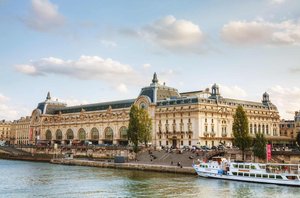 Musée d'Orsay
 Kandinsky's Masterpieces: 25 Paintings That Define Abstract Art | OriginalUniqueArt
 Abstract Expressionism's 10 Defining Masterpieces |