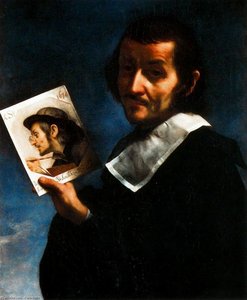
Carlo Dolci portree

85 kulubumatamatumat Carlo Dolci maalist, millist on vaid üks

Uuendatud november 2026 · järjestatud meie populaarsusindeksi järgi (otsingud, külastused ja tellimused igale teosele) · 87 teost Carlo Dolci meie kataloogis

Lühidalt

The Adoration of the Kings (1649) on Carlo Dolci maalide kõige silmapaistvam teos; originaal kuulub museumi National Gallery, London. Pärast seda suunatakse pilk The Guardian Angel (1675) ja Madonna in Glory (1670) suunas. Meie kataloogis olevatest Carlo Dolci 87 teosest on need 85 kõige kuulsumat, millist igaüks on esitatud koos aasta, muuseumi ja põhjusega, miks teos on püsiv.

1616 – 1686, Firenze Baroque Enamama teoseid: Bavaria riiklikud maalidema kogumikud

Carlo Dolci top 10 maalist galeriist vaatenurgast

1
The Adoration of the Kings (1649) autor Carlo Dolci

The Adoration of the Kings

1649 · Oil On Canvas · National Gallery, London

To stand before Carlo Dolci's depiction of The Adoration of the Kings is to step across the threshold of time and into a sanctuary of profound, quiet devotion. This magnificent work captures not the bombast of grand public spectacle, but the intimate, luminous moment where divinity meets earthly reverence. The composition centers on Mary cradling the infant Jesus, figures bathed in a soft, almost palpable glow that speaks volumes about…

2
The Guardian Angel (1675) autor Carlo Dolci

The Guardian Angel

1675 · Oil On Canvas · Prato katedraali muuseum, Prato

Carlo Dolci's “The Guardian Angel,” completed in 1675, transcends mere depiction; it embodies the spiritual fervor characteristic of Baroque art and stands as a testament to Dolci’s masterful artistic vision. Housed within the Museum of the Cathedral in Prato, Italy, this oil on canvas masterpiece invites contemplation and offers a glimpse into the profound symbolism woven throughout its composition.

3
Madonna in Glory (1670) autor Carlo Dolci

Madonna in Glory

1670 · Oil On Canvas · Cantor Arts Center at Stanford University, Stanford

Carlo Dolci's "Madonna in Glory," painted around 1670, is not merely a depiction of the Virgin Mary; it’s an immersion into the heart of Florentine Baroque piety. This intimate portrait, likely intended for private devotion, reveals a masterclass in restrained emotion and meticulous technique – qualities that cemented Dolci's reputation as one of Florence’s most revered artists during his era. The painting immediately draws the viewer in with its dark,…

4
Vase of Flowers (1662) autor Carlo Dolci

Vase of Flowers

1662 · Oil On Canvas · Galleria degli Uffizi, Firenze

Carlo Dolci executed the Vase of Flowers in 1662. This oil on canvas work belongs to the genre of still life painting. It is currently held within the collection of the Galleria degli Uffizi in Florence, Italy.

5
Ecce Homo (1651) autor Carlo Dolci

Ecce Homo

1651 · Oil · Bavaria riiklikud maalidema kogumikud, München

The figure of Christ is presented in a vertical bust-length portrait, his gaze directed slightly upward in a state of profound suffering. A crown of thorns encircles his head, the sharp points protruding into the space around him. He is draped in a deep crimson mantle over a blue undergarment, with a thick rope tied around his neck. The composition focuses on the immediate, intimate connection between the subject and…

6
Saint Philip Neri (1515–1595) (1645) autor Carlo Dolci

Saint Philip Neri (1515–1595)

1645 · Oil · Metropolitan Museum of Art, New York

The room falls away into an indeterminate darkness, leaving only the figure of an elderly man to meet the eye. He sits in a quiet, heavy stillness, his face emerging from the gloom as if caught in a sudden, soft beam of light from the upper left. This is Saint Philip Neri, and even in this frozen moment, there is a sense of profound, inward movement. His skin, rendered with…

7
Portrait of Vittoria della Rovere (1622-1694) as St. Catherine (1640) autor Carlo Dolci

Portrait of Vittoria della Rovere (1622-1694) as St. Catherine

1640 · Oil On Canvas · Kunsthistorisches Museum, Viin

Vittoria della Rovere is presented within an octagonal frame, her likeness transformed through the lens of religious iconography. Portrayed as St. Catherine, she gazes directly at the viewer with a poised, calm expression. The composition centers on her bust-length figure, where the light focuses intensely upon her face and chest. This use of tenebrism creates a deep sense of three-dimensionality, pulling the subject forward from a dark, warm background.

8
Mattias de' Medici (1613-1667) (1635) autor Carlo Dolci

Mattias de' Medici (1613-1667)

1635 · Oil On Canvas · Kunsthistorisches Museum, Viin

A Presence in Polished Steel The figure of Mattias de' Medici commands the space, frozen in a moment of quiet authority. He stands centrally, his body encased in the dark, reflective weight of black plate armor that catches the light from the upper left. This metallic surface gleams with subtle highlights, contrasting sharply against the deep scarlet red of his breeches. A decorative sash and a fine lace collar add…

9
Saint Andrew the Apostle (1658) autor Carlo Dolci

Saint Andrew the Apostle

1658 · Oil On Canvas · Statens Museum For Kunst, Kooberemaa

In Saint Andrew the Apostle by Carlo Dolci, the viewer meets a figure caught in a moment of profound spiritual weight. The composition follows a vertical arrangement, pulling the gaze upward toward the saint's head and upper torso. He sits slightly off-center, creating a sense of natural, unforced presence. A large, dark wooden saltire cross cuts diagonally across the frame, its heavy shape anchoring the saint within the shadows. A…

10
The Virgin (1658) autor Carlo Dolci

The Virgin

1658 · Oil On Canvas · Statens Museum For Kunst, Kooberemaa

The Virgin is a somber and deeply emotive Baroque portrait of a woman, likely the Virgin Mary, rendered in oil on canvas. The composition is a close-up, centered on the subject's downward-looking face, which is partially shrouded by a heavy dark blue mantle. The color palette is restrained, dominated by deep blues, shadows, and warm skin tones, with a single highlight of white fabric at the neck.

Carlo Dolci kuulsad maalid, numbrid 11 kuni 85

11Christ and Mary Magdalen in the House of Simon (1645) autor Carlo DolciChrist and Mary Magdalen in the House of Simon1645 · Nationalmuseum 12Christ's Agony in the Garden of Gethsemane (1658) autor Carlo DolciChrist's Agony in the Garden of Gethsemane1658 · Statens Museum For Kunst 13Archduchess Claudia Felicitas (1653-1676) (1672) autor Carlo DolciArchduchess Claudia Felicitas (1653-1676)1672 · Kunsthistorisches Museum 14The boy Jesus invites the Christian soul to crown it according to the Song of Songs (1674) autor Carlo DolciThe boy Jesus invites the Christian soul to crown it according to the Song of Songs1674 · Kunsthistorisches Museum 15Allegory of Sincerity (1665) autor Carlo DolciAllegory of Sincerity1665 · Kunsthistorisches Museum 16St Andrew Praying before his Martyrdom (1643) autor Carlo DolciSt Andrew Praying before his Martyrdom1643 · Birmingham Museum and Art Gallery 17The Flight into Egypt (1648) autor Carlo DolciThe Flight into Egypt1648 · Detroit Institute of Arts 18The Trinity in Glory (1640) autor Carlo DolciThe Trinity in Glory1640 · Rhode Island School of Design Museum of Art 19Saint John the Baptist (1645) autor Carlo DolciSaint John the Baptist1645 · Hatchlands Park 20Saint John the Evangelist (1647) autor Carlo DolciSaint John the Evangelist1647 · Pushkini riiklik kunstimuuseum 21Saint Agnes (1651) autor Carlo DolciSaint Agnes1651 · Bavaria riiklikud maalidema kogumikud 22The Penitent Mary Magdalene (1651) autor Carlo DolciThe Penitent Mary Magdalene1651 · Bavaria riiklikud maalidema kogumikud 23Penitent Mary Magdalene (1651) autor Carlo DolciPenitent Mary Magdalene1651 · Bavaria riiklikud maalidema kogumikud 24Christ Carrying the Cross (1651) autor Carlo DolciChrist Carrying the Cross1651 · Bavaria riiklikud maalidema kogumikud 25Saint Agnes (1651) autor Carlo DolciSaint Agnes1651 · Bavaria riiklikud maalidema kogumikud 26Christ Child with Flower Wreath (1651) autor Carlo DolciChrist Child with Flower Wreath1651 · Bavaria riiklikud maalidema kogumikud 27Diogenes (1650) autor Carlo DolciDiogenes1650 · Galleria Palatina 28Saint Christina of Bolsena (1652) autor Carlo DolciSaint Christina of Bolsena1652 · Kedleston Hall 29Maria With Child (1665) autor Carlo DolciMaria With Child1665 · Kunsthistorisches Museum 30Saint Sebastian (1650) autor Carlo DolciSaint Sebastian1650 · Schloss Weißenstein 31Saint Agnes (1670) autor Carlo DolciSaint Agnes1670 · National Gallery of Ireland 32Adoration of the Shepherds (1670) autor Carlo DolciAdoration of the Shepherds1670 · Cleveland Museum of Art 33Sir Thomas Baines, F.R.S., F.R.C.P. 1622-1681 (1667) autor Carlo DolciSir Thomas Baines, F.R.S., F.R.C.P. 1622-16811667 · Fitzwilliam Museum 34Sir John Finch F.R.S., F.R.C.P. 1626-1682 (1667) autor Carlo DolciSir John Finch F.R.S., F.R.C.P. 1626-16821667 · Fitzwilliam Museum 35Salome with the Head of John the Baptist (1667) autor Carlo DolciSalome with the Head of John the Baptist1667 · Royal Collection 36The Penitent Magdalen (1670) autor Carlo DolciThe Penitent Magdalen1670 · Royal Collection 37David with the Head of Goliath (1680) autor Carlo DolciDavid with the Head of Goliath1680 · Museum of Fine Arts 38Blessing Christ (1680) autor Carlo DolciBlessing Christ1680 39Portrait of Vittoria della Rovere in Widow's Weeds (1680) autor Carlo DolciPortrait of Vittoria della Rovere in Widow's Weeds1680 40St Cecilia at the Organ (1671) autor Carlo DolciSt Cecilia at the Organ1671 · Gemäldegalerie 41Head of Christ (1658) autor Carlo DolciHead of Christ1658 · Statens Museum For Kunst 42Moses (1640) autor Carlo DolciMoses1640 43Self-Portrait (1674) autor Carlo DolciSelf-Portrait1674 · Galleria degli Uffizi 44Saint Paul the hermit (1640) autor Carlo DolciSaint Paul the hermit1640 · Varssavi Rahvusmuuseum 45The Holy Family with God the Father and the Holy Spirit (1630) autor Carlo DolciThe Holy Family with God the Father and the Holy Spirit1630 46Madonna And Child (1600) autor Carlo DolciMadonna And Child1600 · Patrick and Beatrice Haggerty Museum of Art 47Italian, ) (1616) autor Carlo DolciItalian, )1616 48Italian, dolci) (1616) autor Carlo DolciItalian, dolci)1616 49Portrait of Ainolfo de' Bardi (1632) autor Carlo DolciPortrait of Ainolfo de' Bardi1632 50St Mary Magdalene (1644) autor Carlo DolciSt Mary Magdalene1644 · Hermitage muuseum 51Saint John the Evangelist autor Carlo DolciSaint John the Evangelist 52Magdalene (1660) autor Carlo DolciMagdalene1660 · Galleria Palatina 53St. Mary Magdalene autor Carlo DolciSt. Mary Magdalene 54St Catherine Of Siena autor Carlo DolciSt Catherine Of SienaDulwichi Pildigalerii 55Salome with the Head of St John the Baptist (1665) autor Carlo DolciSalome with the Head of St John the Baptist1665 · Royal Collection 56Head of Christ autor Carlo DolciHead of ChristStatens Museum For Kunst 57Allegory of Patience autor Carlo DolciAllegory of PatienceBiennale Internazionale dell'Antiquariato di Firenze 58Self-Portrait (1674) autor Carlo DolciSelf-Portrait1674 · Galleria degli Uffizi 59Saint John the Evangelist autor Carlo DolciSaint John the EvangelistGemäldegalerie 60Mater Dolorosa autor Carlo DolciMater DolorosaFitzwilliam Museum 61Virgin and Child with the Infant Saint John the Baptist autor Carlo DolciVirgin and Child with the Infant Saint John the BaptistMuseum of Fine Arts 62The Penitent Mary Magdalene autor Carlo DolciThe Penitent Mary MagdaleneNationalmuseum 63Madonna med barnet autor Carlo DolciMadonna med barnetNationalmuseum 64The artist's wife, Teresa Bucherelli, as Saint Agnes autor Carlo DolciThe artist's wife, Teresa Bucherelli, as Saint Agnes 65Saint Mark autor Carlo DolciSaint Mark 66He Mourning Virgin autor Carlo DolciHe Mourning Virgin 67Thistle autor Carlo DolciThistleKunsthistorisches Museum 68Self portrait autor Carlo DolciSelf portrait 69Rescuing a mother and her child autor Carlo DolciRescuing a mother and her child 70Madonna and Child autor Carlo DolciMadonna and ChildDetroit Institute of Arts 71Portrait of Agata Dolci autor Carlo DolciPortrait of Agata Dolci 72The Flight into Egypt autor Carlo DolciThe Flight into Egypt 73Saint Jerome In Prayer autor Carlo DolciSaint Jerome In Prayer 74Virgin with Child autor Carlo DolciVirgin with Child 75Portrait of Stefano Della Bella autor Carlo DolciPortrait of Stefano Della BellaGalleria Palatina 76St. Cathrine reading a book autor Carlo DolciSt. Cathrine reading a bookWallace Collection 77The Virgin and Child with Flowers autor Carlo DolciThe Virgin and Child with Flowers 78The Child Jesus with a crown of flowers autor Carlo DolciThe Child Jesus with a crown of flowersThyssen-Bornemisza Museum 79Death nature with flowers autor Carlo DolciDeath nature with flowers 80The Penitent Magdalen autor Carlo DolciThe Penitent Magdalen 81Mater Dolorosa (1655) autor Carlo DolciMater Dolorosa1655 · Rahvuslik Läänemaa Kunstimuuseum 82The Angel of the Annunciation (1653) autor Carlo DolciThe Angel of the Annunciation1653 83The Virgin of the Annunciation (1653) autor Carlo DolciThe Virgin of the Annunciation1653 84St. Cecil autor Carlo DolciSt. CecilHermitage muuseum 85St. Andrew kneeling before his cross autor Carlo DolciSt. Andrew kneeling before his crossGalleria Palatina

Carlo Dolci kuulsaimad maalid ajastult ajastule

Teemad, mis püüdisid Carlo Dolci pilma

Neli teemat, mis esinevad neis originaalkindel kõige sagedamini, ning iga teema parim näide.

Muuseumid, kus on säilitatud Carlo Dolci originaalteosed

Kümne 8 muuseumi kollektsioonid, mis sisaldavad kõige rohkem sellel lehel esitatud teoseid.

Muuseumid Linn Carlo Dolci teosid Selle nimekirja maalid
Bavaria riiklikud maalidema kogumikud, MünchenBavaria riiklikud maalidema kogumikud München 7 Ecce Homo, Saint Agnes, The Penitent Mary Magdalene
Kunsthistorisches Museum, ViinKunsthistorisches Museum Viin 7 Portrait of Vittoria della Rovere (1622-1694) as St. Catherine, Mattias de' Medici (1613-1667), Archduchess Claudia Felicitas (1653-1676)
Statens Museum For Kunst, KooberemaaStatens Museum For Kunst Kooberemaa 5 Saint Andrew the Apostle, The Virgin, Christ's Agony in the Garden of Gethsemane
Galleria Palatina, FirenzeGalleria Palatina Firenze 4 Diogenes, Magdalene, Portrait of Stefano Della Bella
Galleria degli Uffizi, FirenzeGalleria degli Uffizi Firenze 3 Vase of Flowers, Self-Portrait, Self-Portrait
Nationalmuseum, StockholmNationalmuseum Stockholm 3 Christ and Mary Magdalen in the House of Simon, The Penitent Mary Magdalene, Madonna med barnet
Fitzwilliam MuseumFitzwilliam Museum 3 Sir Thomas Baines, F.R.S., F.R.C.P. 1622-1681, Sir John Finch F.R.S., F.R.C.P. 1626-1682, Mater Dolorosa
Royal Collection, LondonRoyal Collection London 3 Salome with the Head of John the Baptist, The Penitent Magdalen, Salome with the Head of St John the Baptist

Carlo Dolci aastakatega: iga aastakannaga üks unikaalne originaal

Teosed aastakate kaupa

Vali vuosakülg, et näha selle ajastu definieerivat originaalteost.

Carlo Dolci maalid: küsimused galeriile

Mis on Carlo Dolci kõige kuulsam teos?Paljasta vastus

The Adoration of the Kings (1649), National Gallery, London. Järgnevad The Guardian Angel (1675) ja Madonna in Glory (1670).

Mis vanuses luunud Carlo Dolci teos The Adoration of the Kings?Paljasta vastus

33 aastat vanus: teos The Adoration of the Kings on pärinev aastast 1649 ning Carlo Dolci sündis aastal 1616.

Millised on Carlo Dolci kümneks kuulsumat maalatist?Paljasta vastus

The Adoration of the Kings, The Guardian Angel, Madonna in Glory, Vase of Flowers, Ecce Homo, Saint Philip Neri (1515–1595), Portrait of Vittoria della Rovere (1622-1694) as St. Catherine, Mattias de' Medici (1613-1667), Saint Andrew the Apostle ja The Virgin. Ülemine reiting näitab iga teose puhul aastat ja muuseumi.

Kui palju teoseid kunstniku Carlo Dolci kohta on teada?Paljasta vastus

Meie kataloogist leiate 87 teost kunstnikult Carlo Dolci, mis on pärinevad ajastust 1630 kuni 1680.

Kust saab näha kõige kuulsamaid Carlo Dolci originaalteoseid?Paljasta vastus

Peamiselt Bavaria riiklikud maalidema kogumikud (München), Kunsthistorisches Museum (Viin) ja Statens Museum For Kunst (Kooberemaa) muuseumites. Ülalpool olevate muuseumite tabelis on nendest kõik loetletud.

Mille perioodi jooksul lõi Carlo Dolci oma tuntumad maalid?Paljasta vastus

Ajal 1650s: 17 85 sellel lehel olevat teost on sellel perioodil loodud, მათart közül Ecce Homo.

Milline kuuls Carlo Dolci maal on kõige varasem ja milline kõige hiljema?Paljasta vastus

Sellel lehel on kõige vanem teos The Holy Family with God the Father and the Holy Spirit (1630) ja kõige värskeim David with the Head of Goliath (1680).

Millist teemasid Carlo Dolci eelistas?Paljasta vastus

Man (26), Woman (23) ja Beard (11), kogu selle lehekülje 85 teose kohta.

Mida Carlo Dolci kõige rohkem kasutas oma maalide nimiseks?Paljasta vastus

Oil On Canvas, 38 teoseks 85 töödelt sellel lehel.

Millisse toomangu kuulub Carlo Dolci teos?Paljasta vastus

Baroque, seda lähtudes selle lehe originaalteostest.

Mida Carlo Dolci originaalte ma näen Bavaria riiklikud maalidema kogumikud muuseumis?Paljasta vastus

Ecce Homo, Saint Agnes ja The Penitent Mary Magdalene: Bavaria riiklikud maalidema kogumikud, München säilitab 7 selle lehel olevat teost.

Carlo Dolci: kunstniku portree

Florentini baroki vaimulik meister Carlo Dolci

Carlo Dolci, sündinud Firenzes 1616. aastal, on veenv tegelane itaalia barokimaastikul – maalikunstnik, kelle intensiivselt jumalakartlikud tööd ja täpne tehnika kindlustasid talle koha oma aja nõutumaimate kunstnike seas. Erinevalt paljudest kaasaegsetest, kes olid tõmmatud Rooma dramaatilisse suursugususse, jäi Dolci kindlalt Firenze traditsiooni juurde, arendades stiili, mida iseloomustas vaikne intensiivsus ja sügav vaimne sügavus. Tema elu lahknes kunstilise innukuse taustal, kuid ta rajas ainulaadse tee, mille määratlesid mitte viljakas väljund, vaid vankumatu pühendumine detailidele ja emotsionaalsele resonantsile. Alates varasest õppimisest Jacopo Vignali juures näitas Dolci juba varakult andekust, saavutades kiiresti kuulsuse täpsuse poolest, mis sai tema loomingu tunnusjooneks. Ta ei lähtunud laiaulatuslikest kompositsioonidest või dünaamilistest narratiividest; selle asemel keskendus ta intiimsetele religioossete teemade kujutustele, kordades sageli lemmikteemasid mitmes versioonis – tõendamaks nende püsivat apelli ja võib-olla peegeldamaks tema meetodilist lähenemist.

Varajane elu ja kunstiline vormimine

Dolci kunstiline teekond algas perekonnas, mida oli juba puudutanud loovus, pakkudes varajast kasvatavat keskkonda tema kaasasündinud võimetele. Õppisõbral Jacopo Vignali juures noores eas omandas ta meistri õpetused, kellele olid iseloomulikud dramaatilised nüansid, kuid Dolci hakkas peagi looma oma eristuvat häält. Juba poisipõlves oli ilmne tema pühendumine detailide tabamisele ja emotsionaalse kaalu edasiandmisele. Lugusid on palju tema vaevatööst lähenemise kohta – pühendumus, mis oli nii põhjalik, et väidetavalt kulus nädalateks isegi ühe keeliikme valmimine figuuril. See mõõdetud tempo ei sündinud aeglusest, vaid intensiivsest täiuslikkuse soovist, püüdlusest imbuda igasse pintslikäigusse vaimse tähendusega. Ta saavutas kiiresti tunnustuse Firenzes, saades tellimusi silmapaistvatelt perekondadelt ja asutades oma ateljee täiskasvanueaks jõudes. Kuigi teised kunstnikud otsisid Rooma elavat kunstimaailma, jäi Dolci Firenzesse, olles sügavalt seotud selle traditsioonidega ja patroonidega. See kindel lojaalsus oma kodulinnale kujundas mitte ainult tema karjääri, vaid ka tema kunsti olemust.

Stiil ja silmapaistvad teosed

Dolci stiili on koheselt äratuntav – harmooniline segu rikkast värvist, täpsest detailist ja sügavast emotsionaalsest väljendusest. Tema maalid ei seisne suurejoonelises vaatemängus; need on intiimsed kohtumised usuga, mis on kujutatud hellusega, mis kutsub mõtisklema. Ta kujutas sageli pühakute elust ja piibellugudest stseene, keskendudes vaikse pühenduse või südantlõikava kannatuse hetkile. Näiteks Püha Sebastian ei ole kujutatud kui kangelaslikku märtrit, vaid kui figuuri, kes on neelatud vaimsesse valu, tema keha kaunilt renderdatud, et rõhutada haavatavust tugevuse asemel. Samuti näitavad tema neli evangelisti sügavat arusaama inimpsühholoogiast, tabades nende individuaalseid isiksusi tähelepanuväärse tundlikkusega. Kristus murrab leiba, veel üks tuntud teos, on näide tema võimest edasi anda pühasid hetki alahinnatud graatsia ja emotsionaalse jõuga. Tema tütar Agnese Dolci mängis olulist rolli tema kunstilise visiooni levitamisel, kujutades osavalt kopeerides oma isa maale, mis laiendasid veelgi tema ulatust ja mõju. Need reprodutseerimised, kuigi mitte originaalloomingud, kinnitavad nõudlust Dolci töö järele ja tema stiili püsivat apelli.

Pärand ja ajalooline tähtsus

Carlo Dolci mõju Firenze kunstile on vaieldamatu. Ta on võtmeisik barokistiili arendamisel linnas, andes olulise panuse selle rikkasse kunstipärandisse. Kuigi ta oli Giovanni Bellini ja Bramantino varasemate meistrite mõjutatud, rajas ta oma ainulaadse tee, mida iseloomustas vaikne intensiivsus ja jumalakartlik fookus, mis eristas teda paljudest kaasaegsetest. Tema maalid kaunilt asuvad tänapäeval prestiižlikes institutsioonides nagu Uffizi galerii Firenzes, kus Contini Bonacossi kollektsioon pakub eriti rikkalikku tema loomingu esindust. Dolci töö püsiv apell ei piirdu mitte ainult selle tehnilise briljantsusega, vaid ka võimest äratada sügavaid vaimseid emotsioone. Ta ei maalinud lihtsalt religioosseid stseene; ta lõi visuaalseid meditatsioone usust, kutsudes vaatajaid looma sügavat isiklikku ühendust jumalaga. Tema pärand ulatub tema maalide piiridest – ta esindab kunstilist tipptaset ja uskumust kunsti võimes inspireerida jumalakartlikkust ja mõtisklust. Isegi tänapäeval pakub Dolci meistriteoste uurimine pilku 17. sajandi Firenze südamesse ja barokikunsti püsivasse jõusse.