The Genesis of a Vision: Thomas Cole and the Hudson River School
The Hudson River School was a mid-19th-century American art movement embodied by a group of landscape painters whose aesthetic vision was influenced by Romanticism. Early on, the paintings typically depicted the Hudson River Valley and the surroundi...
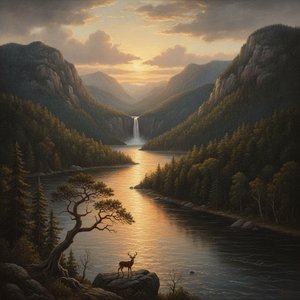
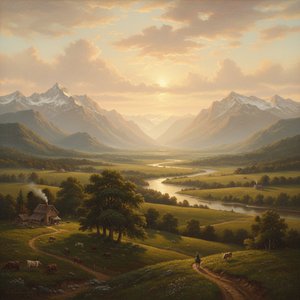
The mid-19th century witnessed the blossoming of a uniquely American artistic voice – the Hudson River School. More than simply a geographical designation, it represented a profound shift in aesthetic sensibility, one that celebrated the raw, untamed beauty of the North American landscape with an almost religious fervor. At its heart lay the vision of Thomas Cole, often hailed as the founder of this influential movement. Cole’s arrival in America from England in 1825 proved pivotal; he wasn't merely documenting scenery but responding to it with a deeply personal and spiritual intensity. His early travels along the Hudson River, punctuated by sketches capturing the dramatic cliffs, verdant valleys, and majestic skies, laid the foundation for a new kind of landscape painting – one imbued with Romantic ideals and a nascent sense of national identity.
Cole’s work wasn't about precise topographical accuracy; it was about evoking an emotional response. He sought to capture not just *what* he saw but *how* he felt in the presence of nature’s grandeur. This pursuit led him to explore themes of discovery, exploration, and the relationship between humanity and the natural world. His paintings often served as allegorical narratives, reflecting on the rise and fall of civilizations and the ephemeral nature of existence. The Hudson River Valley became his canvas, a microcosm for broader meditations on American destiny.
Capturing the American Sublime: Light, Atmosphere, and Detail in Early Luminism
 View of the Hudson River at Haverstraw Bay
Robert Havell’s "View of the Hudson River at Haverstraw Bay" captures a serene Romantic landscape. Oil painting, radiant light, & sublime beauty – a classic Hudson River School piece.
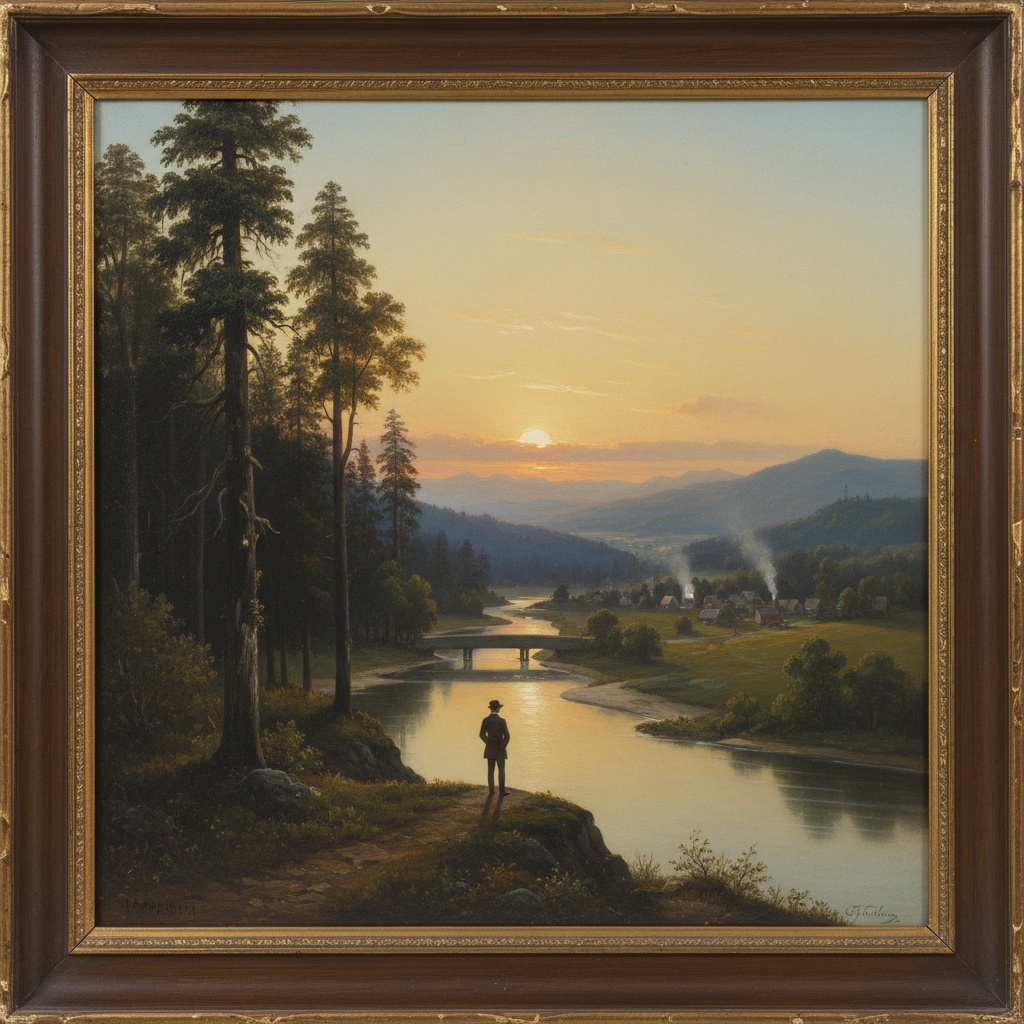
Emerging from the foundations laid by Cole, a distinct style began to coalesce within the Hudson River School – Luminism. This wasn’t a sudden break but rather an evolution, a refinement of techniques focused on capturing the ethereal qualities of light and atmosphere. Artists like Robert Havell Sr., with his exquisite depictions of the Hudson River, exemplified this shift. His “View of the Hudson River at Haverstraw Bay” is a testament to the power of radiant light and serene composition – a classic example of Romantic landscape painting. The emphasis moved towards tranquility, often depicting calm waters reflecting the soft hues of the sky.
The key characteristic of Luminism lay in its meticulous attention to detail and the concealment of visible brushstrokes. Artists sought to create an almost photographic realism, but one that wasn’t merely imitative. Instead, they aimed for a heightened sense of clarity and luminosity, emphasizing the subtle gradations of light and shadow. This technique required exceptional skill and patience, resulting in paintings that possessed a remarkable stillness and depth. The effect was profoundly calming, inviting viewers to immerse themselves in the scene and experience its peaceful beauty.
Beyond the Hudson: Expanding Landscapes and the Second Generation of Painters
The initial focus on the Hudson River Valley gradually expanded as a second generation of artists emerged following Cole’s untimely death in 1848. Figures like Frederic Edwin Church, John Frederick Kensett, and Sanford Robinson Gifford carried the torch, pushing the boundaries of the style and exploring new locales. Church, known for his dramatic depictions of South American landscapes and volcanic eruptions, brought a sense of epic scale to his work. Kensett, on the other hand, favored quieter scenes, focusing on the subtle nuances of light and atmosphere in New England coastal settings.
This expansion wasn’t merely geographical; it also reflected a growing interest in scientific observation. Artists meticulously studied atmospheric effects, geological formations, and botanical details, striving for an even greater degree of realism. The influence of European masters like Claude Lorrain and J.M.W. Turner remained evident, but the second-generation painters developed their own distinct voices, characterized by a heightened sense of tranquility and a more refined technique.
Narrative Threads: Exploration, Discovery, and the Romantic Ideal in 19th-Century America
 The Landing of Henry Hudson
Admire 'The Landing of Henry Hudson' by Robert Walter Weir (1838). A stunning Hudson River School painting depicting exploration & discovery. Authentic 19th-century art.
Underlying the aesthetic beauty of Hudson River School paintings was a powerful narrative – one deeply intertwined with the story of 19th-century America. Paintings often depicted scenes of exploration and discovery, celebrating the pioneers who ventured into the wilderness and tamed the frontier. Robert Walter Weir’s “The Landing of Henry Hudson” (1838) exemplifies this theme, portraying a pivotal moment in American history with a sense of grandeur and optimism. These works weren't simply historical records; they were imbued with Romantic ideals, celebrating the courage, resilience, and ingenuity of the early settlers.
The paintings also reflected a growing awareness of the fragility of nature. As settlement expanded, forests were cleared, rivers were dammed, and wildlife was hunted to near extinction. Artists like Cole began to express concerns about the impact of human activity on the environment, subtly warning against the dangers of unchecked progress. This underlying tension – between celebration of American expansion and a lament for its environmental consequences – adds another layer of complexity to these seemingly idyllic landscapes.
The Quietude of Reflection: Exploring the Emotional Resonance of Luminist Compositions
Luminism is a style of American landscape painting from the 1850s to 1870s, characterized by effects of light in a landscape, through the use of aerial perspective and the concealing of visible brushstrokes. Luminist landscapes emphasize tranquility,...
What truly sets Luminism apart is its ability to evoke a profound sense of emotional resonance. The paintings aren’t merely visually appealing; they invite contemplation, offering viewers a space for quiet reflection. The emphasis on tranquility, calm waters, and soft light creates an atmosphere of peace and serenity, allowing the viewer to connect with nature on a deeper level. This wasn't accidental; artists deliberately sought to create compositions that fostered introspection and spiritual renewal.
The absence of human figures in many Luminist paintings further enhances this sense of solitude and contemplation. The landscape itself becomes the protagonist, inviting viewers to project their own emotions and experiences onto the scene. This ability to connect with nature on a personal level is what continues to make these paintings so compelling today. They offer a respite from the chaos of modern life, reminding us of the enduring beauty and power of the natural world.
Legacy and Influence: The Enduring Appeal of American Landscape Painting
The Hudson River School and Luminism may have faded in popularity for a time, but their influence continues to be felt today. A renewed appreciation for these paintings emerged in the 1960s, coinciding with growing environmental awareness and a desire for simpler ways of life. The movement’s emphasis on tranquility, beauty, and the importance of preserving nature resonates deeply with contemporary audiences.
At OriginalUniqueArt.com, we are proud to offer museum-quality reproductions of these iconic American landscapes. From Thomas Cole's allegorical narratives to Robert Havell’s serene river scenes, our collection allows you to bring the beauty and tranquility of the Hudson River School into your own home. Explore our selection today and discover the enduring power of American landscape painting – a testament to the visionaries who first captured the sublime beauty of this extraordinary land.