

 Vaata sisu
 Jaga teost
 Jaga
Jaga
 Detailid
 Õppekate juhend

 Laadi alla
 Sarnased teosed
 Röntgenuuring
 Slaidietendus
 Statistika
Elijah
 Akrüülkainal
- Seinakunst
- Bezalel School Style
 1916
1916 90.0 x 91.0 cm
 Iisraeli muuseum
 Loe lähemalt
Sellel lehel kuvatav kunstiteos on kaitstud autoriõigusega, mis tähendab, et meil ei ole seaduslikku õigust luua või müüa identset reproduktsiooni. Seda kaitset rakendatakse rahvusvaheliste kokkulepete alusel, nagu näiteks Berne konventsioon ning riiklike seadustega, sealhulgas nendega, mida on sätestatud USA autoriõiguse seadus – 17. peatükk.
Austasena ja seaduslikuna alternatiivina pakume originaalist inspireeritud, käsitsi maalitud isikupärastatud teoseid. Meie osutavad ja professionalsed kunstnikud uurivad hoolikalt originaali stiili, meelemoi ja kunstilist olemust, et luua uus, ainulaadne teos, mis tekitab sama tunnet – olles samal ajal omaette originaalne looming.
See meetod järgib täielikult autoriõiguse reegleid, kuna see ei põhine kaitstud kunstiteose kopeerimisel või dupliteerimisel. Selle asemel on tegu loova reinterpreetatsiooniga – uue maaldisega, mis on algteosest inspireeritud, kuid ei ole sellest identiline.
Käsitsi valmistatud õlimaalireproduktsioon
Meie kunstnike poolt tellimusel valmistatud käsitsi maalitud õli-kainaste teos teie soovitud suuruses ja raamis. ( Lülita trükkitoodetele Ülemineku digitaalse pildi müügi kanalisse)




P118B €10

P118H €10

P118W €10

P438Z €10

P508JH €12

P508YH €12

P805H €10

P805Z €10

P919BZ €10

P919G €10

P919XJ €10

P959ZH €10

P968JZ €12

W106C €8

W218G €10

W218JH €8

W218Y €10

W307PJ €10

W316G €10

W316PJ €8

W316Y €10

W398PJ €8

W4111J €10

W500HY €15

W500JH €15

W692G €12

W849H €8

W940BG €15

W953PJ €8




Vali meie eelmääratud suurused, mis vastavad teose algupärastele proportsioonidele.

Sisestage vajalik laius ja kõrgus, et teos sobiks teie raamile või seinale. Kuna tegu on käsipainatud teosega, siis erineva kujuga suuruse korral võib kunstnik jätta pildi ümber veidi rohkem marginaali või lõigata osa ära — valik on teie. Enne maali alustamist saadame teile kinnitamiseks digitaalse näidisprojektsiooni. Sellel lehel näidatud pilt ei kajasta tegelikku tulemust — seda näitab ainult näidisprojekttsioon.
Pärast tellimust saadab OriginalUniqueArt.com meeskond kliendile e-posti juhised ning esitab eelvaate kavandi
Maailmline tarne 3–4 nädala jooksul tavalise 5 nädala asemel. (22 oktoober). Kvaliteedis kompromisse ei tehta.

Tasuta ekspresssaatmine üle maailma

Kõrgekvaliteediline lina-kangastest muld

Täielik transpordikindlustus

Tollimaksude tagastamise garantii

Värvitoime täpsuse garantii

100 päeva tagastusõigus (ainult defektide korral)

100% raha tagasi garantii

Hulgusoodustus
 Klaasivalik on saadaval ainult kuni 110 cm suuruses teostes

Elijah
Reproduktsiooni materjal
Reproduktsiooni mõõtmed
-


Lõppsumma
€ 262
Elijah – Een Symbool van Nationale Revitalisatie en Religieuze Erfenis
De prachtige reproductie van "Elijah" door Wolf Rawicki (Ravitzki), een kunstwerk uit 1916, vertegenwoordigt een hoogtepunt van de Bezalel School stijl en een belangrijke bijdrage aan het Israëlische kunstwereldbeeld. Deze imposante compositie, afkomstig uit Jeruzalem en gekocht als cadeau door Yossi Benyaminoff aan het Amerikaanse Vrienden Instituut voor het Israël Museum, biedt een fascinerende kijk op zowel artistieke innovatie als historische betekenis.- Beschrijving: Het kunstwerk is een gedetailleerde fotografie van een oude houten stoel die zorgvuldig gepresenteerd wordt in een museumsetting. De stoel staat bekend om zijn complexe houtsnijwerk, dat rijkelijk versierd is met biblische scènes en decoratieve elementen, waardoor het een centraal onderdeel vormt van de Bezalel School stijl. Een kleine fles staat bovenaan links in beeld, wat een subtiele contextuele dimensie aan de afbeelding geeft.
- Compositie: De fotografie maakt gebruik van een licht aangepakte perspectieflijn die een uitgebreide weergave biedt van de stoelstructuur en haar ornamentatie. De stoel wordt centraal geplaatst binnen het kader, waardoor directe aandacht wordt getrokken naar zijn gedetailleerde ontwerp. Een zorgvuldige compositie zorgt ervoor dat elk element optimaal tot blootstelling komt.
- Kleurenpalet: Het dominante kleurenschema bestaat uit warme aardetinten – verschillende tinten bruin en beige – afkomstig van het hout zelf. Accenten van goud of messing zijn zichtbaar in ingelegde delen, waardoor een rijke visuele ervaring wordt gecreëerd. Een vleugje blauw/groen komt voor bij bepaalde decoratieve details.
- Gebruik van lijnen: Sterke, gedefinieerde lijnen karakteriseren de houtsnijpatronen op de rugleuning en zijden van de stoel. Deze lijnen creëren een gevoel van diepte en complexiteit, waardoor het kunstwerk een dynamische kwaliteit krijgt. Gebogen lijnen zijn zichtbaar in het ontwerp van de zitting (vormgegeven als hoofd van een hond) en bepaalde ornamentale motieven.
- Vormen: De algemene vorm is die van een stijlvolle troonachtige stoel, met rechthoekige panelen en geometrische patronen geïntegreerd in het houtsnijwerk. Ronde vormen komen voor binnen sommige decoratieve elementen, wat bijdraagt aan de harmonieuze balans van het kunstwerk.
Küsimused ja vastused
Milline on teose „Elijah“, autor Wolf Rawicki (Ravitzki) värvitoon intensiivsus?
Teose „Elijah“, autor Wolf Rawicki (Ravitzki) värvid on Monokroomne intensiivsusega.
Milline on teose „Elijah“, autor Wolf Rawicki (Ravitzki) visuaalne heledus?
Teose „Elijah“, autor Wolf Rawicki (Ravitzki) tajutav heledus on kõrgema valguslahjususega. Seda saab kohandada mõeldud ruumi valgusest koos.
Kui palju valgust tundub värvid teosele "Elijah" peegeldatav olevat?
Teose „Elijah“, autor Wolf Rawicki (Ravitzki) kirjeldatud luminants on Valgusrikas.
Kunstniku elulugu
The Pioneering Vision of Ze’ev Raban: From Rawicki to the Soul of Israeli Art
Ze’ev Raban, born Wolf Rawicki in Kaunas, Russia, in 1890, stands as a monumental figure in the genesis of Israeli art. His journey wasn't merely that of an artist finding his voice; it was the forging of a new aesthetic identity for a nation yearning to express itself. Rawicki’s early life, steeped in the cultural currents of Eastern Europe, laid the foundation for a career dedicated to synthesizing tradition and modernity, culminating in works that became iconic symbols of a burgeoning national consciousness. He wasn't simply *a* painter; he was an architect of visual culture, deeply involved in shaping the artistic landscape of the nascent State of Israel.
Early Formation & The Bezalel School
Rawicki’s formal training took him across Europe – Munich, Paris, and Brussels – exposing him to the prevailing styles of the early 20th century. He absorbed the lessons of Jugendstil, Symbolism, and Art Nouveau, but these influences were never adopted wholesale. A crucial turning point came with his arrival at Bezalel Academy in Jerusalem in 1906. Bezalel, founded by Boris Schatz, was more than an art school; it was a crucible for creating a distinctly “Hebrew style.” This wasn’t about replicating historical forms but rather excavating the spirit of Jewish culture and translating it into contemporary artistic expression. Raban quickly became a central figure in this endeavor, embracing the challenge of defining what that aesthetic might look like.
A Synthesis of Tradition & Modernity
Raban's work is characterized by a remarkable ability to blend diverse influences. He sought inspiration not only from European art movements but also from traditional Jewish crafts, Islamic motifs, and the archaeological discoveries unfolding in Palestine. This fusion manifested in his decorative arts – silver Hanukkah lamps, ceremonial objects, furniture—where intricate carvings and stylized forms evoked ancient patterns while remaining firmly rooted in a modern sensibility. He believed that true Hebrew art wasn’t about imitation but about *interpretation* – distilling the essence of Jewish heritage into new artistic languages. His designs weren't merely beautiful; they were imbued with symbolic meaning, reflecting a deep connection to history and faith.
Major Achievements & The Capitoline Wolf
While Raban excelled in numerous mediums, his impact extended beyond individual artworks. He was instrumental in establishing the aesthetic principles of early Israeli design, influencing everything from typography to public monuments. Perhaps his most enduring legacy is the “Capitoline Wolf,” a silver menorah created for the Hebrew University on Mount Scopus in 1926. This piece, inspired by the Roman wolf that suckled Romulus and Remus, became a powerful symbol of Jewish resilience and national aspiration. It wasn’t simply a religious object; it was a statement about reclaiming heritage and forging a new future. The menorah's design, incorporating stylized Hebrew letters and motifs, resonated deeply with the Zionist movement and solidified Raban’s position as a leading artistic voice.
Historical Significance & Lasting Influence
Ze’ev Raban died in 1970, leaving behind a body of work that continues to inspire. He wasn't just an artist; he was a cultural pioneer who helped define the visual identity of Israel. His commitment to synthesizing tradition and modernity, his dedication to creating a distinctly Hebrew aesthetic, and his ability to imbue objects with profound symbolic meaning cemented his place as one of the most important figures in Israeli art history. His influence can be seen in the work of subsequent generations of artists and designers, who continue to grapple with the challenges of balancing cultural heritage with contemporary expression. Raban’s legacy is a testament to the power of art to shape national identity and inspire a sense of belonging.
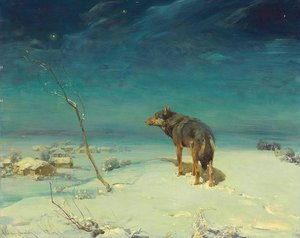
Wolf Rawicki (Ravitzki)
1890 - 1970 , Russia
Lühikest infot
- Full Name: Ze'ev Raban
- Nationality: Israeli
- Date Of Birth: 1890
- Date Of Death: 1970
- Place Of Birth: Kaunas, Russia
- Notable Artworks:
- Elijah
- Standing Hanukkah Lamp
- Capitoline Wolf
- Artistic Movement Or Style: Bezalel School Style
Sarnased artiklid
The Barbizon School: A Professional Guide to Naturalism and Landscape Mastery for Interior Designers
Explore the Barbizon School's mastery of naturalism. An expert guide for hotel designers and procurement managers on sourcing high-quality landscape reproductions to elevate hospitality and corporate interiors with authentic, large-scale fine art solutions.
Elizabeth Adela Forbes: A Pioneering Impressionist of the Newlyn School
Explore the life & art of Elizabeth Adela Forbes, a pioneering Impressionist of the Newlyn School. Discover her captivating paintings, unique style, and lasting legacy with OriginalUniqueArt.

The Hague School: Realism, Atmosphere & the Dawn of Dutch Impressionism
Explore the Hague School's pivotal role in Dutch art history. Discover realism, atmospheric landscapes & its influence on Impressionism. Learn about key artists like Mauve & Maris with OriginalUniqueArt.

The Sublime Landscape: Exploring the Hudson River School Movement
Explore the captivating world of the Hudson River School! Discover the history, artists, and defining characteristics of this iconic American art movement. Learn about Romanticism's influence & find inspiration for your collection.
Hudsoni jõe koolkonna 10 meistriteost: Kunst ja kodu
Avasta Hudsoni jõe koolkonna 10 vapustavat meistriteost! Bierstadt, Church jt legendid loonud romantilised loodusmaalingud. Kunstnikest lood ja värvid inspireerivad interjööri. Leia oma uus seinakaunastus OriginalUniqueArt.com-ist!
