

 Eelvaade
 Saada
Saada Jaga
Jaga
 Teave teose kohta

 Laadi alla
 Sarnased teosed
 Röntgenuuring
 Slaidietendus
The Virgin With Angels


 Loe lähemalt
Käsitsi valmistatud õlimaalireproduktsioon
Meie kunstnike poolt tellimusel valmistatud käsitsi maalitud õli-kainaste teos teie soovitud suuruses ja raamis. ( Osta print Osta pilt)




P118B $10

P118H $10

P118W $10

P438Z $10

P508JH $12

P508YH $12

P805H $10

P805Z $10

P919BZ $10

P919G $10

P919XJ $10

P959ZH $10

P968JZ $12

W106C $8

W218G $10

W218JH $8

W218Y $10

W307PJ $10

W316G $10

W316PJ $8

W316Y $10

W398PJ $8

W4111J $10

W500HY $15

W500JH $15

W692G $12

W849H $8

W940BG $15

W953PJ $8




Vali meie eelmääratud suurused, mis vastavad teose algupärastele proportsioonidele.

Sa võite sisestada oma mõõtmed konkreetse raami või ruumi sobivuse tagamiseks. Kui teie valitud suurus ei vasta originaalpildi proportsioonidele, siis kärvime kunstiteost või laiendame maali täiendavate käsitsi maalitud elementidega. Enne tootmise algust saadetakse teile heakskiitmiseks digitaalne eelvaade.
Palun pidage meeles, et ekraanil kuvatav eelvaade ei kajasta tegelikku kärpimist või laiendamist. Ainult eelvaade näitab täpselt lõplikku kompositsiooni.
Kuigi on saadaval kohandatud suurused, soovitame originaalproportsioonide säilimiseks valida mõõdud eelmääratletud nimekirjast.
Pärast tellimust saadab OriginalUniqueArt.com meeskond kliendile e-posti juhised ning esitab eelvaate kavandi.
Maailmline tarne 3–4 nädala jooksul tavalise 5 nädala asemel. (22 august). Kvaliteedis kompromisse ei tehta.

Tasuta ekspresssaatmine üle maailma

Kõrgekvaliteediline linakangas

Täielik transpordikindlustus

Tollimaksude tagastamise garantii

Värvitoime täpsuse garantii

60-päevane tagastusõig: ainult tootmisdefektide korral

100% raha tagasi garantii

Hulgusoodustus
 Klaasivalik on saadaval ainult suuruses kuni 110 cm

The Virgin With Angels
Reproduktsiooni tehnika
Reproduktsiooni suurus
-


Kogusumma
$ 300
Teose kirjeldus
A Vision of Heavenly Grace: Exploring Bouguereau’s ‘The Virgin With Angels’
William-Adolphe Bouguereau, a titan amongst Academic painters, achieved renown for his ability to distill the essence of classical ideals into breathtakingly realistic depictions. Born in La Rochelle in 1825, Bouguereau's artistic journey began with a fervent embrace of Raphael and Titian – masters whose influence would permeate every brushstroke of his oeuvre. This dedication to meticulous observation combined with an unwavering belief in inherent beauty resulted in canvases that transcend mere representation; they embody a profound spiritual contemplation. ‘The Virgin With Angels,’ completed in 1900, exemplifies this artistic philosophy perfectly.Subject Matter and Composition: Mythological Reverence Rendered Real
At its core, the painting presents a familiar biblical narrative – Mary cradling Jesus – yet Bouguereau elevates it beyond simple storytelling. He doesn’t merely portray figures; he sculpts them with light and shadow, imbuing them with palpable emotion. The Virgin Mary is positioned centrally, radiating serenity as she gazes upwards towards the angelic chorus surrounding her. This upward gaze symbolizes faith and aspiration, mirroring the divine realm above. Bouguereau skillfully arranges the angels in graduated tiers, creating a dynamic visual hierarchy that draws the viewer’s eye upwards, reinforcing the spiritual significance of the scene. The cloudy backdrop serves not merely as an atmospheric element but also contributes to the painting's contemplative mood, suggesting a timeless expanse beyond earthly concerns.Technique and Style: Bouguereau’s Pursuit of Idealized Perfection
Bouguereau’s technique is characterized by painstaking detail and masterful glazing – a process whereby thin layers of translucent paint are applied over subsequent opaque layers to achieve luminous color palettes and subtle tonal variations. This meticulous approach allowed him to capture the textures of fabric, skin, and drapery with astonishing accuracy, creating an illusion of palpable physicality despite the idealized figures depicted. The artist’s palette favors muted tones – creams, golds, and pale blues – reflecting the solemnity of the subject matter and enhancing the painting's ethereal quality. Bouguereau deliberately avoided Impressionistic brushstrokes, prioritizing clarity and precision to convey his vision of beauty as conceived by the Renaissance masters.Historical Context: The Salon Era and Artistic Ideals
‘The Virgin With Angels’ debuted during the height of the Salon era in Paris – a period defined by stringent artistic standards dictated by the Académie des Beaux-Arts. Bouguereau's work was celebrated for its adherence to classical principles, specifically those championed by Raphael and Michelangelo. The painting reflects the broader cultural preoccupation with religious iconography and moral virtue prevalent at the time. It speaks to an aesthetic sensibility that valued idealized form and harmonious composition above all else – a worldview sharply contrasted with the burgeoning Impressionist movement’s focus on capturing fleeting moments of sensory experience.Symbolism: Angels as Embodiments of Divine Grace
The angels depicted in ‘The Virgin With Angels’ are more than mere decorative elements; they represent divine grace and guardianship. Their luminous halos symbolize holiness, while their outstretched hands convey compassion and protection. The angels' gaze upwards signifies reverence for God and reinforces the painting’s spiritual message. Bouguereau skillfully utilizes symbolism to elevate the narrative beyond its literal depiction, inviting viewers to contemplate themes of faith, purity, and divine benevolence.Emotional Impact: A Balm for the Soul
Ultimately, ‘The Virgin With Angels’ transcends mere visual beauty; it evokes a profound emotional response. The painting's serene composition and luminous color palette instill a sense of tranquility and contemplation. It captures the essence of Christian piety – humility before God and unwavering devotion to Mary – offering viewers a timeless reminder of spiritual solace and artistic excellence.Kunstniku elulugu
William-Adolphe Bouguereau (1825-1905): The Master of Academic Realism
Born in 1825, amidst the vineyards and olive groves of La Rochelle, France, William-Adolphe Bouguereau’s life was destined to be a celebration of classical ideals and breathtaking realism. From an early age, his artistic inclinations were nurtured, leading him to Paris and the prestigious École des Beaux-Arts. There, under the guidance of François-Edouard Picquenot, he honed his skills, absorbing the lessons of the Old Masters – Raphael and Titian foremost among them. These influences weren’t mere imitation; they became the bedrock upon which Bouguereau built a unique artistic vision, one characterized by meticulous detail, luminous color palettes, and an unwavering commitment to portraying beauty in its most idealized form. He wasn't simply painting what he *saw*, but rather what he believed to be inherently beautiful, striving for a perfection that resonated with the aesthetic sensibilities of his time.Early Life and Artistic Training
Bouguereau’s formative years were marked by an innate fascination with art and a prodigious talent for draughtsmanship. Demonstrating exceptional aptitude from a young age, he quickly excelled at the École des Beaux-Arts in Paris, where he immersed himself in the study of anatomy and perspective – disciplines championed by Raphael and Titian. These masters served as guiding lights, shaping Bouguereau’s artistic sensibilities and instilling within him an unwavering dedication to anatomical accuracy and compositional harmony. He meticulously dissected cadavers, painstakingly recreating human forms with unparalleled precision, a practice that would become synonymous with his distinctive style. This rigorous training ensured that he possessed the technical mastery necessary to translate his vision of beauty onto canvas.The Style of Academic Realism
Bouguereau’s artistic style is undeniably academic realism—a term that encapsulates both its meticulous technique and its unwavering adherence to classical ideals. He achieved this remarkable feat through an unparalleled understanding of light, color, and form. His canvases are populated by figures rendered with astonishing detail – the delicate curve of a shoulder, the subtle flush of skin, the expressive depth of an eye. Yet, his work transcends mere technical skill; it’s infused with emotion and narrative power. He frequently depicted mythological scenes, transforming ancient tales into vibrant, emotionally resonant moments. *The Birth of Venus*, for example, isn't just a depiction of a goddess emerging from the sea; it’s a celebration of feminine grace and ethereal beauty—a testament to Bouguereau’s ability to capture idealized forms with breathtaking luminosity. Similarly, works like *Zenobia Found by Shepherds on the Banks of the Araxes* convey vulnerability and pathos with remarkable sensitivity. Beyond mythology, Bouguereau found inspiration in everyday life – shepherdesses tending their flocks, young girls at play—capturing these scenes with an exquisite attention to detail and atmosphere.Major Achievements and Recognition
Throughout his illustrious career, Bouguereau achieved widespread acclaim and garnered numerous awards from the Salon—Paris’s premier art exhibition. His paintings were consistently lauded for their technical brilliance and artistic integrity, establishing him as a dominant figure in 19th-century French painting. He became particularly celebrated for his depictions of female figures—particularly nude women—which embodied Bouguereau's mastery of anatomy and his unwavering commitment to portraying beauty with idealized grace. His works graced the collections of prominent museums across Europe, cementing his legacy as one of the most influential artists of his era. Notable masterpieces include *The Nymphaeum*, *Bergère 1886*, *Child at Bath*, *Song of the Angels (1881)* and *Birth of Venus*. These paintings exemplify Bouguereau’s ability to evoke wonder and spiritual transcendence—a testament to his artistic vision.A Lasting Influence
Despite facing criticism during his lifetime from avant-garde artists who championed abstraction, Bouguereau's influence endured beyond the initial shockwaves of modernism. His meticulous draftsmanship and anatomical precision continue to inspire contemporary figurative painters, demonstrating that Bouguereau’s artistic principles remain relevant in the 21st century. He fostered a spirit of intellectual rigor within the art world—a conviction that beauty could be achieved through careful observation and disciplined technique. Furthermore, Bouguereau championed the cause of women artists, actively advocating for their admission to prestigious academies during a period when opportunities for female painters were severely limited. Elizabeth Jane Gardner Bouguereau, his wife and fellow artist, stands as a poignant symbol of his unwavering belief in her talent—a testament to his enduring legacy as an innovator and humanist. His art continues to captivate audiences worldwide, securing its place among the most cherished treasures of European artistic heritage. He remains a pivotal figure in 19th-century French painting, representing the pinnacle of academic artistry and offering a timeless vision of beauty that resonates across generations.
William-Adolphe Bouguereau
1825 - 1905 , Prantsusmaa
Lühikesed faktid
- Artistic Movement Or Style: Akadeemiline realism
- Artists Who Influenced This Artist:
- Raphael
- Titian
- Date Of Birth: 1825
- Date Of Death: 1905
- Full Name: William-Adolphe Bouguereau
- Nationality: Prantsuse
- Notable Artworks:
- Tants
- Bergère
- Lapse vannimas
- Ingelööni laul
- Veenuse sünd
- Faneuse
- Place Of Birth: La Rochelle, France
Seotud artiklid

Neo-Classicism's Greatest Hits: 10 Masterpieces for Your Home |
Journey through Neo-Classicism's finest! Explore 10 iconic masterpieces by David, Ingres & Canova. Discover art history, techniques & timeless beauty – perfect for inspiring your home decor. Find museum-quality reproductions at
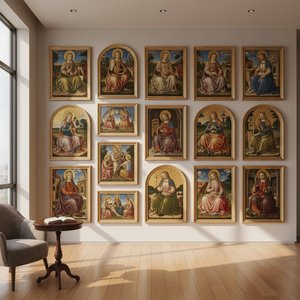
Fra Angelico: 25 meistriteost, mis täidavad kodu vaimsust ja ilu
Avastage Fra Angelico 25 võrratut meistriteost! Sukelduge renessansi kunstimaailma, religioossete freskode ja altarimaalide lummusesse. Leidke inspiratsiooni kodukaunistuseks OriginalUniqueArt.com-is – kvaliteetsed reproduktsioonid otse teie seinale. Vaadake kogu kollektsiooni online!

Divine Grace: An Art Historian's Journey Through Iconic Masterpieces of the Virgin Mary
Explore the profound beauty of Marian iconography through an art historian's lens. Discover iconic masterpieces by Raphael and Renaissance masters, celebrating the divine grace and timeless elegance of the Virgin Mary in classical fine art.
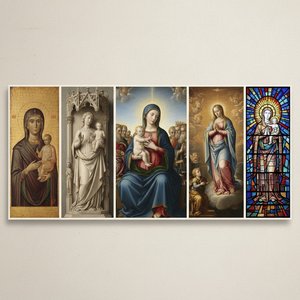
Divine Grace: A Journey Through the Most Iconic Depictions of the Virgin Mary in Art History
Embark on a profound journey through art history with our exploration of the most iconic depictions of the Virgin Mary. Discover the divine grace, symbolism, and masterful techniques found in Renaissance masterpieces and sacred iconography.
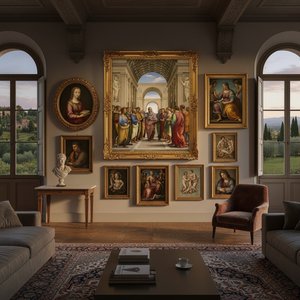
Raphaeli 25 parimat teost: Renessansi meistriteosed kodus – OriginalUniqueArt.com
Avastage Raphaeli 25 parimat teost! Sukeldu renessanssimaali ilu, luksuslikesse portreedesse ja atmosfäärilistesse freskode. Leia inspiratsiooni kodukaunistuseks OriginalUniqueArt.com-is – kvaliteetsed maalide reproduktsioonid ja kunstikollektsioonid.



