

 Vaata sisu
 Jaga teost
 Jaga
Jaga
 Detailid
 Õppekate juhend

 Laadi alla
 Sarnased teosed
 Röntgenuuring
 Slaidietendus
 Statistika
The Nymphaeum


 Loe lähemalt
Giclée / Kunstiprint
Muuseumikvaliteediga giclée- või kangasprint kiire tootmisega ja paindlikud viimistlusvõimalused. ( Telli käsitsi maalitud reproduktsioon Ülemineku digitaalse pildi müügi kanalisse)




P118B €10

P118H €10

P118W €10

P438Z €10

P508JH €12

P508YH €12

P805H €10

P805Z €10

P919BZ €10

P919G €10

P919XJ €10

P959ZH €10

P968JZ €12

W106C €8

W218G €10

W218JH €8

W218Y €10

W307PJ €10

W316G €10

W316PJ €8

W316Y €10

W398PJ €8

W4111J €10

W500HY €15

W500JH €15

W692G €12

W849H €8

W940BG €15

W953PJ €8




Vali meie eelmääratud suurused, mis vastavad teose algupärastele proportsioonidele.

Sisestage vajalik laius ja kõrgus, et see sobiks teie raamile või seinale. Trükki saab ainult lõigata, seda ei saa kunagi pildist suuremaks teha, seega ka differentse vormiga suurus kaotab osa pildist. Enne trükkimist saadame teile kinnitamiseks digitaalse näidisprojektsiooni. Sellel lehel näidatud pilt ei kujuta reaalset lõiget — seda näitab ainult näidisprojekttsioon.
Ülemaailmne tarne () 2 nädala jooksul, tavalise 4/5 nädala asemel. (22 oktoober)

Tasuta ekspresssaatmine üle maailma

Kõrgekvaliteediline lina-kangastest muld

Täielik transpordikindlustus

Tollimaksude tagastamise garantii

Värvitoime täpsuse garantii

100 päeva tagastusõigus (ainult defektide korral)

100% raha tagasi garantii

Hulgusoodustus
 Klaasivalik on saadaval ainult kuni 110 cm suuruses teostes

The Nymphaeum
Giclée / Kunstiprint
Reproduktsiooni mõõtmed
-


Lõppsumma
€ 70
The Allure of Myth in Bouguereau's Nymphaeum
To gaze upon William Adolphe Bouguereau’s The Nymphaeum is to step directly into a sun-dappled corner of classical mythology, a place where artifice and idealized nature merge seamlessly. This magnificent oil on canvas, painted in 1878, remains a quintessential embodiment of the academic tradition while simultaneously whispering secrets of timeless beauty. The scene itself transports us to an imagined sanctuary—a grotto or fountainhead where nymphs, embodiments of fresh water and untamed grace, gather in playful abandon. Bouguereau does not merely paint figures; he captures a moment suspended in amber, allowing the viewer to feel the warmth of the sun and hear the gentle murmur of unseen waters.
Mastery of Form and Light
Technically speaking, The Nymphaeum is a breathtaking display of academic realism. Bouguereau’s command over the human form is legendary, and here it shines with unparalleled brilliance. The composition itself is a carefully orchestrated ballet; the figures are arranged in a harmonious, almost circular flow that guides the eye across the canvas. Notice how the artist handles the interplay between light and shadow—it is not merely illumination, but an active participant in the narrative. Bouguereau uses his rich palette of vibrant blues, lush greens, and warm yellows to build a verdant atmosphere, making the skin tones appear luminous against the backdrop of foliage. Every fold of drapery, every strand of hair, possesses an intricate detail that speaks to countless hours of meticulous brushwork.
Symbolism and the Classical Ideal
The subject matter—nymphs frolicking near a fountain—is deeply rooted in Greco-Roman mythology. Nymphs were spirits associated with nature, embodying fertility, beauty, and the wild vitality of the natural world. By choosing this theme, Bouguereau taps into humanity’s enduring fascination with idealized femininity and pastoral bliss. The painting functions as an ode to classical perfection; it suggests a moment untouched by the grime of modern life, existing instead in a realm where art and nature are one. For the collector or decorator, owning such a piece is not just acquiring art; it is curating an atmosphere of elevated, timeless elegance for your space.
An Enduring Emotional Resonance
What makes The Nymphaeum so captivating beyond its technical merits is its emotional resonance. There is a palpable sense of joy and languid intimacy among the figures. They interact with one another, their poses suggesting shared secrets and carefree moments. This dynamic yet balanced energy allows the viewer to project their own feelings onto the scene—a yearning for such unburdened beauty. Whether you are seeking a focal point that speaks to historical grandeur or an artwork that simply elevates the spirit, Bouguereau’s mastery ensures that this piece remains perpetually captivating, offering a glimpse into a perfected, mythic reality.
Küsimused ja vastused
Millast ajastu kuulub teos "The Nymphaeum"?
Teose „The Nymphaeum“, autor William-Adolphe Bouguereau ajalooline periood on 19th Century. See klassifikatsioon aitab teost kunstiloostikuliselt paikata.
Milline kunstnik ja milline stiil seisavad teose "The Nymphaeum" taga?
Teose "The Nymphaeum" taga on William-Adolphe Bouguereau ja Academic Realism suunad.
Kust koht sellest teosest "The Nymphaeum" on William-Adolphe Bouguereau laupikus?
William-Adolphe Bouguereau loominguses kuulub teos "The Nymphaeum" Academic Realism stiilile, kandes endas ka teemasid nagu classical greek mythology inspiration, bouguereau's academic mastery of form, celebration of idealized female beauty.
Kunstniku elulugu
William-Adolphe Bouguereau (1825-1905): The Master of Academic Realism
Born in 1825, amidst the vineyards and olive groves of La Rochelle, France, William-Adolphe Bouguereau’s life was destined to be a celebration of classical ideals and breathtaking realism. From an early age, his artistic inclinations were nurtured, leading him to Paris and the prestigious École des Beaux-Arts. There, under the guidance of François-Edouard Picquenot, he honed his skills, absorbing the lessons of the Old Masters – Raphael and Titian foremost among them. These influences weren’t mere imitation; they became the bedrock upon which Bouguereau built a unique artistic vision, one characterized by meticulous detail, luminous color palettes, and an unwavering commitment to portraying beauty in its most idealized form. He wasn't simply painting what he *saw*, but rather what he believed to be inherently beautiful, striving for a perfection that resonated with the aesthetic sensibilities of his time.Early Life and Artistic Training
Bouguereau’s formative years were marked by an innate fascination with art and a prodigious talent for draughtsmanship. Demonstrating exceptional aptitude from a young age, he quickly excelled at the École des Beaux-Arts in Paris, where he immersed himself in the study of anatomy and perspective – disciplines championed by Raphael and Titian. These masters served as guiding lights, shaping Bouguereau’s artistic sensibilities and instilling within him an unwavering dedication to anatomical accuracy and compositional harmony. He meticulously dissected cadavers, painstakingly recreating human forms with unparalleled precision, a practice that would become synonymous with his distinctive style. This rigorous training ensured that he possessed the technical mastery necessary to translate his vision of beauty onto canvas.The Style of Academic Realism
Bouguereau’s artistic style is undeniably academic realism—a term that encapsulates both its meticulous technique and its unwavering adherence to classical ideals. He achieved this remarkable feat through an unparalleled understanding of light, color, and form. His canvases are populated by figures rendered with astonishing detail – the delicate curve of a shoulder, the subtle flush of skin, the expressive depth of an eye. Yet, his work transcends mere technical skill; it’s infused with emotion and narrative power. He frequently depicted mythological scenes, transforming ancient tales into vibrant, emotionally resonant moments. *The Birth of Venus*, for example, isn't just a depiction of a goddess emerging from the sea; it’s a celebration of feminine grace and ethereal beauty—a testament to Bouguereau’s ability to capture idealized forms with breathtaking luminosity. Similarly, works like *Zenobia Found by Shepherds on the Banks of the Araxes* convey vulnerability and pathos with remarkable sensitivity. Beyond mythology, Bouguereau found inspiration in everyday life – shepherdesses tending their flocks, young girls at play—capturing these scenes with an exquisite attention to detail and atmosphere.Major Achievements and Recognition
Throughout his illustrious career, Bouguereau achieved widespread acclaim and garnered numerous awards from the Salon—Paris’s premier art exhibition. His paintings were consistently lauded for their technical brilliance and artistic integrity, establishing him as a dominant figure in 19th-century French painting. He became particularly celebrated for his depictions of female figures—particularly nude women—which embodied Bouguereau's mastery of anatomy and his unwavering commitment to portraying beauty with idealized grace. His works graced the collections of prominent museums across Europe, cementing his legacy as one of the most influential artists of his era. Notable masterpieces include *The Nymphaeum*, *Bergère 1886*, *Child at Bath*, *Song of the Angels (1881)* and *Birth of Venus*. These paintings exemplify Bouguereau’s ability to evoke wonder and spiritual transcendence—a testament to his artistic vision.A Lasting Influence
Despite facing criticism during his lifetime from avant-garde artists who championed abstraction, Bouguereau's influence endured beyond the initial shockwaves of modernism. His meticulous draftsmanship and anatomical precision continue to inspire contemporary figurative painters, demonstrating that Bouguereau’s artistic principles remain relevant in the 21st century. He fostered a spirit of intellectual rigor within the art world—a conviction that beauty could be achieved through careful observation and disciplined technique. Furthermore, Bouguereau championed the cause of women artists, actively advocating for their admission to prestigious academies during a period when opportunities for female painters were severely limited. Elizabeth Jane Gardner Bouguereau, his wife and fellow artist, stands as a poignant symbol of his unwavering belief in her talent—a testament to his enduring legacy as an innovator and humanist. His art continues to captivate audiences worldwide, securing its place among the most cherished treasures of European artistic heritage. He remains a pivotal figure in 19th-century French painting, representing the pinnacle of academic artistry and offering a timeless vision of beauty that resonates across generations.
William-Adolphe Bouguereau
1825 - 1905 , Prantsusmaa
Lühikest infot
- Artistic Movement Or Style: Akadeemiline realism
- Artists Who Influenced This Artist:
- Raphael
- Titian
- Date Of Birth: 1825
- Date Of Death: 1905
- Full Name: William-Adolphe Bouguereau
- Nationality: Prantsuse
- Notable Artworks:
- Tants
- Bergère
- Lapse vannimas
- Ingelööni laul
- Veenuse sünd
- Faneuse
- Place Of Birth: La Rochelle, France
Sarnased artiklid
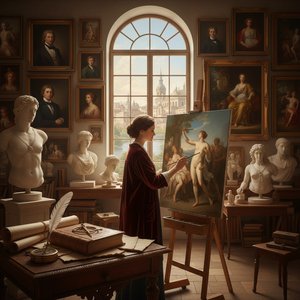
Academic Realism: Technique, History & Enduring Influence on Art
Explore the captivating world of Academic Realism! Discover key artists, techniques & its lasting impact on art history. Expert insights & high-quality reproductions at OriginalUniqueArt.
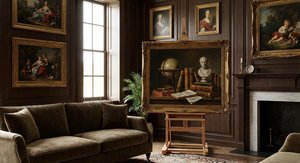
Academic Realism's Finest: 10 Masterpieces for Art Lovers & Home Decor
Explore 10 defining Academic Realism masterpieces by Bouguereau, Gérôme & Cabanel. Discover the stories behind these iconic paintings and bring timeless art into your home with museum-quality reproductions from OriginalUniqueArt.com. Explore the full collection online!

Mastering Perfection: A Definitive Guide to the Elegance and Precision of Academic Classicism
Explore the rigorous beauty of Academic Classicism. Discover the principles of order, precision, and historical reverence that define this timeless art movement through an expert guide to its enduring legacy and technical mastery.

The Beauty of Perfection: A Journey Through the Rigor and Radiance of Academic Realism
Explore the profound elegance of Academic Realism. Discover how meticulous observation, anatomical precision, and the pursuit of ideal beauty created a timeless legacy of technical mastery and emotional depth in the world's most revered art academies.
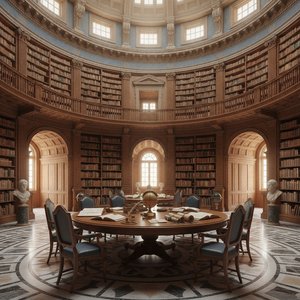
The Timeless Elegance of Academic Classicism: A Journey Through Order, Precision, and the Pursuit of Perfection
Explore the profound beauty of Academic Classicism. Discover how masters used order, precision, and classical ideals to achieve timeless perfection in art history, from Neoclassical portraits to the pursuit of ideal beauty.

