

 Eelvaade
 Saada
Saada Jaga
Jaga
 Teave teose kohta

 Laadi alla
 Sarnased teosed
 Röntgenuuring
 Slaidietendus
 Statistika
Philosopher and His Pupils
 Loe lähemalt
Giclée / Kunstiprint
Muuseumikvaliteediga giclée- või kangasprint kiire tootmisega ja paindlikud viimistlusvõimalused. ( Osta käsitsi maalitud maal Ülemineks digitaalse pildiga müügi kanalisse)




































Vali meie eelmääratud suurused, mis vastavad teose algupärastele proportsioonidele.

Saate sisestada oma mõõdud, et need sobiks konkreetse raami või ruumi sisse. Kui valitud suurus ei vasta originaalteose proportsioonidele, lõigame teose ära või laiendame pilti peegeldatud või ühtlase servaga. Enne tootmisprotsessi algust saadetakse Teie kinnitamiseks digitaalne näidis.
Palun märka, et ekraanil kuvatav eelvaade ei kajasta tegelikku lõigamist või laiendamist. Ainult näidis kujutab täpselt lõplikku kompositsiooni.
Kuigi erimõõdu on saadaval, soovitame originaaproportsioonide säilitamiseks valida mõõt ette määratud nimekirjast.
Ülemaailmne tarne () 2 nädala jooksul, tavalise 4/5 nädala asemel. (19 september)

Tasuta ekspresssaatmine üle maailma

Kõrgekvaliteediline linakangas

Täielik transpordikindlustus

Tollimaksude tagastamise garantii

Värvitoime täpsuse garantii

100 päeva tagastusõigus (ainult tootmisdefektide korral)

100% raha tagasi garantii

Hulgusoodustus
 Klaasivalik on saadaval ainult suuruses kuni 110 cm

Philosopher and His Pupils
Giclée / Kunstiprint
Reproduktsiooni suurus
-


Kogusumma
$ 80
Kunstniku elulugu
The Master of Delft: The Life and Legacy of Willem van der Vliet
Willem van der Vliet was a painter whose brush captured the very essence of the Dutch Golden Age, an era defined by unparalleled cultural flourishing and artistic innovation. Born in the historic city of Delft around 1584, Van der Vliet lived and breathed the atmosphere of a Netherlands finding its voice on the global stage. His life, which concluded in his beloved birthplace in 1642, was deeply intertwined with the artistic traditions of his region. While history sometimes places him in the shadow of more famous contemporaries, his contributions to the genres of historical allegory and portraiture remain a testament to his technical mastery and his ability to weave complex narratives through paint. The foundations of Van der Vliet’s artistry were laid through a lineage of mentorship and familial connection. He served as a mentor to his nephew, Hendrick Cornelisz. van Vliet, an artist who would later become renowned for his architectural perspectives. This relationship suggests a workshop environment where the principles of spatial depth and structural accuracy were passed down with great care. Through this lineage, one can trace the influence of masters like Michiel Jansz van Mierevelt, whose expertise in portraiture likely informed the refined manner in which Willem approached the human face and the social standing of his subjects.A Symphony of Light and Perspective
To encounter a work by Van der Vliet is to experience a profound command over the illusion of space. He was a master of architectural perspective, utilizing linear techniques to construct environments that felt remarkably tangible. His ability to render buildings and landscapes with such precision allowed him to create more than just scenery; he built stages for moral and allegorical dramas. These compositions were never merely decorative; they were carefully staged scenes designed to transport the viewer into a world where grandeur and meaning coexisted. This sense of depth was further heightened by his sophisticated use of chiaroscuro. Van der Vliet possessed a rare ability to manipulate dramatic lighting, using sharp contrasts between light and shadow to carve figures out of the darkness. In his portraits, this technique served a dual purpose: it provided a structural weight to the subjects, giving them a palpable presence, and it highlighted the luxurious textures of the era—the soft sheen of leather, the crispness of a linen collar, or the heavy warmth of fur. This interplay of light and shadow did not just illuminate the canvas; it breathed life into the very fabric of his subjects' identities.The Soul of the Dutch Golden Age
Beyond the technical brilliance of his brushwork, Van der Vliet’s work serves as a vital historical window into the social fabric of seventeenth-century Delft. His portraits were potent instruments of status and self-assurance. When he painted a man seated in an ornate chair, draped in dark, expensive attire, he was recording much more than a likeness; he was documenting the mercantile success and the quiet authority of a rising class of Dutch citizens. Every fold of fabric and every carefully placed shadow spoke to the wealth and dignity of the era. The historical significance of Willem van der Vliet lies in his role as a bridge between the rigid traditions of the past and the expressive innovations of the Golden Age. His works, ranging from intimate portraits like Portrait of a Man to complex allegories, continue to captivate art historians by offering a glimpse into a period of immense transformation. Through his meticulous attention to detail and his mastery of light, Van der Vliet ensured that the spirit of Delft would endure, leaving behind a legacy of evocative beauty that remains as striking today as it was in the seventeenth century.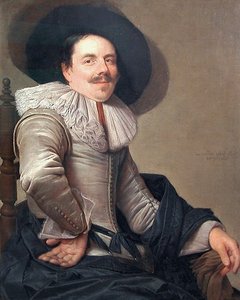
Willem van der Vliet
1584 - 1642 , Netherlands
Lühikesed faktid
- Artistic Movement Or Style: Golden Age Art
- Artists Or Movements Influenced By This Artist: ['Hugo van der Goes']
- Artists Who Influenced This Artist: ['Michiel van Mierevelt']
- Date Of Birth: ca. 1584
- Date Of Death: 1642
- Full Name: Willem van der Vliet
- Nationality: Dutch
- Notable Artworks:
- Portrait of a Man
- An Allegory
- Portrait of an Unknown Boy
- Place Of Birth: Delft, Netherlands