Eelvaade
 Saada
Saada Jaga
Jaga
 Teave teose kohta
 Juhend

 Laadi alla
 Sarnased teosed
 Röntgenuuring
 Slaidietendus
 KÜSIMUSED JA VASTUSID
 Statistika
Valge Must Арх


 Loe lähemalt
Giclée / Kunstiprint
Muuseumikvaliteediga giclée- või kangasprint kiire tootmisega ja paindlikud viimistlusvõimalused. ( Osta käsitsi maalatud teos Lülita digitaalse pildi juurde)




P118B €10

P118H €10

P118W €10

P438Z €10

P508JH €12

P508YH €12

P805H €10

P805Z €10

P919BZ €10

P919G €10

P919XJ €10

P959ZH €10

P968JZ €12

W106C €8

W218G €10

W218JH €8

W218Y €10

W307PJ €10

W316G €10

W316PJ €8

W316Y €10

W398PJ €8

W4111J €10

W500HY €15

W500JH €15

W692G €12

W849H €8

W940BG €15

W953PJ €8




Vali meie eelmääratud suurused, mis vastavad teose algupärastele proportsioonidele.

Sisestage vajalik laius ja kõrgus, et see sobiks teie raamile või seinale. Trükki saab ainult lõigata, seda ei saa kunagi pildist suuremaks teha, seega ka erineva mustega suurus kaotab osa pildist. Enne trükkimist saadame teile kinnitamiseks digitaalse näidisprojektsiooni. Sellel lehel näidatud pilt ei kujuta reaalset lõiget — seda näitab ainult näidisprojektsioon.
Ülemaailmne tarne () 2 nädala jooksul, tavalise 4/5 nädala asemel. (7 november)

Tasuta ekspresssaatmine üle maailma

Kõrgekvaliteediline lina-kangas

Täielik transpordikindlustus

Tollimaksude tagastamise garantii

Värvitoime täpsuse garantii

100 päeva tagastusõigus (ainult valmistusdefektide korral)

100% raha tagasi garantii

Hulgusoodustus
 Klaasivalik on saadaval ainult kuni 110 cm suuruses teostes

Valge Must Арх
Giclée / Kunstiprint
Reproduktsiooni suurus
-


Koguhind
€ 72
A Symphony of Form and Color: Exploring Kandinsky’s ‘White Black Arch’
Wassily Kandinsky on tuntud kui suur nimi kunstihistoorias, revolutsiooniline mees, kes julges vabaneda maobjekti tõelistest kujude ja värvide vahetusest ning uurida nende sügavat, provokatiivset jõudu. “White Black Arch” (Valge Must Arh) on just selline – see näide revolutsioonilisest lähenemisviisist, mis ei pakuks vaatajale pildi *mõjust*, vaid kogemust *itsest*. See õli ja kampsunil tehtud töö on elav tõend Kandinsky usu kunstide vaimsest tähendusest ja selle võimajõust suunda otsida inimese hingemaailma poole.Kompositsiooni Dekoosimine
Esmapilgub võib “White Black Arch” välja näha kui dünaamiline pind, mis on täis ühiseid kujundeid – ringe, kolmnurkade, jooni ja ebaselgeid vorme – kõik tehtud rikkalikus värvikombinatsioonis: punane, roheline, kollane, sinine, oranž ja valge. Kompositsiooni ei juurdu ühte selgesse keskpunkti, selle asemel kutsub see vaatajat mööda pinda ringlema, tänu annu värvidele ja geomeetrilistele kujunditele. Erilist huvi pakuvad kaks toolimõrista – üks on asetatud vasemasse ülemisse nurka ja teine paremasse alumisesse. Need elemendid lisavad abstrakti kujundusele natuke tuttatavat vormi, mis paneb küpsama küsimusi: kas need on meeleolusid, inimloomuse jäljejäänuseid või lihtsalt kompositsioonilisi vahendeid?Expresssionism ja Sisemine Taradus
“White Black Arch” on sügavalt juurdunud Expresssionismi põhimõtetes – kunstiliikumises, mis pidas esikohale subjektiivset emotsiooni kogemist objektiivse reaalsuse ees. Kandinsky ei tahtnud jäljendada välismaailma; ta soovis väljendale oma *siset* maailma – tundeid, mõtteid ja vaimseid nägemusi abstraktsusega. Värvid pole valitud nende representatsiooniliste omaduste põhjal, vaid nende sisemise emotsionaalse tähenduse järgi. Punane võib sümboliseerida energiat või põnevust, sinine – rahu või vaimsust ja nii edasi. See “sisemise taru” rõhutamine, mida Kandinsky nimetas, on tema kunstilises filosoofias oluline osa.Ajalooline Kontekst: Esindusest Abstrakti Poole
20. sajandi alguses oli maailm sügavasti muutumas – kiirendati tööstust, arenesid teaduslikud leiud ja kasvav muretsoon modernima maailma suhtest. Traditsioonilised kunstikunstide konventsioonid hakkasid küsitama, kuna kunstnikud otsisid uusi viise oma ajastu keerukuste väljendamiseks. Kandinsky teekonna abstrakti poole ei olnud äkki; see arenes lihtsustamise ja eksperimentimise faaside kaudu. Ta mõjutas vaimseid liikumisi nagu Theosophy, mis uskusid, et kunst võib olla vaimse ärkamise vahendus ja ületada materiaalse reaalsuse piire. Tema töö aitas otseselt abstrakti kunsti arendamist, avas uued teed tulevastele kunstnikele.Sümbolism ja Interpretatsioon
Kuigi Kandinsky vastistas kindlate tähenduste määramist oma töödele, usudes, et iga vaataja peaks saama omada ainulaadset kogemust, on mõned sümbolilised tõlgendused võimalikud. Arh – see võib olla uks või ülemineku koht – materiaalsest ja vaimsest maailmast. Toolid võivad sümboliseerida inimloomust, meeleolusid või isegi soovimist. See on aga vaid ettepanek; “White Black Arch” tugevus on selle ähmastes ja avatud tõlgenduste võimalustes.Emotsionaalne Resonants ja Pärand
“White Black Arch” tekitab erinevaid emotsioone – energiat, jõudu, pinget ja isegi ebamõistliku tuju. Maali elavad värvid ja tükeldatud kujundid on visuaalne kogemus, mis on samal ajal ärgates ja häiritav. Kandinsky töö inspireerib tänapäevalgi kunstnike, disainerite ja kunsti austajate. Tema mõju on näha paljudes abstraktsetes kunstiteostes ning ka graafikas, arhitektuuris ja muusikas. Solomon R. Guggenheimi muuseum New Yorgis uhkusega esitab tema meistrid, et tagada, et tema pärand jääb generaatsioonideks.- Stiil: Expresssionism, Abstraktne Kunst
- Tehnika: Ööl värvitud kangastel
- Põhid: Vaimsuse, Sisemise Kogemuse, Värvide Teooria, Abstrakti
- Emotsionaalne Mõju: Dünaamiline, Energiline, Provokatiivne, Muistlik
Korduvad küsimused
Kust saan alla laadida „Valge Must Арх“, autor Vasili Vassiljevich Kandinski?
Teose „Valge Must Арх“, autor Vasili Vassiljevich Kandinski digitaalset pilti saab alla laadida selle teose Laadi alla lehelt: kõrge resolutsiooniga digitaalse pildi allalaadimine.
Millist tunnet "Valge Must Арх" edastab?
Teose „Valge Must Арх“, autor Vasili Vassiljevich Kandinski emotsionaalne toon on Energiline. See kokkuvõtab tunnet, mida teos väljendab.
Kas ma saan teost „Valge Must Арх“, autor Vasili Vassiljevich Kandinski enne tellimist eelvaatata?
Teose „Valge Must Арх“, autor Vasili Vassiljevich Kandinski eelvaade on saadaval teose Eelvaade lehel.
Kunstniku elulugu
A Life Immersed in Color and Spirit
Wassily Wassilyevich Kandinsky, born in Moscow in 1866, was a revolutionary figure who irrevocably altered the course of modern art. His journey wasn’t one of immediate artistic calling; initially destined for a career in law and economics at the University of Moscow, it was a profound encounter with Impressionist painting – specifically Claude Monet's “Haystacks” – and a deeply moving experience witnessing Wagner’s opera "Lohengrin" that ignited within him an irrepressible desire to pursue art. This pivotal moment, occurring around age thirty, marked not merely a career change but a complete transformation of perspective, setting him on a path toward pioneering abstraction.
Early influences included Russian folk art, gleaned from an ethnographic expedition to the Vologda region in 1889, which instilled a fascination with vibrant color palettes and symbolic imagery. This foundation would prove crucial as he began to develop his unique artistic language. These early explorations weren’t simply about aesthetic preference; they were rooted in a deep cultural connection and a burgeoning understanding of how art could communicate beyond the literal.
The Dawn of Abstraction: From Expressionism to Inner Necessity
Kandinsky’s early works reveal a strong expressionistic bent, characterized by bold colors and emotional intensity – pieces like “Papeln (Poplars)” from 1902 exemplify this period. However, he wasn't content with merely representing the external world; he sought to express inner realities, spiritual truths that transcended mere visual depiction. This quest led him gradually away from representational art and toward a revolutionary exploration of color, form, and their emotional resonance.
He began to believe that colors possessed inherent psychological effects, capable of evoking specific feelings and sensations in the viewer. This conviction was deeply intertwined with his burgeoning interest in Theosophy, a spiritual movement emphasizing esoteric knowledge and universal brotherhood. As he delved deeper into these ideas, Kandinsky’s paintings became increasingly non-objective, shedding recognizable forms in favor of abstract compositions driven by an “inner necessity.” This wasn't simply about abandoning representation; it was about discovering a new visual language capable of expressing the intangible realms of emotion and spirituality.
Geometric Harmony and Spiritual Resonance
The period following his involvement with the influential artist group Der Blaue Reiter (The Blue Rider), which he co-founded in Munich in 1911, saw a further evolution in Kandinsky’s style. While earlier works often featured fluid, organic shapes, he began to explore geometric abstraction, focusing on the interplay of circles, triangles, and squares. “Several Circles” (140 x 140 cm) stands as a prime example of this phase – a dynamic composition where color and form interact in a harmonious yet energetic dance.
This wasn't cold or sterile geometry; rather, it was imbued with spiritual significance. Kandinsky believed that geometric shapes possessed inherent symbolic meaning, and their arrangement within the canvas could evoke specific emotional responses. His theoretical writings, most notably “Concerning the Spiritual in Art” (1911), articulated these beliefs, laying the groundwork for a new understanding of abstract art as a vehicle for expressing profound spiritual truths. He argued that art should not aim to imitate nature but rather to reveal the artist’s inner world and connect with the viewer on a deeper, more intuitive level.
Bauhaus Influence and Lasting Legacy
The outbreak of World War I forced Kandinsky's return to Russia in 1914, but following the Russian Revolution, he found himself increasingly at odds with the prevailing artistic climate. In 1920, he accepted a teaching position at the Bauhaus school in Germany, where he profoundly influenced generations of artists with his theories on color, form, and abstraction. The Bauhaus provided an ideal environment for Kandinsky to further develop his ideas and explore new creative avenues.
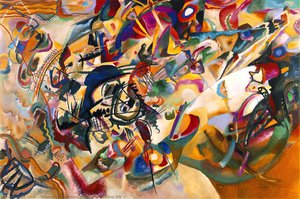
He continued to experiment with geometric forms and vibrant colors, often incorporating layered impasto techniques to create textured surfaces that added depth and complexity to his compositions – as seen in later works like “An Intimate Party” (1942). After the closure of the Bauhaus by the Nazi regime in 1933, Kandinsky moved to France, where he remained for the rest of his life. His impact on modern art is immeasurable; he is widely recognized as a pioneer of abstract expressionism and a key figure in the development of non-representational painting. His works are held in major museums worldwide, including the Tretyakov Gallery in Moscow, which houses his monumental “Composition VII,” a testament to his artistic vision and enduring legacy.
Kandinsky’s exploration of color, form, and spirituality continues to inspire artists today, solidifying his place as one of the most important figures in 20th-century art history. He didn't just paint pictures; he painted emotions, ideas, and the very essence of the human spirit.

Vasili Vassiljevich Kandinski
1866 - 1944 , Venemaa
Lühikest infot
- Artistic Movement Or Style: Abstract art, Expressionism
- Artists Or Movements Influenced By This Artist: ['Abstract Expressionism']
- Artists Who Influenced This Artist:
- Claude Monet
- Richard Wagner
- Date Of Birth: 1866
- Date Of Death: 1944
- Full Name: Wassily Wassilyevich Kandinsky
- Nationality: Russian, French
- Notable Artworks:
- Murnau with Rainbow
- Tempered Elan
- Several Circles
- Place Of Birth: Moscow, Russia
Sarnased artiklid

Geomeetrilise Abstraktsiooni 10 Meisterteost: Kunst ja Kodukaunistus OriginalUniqueArt.com-is
Avastage geomeetrilise abstraktsiooni 10 suurteost – Kandinsky, Mondrian ja teised. Lugege kunstiteoste lugusid ning leidke inspiratsiooni kodukaunistuseks OriginalUniqueArt.com-is! Kunstikollektsioon ja reprodutsioonid.

White on Canvas: 10 Masterpieces & Timeless Elegance for Your Home Decor
Explore 10 iconic white paintings by Monet, Whistler & Rothko! Discover the stories behind these serene masterpieces and their impact on art history. Find museum-quality reproductions for your home decor at .

Mastering Abstraction: The 25 Most Iconic Works by Wassily Kandinsky
Explore 25 iconic Kandinsky masterpieces and the birth of abstraction. Discover the full collection online at OriginalUniqueArt.com.

Abstract Ekspressionismi 10 Meisterteost: Kunsti ja Sisustamise Klassikat
Sukeldu abstraktse ekspressionismi maailma! Avasta 10 legendaarset kunstiteost – Pollock, Rothko jt. – ja nende loo. Leia inspiratsiooni interjööriks ning kaunista kodu OriginalUniqueArt.com kvaliteetsete reproduktsioonidega. Uuri kollektsiooni!
The Soul of Color: A Journey into the Emotional Resonance of Lyrical Abstraction
Embark on a cultural journey through Lyrical Abstraction. Explore how masters like Kandinsky used color and motion to translate emotion into visual poetry. Discover the profound beauty of abstract expressionism and learn to curate emotional resonance in your own art collection.