- Avaleht

- Trükk lõendile
- Vasili Vassiljevich Kandinski
- Improvisation 5

 Eelvaade
 Saada
Saada Jaga
Jaga
 Teave teose kohta

 Laadi alla
 Sarnased teosed
 Röntgenuuring
 Slaidietendus
Improvisation 5


 Loe lähemalt
Giclée / Kunstiprint
Muuseumikvaliteediga giclée- või kangasprint kiire tootmisega ja paindlikud viimistlusvõimalused. ( Lülita käsitsi maalatud版本le Vaata pilti)




P118B $10

P118H $10

P118W $10

P438Z $10

P508JH $12

P508YH $12

P805H $10

P805Z $10

P919BZ $10

P919G $10

P919XJ $10

P959ZH $10

P968JZ $12

W106C $8

W218G $10

W218JH $8

W218Y $10

W307PJ $10

W316G $10

W316PJ $8

W316Y $10

W398PJ $8

W4111J $10

W500HY $15

W500JH $15

W692G $12

W849H $8

W940BG $15

W953PJ $8




Vali meie eelmääratud suurused, mis vastavad teose algupärastele proportsioonidele.

Saate sisestada oma mõõdud, et need sobiks konkreetse raami või ruumi sisse. Kui valitud suurus ei vasta originaalteose proportsioonidele, lõigame teose ära või laiendame pilti peegeldatud või ühtlase servaga. Enne tootmisprotsessi algust saadetakse Teie kinnitamiseks digitaalne näidis.
Palun märka, et ekraanil kuvatav eelvaade ei kajasta tegelikku lõigamist või laiendamist. Ainult näidis kujutab täpselt lõplikku kompositsiooni.
Kuigi erimõõdu on saadaval, soovitame originaaproportsioonide säilitamiseks valida mõõt ette määratud nimekirjast.
Ülemaailmne tarne () 2 nädala jooksul, tavalise 4/5 nädala asemel. (31 juuli)

Tasuta ekspresssaatmine üle maailma

Kõrgekvaliteediline linakangas

Täielik transpordikindlustus

Tollimaksude tagastamise garantii

Värvitoime täpsuse garantii

60-päevane tagastusõig: ainult tootmisdefektide korral

100% raha tagasi garantii

Hulgusoodustus
 Klaasivalik on saadaval ainult suuruses kuni 110 cm

Improvisation 5
Giclée / Kunstiprint
Reproduktsiooni suurus
-


Kogusumma
$ 81
Kogumuse kirjeldus
A Burst of Inner Harmony: Exploring Kandinsky’s ‘Improvisation 5’
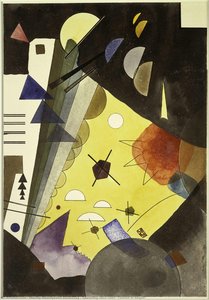
Wassily Kandinsky stands as a monumental figure in the history of modern art, a true pioneer who dared to liberate painting from its traditional representational constraints. As a leading theorist and practitioner of abstract art, he believed deeply in the power of color and form to evoke emotion and spiritual resonance – principles vividly embodied in his 1911 masterpiece, Improvisation 5. This work isn’t merely a painting; it's a visual symphony, an attempt to translate inner experience directly onto canvas.Deconstructing the Composition: A World Beyond Representation
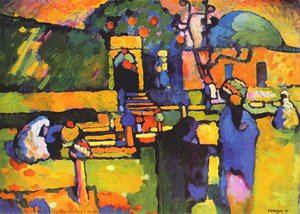
At first glance, Improvisation 5 appears as a dynamic interplay of vibrant hues and geometric shapes. The photo reveals a composition teeming with energy, featuring abstracted figures seemingly caught within an urban or architectural landscape. However, Kandinsky wasn’t aiming for realistic depiction. Instead, he employed flattened perspectives and bold blocks of color to create a sense of movement and emotional intensity. Rectangular forms suggest figures clad in colorful garments, their individual identities dissolving into the overall chromatic experience. The thick impasto brushstrokes are immediately apparent, adding texture and emphasizing the physicality of the paint itself – a testament to Kandinsky’s expressive technique.The Dawn of Abstraction: Historical Context & Artistic Movement
Created during a pivotal moment in art history, Improvisation 5 reflects the burgeoning spirit of abstraction that was challenging conventional artistic norms. While often categorized within Abstract Expressionism, it’s crucial to understand its roots in earlier movements like Expressionism. Kandinsky sought to move beyond merely portraying the external world and instead convey inner psychological states through purely abstract means. This period saw artists rejecting traditional academic styles, embracing experimentation, and prioritizing emotional impact over precise representation. His work directly influenced the development of non-objective art, paving the way for future generations of abstract painters.Symbolism & Emotional Resonance: A Language of Color
Kandinsky believed that colors possessed inherent spiritual qualities and could directly affect the viewer’s emotions. In Improvisation 5, the vibrant palette – a striking combination of yellows, oranges, blues, greens, and reds – isn't arbitrary. Each hue is carefully chosen to contribute to the painting’s overall emotional tone. The dynamic composition and interplay of colors evoke feelings of energy, tension, and perhaps even spiritual awakening. While specific interpretations remain open-ended, the work invites contemplation on themes of community, movement, and the human condition within a rapidly changing modern world.Technique & Materials: Impasto and the Power of Texture
Kandinsky’s masterful use of oil paints is evident in the visible brushstrokes and textured surface of Improvisation 5. The impasto technique – applying paint thickly to the canvas – adds a tactile quality, inviting viewers to engage with the artwork on a visceral level. This deliberate application of paint isn’t merely aesthetic; it's integral to Kandinsky’s expressive intent, emphasizing the artist’s hand and the materiality of the medium itself.Collecting & Interior Design: Bringing Abstract Harmony Home
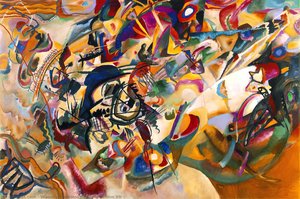
A reproduction of Improvisation 5 can serve as a stunning focal point in any modern or contemporary interior. Its bold colors and dynamic composition add energy and sophistication to living spaces, offices, or galleries. The artwork’s abstract nature allows it to complement a wide range of décor styles, from minimalist to eclectic. For collectors, owning a high-quality reproduction offers an opportunity to appreciate Kandinsky's genius and contribute to the enduring legacy of abstract art.- Explore related works by Wassily Kandinsky: Composition VII
- Discover more about the artist’s life and work: Wassily Kandinsky on Wikipedia
- Delve deeper into the artistic context of Modernism: Modernism on Wikipedia
Kunstniku elulugu
A Life Immersed in Color and Spirit
Wassily Wassilyevich Kandinsky, born in Moscow in 1866, was a revolutionary figure who irrevocably altered the course of modern art. His journey wasn’t one of immediate artistic calling; initially destined for a career in law and economics at the University of Moscow, it was a profound encounter with Impressionist painting – specifically Claude Monet's “Haystacks” – and a deeply moving experience witnessing Wagner’s opera "Lohengrin" that ignited within him an irrepressible desire to pursue art. This pivotal moment, occurring around age thirty, marked not merely a career change but a complete transformation of perspective, setting him on a path toward pioneering abstraction.
Early influences included Russian folk art, gleaned from an ethnographic expedition to the Vologda region in 1889, which instilled a fascination with vibrant color palettes and symbolic imagery. This foundation would prove crucial as he began to develop his unique artistic language. These early explorations weren’t simply about aesthetic preference; they were rooted in a deep cultural connection and a burgeoning understanding of how art could communicate beyond the literal.
The Dawn of Abstraction: From Expressionism to Inner Necessity
Kandinsky’s early works reveal a strong expressionistic bent, characterized by bold colors and emotional intensity – pieces like “Papeln (Poplars)” from 1902 exemplify this period. However, he wasn't content with merely representing the external world; he sought to express inner realities, spiritual truths that transcended mere visual depiction. This quest led him gradually away from representational art and toward a revolutionary exploration of color, form, and their emotional resonance.
He began to believe that colors possessed inherent psychological effects, capable of evoking specific feelings and sensations in the viewer. This conviction was deeply intertwined with his burgeoning interest in Theosophy, a spiritual movement emphasizing esoteric knowledge and universal brotherhood. As he delved deeper into these ideas, Kandinsky’s paintings became increasingly non-objective, shedding recognizable forms in favor of abstract compositions driven by an “inner necessity.” This wasn't simply about abandoning representation; it was about discovering a new visual language capable of expressing the intangible realms of emotion and spirituality.
Geometric Harmony and Spiritual Resonance
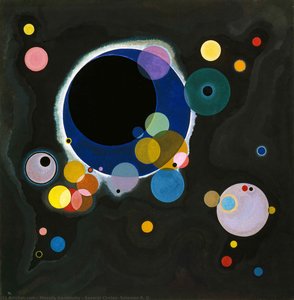
The period following his involvement with the influential artist group Der Blaue Reiter (The Blue Rider), which he co-founded in Munich in 1911, saw a further evolution in Kandinsky’s style. While earlier works often featured fluid, organic shapes, he began to explore geometric abstraction, focusing on the interplay of circles, triangles, and squares. “Several Circles” (140 x 140 cm) stands as a prime example of this phase – a dynamic composition where color and form interact in a harmonious yet energetic dance.
This wasn't cold or sterile geometry; rather, it was imbued with spiritual significance. Kandinsky believed that geometric shapes possessed inherent symbolic meaning, and their arrangement within the canvas could evoke specific emotional responses. His theoretical writings, most notably “Concerning the Spiritual in Art” (1911), articulated these beliefs, laying the groundwork for a new understanding of abstract art as a vehicle for expressing profound spiritual truths. He argued that art should not aim to imitate nature but rather to reveal the artist’s inner world and connect with the viewer on a deeper, more intuitive level.
Bauhaus Influence and Lasting Legacy
The outbreak of World War I forced Kandinsky's return to Russia in 1914, but following the Russian Revolution, he found himself increasingly at odds with the prevailing artistic climate. In 1920, he accepted a teaching position at the Bauhaus school in Germany, where he profoundly influenced generations of artists with his theories on color, form, and abstraction. The Bauhaus provided an ideal environment for Kandinsky to further develop his ideas and explore new creative avenues.
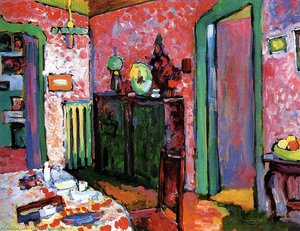
He continued to experiment with geometric forms and vibrant colors, often incorporating layered impasto techniques to create textured surfaces that added depth and complexity to his compositions – as seen in later works like “An Intimate Party” (1942). After the closure of the Bauhaus by the Nazi regime in 1933, Kandinsky moved to France, where he remained for the rest of his life. His impact on modern art is immeasurable; he is widely recognized as a pioneer of abstract expressionism and a key figure in the development of non-representational painting. His works are held in major museums worldwide, including the Tretyakov Gallery in Moscow, which houses his monumental “Composition VII,” a testament to his artistic vision and enduring legacy.
Kandinsky’s exploration of color, form, and spirituality continues to inspire artists today, solidifying his place as one of the most important figures in 20th-century art history. He didn't just paint pictures; he painted emotions, ideas, and the very essence of the human spirit.

Vasili Vassiljevich Kandinski
1866 - 1944 , Venemaa
Lühikesed faktid
- Artistic Movement Or Style: Abstract art, Expressionism
- Artists Or Movements Influenced By This Artist: ['Abstract Expressionism']
- Artists Who Influenced This Artist:
- Claude Monet
- Richard Wagner
- Date Of Birth: 1866
- Date Of Death: 1944
- Full Name: Wassily Wassilyevich Kandinsky
- Nationality: Russian, French
- Notable Artworks:
- Murnau with Rainbow
- Tempered Elan
- Several Circles
- Place Of Birth: Moscow, Russia
Seotud artiklid

Kandinsky's Masterpieces: 25 Paintings That Define Abstract Art | OriginalUniqueArt
Journey through Wassily Kandinsky's 25 most iconic abstract paintings. Explore his revolutionary use of color, form & spiritual expressionism. Find museum-quality Kandinsky reproductions and elevate your home decor with OriginalUniqueArt.com. Discover all masterpieces on OriginalUniqueArt.com!

Abstract Ekspressionismi 10 Meisterteost: Kunsti ja Sisustamise Klassikat
Sukeldu abstraktse ekspressionismi maailma! Avasta 10 legendaarset kunstiteost – Pollock, Rothko jt. – ja nende loo. Leia inspiratsiooni interjööriks ning kaunista kodu OriginalUniqueArt.com kvaliteetsete reproduktsioonidega. Uuri kollektsiooni!

Geomeetrilise Abstraktsiooni 10 Meisterteost: Kunst ja Kodukaunistus OriginalUniqueArt.com-is
Avastage geomeetrilise abstraktsiooni 10 suurteost – Kandinsky, Mondrian ja teised. Lugege kunstiteoste lugusid ning leidke inspiratsiooni kodukaunistuseks OriginalUniqueArt.com-is! Kunstikollektsioon ja reprodutsioonid.
Metropolitani Muuseumi 25 Kunsti Helmi: Ajaloo ja Ilu Teekond OriginalUniqueArt'is
Avastage Metropolitani muuseumi 25 kõige ikoonilisemat kunstiteost! Sukeldume maalikunstnike maailma, impressionismi võlu ja ajalooliste värvikombinatsioonide sisse. Leidke täiuslik seina kaunistus OriginalUniqueArt'is – kvaliteetsed reproduktsioonid ja sisustus ideed. Avastage kogu kollektsioon online!
Kazimir Malevitši 25 parimat teost: Abstraktse kunsti meistriteosed kodus
Avastage Kazimir Malevitši 25 parimat teost! Sukelduge suprematismi ja abstraktse kunsti maailma. Leidke inspiratsiooni interjööridisainiks ning ostke kvaliteetseid reproduktsioone OriginalUniqueArt.com-is. Avastage täielik kollektsioon veebis!