Vaata sisu
 Jaga teost
 Jaga
Jaga
 Detailid
 Õppekate juhend

 Laadi alla
 Sarnased teosed
 Röntgenuuring
 Slaidietendus
 Statistika
Prometheus Bound
 Oil
Oil- WallArt
- Hudson River School
 1847
1847 243.0 x 162.0 cm
 Fine Arts Museums of San Francisco
 Loe lähemalt
Käsitsi valmistatud õlimaalireproduktsioon
Meie kunstnike poolt tellimusel valmistatud käsitsi maalitud õli-kainaste teos teie soovitud suuruses ja raamis. ( Lülita trükkitoodetele Ülemineku digitaalse pildi müügi kanalisse)




P118B €10

P118H €10

P118W €10

P438Z €10

P508JH €12

P508YH €12

P805H €10

P805Z €10

P919BZ €10

P919G €10

P919XJ €10

P959ZH €10

P968JZ €12

W106C €8

W218G €10

W218JH €8

W218Y €10

W307PJ €10

W316G €10

W316PJ €8

W316Y €10

W398PJ €8

W4111J €10

W500HY €15

W500JH €15

W692G €12

W849H €8

W940BG €15

W953PJ €8




Vali meie eelmääratud suurused, mis vastavad teose algupärastele proportsioonidele.

Sisestage vajalik laius ja kõrgus, et teos sobiks teie raamile või seinale. Kuna tegu on käsipainatud teosega, siis erineva kujuga suuruse korral võib kunstnik jätta pildi ümber veidi rohkem marginaali või lõigata osa ära — valik on teie. Enne maali alustamist saadame teile kinnitamiseks digitaalse näidisprojektsiooni. Sellel lehel näidatud pilt ei kajasta tegelikku tulemust — seda näitab ainult näidisprojekttsioon.
Pärast tellimust saadab OriginalUniqueArt.com meeskond kliendile e-posti juhised ning esitab eelvaate kavandi
Maailmline tarne 3–4 nädala jooksul tavalise 5 nädala asemel. (21 oktoober). Kvaliteedis kompromisse ei tehta.

Tasuta ekspresssaatmine üle maailma

Kõrgekvaliteediline lina-kangastest muld

Täielik transpordikindlustus

Tollimaksude tagastamise garantii

Värvitoime täpsuse garantii

100 päeva tagastusõigus (ainult defektide korral)

100% raha tagasi garantii

Hulgusoodustus
 Klaasivalik on saadaval ainult kuni 110 cm suuruses teostes

Prometheus Bound
Reproduktsiooni materjal
Reproduktsiooni mõõtmed
-


Lõppsumma
€ 262
The Weight of Myth: Thomas Cole’s “Prometheus Bound”
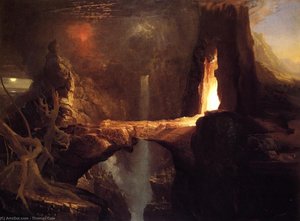
Thomas Cole's "Prometheus Bound," painted in 1847, isn’t merely a landscape; it’s a profound meditation on defiance, punishment, and the enduring human spirit. This monumental canvas, now residing within the Fine Arts Museums of San Francisco, transcends its subject matter to become a powerful allegory for the struggles inherent in challenging authority and forging one's own destiny. Cole, a pivotal figure in the Hudson River School movement, masterfully blends Romanticism with an underlying moral urgency, creating an image that continues to resonate deeply with viewers today.
The scene depicts Prometheus, chained to a towering rock formation amidst a desolate, snow-laden mountainscape. The composition is strikingly dramatic – a vast expanse of jagged peaks dominates the background, dwarfing the solitary figure of the Titan and emphasizing his isolation and vulnerability. A vulture circles overhead, a constant reminder of Zeus’s relentless retribution, while a subtle hint of Jupiter, the Roman equivalent of Zeus, watches from above, embodying the cold indifference of divine power. Cole's use of light is particularly masterful; a diffused, almost ethereal glow illuminates the scene, casting long shadows and creating an atmosphere of both grandeur and despair. The color palette—primarily cool blues, grays, and whites—reinforces this sense of bleakness, punctuated by the fiery red underpaint used to render the snow-covered mountains – a deliberate choice that subtly hints at Prometheus’s stolen fire.
A Myth Made Manifest: Exploring the Narrative
The painting draws directly from Aeschylus's Greek tragedy, “Prometheus Bound,” a story of rebellion against the gods. Prometheus, in this narrative, is not simply a titan but a symbol of humanity’s relentless pursuit of knowledge and progress. He steals fire from Mount Olympus, gifting it to mankind – an act of defiance that ultimately earns him eternal torment at the hands of Zeus. Cole doesn't shy away from the brutality of the punishment; the stark depiction of Prometheus’s chains and the looming threat of the vulture vividly convey the weight of his transgression. However, within this scene of suffering, there is also a palpable sense of resilience. Prometheus’s gaze, fixed upon the viewer, exudes an almost defiant serenity—a refusal to succumb to despair.
The inclusion of the chorus, comprised of figures emerging from the depths of the mountains, adds another layer of complexity to the narrative. They represent the forces of nature, witnesses to Prometheus's plight, and perhaps even a subtle acknowledgment of his heroic struggle. Their hesitant approach, marked by curiosity and apprehension, suggests that even those seemingly untouched by divine wrath recognize the significance of Prometheus’s actions.
The Hudson River School: A New American Vision
“Prometheus Bound” is a quintessential example of the Hudson River School's artistic philosophy. Unlike earlier European landscape paintings that often focused on idyllic pastoral scenes, Cole sought to capture the raw power and sublime beauty of the American wilderness. He employed a technique known as “atmospheric perspective,” subtly blurring distant elements to create a sense of depth and vastness. This approach wasn’t simply about replicating reality; it was about conveying an emotional response—a feeling of awe and reverence for nature's grandeur.
Cole’s work also reflects the burgeoning American identity of the mid-19th century, grappling with themes of independence, self-reliance, and the relationship between humanity and the natural world. The painting can be interpreted as a metaphor for America’s own struggle to assert its sovereignty against established powers – a sentiment particularly relevant in the context of westward expansion and the nation's growing tensions with European empires.
A Timeless Masterpiece: Reproduction & Beyond
Reproductions of “Prometheus Bound” offer an exceptional opportunity to bring this powerful image into any setting. The meticulous detail, evocative atmosphere, and profound symbolism ensure that a high-quality reproduction will serve as both a beautiful work of art and a compelling conversation piece. Consider framing the artwork in a manner that complements its dramatic scale and reinforces its thematic resonance – perhaps within a contemporary interior space to juxtapose the ancient myth with modern life.
For those seeking an authentic experience, exploring the original painting at the Fine Arts Museums of San Francisco is highly recommended. It’s a truly immersive encounter with one of America's most significant artistic achievements—a testament to Thomas Cole’s genius and a timeless exploration of human courage in the face of overwhelming adversity.
Küsimused ja vastused
Millist meeleolu loovaks teos "Prometheus Bound" ruumile?
Teose „Prometheus Bound“, autor Thomas Cole Romantic atmosfäär sobib ideaalselt selle soovituslikku ruumi: Living Room.
Kas teose „Prometheus Bound“, autor Thomas Cole autoriõigused lubavad selle reproduktsiooni?
Originaalteos "Prometheus Bound" asub Fine Arts Museums of San Francisco kogumuses ning teos on avalikus õiguses – selle autoriõigud onหมดunud.
Millist reproduktsiooni suurust soovitatakse teosele „Prometheus Bound“, autor Thomas Cole?
Soovitatav trükimõõt teosele „Prometheus Bound“, autor Thomas Cole on Large.
Kunstniku elulugu
A Pioneer of American Landscape Painting
Thomas Cole (February 1, 1801 – February 11, 1848) oli Inglismaal sündinud Ameerika maalikunstnik. Ta kolis 1818. aastal koos perekonnaga USA-sse, algul Steubenville'i Ohio osariigis, kaks aastat hiljem Philadelphiasse. Ta õppis ringireisiva kunstniku John Steini käe all ja aastatel 1823–1824 maastikumaali Phildadelphia kunstikoolis Pennsylvania Academy of the Fine Arts.Early Life and Artistic Influences
Thomas Cole urodził się w Bolton le Moors, Lancashire, Anglia, dnia 1 lutego 1801 roku jako syn angielskiego imigranta, który osiadł w Ohio. Jego dzieciństwo nie oferowało wiele wskazówek dotyczących głębokości wpływu, jaki miał na sztukę. Początkowo Cole pracował jako itinerant portrait painter – częsty handel w tamtych czasach – ale szybko poczuł się przyciągnięty pięknem dzikiej amerykańskiej przyrody. Ta zmiana nie była jedynie zmianą tematu obrazu; reprezentowała fundamentalną różnicę od europejskich tradycji artystycznych, które często koncentrowały się na historiach lub mitologiach. Jego krajobrazy nie były tylko przedstawieniami krajobrazu; były wypełnione duchową i alegoryczną głębokością, która głęboko rezonowała z narodem kształtującym własną tożsamość. Jego przeniesienie do Catskill Mountains w stanie Nowy Jork w 1825 roku okazało się transformacyjne, zapewniając mu zarówno inspirację, jak i trwałą bazę wypadową – obszar, który stał się nieodłącznie związany z jego dziedzictwem artystycznym. Jego twórczość została zainspirowana przez europejską Romantyzm – szczególnie dziełami Claude Lorraina i J.M.W. Turnerem – adaptując tym sposobem estetykę europejskich romantyków do kontekstu amerykańskiego. Podczas gdy europejscy Romantycy często przedstawiali dramatyczne, sublimarne krajobrazy jako odzwierciedlenie wewnętrznych rozterek, Cole często wyrażał optymizm i obecność boską w przyrodzie. Widział w ogromie amerykańskiej dzikiej przyrody symbol potencjału narodowego i duchowej odnowy.The Hudson River School and Romantic Ideals
Cole jest uznawany za twórcę Hudsoni Szkół Sztuki, ruchu artystycznego charakteryzującego się romantycznym przedstawieniem amerykańskiego krajobrazu. Jednak nazwanie go jedynie „malarzem krajobrazowym” wydaje się niewystarczające. Jego dzieła przekraczały prostą reprezentację; były głęboko filozoficzne, często eksplorując temat relacji między człowiekiem a naturą, mijającego czasu i wzlotu i upadku cywilizacji. Jego twórczość została zainspirowana przez europejską Romantyzm – szczególnie dziełami Claude Lorraina i J.M.W. Turnerem – adaptując tym sposobem estetykę europejskich romantyków do kontekstu amerykańskiego. Podczas gdy europejscy Romantycy często przedstawiali dramatyczne, sublimarne krajobrazy jako odzwierciedlenie wewnętrznych rozterek, Cole często wyrażał optymizm i obecność boską w przyrodzie. Jego dzieła nie były jedynie reprezentacją krajobrazu; były wypełnione duchową i alegoryczną głębokością, która głęboko rezonowała z narodem kształtującym własną tożsamość. Jego przeniesienie do Catskill Mountains w stanie Nowy Jork w 1825 roku okazało się transformacyjne, zapewniając mu zarówno inspirację, jak i trwałą bazę wypadową – obszar, który stał się nieodłącznie związany z jego dziedzictwem artystycznym. Jego dzieła były często uznawane za konserwatywne i krytykowano go za brak uwzględnienia szybko industrializującego się świata oraz ekspansji zachodu. Cole był jednym z najważniejszych twórców Hudsoni Szkół Sztuki, ruchu artystycznego charakteryzującego się romantycznym przedstawieniem amerykańskiego krajobrazu. Jego dzieła przekraczały prostą reprezentację; były głęboko filozoficzne, często eksplorując temat relacji między człowiekiem a naturą, mijającego czasu i wzlotu i upadku cywilizacji. Jego twórczość została zainspirowana przez europejską Romantyzm – szczególnie dziełami Claude Lorraina i J.M.W. Turnerem – adaptując tym sposobem estetykę europejskich romantyków do kontekstu amerykańskiego. Podczas gdy europejscy Romantycy często przedstawiali dramatyczne, sublimarne krajobrazy jako odzwierciedlenie wewnętrznych rozterek, Cole często wyrażał optymizm i obecność boską w przyrodzie. Jego dzieła nie były jedynie reprezentacją krajobrazu; były wypełnione duchową i alegoryczną głębokością, która głęboko rezonowała z narodem kształtującym własną tożsamość. Jego przeniesienie do Catskill Mountains w stanie Nowy Jork w 1825 roku okazało się transformacyjne, zapewniając mu zarówno inspirację, jak i trwałą bazę wypadową – obszar, który stał się nieodłącznie związany z jego dziedzictwem artystycznym. Jego dzieła były często uznawane za konserwatywne i krytykowano go za brak uwzględnienia szybko industrializującego się świata oraz ekspansji zachodu. Cole był jednym z najważniejszych twórców Hudsoni Szkół Sztuki, ruchu artystycznego charakteryzującego się romantycznym przedstawieniem amerykańskiego krajobrazu. Jego dzieła przekraczały prostą reprezentację; były głęboko filozoficzne, często eksplorując temat relacji między człowiekiem a naturą, mijającego czasu i wzlotu i upadku cywilizacji. Jego twórczość została zainspirowana przez europejską Romantyzm – szczególnie dziełami Claude Lorraina i J.M.W. Turnerem – adaptując tym sposobem estetykę europejskich romantyków do kontekstu amerykańskiego. Podczas gdy europejscy Romantycy często przedstawiali dramatyczne, sublimarne krajobrazy jako odzwierciedlenie wewnętrznych rozterek, Cole często wyrażał optymizm i obecność boską w przyrodzie. Jego dzieła nie były jedynie reprezentacją krajobrazu; były wypełnione duchową i alegoryczną głębokością, która głęboko rezonowała z narodem kształtującym własną tożsamość. Jego przeniesienie do Catskill Mountains w stanie Nowy Jork w 1825 roku okazało się transformacyjne, zapewniając mu zarówno inspirację, jak i trwałą bazę wypadową – obszar, który stał się nieodłącznie związany z jego dziedzictwem artystycznym. Jego dzieła były często uznawane za konserwatywne i krytykowano go za brak uwzględnienia szybko industrializującego się świata oraz ekspansji zachodu. Cole był jednym z najważniejszych twórców Hudsoni Szkół Sztuki, ruchu artystycznego charakteryzującego się romantycznym przedstawieniem amerykańskiego krajobrazu. Jego dzieła przekraczały prostą reprezentację; były głęboko filozoficzne, często eksplorując temat relacji między człowiekiem a naturą, mijającego czasu i wzlotu i upadku cywilizacji. Jego twórczość została zainspirowana przez europejską Romantyzm – szczególnie dziełami Claude Lorraina i J.M.W. Turnerem – adaptując tym sposobem estetykę europejskich romantyków do kontekstu amerykańskiego. Podczas gdy europejscy Romantycy często przedstawiali dramatyczne, sublimarne krajobrazy jako odzwierciedlenie wewnętrznych rozterek, Cole często wyrażał optymizm i obecność boską w przyrodzie. Jego dzieła nie były jedynie reprezentacją krajobrazu; były wypełnione duchową i alegoryczną głębokością, która głęboko rezonowała z narodem kształtującym własną tożsamość. Jego przeniesienie do Catskill Mountains w stanie Nowy Jork w 1825 roku okazało się transformacyjne, zapewniając mu zarówno inspirację, jak i trwałą bazę wypadową – obszar, który stał się nieodłącznie związany z jego dziedzictwem artystycznym. Jego dzieła były często uznawane za konserwatywne i krytykowano go za brak uwzględnienia szybko industrializującego się świata oraz ekspansji zachodu. Cole był jednym z najważniejszych twórców Hudsoni Szkół Sztuki, ruchu artystycznego charakteryzującego się romantycznym przedstawieniem amerykańskiego krajobrazu. Jego dzieła przekracza
Thomas Cole
1801 - 1848 , Suurbritannia
Lühikest infot
- Artistic Movement Or Style: Hudson River School
- Artists Who Influenced This Artist: ['Frederic Church']
- Date Of Birth: Feb 1, 1801
- Full Name: Thomas Cole
- Nationality: American
- Notable Artworks:
- Course of Empire
- Oxbow
- View from Mt Etna
- Place Of Birth: Bolton, UK
Sarnased artiklid

Evocations of Place: A Historical Journey Through Landscape Art
Explore the rich history of landscape art with OriginalUniqueArt. Discover renowned artists, movements like Impressionism & Romanticism, and expert guidance for collecting timeless pieces. Find your perfect serene escape today!

Romantilise Maastikukunsti 10 Meisterteost: Kunstiteosed Koduks OriginalUniqueArt.com'ist
Avastage 10 romantilise maastikukunsti meistriteost! Tutvuge Caspar David Friedrichi, J.M.W. Turneri ja teiste suurte kunstnike loominguga OriginalUniqueArt.com-is. Leidke täiuslik õlimaal või reproduktsioon koduks – inspireeriv kollektsioon ootab!

The Sublime and the Picturesque: Exploring Emotion & Nature in Romantic Landscape Painting
Explore the emotional power of Romantic landscape painting! Discover the sublime & picturesque traditions, key artists like Friedrich & Cole, and find your perfect artwork at OriginalUniqueArt.

John Constable: 25 Suurimat Teost Inglise Maastikumaali Tippu
Avastage John Constable'i 25 suurimat teost! Sukeldu inglise maastikumaali romantismisse, imetlege Dedham Vale ilu ja leia inspiratsiooni kodukaunistuseks. Kvaliteetsed kunstireprodutsioonid OriginalUniqueArt.com-is. Vaata kohe!
Thomas Barker of Bath: Landscape Painting & Societal Reflection in Early 19th-Century England
Explore the life & work of Thomas Barker of Bath, a key figure in 19th-century English Romanticism. Discover his Parisian success, iconic paintings like 'The Bride of Death', and lasting artistic legacy. Learn more at OriginalUniqueArt.