

 Vaata sisu
 Jaga teost
 Jaga
Jaga
 Detailid
 Õppekate juhend

 Laadi alla
 Sarnased teosed
 Röntgenuuring
 Slaidietendus
 Statistika
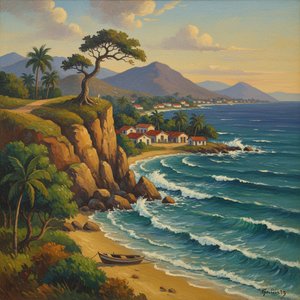
Landscape VII


 Loe lähemalt
Sellel lehel kuvatav kunstiteos on kaitstud autoriõigusega, mis tähendab, et meil ei ole seaduslikku õigust luua või müüa identset reproduktsiooni. Seda kaitset rakendatakse rahvusvaheliste kokkulepete alusel, nagu näiteks Berne konventsioon ning riiklike seadustega, sealhulgas nendega, mida on sätestatud USA autoriõiguse seadus – 17. peatükk.
Austasena ja seaduslikuna alternatiivina pakume originaalist inspireeritud, käsitsi maalitud isikupärastatud teoseid. Meie osutavad ja professionalsed kunstnikud uurivad hoolikalt originaali stiili, meelemoi ja kunstilist olemust, et luua uus, ainulaadne teos, mis tekitab sama tunnet – olles samal ajal omaette originaalne looming.
See meetod järgib täielikult autoriõiguse reegleid, kuna see ei põhine kaitstud kunstiteose kopeerimisel või dupliteerimisel. Selle asemel on tegu loova reinterpreetatsiooniga – uue maaldisega, mis on algteosest inspireeritud, kuid ei ole sellest identiline.
Käsitsi valmistatud õlimaalireproduktsioon
Meie kunstnike poolt tellimusel valmistatud käsitsi maalitud õli-kainaste teos teie soovitud suuruses ja raamis. ( Lülita trükkitoodetele Ülemineku digitaalse pildi müügi kanalisse)




P118B €10

P118H €10

P118W €10

P438Z €10

P508JH €12

P508YH €12

P805H €10

P805Z €10

P919BZ €10

P919G €10

P919XJ €10

P959ZH €10

P968JZ €12

W106C €8

W218G €10

W218JH €8

W218Y €10

W307PJ €10

W316G €10

W316PJ €8

W316Y €10

W398PJ €8

W4111J €10

W500HY €15

W500JH €15

W692G €12

W849H €8

W940BG €15

W953PJ €8




Vali meie eelmääratud suurused, mis vastavad teose algupärastele proportsioonidele.

Sisestage vajalik laius ja kõrgus, et teos sobiks teie raamile või seinale. Kuna tegu on käsipainatud teosega, siis erineva kujuga suuruse korral võib kunstnik jätta pildi ümber veidi rohkem marginaali või lõigata osa ära — valik on teie. Enne maali alustamist saadame teile kinnitamiseks digitaalse näidisprojektsiooni. Sellel lehel näidatud pilt ei kajasta tegelikku tulemust — seda näitab ainult näidisprojekttsioon.
Pärast tellimust saadab OriginalUniqueArt.com meeskond kliendile e-posti juhised ning esitab eelvaate kavandi
Maailmline tarne 3–4 nädala jooksul tavalise 5 nädala asemel. (24 oktoober). Kvaliteedis kompromisse ei tehta.

Tasuta ekspresssaatmine üle maailma

Kõrgekvaliteediline lina-kangastest muld

Täielik transpordikindlustus

Tollimaksude tagastamise garantii

Värvitoime täpsuse garantii

100 päeva tagastusõigus (ainult defektide korral)

100% raha tagasi garantii

Hulgusoodustus
 Klaasivalik on saadaval ainult kuni 110 cm suuruses teostes

Landscape VII
Reproduktsiooni materjal
Reproduktsiooni mõõtmed
-


Lõppsumma
€ 264
A Dreamscape of Brazilian Serenity
In the quiet corners of art history, few works capture the essence of pastoral tranquility as tenderly as Tarsila do Amaral’s Landscape VII. Created in 1971, toward the twilight of the artist's illustrious career, this piece serves as a window into a world where time seems to slow down. The painting presents a breathtakingly serene landscape, depicting a small, nestled village cradled by rolling hills and the gentle presence of water. It is an invitation to step away from the chaos of modernity and enter a realm of soft light and rhythmic simplicity. Through her masterful use of pastel shades—delicate pinks, ethereal blues, and lush greens—Amaral crafts a dreamlike atmosphere that feels both intimately familiar and otherworldly.
The composition is a masterclass in balanced, horizontal layering. The viewer’s eye is led through a series of soft bands: a verdant foreground suggesting cool water or thick vegetation, a central stage featuring quaint architecture and a striking rock formation, and finally, a background of pink-hued hills that melt into the horizon. There is a charming, almost naive quality to the perspective; by eschewing harsh linear recession in favor of a flatter, more two-dimensional arrangement, the artist emphasizes the decorative beauty of the scene. This approach allows the shapes—the rounded contours of the hills and the organic forms of the trees—to dance across the canvas with a rhythmic, folk-art grace.
Technique and the Texture of Memory
To behold Landscape VII is to witness the tactile power of oil on canvas. Amaral employs a technique characterized by visible, expressive brushstrokes that lend the work a vibrant, living energy. The application of paint is particularly noteworthy in the central rock formation and the surfaces of the buildings, where thick impasto creates a physical texture you can almost feel with your eyes. This ruggedness provides a beautiful counterpoint to the soft, diffused lighting that permeates the scene, suggesting the gentle glow of an overcast afternoon. Every stroke feels intentional, contributing to a surface that is as much about the physical presence of the medium as it is about the subject matter itself.
For the discerning collector or interior designer, this piece offers a unique opportunity to introduce a sense of calm and sophisticated nostalgia into a space. The artwork does not merely decorate a wall; it transforms an environment. Its soft palette and organic shapes make it an ideal centerpiece for rooms designed for relaxation, such as a master suite or a quiet reading nook. Because the style leans toward the Antropofagia movement's roots while embracing a more mature, simplified aesthetic, it bridges the gap between avant-garde history and timeless decorative elegance.
A Legacy of Peace and Identity
Beyond its visual splendor, Landscape VII carries a profound symbolic weight. As a pivotal figure in Brazilian Modernism, Tarsila do Amaral spent her life distilling the soul of her nation into bold, innovative forms. In this later work, that mission evolves into an exploration of harmony and peace. The village scene acts as a symbol of a life lived in equilibrium with nature, where human habitation and the earth exist in a seamless, unconflicted embrace. It evokes a sense of nostalgia for a simpler era, making it deeply resonant for anyone seeking to surround themselves with art that promotes emotional well-being.
Owning a high-quality reproduction of this masterpiece allows one to possess a fragment of Brazilian cultural identity. Whether you are an art historian captivated by her evolution from Cubist influences to folk-inspired simplicity, or a decorator looking for a piece that breathes tranquility into a contemporary setting, Landscape VII stands as a testament to the enduring power of the landscape to soothe the human spirit. It is more than a painting; it is a quiet sanctuary captured in pigment.
Küsimused ja vastused
Millist emotsiooni edastab Modernism suunaga teos "Landscape VII"?
Modernism suunangu raames on teos "Landscape VII" üles seabetud Tranquil toonil.
Kuidas saan tellida teose „Landscape VII“, autor Tarsila Do Amaral trükki?
Teose „Landscape VII“, autor Tarsila Do Amaral trüket saate tellida otse sellelt lehelt Kõlblik kunstutrüki kvaliteetne trükis: kunstiprint puuvillalõikel}}^{\text{canvas}}$ või arhiveeritaval kangaspaberil.
Kuidas teose "Landscape VII" stiil seotub selle looja ajaga?
Teoses „Landscape VII“, autor Tarsila Do Amaral kohtuvad Modernism suunad ja Modernism ajastu.
Kunstniku elulugu
Brasiilia visjonäär: Tarsila do Amarali elu ja kunst
Tarsila do Amaral tõus esile 20. sajandi alguse Brasiilia kunsti kirevas kudula asendamatu tegelasena – maalidena, kes julges distillida oma rahva olemuse lõluga lõikemajale, kasutades julgeid värve ja uuendustelust}}^{\text{uhingut}}. Sündinud 1. septembril 1886 Capivaris, São Paulos, rikkasse kohviostmise perekonnas, pakkus Tarsila lapseuus talle võimalusi, mis olid tema ajastu naistele ebatavaline. See privileet võimaldas tal pursuitida kunstilist haridust, esialgselt Pedro Alexandrino Borges juhendamisel, enne kui ta alustas 1eks transformatiivset teekonda Pariisis aastal 1920. Just Académie Juliani ja hiljem Académie Moderne ehisel, kohtus ta avantgardsetega vooludega, mis kujundasid kunstivärssi – kubismiga, futurismiga ja ekspressionismiga –, mille mõjud olid sügavalt seotud tema kunstilise trajektööri kujundamisega. Fernand Légeri, Albert Gleizesi ja André Lhote mentorlus osutus eriti võimsalt, julgustades teda sünteesima Euroopa modernismi iseloomuliku brasiilia tundlikkusega.Riikliku identiteedi loomine läbi kunsti
Pärast Brasiilias 1920. aastate alguses naasmist sai Tarsila keskseks jõuks unikaalse brasiilia modernistliku traditsiooni määritlemisel. Ta ei olnud pelgalt Euroopa stiile importija; ta püüdis aktiivselt luua kunsti, mis kõneleks tema riigi hinge koodidega, peegeldades selle maastikke, inimesi ja kultuurilisi keerukusi. See otsing tõi ta koostöösse sarnaste vaadanete ja intellektidega kunstikontingentiga – Anita Malfatti, Menotti Del Picchia, Mário de Andrade ja Oswald de Andrade –, keda tuntakse kollektiivselt kui Grupo dos Cinco. Koos vaidlustasid nad konventsionaalsete kunstiliste normidega ning juhtisid liikumist, mis püüdis murda akadeemilistest piirangutest ja omakuid uut visuaalset keelt. Tarsila panus oli eriti oluline selle visiooni väljendamisel läbi oma maalid, mis kujutasid Brasiilia elu stseene sageli unenoodse kvaliteediga ja elavate palettidega.Pärand ja igavene mõju
Kogu oma pika ja viljakas karjääri jooksul jätkas Tarsila do Amaral Brasiilia identiteedi keerukuste uurimist läbi mitmekülgse teoskogumi. Tema maale iseloomustavad julged värvid, lihtsustatud vormid ja unenoodne atmosfäär, ühendades sageli realismi elemente surrealismiga ja abstraksiooniga. Ta ei kartnud eksperimenteerida, arendades pidevalt oma stiili, püsides samas truuks oma põhiliselle visioonile. Tema mõju ulatus beyond maali valdkonna, inspireerides Brasiilia kunstnike põlvkondi ja kujundades riigi kultuurilavastikku. Täna on Tarsila do Amarali teoseid säilitatud prestiižsetes kogumikutes üle maailma, sealhulamas Brasiilia Keskpanga väärtuste muuseumis ja Rio Grande do Suluse kunstimuuseumis. Tema kunst jätkab publiku võlustamist oma elav energiaga, poeetilise pildikeelega ja sügavalt uuritud küsimusega, mis tähendab olla brustilianilane. Ta lahkus sellest maailmast 17. jaanuaril 1973, jättades järele pärandi kui üks Lääne-Ameerika olulisemaid modernistlikke kunstnereid – visjonääri, kes julges maalid oma rahva hinge.
Tarsila Do Amaral
1886 - 1973 , Brasiilia
Lühikest infot
- Artistic Movement Or Style: Brasiilia modernism
- Artists Or Movements Influenced By This Artist: ['Antropofagia liikumine']
- Artists Who Influenced This Artist:
- Fernand Léger
- Albert Gleizes
- André Lhote
- Date Of Birth: 1. september 1886
- Date Of Death: 17. jaanuar 1973
- Full Name: Tarsila do Amaral
- Nationality: Brasiilia
- Notable Artworks:
- Abaporu
- A Negra
- Morro da favela
- Urutu Snake
- Landscape VII
- Place Of Birth: São Paulo, Brasiilia
Sarnased artiklid

Romantilise Maastikukunsti 10 Meisterteost: Kunstiteosed Koduks OriginalUniqueArt.com'ist
Avastage 10 romantilise maastikukunsti meistriteost! Tutvuge Caspar David Friedrichi, J.M.W. Turneri ja teiste suurte kunstnike loominguga OriginalUniqueArt.com-is. Leidke täiuslik õlimaal või reproduktsioon koduks – inspireeriv kollektsioon ootab!
Benedito Calixto: A Brazilian Modernist's Landscape of Memory & National Identity
Explore the captivating world of Benedito Calixto, a pivotal Brazilian Modernist painter. Discover his iconic landscapes, the story behind the famous Bandeirante portrait, and his lasting impact on Brazilian national identity. Learn more at OriginalUniqueArt.

John Constable: 25 Suurimat Teost Inglise Maastikumaali Tippu
Avastage John Constable'i 25 suurimat teost! Sukeldu inglise maastikumaali romantismisse, imetlege Dedham Vale ilu ja leia inspiratsiooni kodukaunistuseks. Kvaliteetsed kunstireprodutsioonid OriginalUniqueArt.com-is. Vaata kohe!

Evocations of Place: A Historical Journey Through Landscape Art
Explore the rich history of landscape art with OriginalUniqueArt. Discover renowned artists, movements like Impressionism & Romanticism, and expert guidance for collecting timeless pieces. Find your perfect serene escape today!

The Subtleties of Pastel: A Comprehensive Exploration of Technique, History & Emotional Resonance
Explore the captivating world of pastel art! Discover its rich history, Impressionistic masters like Degas, emotional power & unique techniques. Find museum-quality reproductions at OriginalUniqueArt.