Vaata sisu
 Jaga teost
 Jaga
Jaga
 Detailid
 Õppekate juhend

 Laadi alla
 Sarnased teosed
 Röntgenuuring
 Slaidietendus
 Statistika
Frans Snyders
 Oil On Canvas
- WallArt
- Baroque
 1620
1620- Early Modern
 142.0 x 105.0 cm
 The Frick Collection
 Loe lähemalt
Giclée / Kunstiprint
Muuseumikvaliteediga giclée- või kangasprint kiire tootmisega ja paindlikud viimistlusvõimalused. ( Telli käsitsi maalitud reproduktsioon Ülemineku digitaalse pildi müügi kanalisse)




P118B €10

P118H €10

P118W €10

P438Z €10

P508JH €12

P508YH €12

P805H €10

P805Z €10

P919BZ €10

P919G €10

P919XJ €10

P959ZH €10

P968JZ €12

W106C €8

W218G €10

W218JH €8

W218Y €10

W307PJ €10

W316G €10

W316PJ €8

W316Y €10

W398PJ €8

W4111J €10

W500HY €15

W500JH €15

W692G €12

W849H €8

W940BG €15

W953PJ €8




Vali meie eelmääratud suurused, mis vastavad teose algupärastele proportsioonidele.

Sisestage vajalik laius ja kõrgus, et see sobiks teie raamile või seinale. Trükki saab ainult lõigata, seda ei saa kunagi pildist suuremaks teha, seega ka differentse vormiga suurus kaotab osa pildist. Enne trükkimist saadame teile kinnitamiseks digitaalse näidisprojektsiooni. Sellel lehel näidatud pilt ei kujuta reaalset lõiget — seda näitab ainult näidisprojekttsioon.
Ülemaailmne tarne () 2 nädala jooksul, tavalise 4/5 nädala asemel. (25 oktoober)

Tasuta ekspresssaatmine üle maailma

Kõrgekvaliteediline lina-kangastest muld

Täielik transpordikindlustus

Tollimaksude tagastamise garantii

Värvitoime täpsuse garantii

100 päeva tagastusõigus (ainult defektide korral)

100% raha tagasi garantii

Hulgusoodustus
 Klaasivalik on saadaval ainult kuni 110 cm suuruses teostes

Frans Snyders
Giclée / Kunstiprint
Reproduktsiooni mõõtmed
-


Lõppsumma
€ 70
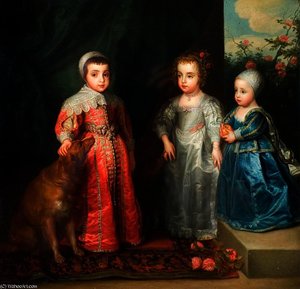
A Symphony of Status and Shadow
In the grand tapestry of the Flemish Baroque, few moments capture the intersection of artistic genius and social aspiration as poignantly as Sir Anthony van Dyck’s 1620 portrait of Frans Snyders. This masterpiece is far more than a mere likeness; it is a carefully orchestrated performance of prestige. At its heart sits Snyders, a man whose reputation as a master of animalier and still life painting was matched only by his rising social prominence in Antwerp. Dressed in the somber yet luxurious black of a gentleman, with a crisp white collar that draws the eye to his composed features, Sny ck embodies the quiet confidence of the era's burgeoning merchant class. The presence of figures flanking him suggests not just a family portrait, but a tableau of communal success, inviting the viewer into a well-dressed gathering where every fold of fabric and every shadow cast speaks of wealth and stability.
The technical brilliance of Van Dyck is on full display through his masterful manipulation of light and texture. Having refined his craft under the legendary Peter Paul Rubens, Van Dyck brings a dynamic energy to this composition that transcends the stillness of traditional portraiture. One can observe the subtle interplay of chiaroscuro—the dramatic contrast between light and dark—which lends a sculptural depth to Snyders’ face and the heavy drapery surrounding him. The brushwork is both precise and fluid, capturing the tactile reality of silk, lace, and skin with an effortless grace. For the discerning collector, this painting offers a window into the Baroque obsession with materiality, where the sheen of a sleeve or the soft light hitting a cheek serves to ground the subject's lofty status in a palpable, physical reality.
The Golden Age of Antwerp
To understand this work, one must look beyond the frame to the vibrant, prosperous streets of 17th-century Antwerp. This was an era of unprecedented economic flourishing, where trade and artistic innovation fueled a cultural renaissance. The very existence of this portrait serves as a historical document of Snyders’ ascent; having recently acquired a magnificent townhouse on the prestigious Meirstraat, the sitter used Van Dyck’s brush to cement his family's legacy. The painting functions as a visual manifesto of the couple's social ambitions, reflecting a time when art was the ultimate currency of influence. It is a period where the boundaries between the artist and the patron blurred, creating a shared language of elegance that continues to resonate in modern aesthetics.
For those looking to integrate such a profound piece into a contemporary interior, this reproduction offers an unparalleled sense of historical gravity and sophisticated charm. Whether placed in a formal study or as a focal point in a grand hallway, the painting brings with it an atmosphere of intellectual depth and timeless luxury. It is not merely a decoration but an invitation to contemplate the enduring power of legacy and the beauty of human achievement. Owning a piece that captures the essence of Van Dyck’s refined elegance allows a space to breathe with the spirit of the Golden Age, providing a constant source of inspiration and a sophisticated connection to the masters of the past.
Küsimused ja vastused
Mis tüüpi teos on "Frans Snyders"?
Teos „Frans Snyders“, autor Sir Anthony Van Dyck on klassifitseeritud kui WallArt. See kategooria kirjeldab originaalteose kunstivormi.
Kust saan osta teose „Frans Snyders“, autor Sir Anthony Van Dyck trükki?
Teose „Frans Snyders“, autor Sir Anthony Van Dyck trüket saab tellida otse selle Kõlblik kunstutrüki kvaliteetne trükis lehelt: kunstiprint puuvillalõikel}}^{\text{canvas}}$ või arhiveeritaval kangaspaberil.
Kust kohast kunstiloost „Frans Snyders“, autor Sir Anthony Van Dyck löytyb?
Ajalooliselt on "Frans Snyders" laiemast Early Modern ajast pärit Baroque teos.
Kunstniku elulugu
A Flemish Master at the Courts of Europe
Sir Anthony van Dyck, born in Antwerp in 1599, emerged as one of the most celebrated and influential portraitists of the Baroque era. His life, though tragically cut short at just forty-two years old, was a whirlwind of artistic exploration and prestigious commissions that took him from his native Flanders to Italy and ultimately to the heart of the English court. From an early age, van Dyck displayed remarkable talent, entering Hendrick van Balen’s workshop as a young apprentice and quickly absorbing the prevailing styles of the time. However, it was his association with Peter Paul Rubens – not merely as a student but as a collaborator – that truly shaped his artistic foundation. He learned from Rubens' dynamic compositions, rich color palettes, and masterful handling of light and shadow, yet van Dyck soon began to forge his own distinct path, one characterized by an elegance and refinement that would become his signature.Italian Sojourns and the Birth of a Style
The years van Dyck spent in Italy, beginning around 1621, proved pivotal in his artistic development. He resided primarily in Genoa, where he found favor among the city’s aristocratic families. It was here that he began to cultivate the sophisticated style for which he would become renowned – a style marked by graceful poses, luxurious fabrics, and an almost palpable sense of nobility. Unlike the robust energy often found in Rubens' work, van Dyck’s Italian portraits exude a refined composure, capturing not just physical likeness but also the inner character and social standing of his sitters. During this period, he honed his skills in etching, producing a series of iconic prints featuring prominent figures – artists, scholars, and rulers alike. This project showcased his exceptional technical prowess and established him as a leading printmaker. These etchings weren’t simply reproductions; they were carefully constructed images designed to convey status and intellect, reflecting the humanist ideals prevalent during the Renaissance. He experimented with chiaroscuro—the dramatic interplay of light and shadow—creating depth and emotion within his compositions.The King's Painter: Van Dyck in England
In 1632, van Dyck received an invitation that would forever alter his career trajectory – a summons from Charles I of England to become the court painter. This appointment marked a turning point, not only for van Dyck but also for English portraiture. He arrived in London with considerable reputation and quickly became indispensable to the king, tasked with creating images that projected an aura of power, majesty, and divine right. Van Dyck’s portraits of Charles I are particularly noteworthy; he moved away from the stiff, formal representations favored by earlier artists, instead portraying the king as a dynamic, charismatic leader. He employed innovative techniques – dramatic lighting, sweeping gestures, and carefully chosen backgrounds – to create images that were both visually stunning and politically charged. His influence extended beyond the royal family, shaping the visual culture of the English aristocracy for generations to come. He didn’t just paint portraits; he crafted an image of kingship, influencing how royalty was perceived for over a century.Legacy and Enduring Influence
Van Dyck's untimely death in 1641 robbed the art world of a prodigious talent, but his legacy endures to this day. His impact on English portraiture is immeasurable; he established a standard of elegance and sophistication that subsequent artists would strive to emulate. He mastered both oil painting and etching, constantly experimenting with new techniques. His portraits are characterized by their graceful poses, luxurious fabrics, and subtle psychological insights—capturing not just physical likeness but also the inner character and social standing of his subjects. Beyond his technical prowess, van Dyck possessed an exceptional ability to convey emotion and drama within his compositions.- Technical Innovation: He pioneered new etching techniques, achieving unparalleled detail and tonal range.
- Stylistic Refinement: His portraits embody a timeless elegance—characterized by graceful poses and subtle psychological depth.
- Courtly Influence: He transformed the image of the English monarchy, creating visual language of power and prestige.

Sir Anthony Van Dyck
1599 - 1641 , Belgia
Lühikest infot
- Artistic Movement Or Style: Baroque
- Artists Who Influenced This Artist: ['Peter Paul Rubens']
- Date Of Birth: March 22, 1599
- Date Of Death: December 9, 1641
- Full Name: Sir Anthony van Dyck
- Nationality: Flemish
- Notable Artworks:
- Portrait of a woman and child
- Equestrian portrait of Charles I
- Lord John Stuart & brother
- Place Of Birth: Antwerp, Belgium
Sarnased artiklid

Sir Anthony van Dyck: Courtly Portraiture & the Shaping of Baroque Identity
Explore the life & legacy of Sir Anthony van Dyck, the leading court painter of his era. Discover his innovative portraiture, Baroque masterpieces, and investment potential for discerning collectors. Learn more at OriginalUniqueArt.

Rembrandti 25 meistriteost: Valgus ja varjud Hollandi kuldajast kunstikollektsioonis
Avastage Rembrandti 25 meistriteost! Hollandi kuldajastu barokkmaalid, portreed ja ajaloolised stseenid. Leidke inspiratsiooni interjööri kujunduseks või soetage luksuslik Rembrandt reproduktsioon OriginalUniqueArt.com-ist. Avastage kogu kollektsioon veebis!

Dutch Baroque Masters: 10 Paintings That Shaped an Era | OriginalUniqueArt
Journey through the Golden Age with our guide to the Top 10 Dutch Baroque masterpieces! Explore iconic paintings by Rembrandt, Vermeer & Frans Hals. Find museum-quality art reproductions and elevate your home decor at OriginalUniqueArt.com.

Golden Age Reflections: Dutch Baroque Painting & Cultural Innovation
Explore the Dutch Golden Age of painting! Discover key artists like Vermeer & ter Borch, their innovative techniques, and the rich cultural context behind these Baroque masterpieces. Learn about collecting & appreciating this iconic art period.

Hollandi Kuldaja Särgas Kunstipärit: 10 Meisterteost Sinu Koduks
Sukeldu Hollandi Kuldaja kunstivorme! Avasta 10 ikoonilist meistriteost – Rembrandt, Vermeer jt. - ning nende ajatu loojatööd. Leia inspiratsiooni interjöörile ja kaunista kodu OriginalUniqueArt.com kvaliteetsete reproduktsioonidega. Uuri kollektsiooni!