

 Eelvaade
 Saada
Saada Jaga
Jaga
 Teave teose kohta
 Juhend

 Laadi alla
 Sarnased teosed
 Röntgenuuring
 Slaidietendus
 Q&A
Q&A Statistika
Deux têtes d
 Oil
Oil- WallArt
- Baroque
 1650
1650 5.0 x 61.0 cm
 Museum of Fine Arts
 Loe lähemalt
Hankige trükiivaldatav fail, mis on kvaliteedilt palju parem kui veebilehel näidatud eelvaade. Kõik meie müüdavad digitaalsed pildid pärinevad meie arhiivist kõrge resolutsiooniga originaalfailidest — tavaliselt 5000 kuni 15 000 pikslit laiust — nii et saate julgelt trükida suurematsat, lüüdist teha või detailset sisu reproduktsiooni teha.
Meie stuudiost ei lahtu ükski fail puutumatuna. Digiekpert võrdleb värve algsest maalistimusega ja vajadusel korrigeerib neid, seejärel parandab selgust ja detaile professionaalsete retušimisvahendite abil — püüdes alati jääda truudeks kunstniku pintoonile ja stiilile. Tulemuseks on pilt, mis näeb välja nagu maali, mitte nagu filtreeritud skann.
Teet kinnituse enne lõplikku valmimist: meie ekspert saadab pildi 72 tunni jooksul e-posti ülevaatamiseks. Ei ole rahul? Paluge parandusi või korrektsioone ning kui kvaliteet ei vasta ootustele, võite paluda tagastamist.
See on kvaliteet, millele tuguvad väljaandjad, disainistuudiod, galeriid ja trükikojad.
Digitaalne kunstiteos
Laadi alla kõrge resolutsiooniga fail isiklikuks vaatamiseks, trükkimiseks ja loomingulisteks projektideks. ( Lülita trükkitoodetele Osta käsitsi maalatud teos)
Sisse kuulub iga digitaalse pildi tellimusega
Eksperdi digitaalne kohaletoimetamine, garanteeritud
Valides OriginalUniqueArt.com, ei saa sa lihtsalt pilti – saad professionaalselt parandatud digitaalse teose, mida on valmistatud täpsusega ja mis on toetatud rahuldamatusgarantiiga. Siin on kõik, mis sinu tellimusega automaatselt kaasneb:

Kiire digitaalne edastus
Teie kõrge resolutsiooniga digitaalne pildifail saadetakse teile e-posti 72 tunni jooksul pärast tellimist – kohe kasutamiseks valmis.

Tehisintellektiga täiustatud digitaalne fail
Teie teos on professionaalselt optimeeritud arenenud tehisintellekti tööriistade ja käsitsi redigeerimise abil, tagades maksimaalse detailitaseme, selguse ja värvitäpsuse.

Tasuta eluaegne uuesti saatmine
Kas kustutasid faili kogukalu unustamisel või kustutamisel? Puudub mure – saad selle uuesti igal ajal ilma lisatasuta.

Puuduvad importimaksud – alati
Nautige oma teoseid koheselt ilma tolli-, maksude või tarnimaskuludeta – digiletchargused on alati maksuvabadud.

Värvitäpsuse garantii
Me tagame, et teie digitaalne pilt kajastaks originaali värve professionaalsete tööriistade ja värvihalduse abil võimalikult täpselt.

100 päeva rahuldamatuse garantii
Kui te ei ole oma digitaalse pildi eest rahul, siis me parandame seda või tagastame 100% summast 100 päeva jooksul – küsimusteta.

100% raha tagastamise garantii
Ei ole rahul? Saate täielise tagastaja 100 päeva jooksul pärast digitaalse faili kättesaamist – ilma küsimusteta.

Suurema tellimuse soodustused
Osta 3 pilti, säästa 10% - Osta 5, säästa 15% - Osta 10+, säästa 20%. Sobib suurepäraselt loomingulisteks projektideks, galeriideks ja agentuurideks.
A Portrait of Shared Intensity: Exploring Van Dyck’s “Deux têtes d”
Sir Anthony van Dyck's "Deux têtes d" – literally, “Two Heads” – is not merely a painting; it’s an arresting tableau of psychological depth and subtle drama. Completed in 1650, this double portrait transcends the conventional formality of courtly portraiture, offering instead a glimpse into a complex exchange between two figures shrouded in shadow and suggestion. The work immediately commands attention with its unusual composition: two male heads, rendered with Van Dyck’s signature meticulous detail and masterful use of light, are presented side-by-side within a dark, almost claustrophobic space. The faces themselves are not overtly expressive – there's no boisterous laughter or triumphant gaze – but rather convey an undercurrent of contemplation, perhaps even unease. The artist’s skill lies in the way he uses darkness and light to create a sense of intimacy and shared experience, inviting the viewer to become an active participant in deciphering the unspoken narrative.
The Master at Work: Technique and Style
Van Dyck's technique is instantly recognizable. He employs a loose, almost impasto application of paint, particularly noticeable in the rendering of the hair and beards – textures that seem to practically leap off the canvas. The use of chiaroscuro—the dramatic contrast between light and dark—is exceptionally sophisticated here. The figures are bathed in a soft, diffused light emanating from an unseen source, while the background plunges into deep shadow, intensifying the sense of intimacy and drawing focus entirely onto the faces. This technique wasn’t simply aesthetic; it was integral to Van Dyck's approach to portraiture. He sought not just to capture likeness but also to convey character—the mood, temperament, and even the inner life of his subjects. The subtle variations in tone and texture across each face contribute significantly to this effect, revealing a remarkable sensitivity to human expression.
Historical Context: Courtly Intrigue and Artistic Influence
"Deux têtes d" was painted during a pivotal period in Van Dyck’s career. Having established himself as the leading court painter for Charles I of England, he was deeply immersed in the world of aristocratic patronage. The painting reflects this environment – it's not a grand, celebratory portrait but rather something more intimate and psychologically probing. It’s believed that the subjects were likely members of the English nobility, possibly connected to a complex web of courtly alliances and rivalries. Van Dyck was heavily influenced by the Italian Renaissance masters, particularly Titian and Raphael, evident in his masterful use of color, composition, and anatomical accuracy. However, he skillfully adapted these influences to create a distinctly personal style—one characterized by elegance, grace, and an unparalleled ability to capture the nuances of human emotion.
Symbolism and Interpretation: A Dialogue Unspoken
The true meaning of “Deux têtes d” remains open to interpretation, adding to its enduring appeal. The positioning of the heads – close together, almost touching – suggests a profound connection between the two figures, yet their averted gazes hint at an unspoken tension or perhaps even a concealed disagreement. Some art historians speculate that the painting represents a philosophical debate, a discussion about morality, politics, or simply the nature of human existence. The shadows enveloping them could symbolize hidden secrets or unresolved conflicts. The lack of explicit narrative allows viewers to project their own interpretations onto the scene, transforming it into a mirror reflecting our own anxieties and desires. It’s this ambiguity—this refusal to offer easy answers—that makes “Deux têtes d” such a compelling and thought-provoking work of art.
The painting's enduring power lies in its ability to evoke a sense of mystery and invite contemplation. Reproductions, meticulously crafted to capture the original’s atmospheric depth and nuanced details, offer a remarkable opportunity to experience Van Dyck’s genius firsthand. Whether displayed as a centerpiece in a grand salon or a subtle addition to a more intimate space, “Deux têtes d” continues to captivate viewers with its arresting composition, masterful technique, and profound psychological insight.
Korduvad küsimused
Kes on teose "Deux têtes d" autor ja millises stiilis see on kujutatud?
Teose "Deux têtes d" on loonud Sir Anthony Van Dyck Baroque stiilis. Kunstnik ja suunamine määratlevad teose traditsiooni.
Mida „Deux têtes d“, autor Sir Anthony Van Dyck kujutab ja milline on selle meeleolu?
Teos "Deux têtes d" kujutab teemasid portraiture, two men, beards, conversation, ties, sky, baroque, anthony van dyck ning selle meeleolu on Elegant.
Millist etap Sir Anthony Van Dyck loomingus teos "Deux têtes d" esindab?
Teos "Deux têtes d" esindab kunstniku Sir Anthony Van Dyck loovperioodi Mature Period.
Kunstniku elulugu
A Flemish Master at the Courts of Europe
Sir Anthony van Dyck, born in Antwerp in 1599, emerged as one of the most celebrated and influential portraitists of the Baroque era. His life, though tragically cut short at just forty-two years old, was a whirlwind of artistic exploration and prestigious commissions that took him from his native Flanders to Italy and ultimately to the heart of the English court. From an early age, van Dyck displayed remarkable talent, entering Hendrick van Balen’s workshop as a young apprentice and quickly absorbing the prevailing styles of the time. However, it was his association with Peter Paul Rubens – not merely as a student but as a collaborator – that truly shaped his artistic foundation. He learned from Rubens' dynamic compositions, rich color palettes, and masterful handling of light and shadow, yet van Dyck soon began to forge his own distinct path, one characterized by an elegance and refinement that would become his signature.Italian Sojourns and the Birth of a Style
The years van Dyck spent in Italy, beginning around 1621, proved pivotal in his artistic development. He resided primarily in Genoa, where he found favor among the city’s aristocratic families. It was here that he began to cultivate the sophisticated style for which he would become renowned – a style marked by graceful poses, luxurious fabrics, and an almost palpable sense of nobility. Unlike the robust energy often found in Rubens' work, van Dyck’s Italian portraits exude a refined composure, capturing not just physical likeness but also the inner character and social standing of his sitters. During this period, he honed his skills in etching, producing a series of iconic prints featuring prominent figures – artists, scholars, and rulers alike. This project showcased his exceptional technical prowess and established him as a leading printmaker. These etchings weren’t simply reproductions; they were carefully constructed images designed to convey status and intellect, reflecting the humanist ideals prevalent during the Renaissance. He experimented with chiaroscuro—the dramatic interplay of light and shadow—creating depth and emotion within his compositions.The King's Painter: Van Dyck in England
In 1632, van Dyck received an invitation that would forever alter his career trajectory – a summons from Charles I of England to become the court painter. This appointment marked a turning point, not only for van Dyck but also for English portraiture. He arrived in London with considerable reputation and quickly became indispensable to the king, tasked with creating images that projected an aura of power, majesty, and divine right. Van Dyck’s portraits of Charles I are particularly noteworthy; he moved away from the stiff, formal representations favored by earlier artists, instead portraying the king as a dynamic, charismatic leader. He employed innovative techniques – dramatic lighting, sweeping gestures, and carefully chosen backgrounds – to create images that were both visually stunning and politically charged. His influence extended beyond the royal family, shaping the visual culture of the English aristocracy for generations to come. He didn’t just paint portraits; he crafted an image of kingship, influencing how royalty was perceived for over a century.Legacy and Enduring Influence
Van Dyck's untimely death in 1641 robbed the art world of a prodigious talent, but his legacy endures to this day. His impact on English portraiture is immeasurable; he established a standard of elegance and sophistication that subsequent artists would strive to emulate. He mastered both oil painting and etching, constantly experimenting with new techniques. His portraits are characterized by their graceful poses, luxurious fabrics, and subtle psychological insights—capturing not just physical likeness but also the inner character and social standing of his subjects. Beyond his technical prowess, van Dyck possessed an exceptional ability to convey emotion and drama within his compositions.- Technical Innovation: He pioneered new etching techniques, achieving unparalleled detail and tonal range.
- Stylistic Refinement: His portraits embody a timeless elegance—characterized by graceful poses and subtle psychological depth.
- Courtly Influence: He transformed the image of the English monarchy, creating visual language of power and prestige.
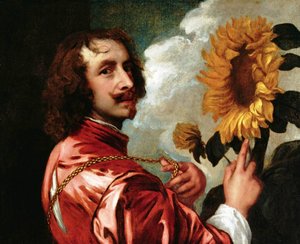
Sir Anthony Van Dyck
1599 - 1641 , Belgia
Lühikesed faktid
- Artistic Movement Or Style: Baroque
- Artists Who Influenced This Artist: ['Peter Paul Rubens']
- Date Of Birth: March 22, 1599
- Date Of Death: December 9, 1641
- Full Name: Sir Anthony van Dyck
- Nationality: Flemish
- Notable Artworks:
- Portrait of a woman and child
- Equestrian portrait of Charles I
- Lord John Stuart & brother
- Place Of Birth: Antwerp, Belgium