Jaga teost
 Jaga
Jaga
 Detailid
 Õppekate juhend

 Laadi alla
 Sarnased teosed
 Slaidietendus
 Statistika
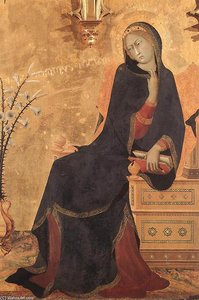
Maestà (detail)


 Loe lähemalt
Giclée / Kunstiprint
Muuseumikvaliteediga giclée- või kangasprint kiire tootmisega ja paindlikud viimistlusvõimalused. ( Telli käsitsi maalitud reproduktsioon Ülemineku digitaalse pildi müügi kanalisse)




































Vali meie eelmääratud suurused, mis vastavad teose algupärastele proportsioonidele.

Sisestage vajalik laius ja kõrgus, et see sobiks teie raamile või seinale. Trükki saab ainult lõigata, seda ei saa kunagi pildist suuremaks teha, seega ka differentse vormiga suurus kaotab osa pildist. Enne trükkimist saadame teile kinnitamiseks digitaalse näidisprojektsiooni. Sellel lehel näidatud pilt ei kujuta reaalset lõiget — seda näitab ainult näidisprojekttsioon.
Ülemaailmne tarne () 2 nädala jooksul, tavalise 4/5 nädala asemel. (22 oktoober)

Tasuta ekspresssaatmine üle maailma

Kõrgekvaliteediline lina-kangastest muld

Täielik transpordikindlustus

Tollimaksude tagastamise garantii

Värvitoime täpsuse garantii

100 päeva tagastusõigus (ainult defektide korral)

100% raha tagasi garantii

Hulgusoodustus
 Klaasivalik on saadaval ainult kuni 110 cm suuruses teostes

Maestà (detail)
Giclée / Kunstiprint
Reproduktsiooni mõõtmed
-


Lõppsumma
€ 70
A Symphony of Grace: The Ethereal Vision of Simone Martini
To gaze upon the detail of Simone Martini’s Maestà is to step through a portal into the golden age of Sienese Gothic art. Created around 1315, this fresco fragment serves as a breathtaking window into a period where spiritual devotion and courtly elegance danced in perfect harmony. The artwork presents a celestial assembly, a rhythmic arrangement of angels and saints whose presence transcends the physical realm. Each figure, adorned with delicate halos, seems to exist in a state of perpetual adoration, their forms layered with a sense of orderly divinity. The composition does not merely depict a group of holy figures; it orchestrates a visual hymn, where the soft interplay of light and shadow creates an atmosphere of profound serenity and timelessness.
The technical mastery displayed in this work is nothing short of extraordinary, showcasing Martini’s unique ability to marry linear precision with a luminous, flowing grace. Unlike the more robust and muscular figures found in the Florentine works of Giotto, Martini’s hand is characterized by an exquisite delicacy. He employs a meticulous linework that defines the rhythmic folds of drapery, lending the figures a weightless, almost ethereal quality. The palette is a masterclass in color harmony, dominated by cool, contemplative blues and verdant greens that evoke the tranquil sanctity of the Basilica di San Domenico. This subtle use of shading and color creates an illusion of three-dimensional form that feels soft to the eye, inviting the viewer into a meditative state of contemplation.
Historical Splendor and Symbolic Depth
The historical backdrop of the Maestà is as rich as its visual textures. Painted during a time when Siena was ascending as a powerful papal stronghold under the influence of Pope Boniface VIII, the artwork reflects the political and religious fervor of the era. This was a period of immense patronage, where art served as both an expression of faith and a symbol of civic and ecclesiastical authority. Martini, a master of the Sienese school, infused this commission with the sophisticated aesthetic of the International Gothic style—a movement that sought to blend the spiritual intensity of the Middle Ages with the refined, courtly splendor of European royalty.
Beyond its surface beauty, every element of the fresco is imbued with deep symbolic significance. The arrangement of the saints and angels represents the hierarchical order of the heavens, a visual manifestation of divine grace descending upon the earthly realm. The very act of looking upon these figures was intended to inspire piety and a sense of connection to the divine. For the modern collector or interior designer, this piece offers more than mere decoration; it provides a focal point of profound emotional resonance. A high-quality reproduction of this masterpiece brings an air of historical prestige and sophisticated tranquility to any space, acting as a bridge between the storied past of the Trecento and the refined elegance of contemporary living.
Küsimused ja vastused
Millest teos "Maestà (detail)" on valmistatud ja millises stiilis on see?
Teos "Maestà (detail)" on valmistatud tehnikas Fresco ja kuulub Late Gothic stiilile.
Kes on teose "Maestà (detail)" kunstnik?
Teose "Maestà (detail)" loovis Simone Martini. Selle lehe info kirjeldab Simone Martini algteost.
Millist ruumi on „Maestà (detail)“, autor Simone Martini jaoks soovitatav?
Soovitatav paik „Maestà (detail)“, autor Simone Martini jaoks on Hotel Lobby. See soovituse võib muidugi oma interjööri vajadust mööda kohandada.
Kunstniku elulugu
Simone Martini (c.1284–1344) – A Sienese Master of Elegance and Grace
Simone Martini, born around 1284 in Siena, Italy—though precise birthdates remain elusive—stands as a cornerstone figure in the transition from medieval to Renaissance art. He wasn’t merely a painter; he was an architect of elegance, a master of line and color who infused his works with a courtly refinement that distinguished him from contemporaries like Giotto di Bondone. Historical accounts regarding Martini’s formative years are fragmentary—scholarly debate centers on whether he apprenticed under Duccio di Buoninsegna, the dominant Sienese artist of his time, or if Florence and Giotto exerted a more profound influence—yet Martini undeniably forged an artistic path uniquely his own.
Origins and Education – The Seeds of Style
The exact circumstances surrounding Simone’s upbringing are shrouded in obscurity. Tradition suggests he was born in Siena’s Sant’Egidio district, possibly the son of Martino Senese, a craftsman specializing in preparing arriccio—the initial plaster layer applied to wall surfaces destined for fresco painting—though corroborating evidence remains scant. Regardless of his precise origins, Martini’s artistic training undoubtedly commenced within Duccio di Buoninsegna’s workshop, where he absorbed the stylistic precepts of Sienese Gothic.
The Siena Workshop – Collaboration and Patronage
Martini’s formative years were marked by close association with Memmo di Filippuccio, another artisan active in San Gimignano—a partnership that fostered not only professional growth but also exposure to the burgeoning artistic culture of Tuscany. Crucially, Martini secured his first major civic commission in 1311: the frescoing of the *Maestà* for Siena’s Palazzo Pubblico—a monumental undertaking that cemented Duccio’s legacy and established Martini as a rising talent.
The Maestà – A Synthesis of Tradition
The *Maestà*, completed in 1315, represents a pivotal moment in Martini’s artistic trajectory. It served as an homage to Duccio’s own masterpiece—a stylistic echo that underscored Martini’s commitment to established Sienese conventions. Yet, Martini transcended mere imitation; he innovated through meticulous attention to detail and the incorporation of groundbreaking techniques—particularly the use of metallic pigments and punching—resulting in a painting that embodies both grandeur and exquisite refinement.
International Gothic – Influence and Artistic Vision
Martini’s stylistic hallmark is undeniably International Gothic, a movement characterized by its delicate beauty, elongated figures, flowing drapery, and opulent ornamentation. This aesthetic was profoundly shaped by artistic currents originating from France—specifically the illuminated manuscripts and ivory carvings of Parisian ateliers—which Martini skillfully assimilated into his own distinctive vision.
Later Career – Avignon and Artistic Circles
Martini’s renown extended beyond Siena, attracting commissions from papal patrons in Avignon—a city at the epicenter of European power during the thirteenth century. His presence within Francesco Petrarca’s intellectual circle further enriched his artistic milieu—a connection underscored by Vasari’s account of Martini’s portrait of Laura de Noves—demonstrating Martini's ability to capture not only physical likeness but also the essence of beauty and inspiration.
Legacy – An Enduring Influence
Simone Martini’s contribution to European art history is undeniable. He championed International Gothic style, disseminating its aesthetic principles across the continent and shaping the artistic sensibilities of subsequent generations. His frescoes in San Francesco d’Assisi exemplify his mastery of large-scale decorative painting—a testament to Martini's unparalleled command of color, form, and compositional harmony. Martini died in Avignon in 1344, leaving behind a legacy that continues to inspire awe and admiration centuries later—a beacon of elegance and artistic innovation.

Simone Martini
1284 - 1344 , Itaalia
Lühikest infot
- Artistic Movement Or Style: International Gothic
- Artists Who Influenced This Artist:
- Duccio di Buoninsegna
- Francesco Petrarca
- Date Of Birth: c. 1284
- Date Of Death: 1344
- Full Name: Simone Martini
- Nationality: Italian
- Notable Artworks:
- Saint Louis Crowning Robert
- Annunciation (Uffizi)
- Consecration of Chapel
- Place Of Birth: Siena, Italy
Sarnased artiklid

Gothic Vibes: From Dark Shadows to Bold Modern Edge | The Ultimate Trend Forecast
Explore the evolution of Gothic vibes, from historical shadows to bold modern edge. Discover how dark aesthetics, noir interiors, and contemporary subcultures are redefining modern design through a high-impact, trend-focused lens.
The Radiant Dusk of Medieval Vision: Exploring Late Gothic Art's Synthesis of Faith, Form & Emotionality (c. 1300-1500)
Explore the exquisite beauty & spiritual depth of Late Gothic art (c. 1300-1500). Discover key artists, symbolism, and its lasting influence on the Renaissance. Expert insights at OriginalUniqueArt.

Simone Martini: Innovation, Spirituality & Courtly Refinement in Sienese Painting
Explore the captivating world of Simone Martini, a pivotal figure in Sienese painting & the International Gothic style. Discover his innovative techniques, spiritual depth, and lasting influence on early Renaissance art.

Beyond Borders: The Spiritual & Stylistic Innovations of International Gothic Art
Explore the exquisite beauty & spiritual depth of International Gothic art. Discover key artists like Simone Martini & Pol de Limbourg, its origins, symbolism, and lasting influence on European painting. Expert insights at OriginalUniqueArt.

International Gothic Style: The Elegant Dawn of European Art History and the Transition to Renaissance Naturalism
Explore the elegance of International Gothic art. Discover how masters like Simone Martini bridged medieval symbolism and Renaissance naturalism through courtly grace, luminous gold, and intricate detail in this expert guide to European art history.